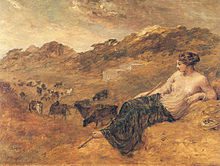
Cyrene is a fascinating figure in Greek mythology, known for her beauty and strength. She was a huntress, often associated with the wild and untamed aspects of nature. Cyrene’s story is one that intertwines with various gods and heroes, showcasing her importance in the mythological landscape of ancient Greece. Her name is often mentioned alongside other notable figures, and her adventures reflect the themes of love, power, and independence that are prevalent in many Greek myths.
The Origins of Cyrene
Cyrene was born to Ares, the god of war, and Thalassa, the goddess of the sea. Her lineage set the stage for her extraordinary life. As a child, she was raised in the wilds of Libya, where she developed a deep connection with nature. This environment helped her become an expert huntress, mastering the skills necessary to survive in the wilderness. Her upbringing in such a vibrant and wild setting shaped her character and made her one of the most revered huntresses in mythology.
 Danae
DanaeAs she grew older, Cyrene’s beauty became legendary. Many suitors sought her hand in marriage, but she was not interested in the typical life of a woman in her time. Instead, she preferred the thrill of the hunt and the freedom of the wild. This independence made her a unique figure among the women of Greek mythology, as many were depicted as passive or subservient to male gods and heroes. Cyrene’s story challenges these stereotypes, showing that women could be strong, capable, and self-reliant.
Cyrene and Apollo
The most famous myth involving Cyrene is her relationship with Apollo, the god of the sun, music, and prophecy. Apollo was captivated by Cyrene’s beauty and strength. According to the myth, he first encountered her while she was wrestling a lion. Impressed by her bravery and skill, he decided to approach her. This meeting marked the beginning of a passionate romance that would lead to significant events in both their lives.
After their initial encounter, Apollo invited Cyrene to live with him on Mount Olympus. However, she had a deep love for her homeland and the wild, which made her hesitant to leave. Eventually, Apollo convinced her to join him, and together they had several children. One of their most notable offspring was Aristaeus, who became known as the god of agriculture, cattle, and beekeeping. This union between Cyrene and Apollo represents the blending of nature and divinity, showcasing the importance of both in Greek mythology.
 Daphnaie
The Legacy of Cyrene
Cyrene’s legacy extends beyond her relationship with Apollo. She is often associated with various places in ancient Greece, particularly in Libya, where the city of Cyrene was named after her. This city became a significant cultural and commercial center in the ancient world. It was known for its rich agricultural lands and thriving trade, reflecting the nurturing aspect of Cyrene’s character. The people of Cyrene honored her with festivals and rituals, celebrating her connection to nature and the bounty it provided.
In addition to her connection with the city, Cyrene was also revered as a goddess of the hunt. She was often depicted in art and literature as a strong, independent woman wielding a bow and arrow. This imagery reinforced her status as a powerful figure in mythology, inspiring countless stories and artworks throughout history. Her representation in art often symbolizes the strength of women and their ability to thrive in a male-dominated world.
Cyrene in Art and Literature
 Deimos
Throughout history, Cyrene has been a popular subject in various forms of art and literature. Ancient Greek pottery often depicted her as a strong huntress, emphasizing her skills and independence. Many vases and sculptures show her in dynamic poses, capturing the essence of her character. These artistic representations served to celebrate her as a powerful figure in Greek mythology, contrasting the more traditional portrayals of women in that era.
In literature, Cyrene’s story has been referenced by various ancient poets and playwrights. Her relationship with Apollo has been explored in many works, highlighting the themes of love and adventure. These stories often emphasize her strength and determination, showcasing her as a role model for women in mythology. The tales of Cyrene resonate with audiences even today, as they reflect the timeless struggle for independence and self-identity.
The Symbolism of Cyrene
Cyrene embodies several important themes in Greek mythology, including strength, independence, and a deep connection to nature. Her character challenges traditional gender roles, showcasing a woman who is both powerful and self-sufficient. This makes her a significant figure in a pantheon often dominated by male heroes and gods. The duality of her nature—being both a huntress and a mother—further emphasizes the complexity of her character.
Additionally, Cyrene’s connection to nature symbolizes the harmony between humanity and the natural world. Her skills as a huntress reflect a respect for the wilderness, showcasing the importance of living in balance with nature. This theme is prevalent in many Greek myths, where the gods and mortals interact with the natural world in various ways. Cyrene serves as a reminder of the power of nature and the need to respect and protect it.
Cyrene’s Influence on Modern Culture
The legacy of Cyrene continues to influence modern culture, particularly in literature and the arts. Many contemporary authors draw inspiration from her character, creating strong female protagonists who embody similar traits of strength and independence. Cyrene’s story serves as a powerful reminder of the potential for women to break free from societal constraints and pursue their own paths.
In film and television, characters inspired by Cyrene often reflect her adventurous spirit and connection to nature. These portrayals contribute to the ongoing conversation about gender roles and representation in media. By highlighting strong female figures, modern adaptations of Greek mythology help to reshape the narrative around women’s capabilities and roles in society.
Cyrene is a remarkable figure in Greek mythology, representing strength, independence, and a deep connection to nature. Her story, intertwined with Apollo and her legacy in the city of Cyrene, continues to resonate through art, literature, and modern culture. As a symbol of empowerment, Cyrene inspires individuals to embrace their strengths and pursue their passions, regardless of societal expectations.