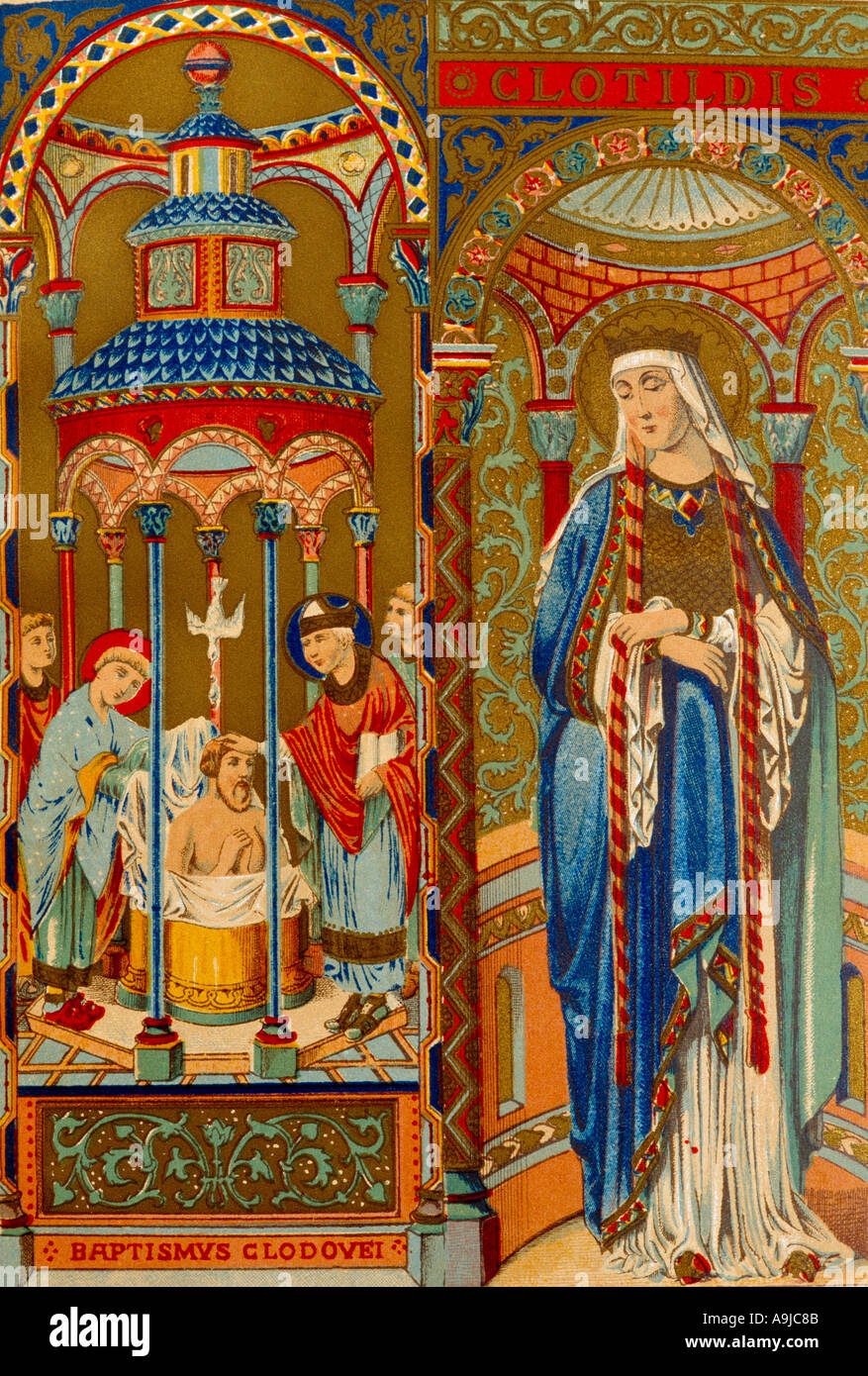
St. Clotilde, a prominent figure in Christian mythology, is revered for her role in the spread of Christianity in France during the early medieval period. She was born around 474 AD in the kingdom of the Burgundians, which is located in modern-day France. Clotilde was not only a queen but also a devout Christian who played a significant role in the conversion of her husband, King Clovis I, and his people to Christianity. Her life and legacy continue to inspire many, and she is often celebrated for her unwavering faith and dedication to God.
The Early Life of St. Clotilde
St. Clotilde was born into a noble family, the daughter of King Chilperic I of the Burgundians. Growing up in a royal household, she was exposed to the complexities of political alliances and the importance of religion in maintaining power. Despite the pagan beliefs prevalent in her family and kingdom, Clotilde was raised with Christian values. This early foundation in faith would later guide her actions as a queen. Her life was marked by a deep commitment to her beliefs, which set her apart from many of her contemporaries.
 St. Cloud
At a young age, Clotilde was married to King Clovis I, who ruled over the Franks. This marriage was politically motivated, aiming to unify the Burgundians and the Franks. However, it also presented Clotilde with the opportunity to introduce Christianity to her husband and his kingdom. Clotilde’s early life was filled with challenges as she navigated the complexities of her marriage while remaining steadfast in her faith. Her determination to practice Christianity in a predominantly pagan society demonstrated her strength and conviction.
The Marriage to Clovis I
The marriage between Clotilde and Clovis I was significant for both political and religious reasons. Clovis was a powerful king, and his conversion to Christianity would have profound implications for the future of France. Clotilde, understanding the importance of her role, took it upon herself to influence Clovis’s spiritual journey. She remained patient and persistent in her efforts, often praying for his conversion. Clotilde’s dedication to her faith was evident as she sought to lead her husband toward the light of Christianity.
Initially, Clovis was resistant to Clotilde’s faith, adhering to the pagan traditions of his ancestors. However, Clotilde did not lose hope. She continued to share her beliefs with him, highlighting the virtues of Christianity and the strength it offered. Her unwavering support and love played a crucial role in Clovis’s eventual conversion. This transformation not only changed the king but also set a precedent for his people, who looked to him as a model of faith and leadership.
 St. Clement I
The Conversion of Clovis I
Clovis I’s conversion to Christianity is one of the most celebrated events in Christian history. The turning point came during a fierce battle against the Alemanni. Clovis, facing defeat, prayed to the God of Clotilde for victory, promising to convert if he emerged victorious. The battle turned in his favor, and true to his word, Clovis embraced Christianity. This moment marked a significant shift in the religious landscape of France, as Clovis became the first Christian king of the Franks.
The baptism of Clovis took place in 496 AD, in the city of Reims. Clotilde played a vital role in this momentous occasion, standing by her husband’s side as he took the sacrament. The event was attended by thousands, symbolizing the unification of the Frankish tribes under Christianity. Clovis’s conversion also led to the baptism of many of his warriors, further solidifying the influence of Christianity in the region. Clotilde’s dream of seeing her husband embrace her faith had finally come true, and the ripple effects of this conversion would be felt for generations.
The Legacy of St. Clotilde
 St. Claude De La Colombière
St. Clotilde’s legacy is one of profound impact on the history of France and Christianity. After Clovis’s conversion, Clotilde continued to advocate for the Christian faith, establishing churches and supporting the clergy. She became a symbol of piety and devotion, inspiring many to follow her example. Clotilde’s influence extended beyond her lifetime, as her children, particularly her sons, continued to promote Christianity throughout the Frankish kingdom.
Her commitment to the faith led to the establishment of the Merovingian dynasty, which played a crucial role in shaping the future of France. The foundation of Christianity in the region allowed for the growth of the Church and the spread of Christian values. Clotilde is often credited with laying the groundwork for what would eventually become a Christian nation. Her life story serves as a reminder of the power of faith and the importance of perseverance in the face of adversity.
Veneration and Canonization
St. Clotilde was venerated as a saint shortly after her death in 545 AD. Her canonization was a testament to her enduring legacy and the impact she had on Christianity in France. The Catholic Church recognizes her as a saint, celebrating her feast day on June 3rd. Throughout the centuries, many have looked to Clotilde as a model of faith and devotion, and her story has been passed down through generations.
Churches and cathedrals have been dedicated to her in various parts of France, further solidifying her place in Christian history. The Basilica of St. Clotilde in Paris stands as a significant monument to her life and contributions. Pilgrims and devotees continue to honor her memory, seeking her intercession in their prayers. St. Clotilde’s legacy lives on, inspiring countless individuals to embrace their faith and live out the teachings of Christianity.
The Role of Women in Early Christianity
St. Clotilde’s life highlights the important role women played in the early Christian church. Despite the patriarchal society of the time, women like Clotilde were instrumental in the spread of Christianity. They often acted as spiritual leaders within their families and communities, influencing their husbands and children to embrace the faith. Clotilde’s determination and strength exemplify the impact women had on shaping religious practices and beliefs during the early medieval period.
Women in early Christianity were often seen as nurturing figures, embodying the virtues of compassion and faith. They provided support to the clergy and were active participants in the church’s growth. Clotilde’s story serves as a reminder of the significant contributions women made to the faith, often working behind the scenes to promote Christianity in a world dominated by male leadership. Their stories, like that of Clotilde, deserve recognition and celebration in the annals of Christian history.
The Influence of St. Clotilde on French Culture
St. Clotilde’s influence extends beyond religion; she has also played a significant role in shaping French culture. As a queen who championed Christianity, her legacy is intertwined with the identity of France as a predominantly Christian nation. Her story has inspired countless works of art, literature, and music throughout the centuries. Artists have depicted her life in various forms, capturing her strength and devotion to her faith.
In addition to artistic representations, Clotilde’s influence can be seen in the cultural traditions of France. Many customs and celebrations are rooted in the Christian faith that she helped establish. Her legacy is celebrated not only in religious contexts but also in cultural festivals and events that honor the history of Christianity in France. Clotilde’s life story continues to resonate with the French people, serving as a symbol of their rich Christian heritage.
St. Clotilde in Modern Times
In modern times, St. Clotilde remains a figure of inspiration for many. Her life story is often shared in religious education and is a subject of interest for those studying the history of Christianity in France. Various organizations and churches continue to promote her teachings and values, emphasizing the importance of faith and perseverance. Clotilde’s example encourages individuals to remain steadfast in their beliefs, even in the face of challenges.
Additionally, St. Clotilde’s legacy has been embraced by feminist movements within Christianity. Her story serves as a reminder of the vital role women have played in the church’s history. Many contemporary discussions around the role of women in the church reference Clotilde as an example of strong female leadership. Her life continues to inspire those who seek to promote equality and representation within religious communities.
Conclusion of St. Clotilde’s Impact
St. Clotilde’s impact on Christianity and French culture is undeniable. Her dedication to her faith, her role in the conversion of Clovis I, and her influence on future generations mark her as a pivotal figure in Christian mythology. Clotilde’s legacy continues to inspire individuals to embrace their beliefs and strive for a life of faith. As we reflect on her life, we are reminded of the power of love, perseverance, and devotion in the pursuit of a greater good.