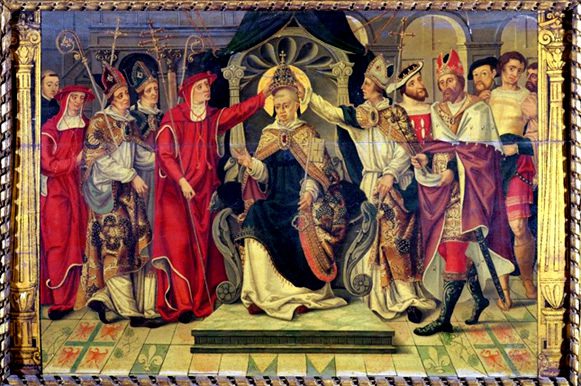
St. Celestine I, also known as Celestine the First, was a significant figure in early Christian history. He served as the Pope from 422 to 432 AD. His papacy came during a time of great change and development within the Christian church. He played a crucial role in defining church doctrine and promoting the Christian faith throughout the Roman Empire. His influence extended beyond his time as pope, and he is remembered for his contributions to the early church.
Background and Early Life
Although not much is known about the early life of St. Celestine I, it is believed that he was born in Rome. His birth name was likely Celestinus, which later evolved into the name we know today. He belonged to a period when Christianity was still establishing its foundations and gaining acceptance in a predominantly pagan society. His upbringing in Rome, a center of political and cultural power, would have exposed him to various theological debates and challenges.
 St. Cedd
Before becoming Pope, Celestine was a respected bishop in Rome. His dedication to the church and his theological knowledge set him apart as a prominent leader among the clergy. It was during this time that he developed a reputation for being a man of integrity and a defender of the faith. This reputation would eventually lead to his election as Pope, where he would have the opportunity to influence the church on a larger scale.
Papal Election
St. Celestine I was elected as Pope following the death of his predecessor, Pope Boniface I. His election came at a time when the church faced numerous challenges, including heresies and political pressures from both the Roman Empire and various sects within Christianity. The election process during this time was not as formalized as it is today, but it involved a consensus among the bishops and the clergy in Rome.
Upon his election, Celestine I took on the responsibility of leading the church through these turbulent times. He understood the importance of maintaining unity among Christians and was determined to combat the growing influence of heretical movements. His leadership style was characterized by a commitment to orthodox teachings and a desire to strengthen the church’s position within the empire.
 St. Cecilia
Theological Contributions
One of the most notable aspects of St. Celestine I’s papacy was his commitment to theological clarity. He worked diligently to define and defend core Christian doctrines against various heretical teachings. One of the significant heresies during his time was Pelagianism, which denied the necessity of divine grace for salvation. Celestine strongly opposed this view, emphasizing the importance of grace in the Christian faith.
Celestine I convened councils to address these theological disputes and clarify the church’s position. His efforts culminated in the condemnation of Pelagianism, which was a pivotal moment in the history of Christian theology. By affirming the necessity of grace, he helped to shape the church’s understanding of salvation and the role of human effort in the process.
Promotion of the Faith
St. Celestine I was not only a defender of doctrine but also a promoter of the Christian faith. He recognized the importance of spreading Christianity beyond the borders of Rome. To achieve this, he sent missionaries to various regions, including Britain and Ireland. His efforts contributed to the establishment of Christian communities in areas that had previously been pagan.
 St. Catherine Of Sweden
One of the most notable figures he sent was Patrick, who later became known as St. Patrick, the patron saint of Ireland. Celestine’s support for Patrick and other missionaries was crucial in the conversion of many people to Christianity. This expansion of the faith was essential for the church’s growth and influence in the early medieval period.
Relations with the Roman Empire
The relationship between the church and the Roman Empire during St. Celestine I’s papacy was complex. While the church was gaining influence, it also faced challenges from the state. Celestine understood the need to navigate these political waters carefully. He sought to maintain a balance between the church’s spiritual authority and the empire’s political power.
Celestine I worked to establish a cooperative relationship with the Roman authorities. He believed that the church could thrive alongside the empire, provided that both entities respected each other’s roles. This approach allowed him to advocate for Christian interests without provoking unnecessary conflict with the state. His diplomatic skills were essential in ensuring the church’s continued growth during this period.
Legacy of St. Celestine I
The legacy of St. Celestine I is profound and far-reaching. His contributions to Christian theology, missionary work, and church-state relations have left a lasting impact on the church. He is often remembered as a pope who prioritized the integrity of the faith and the unity of the church. His efforts to combat heresy and promote orthodoxy laid the groundwork for future theological developments.
Celestine I is venerated as a saint in the Catholic Church, and his feast day is celebrated on April 6. Many churches and institutions are named in his honor, reflecting his enduring influence in Christian history. His commitment to the faith and his role as a leader during a critical time in church history continue to inspire Christians around the world.
St. Celestine I in Christian Art
Throughout history, St. Celestine I has been depicted in various forms of Christian art. Artists have sought to capture his essence as a leader and defender of the faith. These representations often highlight his papal attire, symbolizing his authority within the church. Additionally, many artworks emphasize his role as a missionary, illustrating his commitment to spreading Christianity.
One of the most famous depictions of St. Celestine I is found in medieval manuscripts, where he is often shown with a book or scroll, representing his dedication to theological study and teaching. These images serve as a reminder of his contributions to the church and his commitment to preserving Christian doctrine.
Commemoration and Influence
St. Celestine I’s influence extends beyond his lifetime, as his teachings and actions continue to resonate within the church today. His emphasis on the importance of grace and the necessity of sound doctrine remains central to Christian theology. Many theologians and church leaders look to his example when addressing contemporary issues related to faith and practice.
Furthermore, his commitment to evangelism and missionary work serves as a model for modern Christians seeking to share their faith. St. Celestine I’s legacy encourages believers to engage with the world around them, promoting the message of Christianity with compassion and integrity. His life and work remind Christians of the importance of being active participants in their faith communities.
Conclusion of St. Celestine I’s Life
The life of St. Celestine I serves as a testament to the challenges and triumphs of early Christian leaders. His papacy was marked by significant theological developments, the promotion of the faith, and efforts to maintain unity within the church. Celestine’s dedication to combating heresy and spreading the Gospel has left an indelible mark on Christian history.
Today, St. Celestine I is remembered not only as a pope but also as a saint whose life exemplified the values of faith, integrity, and commitment to the church. His legacy continues to inspire Christians to engage with their faith actively and to strive for unity within the body of Christ. Through his example, believers are encouraged to uphold the teachings of Christianity and to share the message of hope and salvation with the world.