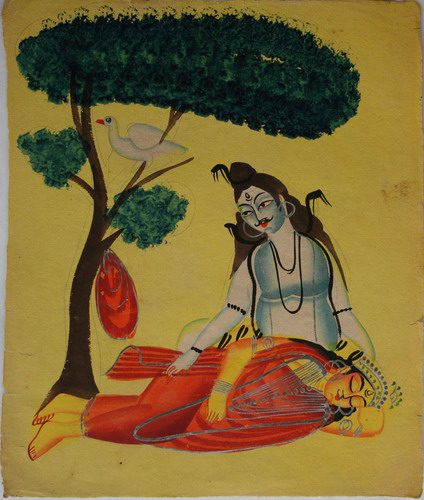
Sati, a prominent figure in Hindu mythology, embodies the themes of devotion, sacrifice, and the complexities of marital relationships in ancient texts. She is often revered as a goddess and is considered the first wife of Lord Shiva, one of the principal deities in Hinduism. Sati’s story is not just a tale of love; it delves into the depths of loyalty and the consequences of societal norms. Her life and ultimate sacrifice illustrate significant philosophical and spiritual lessons that resonate even today. Understanding Sati requires exploring her origins, her marriage to Shiva, and the tragic events that followed, which shaped her legacy in Hindu belief.
Origins of Sati
The origins of Sati can be traced back to ancient Hindu scriptures, particularly the Vedas and Puranas. She is often described as the daughter of King Daksha and Queen Prasuti. Sati’s birth was not ordinary; she was considered an embodiment of divine energy and purity. According to the legends, her father Daksha was a powerful king who organized a grand yajna (sacrificial ritual) to which he invited all deities except for Shiva. This exclusion was rooted in his disdain for Shiva, who he perceived as a beggar and an outcast.
 Sarasvati
Despite her father’s rejection of Shiva, Sati fell deeply in love with him. Her love was pure and unwavering, showcasing the idea of destined love in Hindu mythology. Sati’s devotion to Shiva was evident from the beginning, as she would often meditate on him and seek his presence. This passionate connection illustrates the theme of love transcending societal boundaries and familial obligations, a recurring motif in many Hindu stories.
The Marriage of Sati and Shiva
The marriage of Sati and Shiva is a significant event in Hindu mythology. Despite her father’s opposition, Sati was determined to marry Shiva. Their union was celebrated in a grand ceremony that emphasized the importance of love and commitment over societal norms. In many narratives, the marriage is depicted as a divine union, where Sati symbolizes devotion and Shiva represents asceticism and transcendence. Together, they represent the balance between the material and spiritual worlds.
During their marriage, Sati and Shiva lived in harmony on Mount Kailash, where they were often depicted in deep meditation. Their relationship was characterized by mutual respect and understanding, serving as an ideal model of marital bliss. However, the happiness of their union was short-lived due to the events that unfolded at Daksha’s yajna. This event set the stage for a series of tragic incidents that would ultimately lead to Sati’s demise.
 Saranyu
The Yajna and Sati’s Sacrifice
The pivotal moment in Sati’s story occurs during her father Daksha’s yajna. Feeling insulted by her father’s decision to exclude Shiva, Sati decided to attend the ceremony alone. Her decision to go, despite knowing the tensions between her father and husband, highlights her commitment to family and duty. However, upon arriving at the yajna, Sati was met with disdain and ridicule from her father and the assembled guests. Daksha openly insulted Shiva, which deeply hurt Sati.
In a moment of anguish and frustration, Sati decided to make the ultimate sacrifice. She realized that her father would never accept her marriage to Shiva and that her presence at the yajna would only bring further shame to her husband. In a desperate act of defiance and love, she performed self-immolation, choosing to leave her mortal body rather than endure the humiliation. This act of sacrifice is one of the most poignant moments in Hindu mythology, symbolizing the extremes of love and loyalty.
Shiva’s Reaction to Sati’s Death
Shiva’s reaction to Sati’s death was one of profound grief and rage. Upon learning of her sacrifice, he was devastated and inconsolable. The loss of Sati plunged Shiva into a deep state of mourning, showcasing his vulnerability despite being a powerful deity. In his sorrow, Shiva performed the Tandava, a cosmic dance that represented creation and destruction. This dance was a manifestation of his pain and anger, causing chaos in the universe.
 Saptarishis
In his fury, Shiva vowed to avenge Sati’s death. He unleashed his wrath upon Daksha and the guests at the yajna, leading to a violent confrontation. This reaction highlights the intense emotional bond between Shiva and Sati, illustrating that love can transcend even death. Shiva’s grief also serves as a reminder of the deep connections that exist within relationships, and how the loss of a loved one can have far-reaching consequences.
The Rebirth of Sati as Parvati
The narrative of Sati does not end with her sacrifice. In Hindu mythology, she is reborn as Parvati, the daughter of the mountain king Himavan and queen Mena. Parvati’s rebirth symbolizes renewal and the cyclical nature of life. She was destined to reunite with Shiva, but her journey to win his heart again was filled with challenges. Parvati embodies the qualities of perseverance and determination, traits that are celebrated in many Hindu texts.
In her new life as Parvati, she undertook rigorous penance to win Shiva’s affection. This phase of her life reflects the theme of devotion and the lengths one may go to for love. Her determination to connect with Shiva again illustrates the belief in second chances and the power of love to overcome obstacles. Eventually, her dedication paid off, and Shiva accepted her as his wife, further solidifying the bond they shared.
The Symbolism of Sati in Hindu Mythology
Sati’s story is rich in symbolism and holds various meanings within Hindu mythology. She is often viewed as a symbol of devotion and self-sacrifice. Her willingness to give up her life for the sake of love exemplifies the extreme devotion that is celebrated in many Hindu texts. Sati’s narrative teaches the importance of loyalty and the consequences that can arise from familial conflicts.
Additionally, Sati’s transformation into Parvati represents the concept of rebirth and transformation in Hindu philosophy. It illustrates the belief that life continues in various forms and that love can transcend physical existence. Parvati’s journey to win Shiva’s heart again emphasizes the idea that true love is worth the struggle, and that persistence can lead to ultimate fulfillment.
Sati and the Role of Women in Hinduism
The story of Sati raises important questions about the role of women in Hindu society. Her sacrifice is often interpreted in various ways, with some viewing it as a demonstration of ultimate devotion while others critique it as a reflection of patriarchal values. Sati’s actions can be seen as both empowering and limiting, depending on the perspective taken. Her story highlights the complexities of female agency in a patriarchal context, where women’s choices are often influenced by societal expectations.
In contemporary discussions, Sati’s narrative can serve as a catalyst for conversations about gender roles and the expectations placed on women. The themes of loyalty and sacrifice are celebrated, but they also raise awareness about the need for women’s autonomy and the importance of personal choice. By examining Sati’s story, one can explore the evolving perceptions of women’s roles within Hinduism and how these narratives shape cultural attitudes.
Modern Interpretations of Sati
In modern times, the story of Sati has been reinterpreted in various ways. Some view her as a martyr who made the ultimate sacrifice for love, while others critique the glorification of her death as an act of devotion. This duality reflects the ongoing discourse surrounding female sacrifice and the expectations placed on women in society. Many contemporary scholars and activists argue for a more nuanced understanding of Sati’s legacy, emphasizing the need to move beyond traditional narratives that may reinforce patriarchal ideals.
Additionally, Sati has become a symbol in feminist movements, representing the struggle against societal norms that dictate women’s roles. Her story is often invoked in discussions about female empowerment and the importance of personal choice. By reframing Sati’s narrative, modern interpretations can inspire new conversations about love, sacrifice, and the agency of women in both historical and contemporary contexts.
Sati in Popular Culture
The tale of Sati has also found its way into popular culture, inspiring various forms of art, literature, and performance. From traditional dance dramas to modern novels, her story continues to resonate with audiences. These adaptations often explore the emotional depth of Sati’s character and the complex relationships between the key figures in her life. Through these interpretations, Sati’s legacy is kept alive, inviting new generations to engage with her story.
In cinema, Sati’s narrative has been portrayed in numerous films, often emphasizing themes of love, sacrifice, and redemption. These adaptations vary in their portrayal of Sati, some focusing on her strength and resilience, while others highlight the tragic aspects of her story. By bringing Sati’s tale to the screen, filmmakers contribute to the ongoing dialogue about her significance in Hindu mythology and the lessons that can be drawn from her experiences.
The story of Sati is a profound narrative within Hindu mythology that explores themes of love, sacrifice, and the complexities of human relationships. Her journey from devotion to tragedy, and ultimately to rebirth as Parvati, illustrates the cyclical nature of life and the enduring power of love. As society continues to evolve, Sati’s legacy remains a relevant topic of discussion, inviting reflection on the roles of women, the nature of sacrifice, and the meaning of true devotion. Through various interpretations and adaptations, Sati’s story continues to inspire and provoke thought, ensuring her place in the rich tapestry of Hindu mythology.