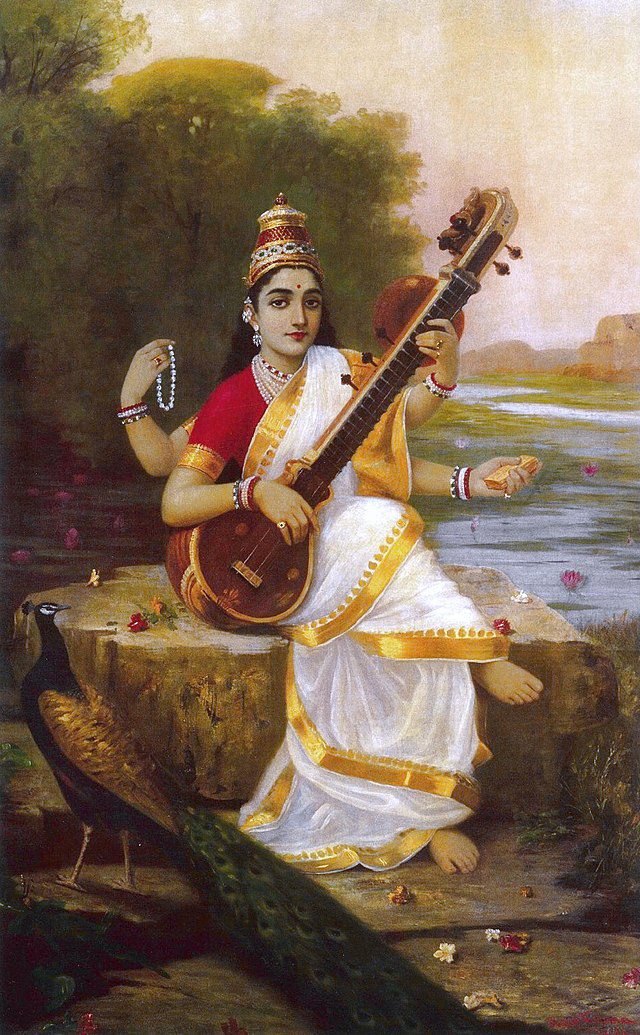
Sarasvati is a significant figure in Hindu mythology, known as the goddess of knowledge, music, art, wisdom, and learning. She is often depicted as a beautiful woman dressed in white, symbolizing purity, and is usually shown sitting on a white lotus. This imagery represents her connection to knowledge and enlightenment. In many illustrations, she holds a veena, a traditional musical instrument, which signifies her mastery over the arts and her role as the muse of creativity. Her presence is a reminder of the importance of education and the pursuit of wisdom in human life.
The Origins of Sarasvati
The origins of Sarasvati can be traced back to ancient texts and scriptures. She is mentioned in the Vedas, which are some of the oldest sacred texts in Hinduism. In the Rigveda, Sarasvati is described as a river, symbolizing the flow of knowledge and the importance of learning. Over time, her identity evolved from a river goddess to a more complex figure embodying various aspects of wisdom and creativity. This transformation highlights the deep connection between water and knowledge, where flowing water represents the continuous pursuit of understanding.
 Saranyu
Sarasvati is also linked to the concept of Shakti, which represents feminine power in Hinduism. As a manifestation of Shakti, she is considered a vital force in the universe. Her connection to Brahma, the creator god, further emphasizes her role in the cosmos. In many stories, Sarasvati is portrayed as the consort of Brahma, suggesting that she plays a crucial role in the process of creation through knowledge and intellect. This relationship showcases the balance between male and female energies in the universe, illustrating the importance of collaboration in achieving harmony.
Symbolism of Sarasvati
The symbols associated with Sarasvati are rich in meaning and significance. The veena she holds represents the harmony of knowledge and the arts. It is a reminder that music and creativity are integral parts of learning and self-expression. The lotus on which she sits symbolizes purity and spiritual awakening. Just as a lotus rises from muddy waters to bloom beautifully, individuals can attain knowledge and enlightenment despite the challenges they face in life.
Another important symbol is the swans that are often depicted alongside her. Swans are known for their ability to separate milk from water, which symbolizes the discernment between good and evil, or knowledge and ignorance. This ability to discriminate is a crucial aspect of wisdom, highlighting the importance of making informed choices in life. The presence of swans reinforces the idea that Sarasvati not only embodies knowledge but also guides her devotees in their quest for understanding.
 Saptarishis
Sarasvati in Festivals
Sarasvati is celebrated in various festivals across India, with one of the most notable being Vasant Panchami. This festival marks the arrival of spring and is dedicated to the goddess of learning. On this day, devotees worship Sarasvati by placing their books and musical instruments near her idol or picture, seeking her blessings for knowledge and creativity. The vibrant yellow color associated with the festival symbolizes the mustard flowers that bloom during this season, representing prosperity and abundance.
During Vasant Panchami, many people also engage in cultural activities such as singing, dancing, and playing musical instruments. These performances are a way of honoring Sarasvati and celebrating the arts. Schools and educational institutions often organize special prayers and events to invoke the blessings of the goddess, emphasizing the importance of education in society. The festival serves as a reminder of the value of knowledge and the role of Sarasvati in guiding individuals toward their intellectual pursuits.
Temples Dedicated to Sarasvati
 Samba
SambaThere are several temples dedicated to Sarasvati across India, each reflecting her significance in the cultural and spiritual landscape. One of the most famous temples is the Saraswati Temple in Pushkar, Rajasthan. This temple attracts many devotees, especially students and artists, who come to seek the goddess’s blessings. The architecture of the temple is a beautiful blend of traditional styles, showcasing intricate carvings and vibrant artwork that celebrate Sarasvati’s divine qualities.
Another prominent temple is the Vasantika Devi Temple in Uttarakhand. This temple is located in a serene environment surrounded by lush greenery, making it an ideal place for meditation and reflection. Visitors often engage in prayers and rituals to honor Sarasvati, seeking her guidance in their academic and artistic endeavors. These temples serve as centers of learning and creativity, where devotees can connect with the goddess and find inspiration in their pursuits.
Sarasvati in Art and Literature
Sarasvati has been a muse for countless artists and writers throughout history. In Indian classical music, she is often invoked at the beginning of performances, symbolizing the artist’s dedication to their craft. Many musicians and dancers consider her blessings essential for success and creativity. Her representation in art varies from traditional paintings to modern interpretations, showcasing her timeless influence on culture and creativity.
In literature, Sarasvati has inspired numerous poets and writers. Her attributes of wisdom and learning are often celebrated in verses and stories, emphasizing the transformative power of knowledge. Various literary works explore her character and the significance of her teachings, highlighting the importance of education in shaping individuals and society. Through these artistic expressions, Sarasvati’s legacy continues to inspire generations, reminding us of the vital role of learning in our lives.
The Global Influence of Sarasvati
The influence of Sarasvati extends beyond India, reaching various cultures and communities around the world. As Hinduism spread, so did the reverence for Sarasvati. In countries like Nepal, Bali, and Mauritius, she is celebrated in festivals and rituals, reflecting the adaptability of her worship across different cultures. Her attributes of knowledge and creativity resonate with people from diverse backgrounds, making her a universal symbol of learning.
In modern times, Sarasvati’s image has been embraced by educational institutions and organizations worldwide. Many universities and schools incorporate her symbolism into their logos and branding, emphasizing their commitment to knowledge and learning. This global recognition underscores the timeless relevance of her teachings and the enduring impact of her character on the pursuit of wisdom.
Sarasvati’s Role in Education
Sarasvati is often regarded as the patron goddess of education. Her blessings are sought by students, teachers, and scholars who aspire to excel in their academic pursuits. Many educational institutions celebrate her through rituals and ceremonies, particularly at the beginning of the academic year. These practices reflect the deep-rooted belief in the importance of divine guidance in the quest for knowledge.
In classrooms across India, it is common to see images of Sarasvati displayed prominently, serving as a source of inspiration for students. Her teachings emphasize the value of hard work, dedication, and continuous learning. By honoring Sarasvati, students are reminded of the importance of education in shaping their futures and contributing positively to society. This connection between Sarasvati and education reinforces the idea that knowledge is not just a means to an end but a lifelong journey of discovery and growth.
Contemporary Interpretations of Sarasvati
In contemporary society, interpretations of Sarasvati continue to evolve. Many modern thinkers and educators draw upon her teachings to promote innovative approaches to learning. The emphasis on creativity, critical thinking, and interdisciplinary studies reflects the essence of Sarasvati’s wisdom. Educational programs that integrate arts and sciences often cite her as an inspiration, highlighting the interconnectedness of different fields of knowledge.
Moreover, the rise of digital learning platforms has opened new avenues for sharing Sarasvati’s teachings. Online courses and resources dedicated to art, music, and literature often reference her as a guiding figure. This digital transformation allows her influence to reach a global audience, encouraging individuals to explore their creative potential and engage in lifelong learning. The modern reinterpretation of Sarasvati showcases her adaptability and relevance in a rapidly changing world.
Sarasvati in Popular Culture
The figure of Sarasvati has also made her way into popular culture, appearing in films, television shows, and literature. Her character is often portrayed as a source of inspiration and guidance for protagonists seeking knowledge and creativity. These representations serve to reinforce her role as a symbol of learning and the arts, making her accessible to a broader audience.
In addition, various artists and musicians have created works that celebrate Sarasvati, incorporating her imagery and symbolism into their creations. This fusion of traditional and contemporary elements reflects the enduring appeal of her character and the relevance of her teachings in modern society. Through popular culture, Sarasvati’s legacy continues to inspire individuals to pursue knowledge and embrace their creative passions.
The Philosophy of Sarasvati
The philosophy surrounding Sarasvati encompasses various themes related to knowledge, creativity, and personal growth. One of the core tenets is the belief that true knowledge is not just the accumulation of information but the ability to apply that knowledge wisely. Sarasvati’s teachings encourage individuals to seek understanding and clarity, fostering a sense of discernment in their pursuits.
Another important aspect of Sarasvati’s philosophy is the integration of arts and sciences. Her embodiment of both music and learning reflects the idea that creativity and intellect are not mutually exclusive. This holistic approach to education encourages individuals to explore their passions while also engaging in rigorous study. By promoting the interconnectedness of different fields, Sarasvati inspires a more comprehensive understanding of the world.
Sarasvati remains a powerful symbol in Hindu mythology, representing the pursuit of knowledge and the importance of creativity. Her influence can be seen in various aspects of life, from education to the arts. As a goddess, she embodies the ideals of wisdom, discernment, and collaboration, reminding us of the value of learning and self-expression. Through her teachings, devotees are encouraged to embrace their intellectual and creative journeys, fostering a deeper appreciation for the transformative power of knowledge.