WORLD

Poia
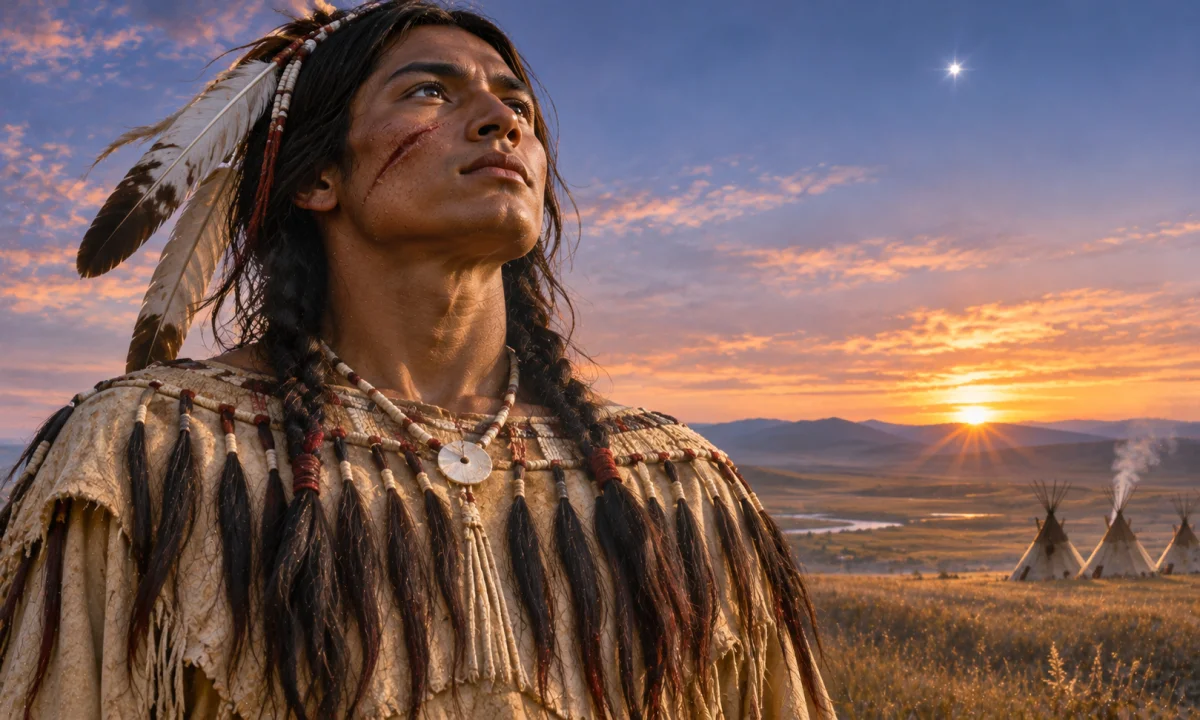
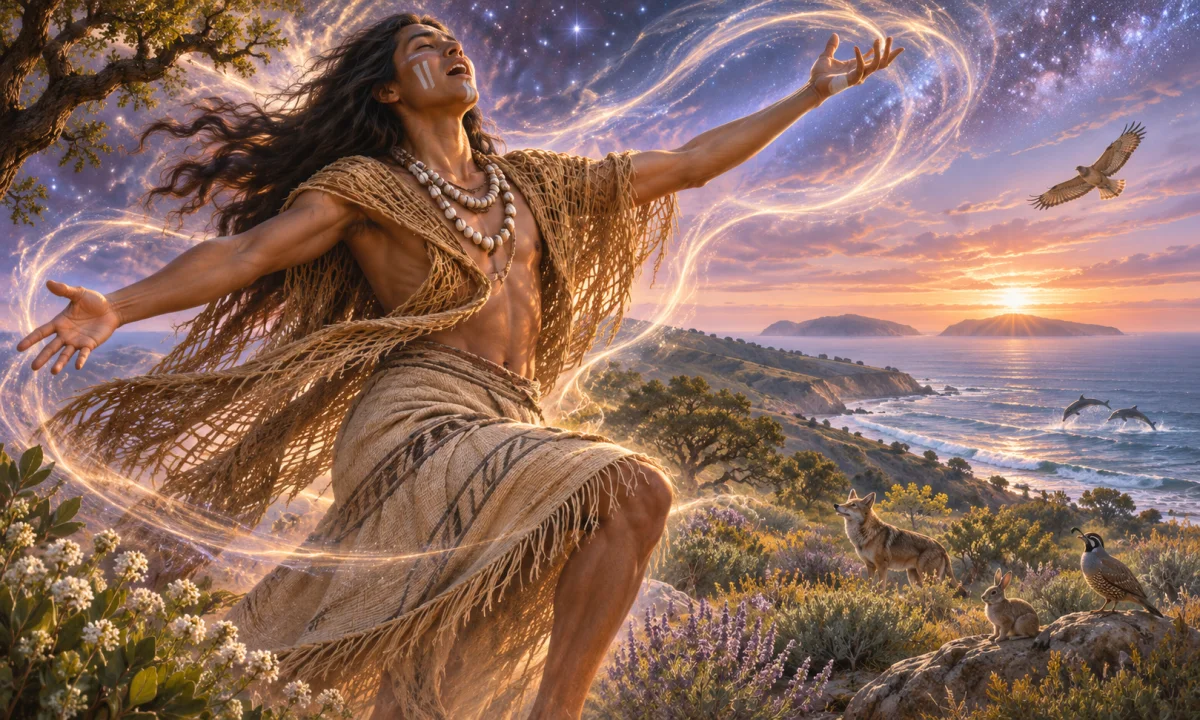
Poia, often translated as Scarface, is a heroic figure in traditions of the Blackfoot peoples of the northern Plains. The name is associated especially with a story about a young man who journeys to the Sun after being rejected because of a scar on his face. Through this encounter, he is healed, receives sacred knowledge, and returns to human society with teachings connected in some versions to the Blackfoot Sun Dance.
Cultural setting
Poia belongs to the traditional religious and storytelling world of the Blackfoot peoples, who refer to themselves collectively as the Siksikaitsitapi. The Blackfoot Confederacy includes the Siksika, Kainai, Aamsskáápipikani, and related communities whose homelands extend across parts of present-day Alberta, Saskatchewan, and Montana. English-language accounts have often used “Blackfoot” as a broad label, although the communities have distinct histories, dialects, and contemporary identities.
Blackfoot sacred traditions include stories about powerful beings, culture heroes, animals, celestial bodies, and encounters between human beings and the supernatural world. These narratives were not merely entertainment. They could explain the origin of ceremonies, establish relationships with powerful beings, teach ethical conduct, and preserve knowledge about the obligations connecting individuals, families, communities, and the wider universe.
Poia should therefore not be treated simply as a fictional character or as a god in the same sense as a deity in a pantheon. In the best-known tradition, he is a human or formerly ordinary young man who becomes a culture hero through an extraordinary encounter. His authority comes from what he experiences, learns, and brings back to his people.
The name Poia and the identity of Scarface
English-language sources commonly identify Poia with Scarface, a name that describes the central feature of his story. The spellings Poia, Poïa, and other forms may appear in older publications because Indigenous names were written down through changing systems of English and French transcription. The precise meaning and pronunciation of a name can depend on the Blackfoot language form and the source in which it was recorded.
“Scarface” is a translation or descriptive English name rather than evidence that every Blackfoot community uses exactly the same name or tells exactly the same story. Oral traditions naturally exist in variants, and older ethnographic publications sometimes rearranged, shortened, or translated narratives for non-Indigenous readers. The relationship between the name Poia and the English name Scarface is widely established in discussions of the legend, but details of the character and his adventures should not be assumed to be identical in every telling.
The story of Poia
In the most familiar version, Poia is a young man marked by a scar on his face. He wishes to marry or obtain the affection of a woman, but she rejects him because of his appearance. The rejection is not presented merely as a personal disappointment. It places Poia in a state of social shame and exclusion, making his later journey a search for dignity as well as physical healing.
Poia resolves to seek help from the Sun, a powerful celestial being. He travels toward the place where the Sun can be reached, undertaking a difficult journey that separates him from ordinary human life. The story may describe him as living or waiting in the Sun’s domain, where he encounters the Sun and, in some versions, other members of the Sun’s supernatural household.
The Sun takes pity on Poia or recognizes his devotion and perseverance. The scar is removed or healed, and Poia is given sacred instruction. The exact nature of the instruction varies between accounts, but it is commonly connected with ceremonial knowledge, songs, prayers, and the proper observance of a Sun Dance or related sacred rite.
Some versions also include a marriage between Poia and a daughter of the Sun. This marriage links the human hero to a celestial family and helps explain why he is entrusted with knowledge that ordinary people do not possess. The relationship is not always described in the same way, however, and some retellings concentrate more on healing and ceremonial instruction than on marriage.
After receiving the Sun’s gifts, Poia returns to the human world. He is no longer the rejected young man who left his community. In many accounts, he brings back the instructions for a ceremony that will benefit his people. The journey thus changes both his own status and the religious life of the community.
Connection with the Sun Dance
The story of Poia is frequently presented as an origin narrative for the Blackfoot Sun Dance. Among Blackfoot communities, the ceremony is known by names including Okan, with spelling and pronunciation varying according to language and transcription. It is a major sacred gathering involving prayer, renewal, communal participation, vows, songs, dancing, and relationships with powerful beings.
In versions of the Poia narrative that emphasize the ceremony’s origin, the Sun teaches Poia how to construct or use the ceremonial lodge, how to perform the dances, and how to maintain the rite. Poia then gives this knowledge to his people. The story can therefore be understood as explaining why the ceremony has celestial authority: its teachings come through a direct relationship between a human culture hero and the Sun.
It is important not to reduce the Sun Dance to a single legend or to assume that every element of the living ceremony can be reconstructed from the Poia story. Religious ceremonies are preserved through community practice, trained knowledge holders, family responsibilities, songs, protocols, and changing historical circumstances. The narrative is one important expression of the ceremony’s sacred meaning, not a complete description of how the ceremony is performed.
The Sun Dance has also been affected by colonial policies. In Canada and the United States, Indigenous religious practices were restricted or suppressed for long periods. Blackfoot communities continued to protect and renew their traditions despite these pressures. Accounts of Poia written by outsiders must consequently be read alongside the fact that much sacred knowledge was not intended for unrestricted publication.
Attributes and powers
Poia is not usually portrayed as a permanent supernatural ruler with a fixed set of powers. His principal qualities are endurance, humility, courage, and persistence in the face of rejection. He does not gain authority by conquering enemies or accumulating wealth. Instead, his transformation begins with vulnerability and depends on his willingness to seek help beyond the ordinary human world.
- The scar: The mark identifies Poia as someone who has suffered visible rejection. Its healing represents restoration, but the story’s significance is not limited to physical beauty.
- The journey: His movement toward the Sun marks a passage from ordinary human life into a sacred realm. The journey tests his commitment and prepares him to receive knowledge.
- The Sun: The Sun acts as a powerful celestial person or being who can heal, teach, judge, and establish obligations. The Sun is not merely a natural object in the story.
- Sacred instruction: Poia becomes important because he receives ceremonial knowledge and carries it back to the community.
- Return and service: His achievement is completed only when the knowledge benefits other people. Healing and personal recognition lead to communal responsibility.
The healed face can symbolize the restoration of social standing, but interpretations should remain careful. The story does not necessarily teach that physical difference makes a person inferior or that acceptance is valuable only after a person becomes conventionally attractive. Poia’s ordeal exposes the pain of social judgment, while his encounter with the Sun reveals a deeper source of worth and belonging.
The Sun and celestial relationships
The Sun in Poia’s story is best understood within Blackfoot religious ideas rather than through a simple comparison with the sun gods of other cultures. Across the world, the Sun is often associated with light, life, order, and power, but the specific relationships and ceremonial obligations in Blackfoot tradition belong to their own cultural setting.
When the Sun is portrayed as a person with a household or family, this does not make the story a straightforward mythological genealogy. Such relationships help explain how sacred knowledge crosses the boundary between the celestial and human worlds. Poia’s possible marriage to the Sun’s daughter, where that episode is included, is part of this exchange. It establishes kinship with a powerful being and reinforces the obligations attached to the teachings Poia receives.
Some retellings also mention the Morning Star or other celestial figures in connection with the Sun’s family. These elements can vary considerably. The Morning Star should not automatically be treated as another name for Poia, nor should every story about a Blackfoot hero who visits the sky be merged with the Scarface tradition.
Variants and the problem of written retellings
Much of what is known by English-speaking audiences comes from narratives recorded by non-Indigenous ethnographers, missionaries, collectors, and historians in the nineteenth and twentieth centuries. These records are valuable, but they are not neutral transcripts of an unchanged oral tradition. Storytellers may have adapted their explanations for particular listeners, interpreters may have selected particular meanings, and collectors may have omitted ceremonial details that were restricted or difficult to translate.
As a result, versions of the story differ in the cause of Poia’s scar, the identity of the woman who rejects him, the nature of his journey, the role of the Sun’s family, and the precise teachings he receives. Some retellings focus on romantic rejection and miraculous healing. Others emphasize the origin of a sacred ceremony and Poia’s responsibility to his people. Neither emphasis should automatically be treated as the single original version.
The name “Poia” can also create confusion because older texts use inconsistent spellings and because English descriptions sometimes turn a translated epithet into a fixed personal name. It is safest to identify him as Poia, commonly known in English as Scarface, while acknowledging that names, pronunciations, and narrative details may differ among sources and communities.
Cultural significance
Poia’s story brings together themes that are particularly important in culture-hero narratives: suffering, perseverance, contact with a powerful being, the acquisition of sacred knowledge, and return to the community. His transformation is not an individual success story detached from religious life. The purpose of his journey is fulfilled through service and responsibility.
The narrative also presents the human relationship with the sacred as reciprocal. Poia must show commitment and follow the conditions placed upon him, while the Sun provides healing and instruction. Sacred knowledge is therefore not treated as a possession that can be used casually. It carries duties, and those duties extend beyond the person who first receives it.
For Blackfoot communities, the meaning of Poia cannot be separated from living cultural authority. An outsider may discuss the broad themes of healing, celestial power, and ceremonial origin, but community members and knowledge keepers determine how particular teachings should be understood, shared, or practiced. Public retellings do not grant unrestricted access to every part of the tradition.
Poia and similar figures
Poia is sometimes confused with other Indigenous culture heroes called Scarface, or with figures who travel to the Sun in traditions from different peoples. Similar motifs occur widely in Native American storytelling, including journeys to the sky, marriages with celestial beings, miraculous healing, and the return of ceremonial knowledge. Similarity of motif does not prove that the stories have the same origin or that the characters are interchangeable.
Poia should also be distinguished from a general “Sun god” or from the Sun Dance itself. He is a culture hero associated with the Sun and with a ceremonial tradition; he is not simply another name for the Sun. Likewise, the Sun Dance is a living Blackfoot religious institution, not merely a performance created by a legendary character.
Later reception
Poia has appeared in English-language collections of Blackfoot legends and in general discussions of Native American mythology. These retellings often simplify the narrative into a story of an outcast whose scar is healed by the Sun. Such versions can preserve the broad outline while losing the ceremonial, social, and religious context that gives the story its significance.
Modern popular culture has not established Poia as a widely standardized character with a single canonical appearance or personality. When the figure appears in educational material, fantasy treatments, or generalized “Native American mythology” collections, readers should check whether the presentation identifies his Blackfoot setting and distinguishes traditional accounts from creative adaptation. A version that turns Poia into a generic superhero, a universal sun deity, or a representative of all Indigenous peoples has moved away from the specific tradition in which the figure belongs.