WORLD
WORLD
Pachacamac
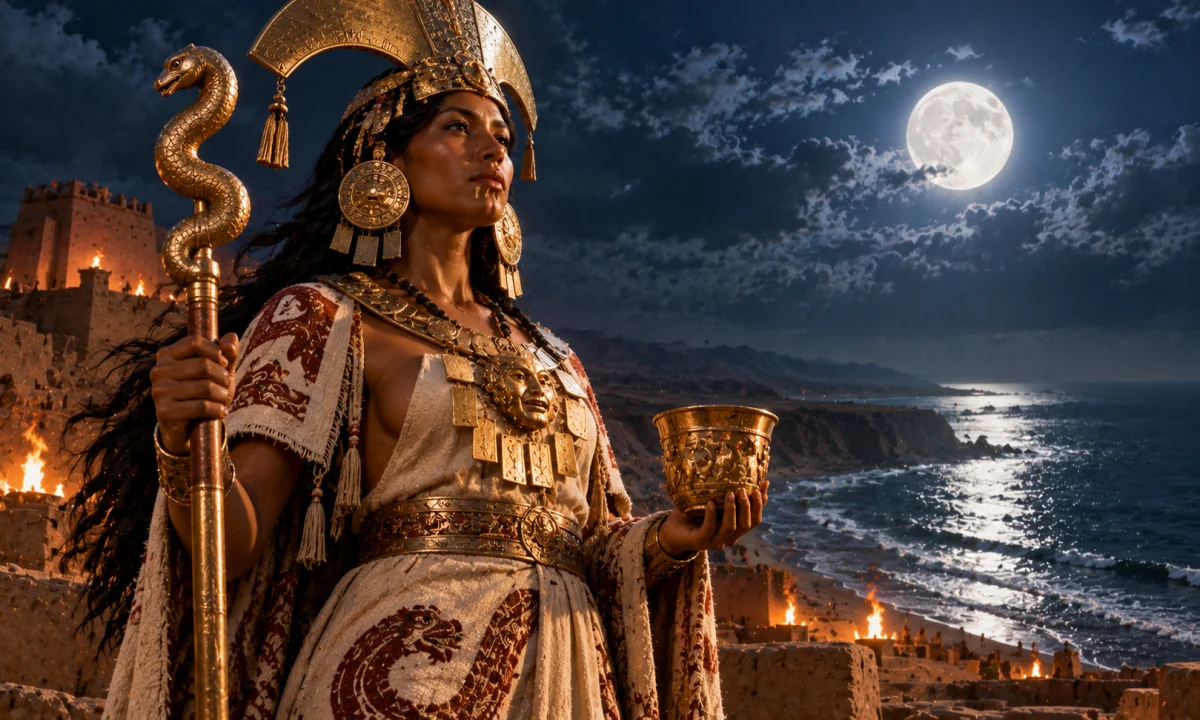
Pachacamac was a major deity and oracle of the central Peruvian coast, worshipped at the large ceremonial centre now known as Pachacamac, south of modern Lima. Although often described as an Inca god, Pachacamac was probably an older coastal divinity whose cult was incorporated into the Inca religious system. His identity, powers and relationship to other creator figures vary between Indigenous traditions, colonial accounts and modern scholarly interpretations.
Origins and cultural setting
The sanctuary of Pachacamac stood in the Lurín Valley, near the Pacific coast of Peru. It became one of the most important pilgrimage centres in the Andes, attracting visitors from many different communities. Its history extended across several centuries and included cultural traditions that predated the Inca Empire.
The earliest major settlement at the site is generally associated with the Ichma or Ychsma tradition, which developed along the central coast after the decline of earlier regional powers. The precise relationship between the name Ychsma and the deity later called Pachacamac is not entirely certain, but colonial sources and archaeological evidence indicate that the site possessed a powerful local religious identity before the arrival of the Incas.
During the fifteenth century, the Inca state brought the central coast into its expanding empire. Rather than erasing Pachacamac's cult, the Inca authorities incorporated the sanctuary into their imperial religious landscape. They constructed or commissioned additional buildings, maintained the pilgrimage network and associated the local deity with wider Andean ideas about creation, authority and the ordering of the world.
Pachacamac therefore belongs to more than one historical context. He was a coastal deity with deep local roots, an oracle consulted by pilgrims and rulers, and a god interpreted through the political and religious framework of the Inca Empire. Treating him simply as an ordinary member of an established Inca pantheon can obscure this complex history.
The name Pachacamac
The name Pachacamac is usually connected with Quechua elements. Pacha can refer to the earth, world, time or the ordered universe, while kamaq may be understood in relation to making, animating, giving form or bringing something into being. For this reason, Pachacamac is often translated as “World Maker,” “Earth Maker” or “He Who Animates the World.”
These translations should be treated cautiously. Andean words can carry several related meanings, and the original religious significance of the name cannot be recovered with complete certainty from a single English equivalent. Some interpretations emphasize creation and animation; others stress the deity's power over the earth and its disturbances. The name may also have been adapted or explained differently by speakers of different languages and by Spanish writers recording Indigenous traditions.
The spelling varies in historical and modern writing. Pachacamac is the most common form in English, while forms such as Pachacámac or Pachacama appear in some sources. These variations do not necessarily indicate different beings.
Identity and classification
Pachacamac is frequently labelled a creator god, but this description does not represent a single, universally preserved doctrine. Several colonial writers presented him as a powerful creator or as a being responsible for the existence and order of the world. Other evidence emphasizes his role as an oracle and as a deity connected with earthquakes, fertility and the forces of the land.
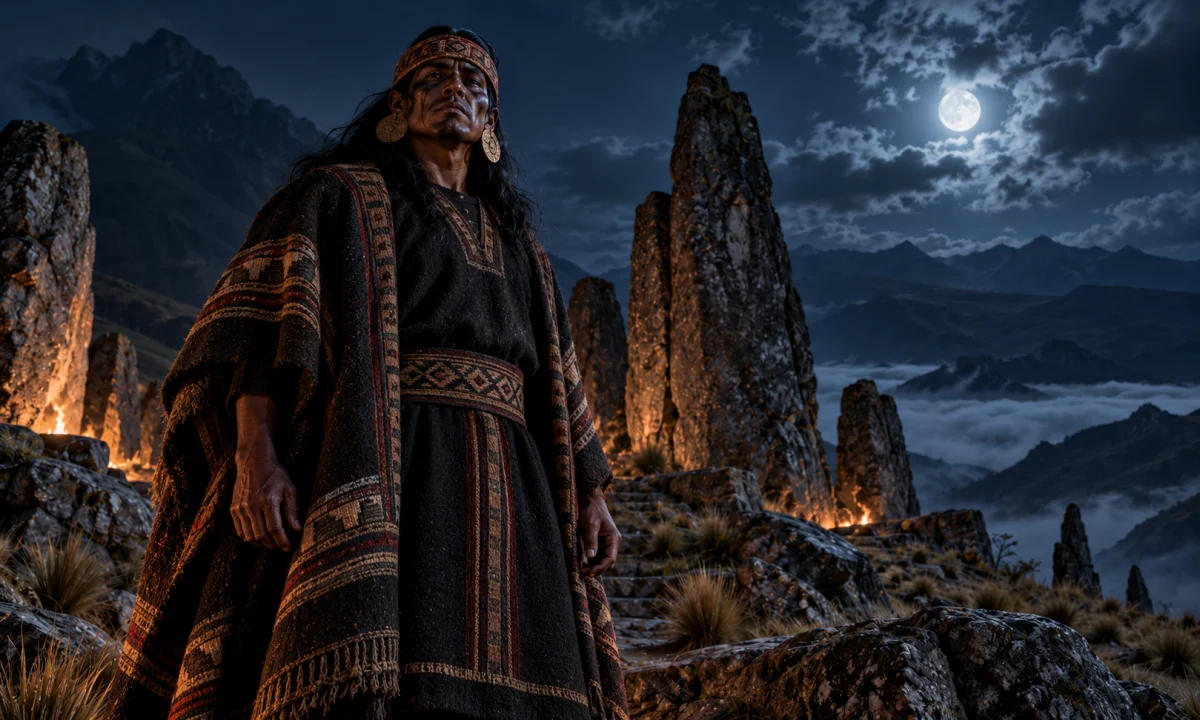
The deity's prominence seems to have rested especially on his ability to reveal hidden knowledge and influence events. Pilgrims travelled to the sanctuary to seek answers concerning illness, harvests, family matters, warfare and political decisions. The god's priests interpreted his responses, probably through ritual procedures conducted in restricted areas of the temple complex. As with many ancient oracles, the exact methods used are not fully known.
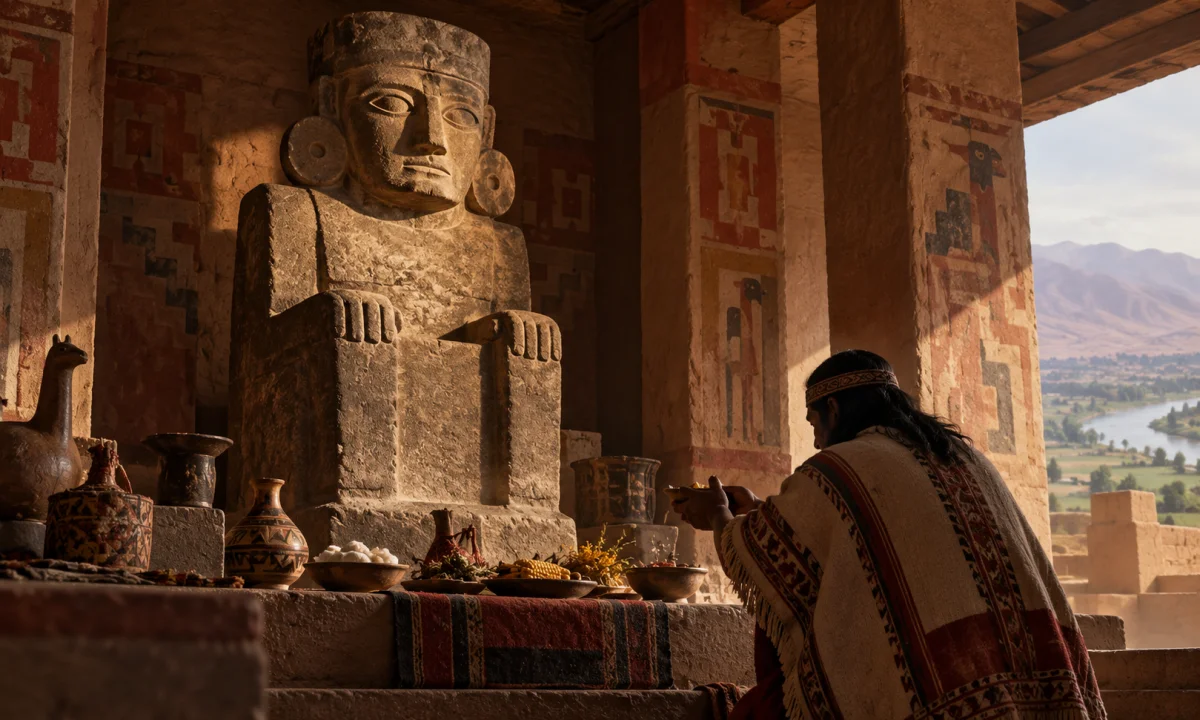
Some Spanish accounts describe a sacred image or idol of Pachacamac housed in the principal temple. These reports were written after the Spanish conquest and were shaped by Christian assumptions about idols and false gods. They are valuable but must be read alongside archaeology and Indigenous traditions rather than accepted as transparent descriptions of the earlier religion.
The sanctuary and the oracle
The ceremonial centre at Pachacamac covered a large area and included temples, pyramidal structures, cemeteries, plazas, storage areas and residential buildings. Its architecture changed over time as different communities controlled or influenced the site. The monumental buildings were not all constructed for the same purpose or during the same period.
The most important structure was the temple associated with the deity, often called the Temple of Pachacamac or the Painted Temple. Other major buildings were added or modified under Inca rule. The site also contained the Temple of the Sun, an Inca construction traditionally understood as dedicated to the solar deity, although its precise ritual functions are interpreted through both archaeology and historical records.
Pachacamac's religious authority extended beyond the immediate valley. Coastal settlements and communities from the highlands participated in networks of exchange and pilgrimage that brought textiles, food, precious objects and other offerings to the sanctuary. The presence of goods from distant regions indicates that the site was not merely a local shrine. It was a place where religious devotion, economic exchange and political power met.
Access to the sacred spaces was probably controlled according to status and ritual role. Ordinary visitors may have approached the outer parts of the complex, while priests, rulers and selected pilgrims entered more restricted areas. This arrangement would have reinforced the deity's mystery and the authority of the specialists who spoke on his behalf.
Attributes and powers
Pachacamac's most consistent attribute was supernatural authority rather than a fixed physical appearance. Unlike some Andean figures represented repeatedly in recognizable human or animal forms, Pachacamac is difficult to define through a single standard iconography. Archaeological objects from the region include human, animal and hybrid imagery, but not every such representation can safely be identified as Pachacamac.
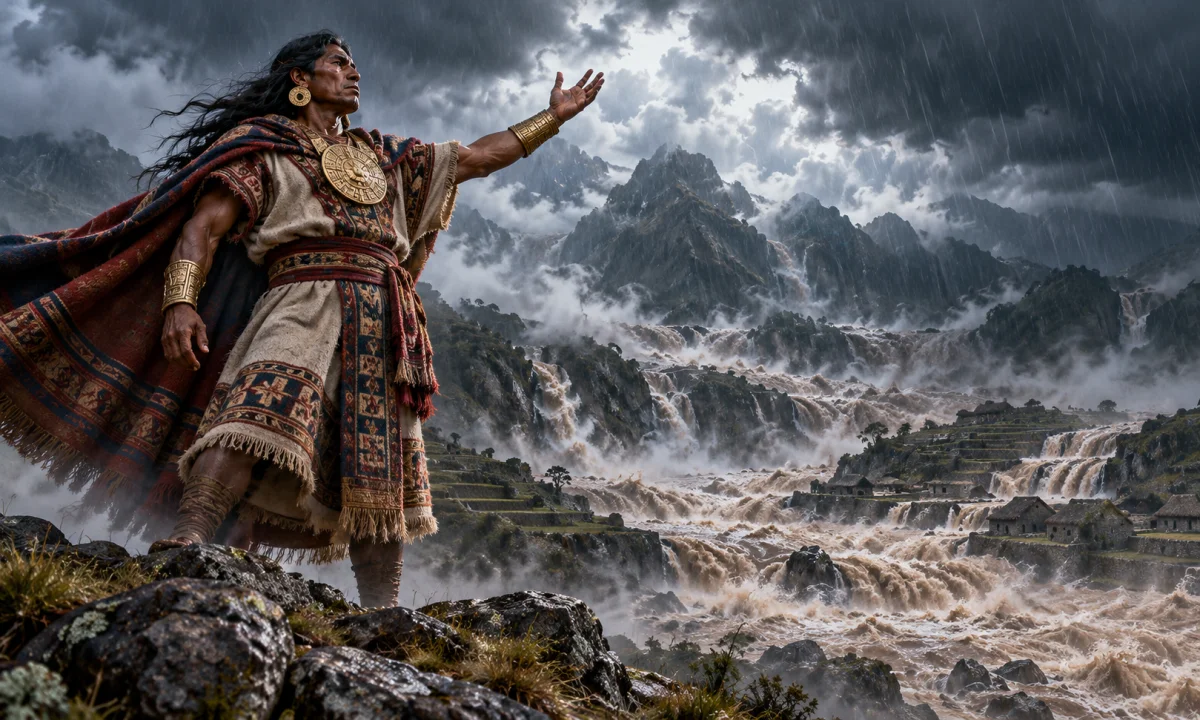
He was associated with the earth and with powerful natural events, especially earthquakes. Earthquakes were a particularly significant force on the Peruvian coast, and a deity whose sanctuary commanded such respect was naturally understood as capable of affecting the land. Some accounts describe people avoiding direct speech about the god or approaching his presence with fear, suggesting that his power was considered dangerous as well as beneficial.
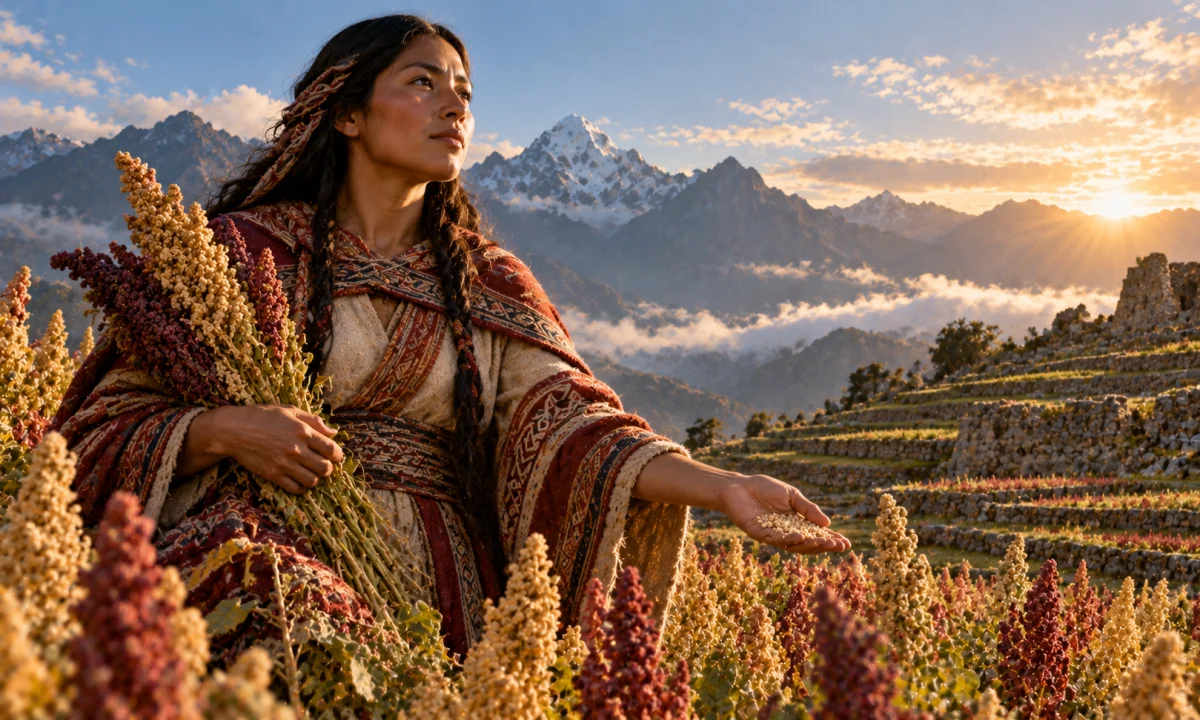
His influence could also be connected with fertility and abundance. In an arid coastal environment, agricultural survival depended on irrigation, seasonal cycles and the availability of water. A deity linked with the vitality of the earth could be asked to protect crops, communities and reproduction. However, evidence does not support reducing Pachacamac to a simple fertility god. His authority was broader and included prophecy, creation and the unpredictable forces of nature.
The deity's hidden or inaccessible character was itself meaningful. The principal sacred image was associated with an enclosed temple, and the god's responses were mediated by priests. This separation between the divine presence and ordinary worshippers helped establish Pachacamac as a power beyond everyday human control.
Stories and relationships with other gods
Surviving stories about Pachacamac do not form one consistent mythology. Much of the evidence comes from early colonial writers who translated, summarized or reorganized Indigenous accounts. These writers often attempted to fit Andean gods into categories familiar from European religious thought, while different Indigenous communities preserved their own versions of events.
In some accounts, Pachacamac appears as a creator or as a powerful being who existed before other divine figures. In others, he is placed in relation to Viracocha, a major Andean creator figure associated especially with the Inca religious world. The two have sometimes been treated as identical, but that identification is not secure. It may reflect theological comparison, political incorporation or the tendency of colonial observers to equate distinct high-ranking gods.
Pachacamac is also connected in certain traditions with Pachamama, the earth mother. Their names share the element pacha, but this linguistic similarity does not prove that they were originally a divine couple. Pachamama is a broad Andean concept associated with the earth, nourishment and reciprocal obligations, while Pachacamac was a specific deity and oracle centred at a particular sanctuary. Some later or regional traditions relate them, but they should not automatically be merged.
The Huarochirí manuscript, an important early colonial record of Indigenous religious traditions from the central Andes, contains stories involving Pachacamac and other powerful beings. These narratives reflect the religious world of the Huarochirí region rather than providing a complete official mythology for every coastal community or for the Inca Empire. They show that Pachacamac could appear in complex relationships involving creation, conflict, kinship and the transformation of the landscape.
Because the manuscript was recorded in a colonial Christian setting and translated through several linguistic stages, individual interpretations remain debated. It is safer to speak of several related traditions than of one authoritative story of Pachacamac.
Pachacamac and the Inca state
The Inca rulers recognized the importance of existing sacred centres. Control over a famous oracle could strengthen imperial authority, provide access to regional elites and demonstrate that the empire respected or had mastered local powers. Pachacamac's incorporation was therefore both religious and political.
Inca officials did not necessarily regard every local deity as identical to an Inca god. They could place regional powers within a larger hierarchy, permit local rituals to continue and add imperial temples beside older sacred buildings. At Pachacamac, this process produced a layered ceremonial landscape in which coastal traditions and Inca state religion coexisted.
The sanctuary's prestige also made it a target during the Spanish invasion. In 1533, Hernando Pizarro led a Spanish expedition to Pachacamac. Spanish accounts describe the destruction or removal of the sacred image and the seizure of valuable offerings. These accounts were written by conquerors who sought to portray the site through the language of idolatry and conquest, so their details must be considered critically. Nevertheless, the episode marks a major rupture in the public worship of Pachacamac.
Archaeological evidence
Archaeology provides evidence for long-term occupation, changing political control and extensive pilgrimage, but it cannot by itself reveal the complete personality of the god. Buildings, burials, offerings, textiles, ceramics and carved objects demonstrate the importance of the sanctuary without supplying a single written theology.
A wooden carved object discovered at the site in the twentieth century has sometimes been identified as the idol of Pachacamac described by colonial chroniclers. Its interpretation remains cautious. The object is important evidence for the ritual history of the sanctuary, but its exact date, original function and relationship to the deity are matters for specialist analysis. It should not be presented as an unquestionably authenticated portrait of Pachacamac.
The archaeological site also preserves evidence of the communities who lived, worked and worshipped there. Their activities show that the sanctuary was not only a temple in a narrow sense. It was a large social institution involving priests, craft workers, administrators, pilgrims and people responsible for food production and storage.
Cultural significance
Pachacamac illustrates how Andean religions were organized around sacred places as much as around portable images or written doctrines. The deity's authority was inseparable from the sanctuary, the landscape and the routes that led pilgrims there. Mountains, valleys, springs, agricultural fields and ceremonial buildings could all participate in a sacred geography.
His cult also demonstrates that religious traditions could survive political change. The site remained important through the rise and fall of regional powers and was adapted by the Inca state without losing its local identity. This continuity should not be mistaken for complete stability: rituals, buildings and interpretations changed over time.
The importance of Pachacamac may also be understood through the Andean principle of reciprocity. Communities offered valuable goods, labour and ritual attention in exchange for protection, prosperity or divine favour. Such relationships were not always peaceful or reassuring. A powerful deity could give life, reveal knowledge and support fertility, while also causing destruction through earthquakes or withholding expected benefits.
Distinguishing Pachacamac from similar figures
- Viracocha: Viracocha is a major Andean creator figure, particularly prominent in Inca-related traditions. Some colonial sources compare or identify Viracocha with Pachacamac, but the two names should not automatically be treated as alternate names for one god.
- Pachamama: Pachamama is associated broadly with the earth, nourishment and fertility in Andean religious life. The shared element pacha does not establish that she and Pachacamac are the same being.
- Inti: Inti is the Inca sun deity. The Inca sanctuary at Pachacamac included a Temple of the Sun, but the presence of that temple does not make Pachacamac a solar god.
- Ychsma: Ychsma refers to a pre-Inca coastal cultural tradition and is also connected in some discussions with the local name of the deity or sanctuary. It is not simply another universally accepted personal name for Pachacamac.
Later reception
After the Spanish conquest, Pachacamac ceased to function openly as the major oracle described in earlier traditions, and the sanctuary fell into decline. Its ruins later became important to archaeology and to the study of Indigenous history in Peru. Excavation and conservation have revealed the scale of the centre and the complexity of the societies that maintained it.
In modern writing, Pachacamac is sometimes presented as a straightforward Inca “god of earthquakes” or as a universal creator deity. Such descriptions preserve part of his traditional profile but can flatten regional differences and the uncertainty of the evidence. A more accurate understanding recognizes Pachacamac as a powerful central-coast deity whose pre-Inca cult was incorporated into the Inca world and whose surviving image is reconstructed from archaeology, colonial records and continuing Andean cultural memory.