WORLD
WORLD
Opochtli
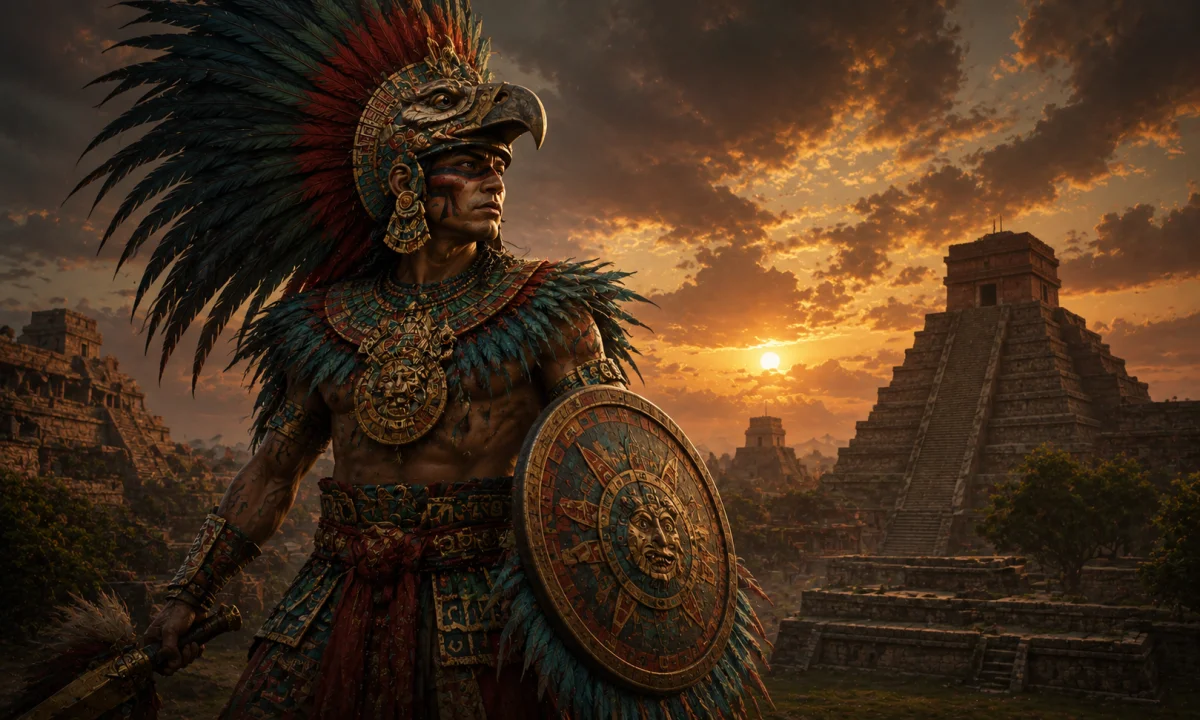
Opochtli is a deity associated with fishing, aquatic resources and the practical skills of life around the lakes of central Mexico. He belongs to the religious world of the Nahua peoples, including the Mexica or Aztecs, and is described in early colonial accounts as one of the water-related beings connected with Tlaloc. Opochtli is especially remembered as an inventor or patron of fishing equipment, nets and related forms of hunting.
Cultural setting
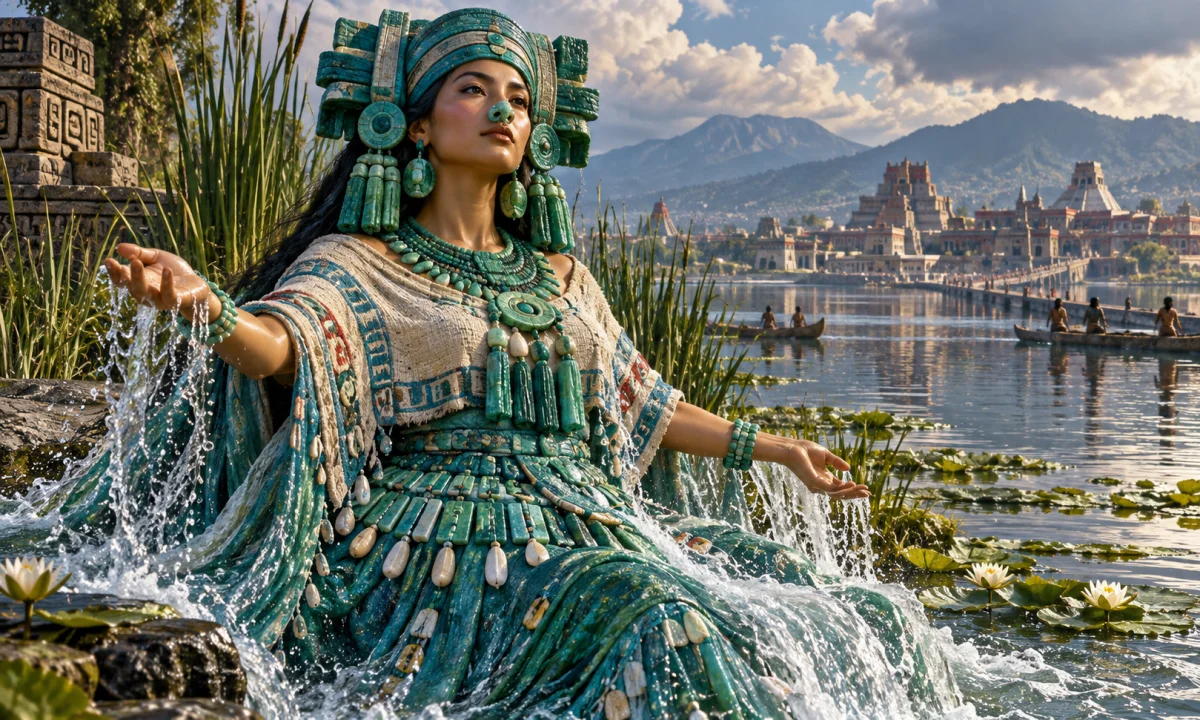
Before the Spanish conquest, much of the Valley of Mexico was shaped by an extensive system of lakes and marshes. The Mexica capital of Tenochtitlan stood on an island in Lake Texcoco, while neighboring communities occupied other islands and shorelines. Fish, aquatic birds, reeds, insects and other wetland resources formed an important part of the economy and diet. Fishing was carried out with nets, spears, hooks and other specialized tools, and the lake environment influenced transport, trade, ritual and social life.
Religious traditions reflected this environment. Water could sustain crops and communities, yet it could also bring storms, floods, disease and destruction. Rain, springs, lakes and the sea were therefore treated as spiritually powerful realms. Tlaloc, the major rain and storm deity, presided over an extensive network of water beings and sacred forces. Opochtli appears within this broader network rather than as an isolated god with a large independent mythology.
The surviving descriptions of Opochtli come mainly from Nahua traditions recorded in the sixteenth century, especially material associated with Bernardino de Sahagún and his Indigenous collaborators. These records were produced after the conquest and through the medium of Christian missionaries, Spanish writing and European assumptions about religion. They remain invaluable, but they do not preserve a complete pre-conquest account in the form of a single, consistent biography. Details can differ according to the manuscript, translation or interpretation.
Name and identity
The name Opochtli is commonly connected with the Nahuatl word for the left side or for a left-handed person. It is often translated as “Left-Handed One” or “He of the Left.” The exact force of the name in religious usage is not certain. A directional name might have carried symbolic significance, but the surviving sources do not provide a full explanation of why the deity received it.
Opochtli is generally classified as a water deity or as one of the beings associated with Tlaloc and the rain deities. Some descriptions treat him as one of the tlaloque, a group or class of water powers connected with Tlaloc. The term can be understood broadly as referring to Tlaloc’s helpers, companions or subordinate water beings, although the organization of these figures is not identical in every source.
Calling Opochtli a “fishing god” is useful but somewhat simplified. The accounts connect him not only with fish but also with the tools and techniques by which people obtained food from aquatic environments. He represents knowledge of nets, lines, traps and other practical technologies. In this sense, his significance lies in the relationship between divine knowledge and human subsistence.
Invention of fishing equipment
The most distinctive tradition about Opochtli concerns invention. Nahua accounts recorded by Sahagún describe him as the one who invented or introduced fishing implements. Translations vary in the exact list of objects, but they associate him with fishing nets, rods, hooks, spears and other equipment used to catch fish. Some accounts also connect him with nets or snares for capturing birds.
This tradition does not necessarily mean that people believed a single supernatural craftsman literally designed every tool used by every fishing community. Mythic “invention” often expresses a sacred origin for a skill or technology. By crediting Opochtli with fishing equipment, the tradition placed practical expertise within a divine order. Fishing was not merely an ordinary occupation; it was an activity whose successful techniques had a sacred precedent.
The story also illustrates how Aztec religious thought could assign divine significance to specialized knowledge. Gods were associated not only with abstract qualities such as war, fertility or death, but also with particular occupations, materials and techniques. A deity connected with fishing could therefore embody both the living waters and the human intelligence required to use them responsibly.
Relationship with Tlaloc and the water powers
Opochtli’s association with Tlaloc is important for understanding his place in Aztec religion. Tlaloc was linked with rain, storms, mountain springs, fertility and the watery forces that made agriculture possible. The tlaloque were often described as a group of powerful beings who controlled or distributed rain and other forms of water. Opochtli’s place among these figures suggests that fishing and aquatic subsistence belonged to the same sacred sphere as rainfall and agricultural fertility.
This relationship should not be understood as proof that Opochtli was simply another name for Tlaloc. The two figures had different identities. Tlaloc was a major deity with a broad cult and distinctive iconography, while Opochtli appears more specifically connected with fishing and the acquisition of food from water. He may be described as a companion, assistant or member of Tlaloc’s divine community, but he remains a separate figure in the surviving traditions.
The water deities were not regarded only as benevolent providers. They could also cause illness, storms, crop failure and drowning. Opochtli’s association with water therefore existed within an ambivalent religious environment. The same lakes and wetlands that supplied fish and birds could be dangerous and unpredictable. Respect, offerings and ritual observance helped establish a proper relationship with these forces.
Ritual and religious significance
Colonial descriptions of Aztec ceremonies mention groups whose livelihoods depended on water, including fishermen and people involved in catching aquatic birds. Such communities had practical reasons to honor water-related deities, and Opochtli’s name appears in connection with this ritual world. The available evidence, however, does not establish a single universally observed festival devoted exclusively to him.
He was more likely encountered as part of a wider pattern of ceremonies for Tlaloc and other aquatic powers. Ritual observances could involve offerings, fasting, prayer, sacred foods, incense, paper ornaments or other forms of participation, but the details recorded for one ceremony should not automatically be assigned to Opochtli alone. The sources frequently describe groups of deities and communities together, making it difficult to separate every individual role.
His importance can also be understood through the idea of reciprocity. People depended on lakes and wetlands, but those environments were believed to belong to powerful beings. Successful fishing was not simply a matter of personal skill. It depended on favorable conditions, the continued vitality of the waters and the maintenance of proper relations with their supernatural owners. Opochtli represented the divine dimension of this exchange.
Appearance and iconography
Opochtli does not possess a securely established and widely recognized visual form comparable to the famous images of Tlaloc or Huitzilopochtli. The surviving evidence does not provide a complete, consistent description of his costume, face, colors or emblem. For that reason, modern illustrations that present him with a standardized appearance should be treated as artistic reconstructions rather than as securely documented Aztec iconography.
Fishing equipment is the most reasonable symbolic association. Nets, rods, hooks, fish spears, traps and captured fish may be used to represent his sphere, especially in educational or contemporary artwork. Such images communicate the role attributed to him in colonial accounts, but they do not demonstrate that these objects formed a fixed iconographic set in pre-conquest temples.
The name’s connection with the left side has sometimes encouraged artists and writers to emphasize left-handedness as a physical characteristic. That interpretation is possible, but it should not be presented as a firmly documented visual attribute. The sources do not establish that Opochtli was always shown holding an object in his left hand or that left-handedness defined his appearance.
Stories and surviving traditions
Opochtli is not known from a long cycle of myths comparable to the stories of the creation of the sun, the birth of Huitzilopochtli or the adventures of Quetzalcoatl. His surviving profile is primarily functional and ritual. He is identified through his connection with water, fishing and the invention of tools rather than through a detailed sequence of battles, marriages or journeys.
This limited mythic record should not be taken to mean that Opochtli lacked importance. Many religious figures are preserved in historical sources only through brief descriptions, prayers, lists of deities or references to particular occupations. The Aztec religious system contained numerous specialized powers whose stories may have been known locally or transmitted orally without being recorded by colonial authors.
It is also possible that information about Opochtli was filtered through the interests of the people questioned by the missionaries. A community of fishermen might emphasize his inventions, while a ritual specialist or a different locality might preserve other associations. Regional variation was a normal feature of Mesoamerican religion, and the Mexica imperial sphere included communities with their own traditions and local sacred landscapes.
Opochtli and the meaning of technology
One of the most revealing aspects of Opochtli is the way his tradition treats technology as sacred knowledge. Fishing tools were not only objects; they embodied an understanding of currents, animal behavior, materials and timing. Nets had to be made and deployed correctly, hooks required appropriate design, and fishing depended on knowledge of the changing lake environment.
Attributing these skills to a deity helped explain why certain techniques worked and why they deserved respect. It also connected individual labor with the larger cosmic order. In Aztec thought, craft and practical knowledge could have divine origins even when they were taught and refined by human communities. Opochtli therefore stands at the meeting point of nature, invention and religious obligation.
His role can be compared with other Mesoamerican traditions in which gods or culture heroes introduce important foods, tools or occupations. Such comparisons must be made carefully, because similar themes do not prove that the figures were identical or that one tradition was copied from another. In Opochtli’s case, the evidence specifically links the divine gift or invention to fishing and aquatic hunting within Nahua culture.
Distinction from similar names and figures
Opochtli is frequently confused with Huitzilopochtli because both names contain the element associated with the left side. They are not the same deity. Huitzilopochtli was the Mexica patron deity of war, rulership, the sun and the Mexica migration tradition. His name is commonly translated in a form such as “Hummingbird of the Left” or “Left-Handed Hummingbird.” Opochtli, by contrast, is associated with fishing, water and aquatic resources.
The shared linguistic element does not establish a shared identity. Nahuatl names could incorporate common words or directional terms in different compounds, just as names in many languages may contain the same element while referring to unrelated people. Claims that Opochtli was a lesser form, alternate name or hidden aspect of Huitzilopochtli are not supported by the main surviving descriptions.
Opochtli should also be distinguished from Tlaloc. Both belong to the realm of water, but Tlaloc is the major rain and storm deity, whereas Opochtli has a narrower association with fishing and the tools used by people who worked in aquatic environments. Nor should he be automatically identified with every local lake, river or fishing spirit in Mesoamerica. Indigenous water traditions were diverse, and names that appear similar across cultures do not necessarily indicate the same being.
Historical interpretation and modern reception
Modern knowledge of Opochtli depends heavily on colonial-era documentation. These records preserve Indigenous testimony but were gathered in a period of religious conflict, when Spanish missionaries aimed to describe and replace local religious practices. Nahuatl concepts were sometimes translated into Christian or classical European categories such as “god,” “idol” or “demon.” As a result, modern readers should distinguish the recorded descriptions from assumptions imposed by the people who wrote them down.
Contemporary writers and artists sometimes portray Opochtli as a fully developed warrior, a ruler of all oceans or a visually standardized fish-man. Those portrayals may be creative interpretations, but they go beyond what the principal historical evidence securely establishes. His traditional profile is more precise and more modest: he is a Nahua water-associated figure connected with fishing, aquatic hunting and the origin of fishing implements.
Opochtli occasionally appears in modern fantasy, games, illustrated mythology and neopagan interpretations of Aztec religion. Such uses belong to modern popular culture and should not be confused with pre-conquest or colonial Nahua tradition. Contemporary Indigenous communities may also engage with ancestral figures in ways that are meaningful in the present, but no single modern interpretation should be treated as representative of all Nahua people or as an unchanged survival of ancient worship.