 WORLD
WORLD
Cherokee mythology
Articles about Cherokee mythology within North America.
Last articles
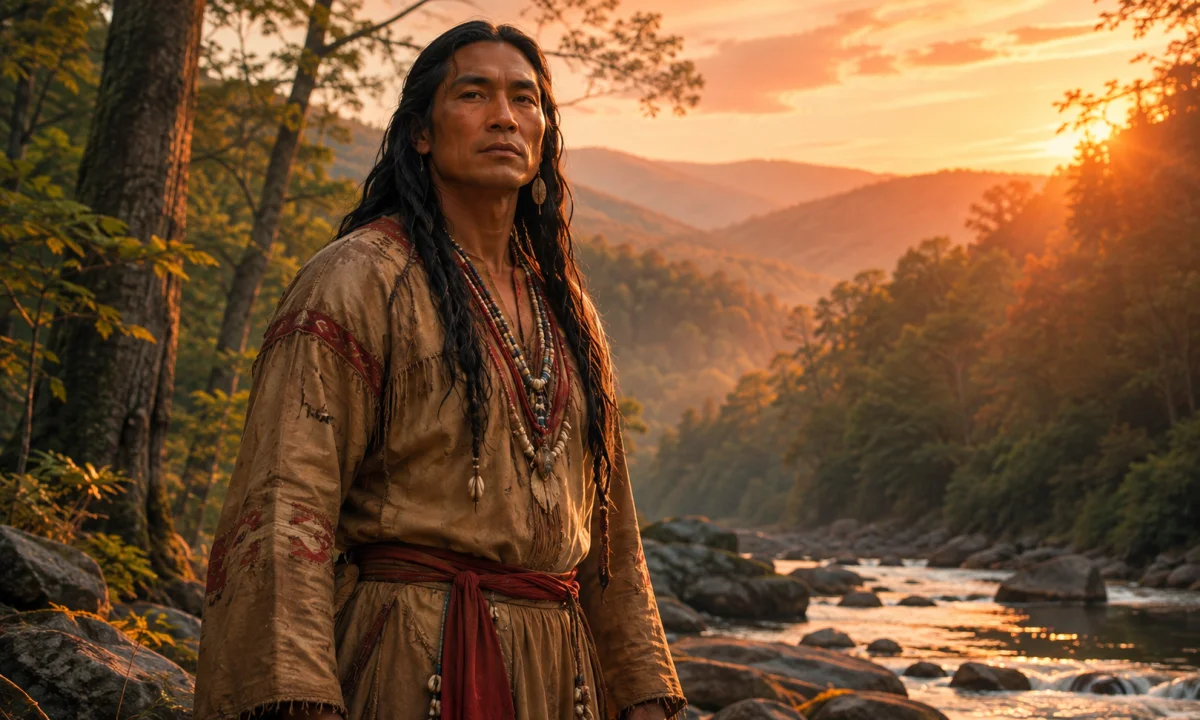
Asgaya Gigagei
Asgaya Gigagei is a name associated with Cherokee tradition and is usually translated into English as “Red Man.” The expression is sometimes presented in modern reference material as the name of a Cherokee god or spirit,…
Blue Jay
Blue Jay is not securely documented as a single major god, spirit, or culture hero in Cherokee mythology. In Cherokee storytelling, the blue jay is better understood as a bird character whose significance can vary from o…
Dayunsi
Dayunsi is a name commonly used in English-language discussions of a Cherokee creation figure identified in Cherokee tradition as a water beetle. In one important earth-diver narrative, Dayunsi dives beneath the primordi…
Enumclaw
Enumclaw is not generally identified as a figure of Cherokee mythology. The name is associated instead with traditions of the Coast Salish peoples of the Pacific Northwest, especially the Puyallup and related communities…
Ew’ah
Ew’ah is a name sometimes presented in modern summaries of Cherokee mythology, but its identity is uncertain. Unlike well-attested figures such as Selu, Kanati, Uktena, Little Deer, or the Raven Mocker, Ew’ah does not ha…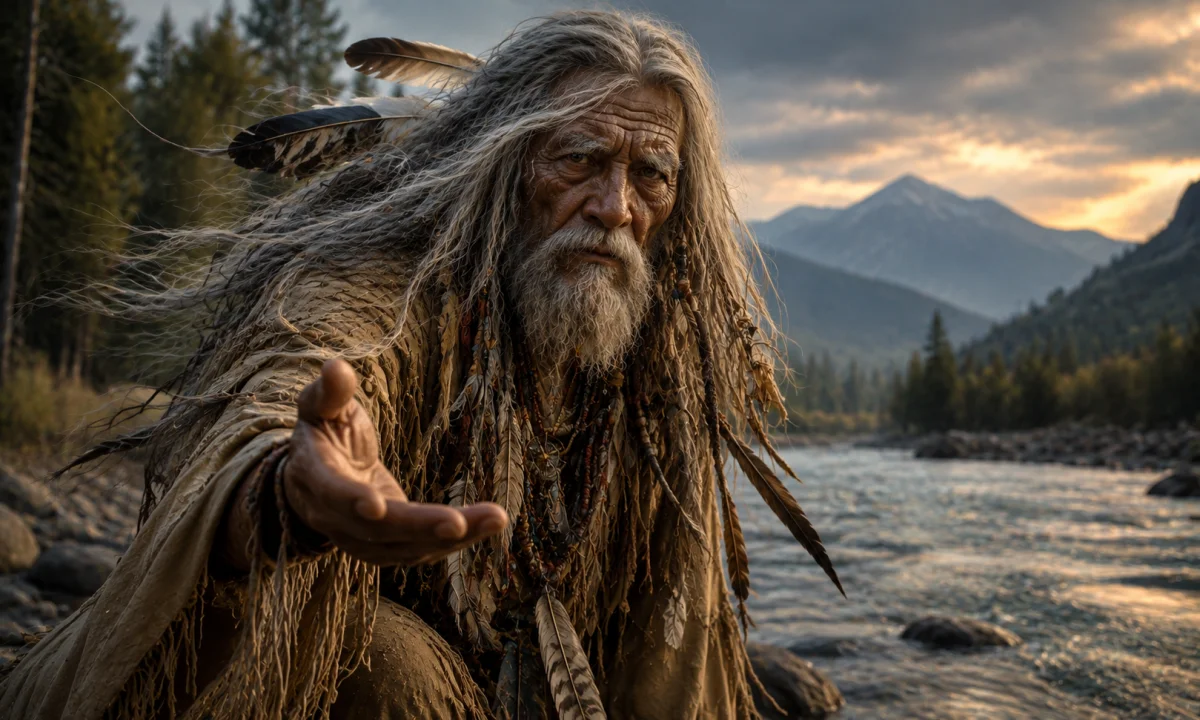
Selu
Selu is a sacred figure in Cherokee traditional narratives, best known as the Corn Mother and the first woman associated with the origin of cultivated corn. Her story explains not only where corn came from, but also why …
Jistu
Jistu is a name used in English-language accounts for the rabbit trickster of Cherokee traditional storytelling. The figure is more accurately understood as Rabbit in Cherokee narratives rather than as a single god with …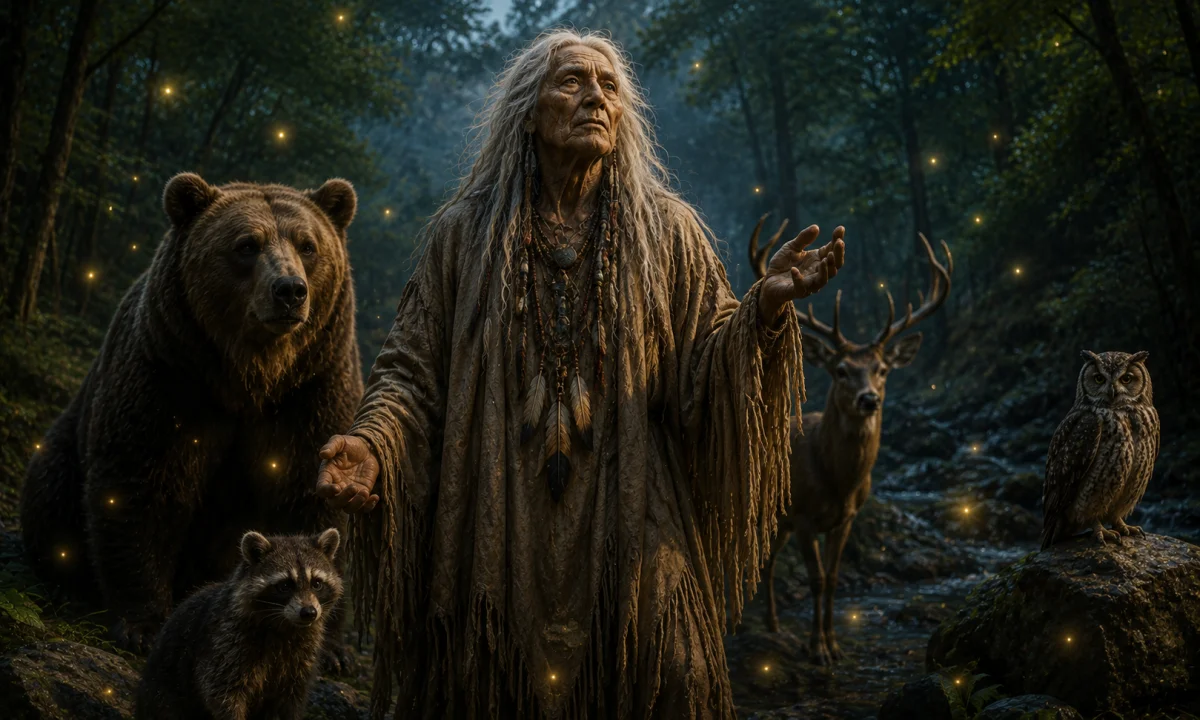
Kananeski Anayehi
Kananeski Anayehi is a name associated in some modern accounts with a hairy or wild people of Cherokee tradition. The name is often presented in English as “hairy people,” “hairy beings,” or “hairy ones,” and the figure …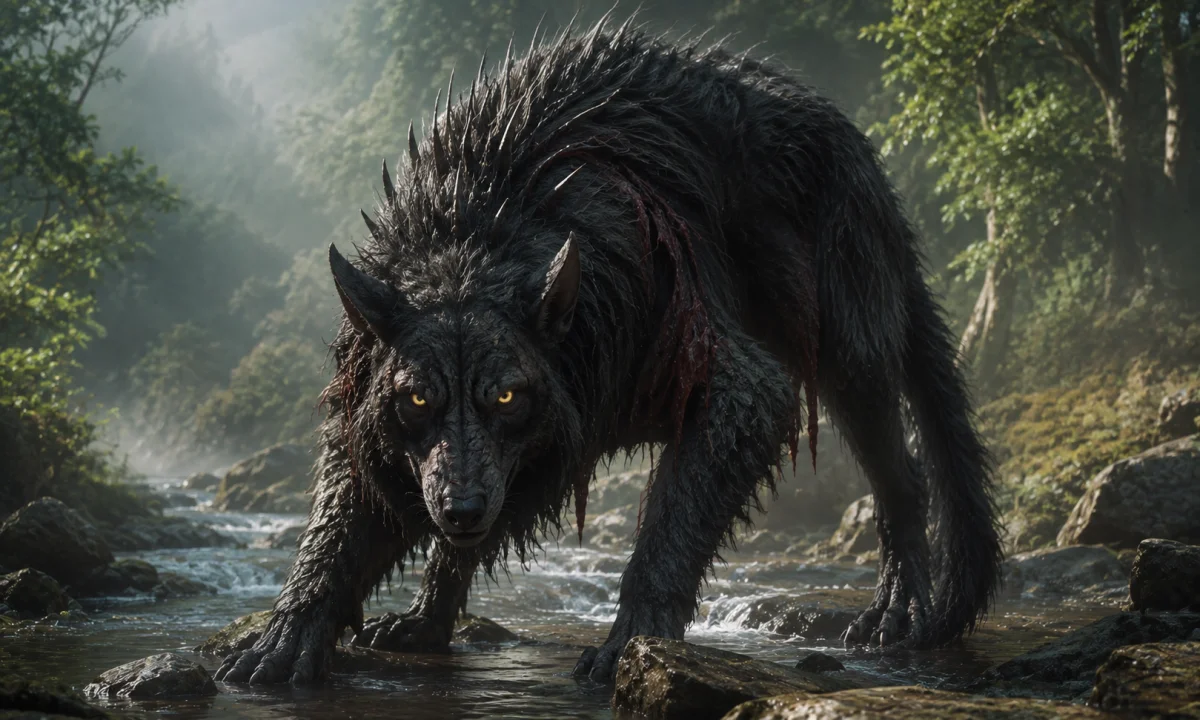
Kanati
Kanati is a figure in Cherokee traditional storytelling, especially in narratives about the origins of game animals, corn and human life. His name is commonly translated as “The Lucky Hunter” or “The Fortunate Hunter.” I…
Ocasta
Ocasta is a name sometimes presented in modern lists of Cherokee mythological beings, but its traditional identity is uncertain. There is no widely accepted Cherokee story, ceremonial account or historical description th…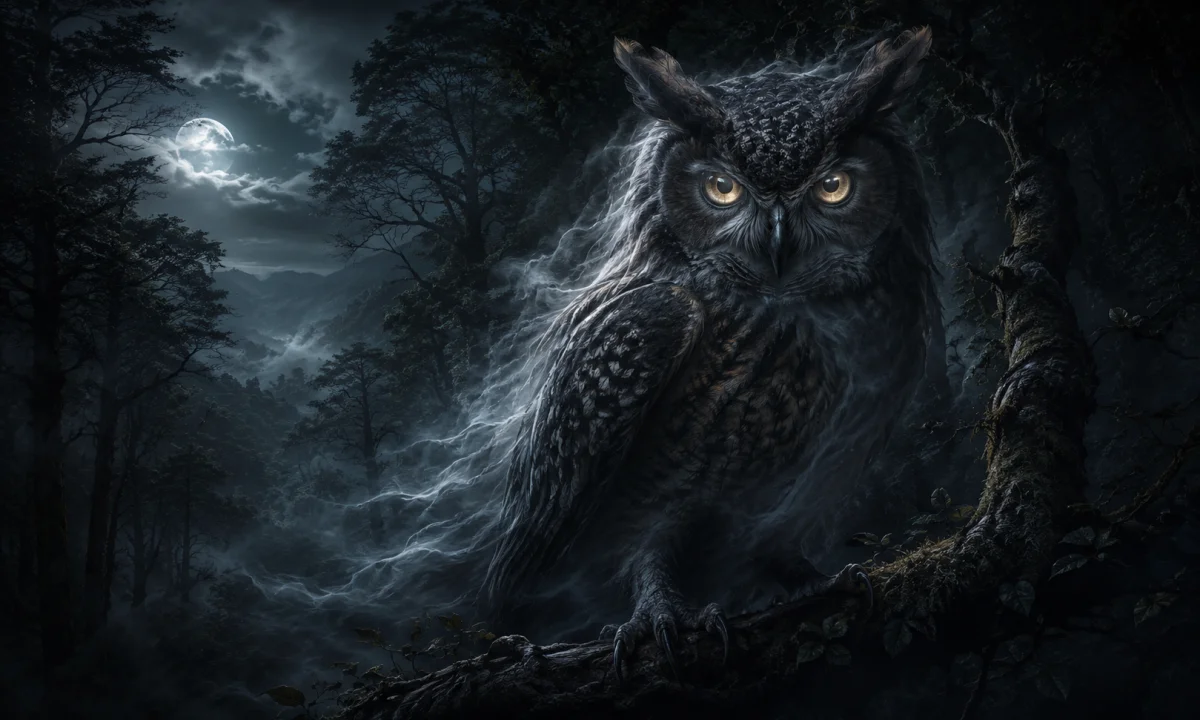
Skili
Skili is a name associated in some English-language accounts with a dangerous owl-like being in Cherokee traditional belief. It is often described as a supernatural owl, or as a witch or harmful spirit appearing in owl f…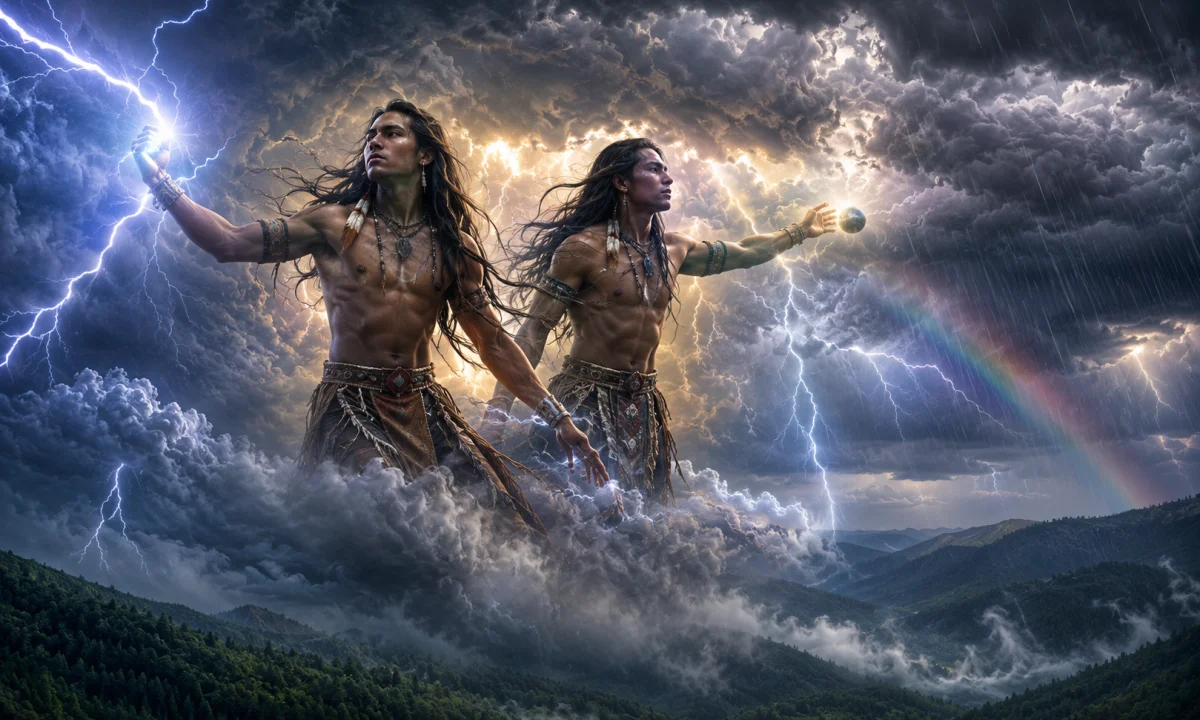
Thunder Twins
The Thunder Twins are often presented in English as a pair of supernatural brothers from Cherokee mythology. The name, however, does not identify one universally fixed Cherokee character comparable to a single, consisten…Cherokee mythology: myths, traditions and legends
Cherokee mythology encompasses the sacred narratives, origin traditions, supernatural beings, ancestral knowledge and ritual concepts of the Cherokee people, an Indigenous nation whose language belongs to the Iroquoian language family. Cherokee homelands historically extended across much of the southern Appalachian region, including areas of what are now North Carolina, Tennessee, Georgia and neighbouring states. Today Cherokee communities include the Cherokee Nation and United Keetoowah Band of Cherokee Indians in Oklahoma and the Eastern Band of Cherokee Indians in North Carolina. Cherokee traditions were transmitted primarily through oral storytelling, ceremonial practice, songs, medicine traditions and community memory rather than through a single canonical scripture. The term mythology is useful in academic discussion, but many of these narratives concern culturally significant relationships among humans, animals, plants, ancestors and sacred powers rather than fictional characters belonging to a vanished religion.
Cherokee tradition should not be treated as interchangeable with the beliefs of other Native American peoples. Popular collections frequently combine stories from unrelated nations into a generic North American mythology, obscuring differences in language, history and religious practice. Cherokee narratives also vary according to community, storyteller and historical period. Some traditions recorded during the nineteenth century preserve older religious concepts, while others reflect centuries of interaction with Christianity and profound political disruption. No single collected version should therefore be assumed to represent every Cherokee understanding.
Oral tradition and historical sources
For most of Cherokee history, sacred narratives and traditional knowledge were transmitted orally. Stories could carry several kinds of meaning at once, explaining features of the landscape, proper relationships with animals, the origins of medicines or the consequences of violating social expectations.
One of the largest early written collections was made by ethnographer James Mooney during the late nineteenth century. His recordings preserve many narratives told by Cherokee informants, including creation traditions, stories of supernatural beings and explanations of ritual practices.
These collections are invaluable but must be interpreted carefully. They were produced after generations of colonial pressure, missionary activity, forced removal and political division. English translations can also flatten Cherokee concepts for which there is no exact equivalent.
The development of the Cherokee syllabary by Sequoyah in the early nineteenth century created new possibilities for Cherokee-language literacy, but written texts did not replace the importance of oral transmission and ceremonial knowledge.
The world before the earth
A widely recorded Cherokee creation tradition describes the earth as originally covered entirely by water. Animals inhabited a world above and eventually sought a place where they could live below.
A small water creature, commonly identified in English as Water Beetle, descends beneath the surface and reaches the mud at the bottom. It brings some of this material upward, and the mud spreads until it forms the earth.
The land is sometimes described as hanging or suspended within a larger cosmic structure. Such imagery belongs to Cherokee cosmology and should not be converted into a modern scientific description of the physical universe.
Different versions emphasise different participants and details, illustrating the normal variation of oral tradition.
The Great Buzzard and the mountains
Another part of the creation tradition explains the mountainous landscape of Cherokee country through the actions of a great buzzard.
When the newly formed earth is still soft, the bird flies over it. As its wings rise, valleys form beneath them, while the downward movements create mountains and ridges.
The story connects the distinctive geography of the southern Appalachians with the primordial actions of animals. Landscape is therefore not simply the setting of Cherokee mythology; geographical features can themselves preserve sacred history.
Animals as participants in creation
Animals play unusually prominent roles in many recorded Cherokee narratives. They are not merely symbolic decorations around human stories but intelligent participants in the ordering of the world.
Birds, mammals, reptiles and smaller creatures can hold councils, speak, make decisions and acquire lasting characteristics through actions in primordial time.
Such narratives should not be interpreted as evidence that Cherokee people believed ordinary animals were secretly humans in disguise. They express a relational world in which humans and other living beings possess responsibilities toward one another.
The origin of fire
Cherokee traditions also preserve stories explaining how animals obtained fire. In a well-known version, fire exists across the water after lightning strikes a tree, and different animals attempt to retrieve it.
Several larger or more conspicuous animals fail and acquire physical characteristics associated with their unsuccessful attempts. Eventually a small water spider succeeds by carrying a coal safely across the water.
The narrative reverses ordinary expectations about strength. The creature that brings a transformative resource to the world is not necessarily the largest or most powerful.
As with many traditional tales, the surviving versions differ in details, and the story should not be reduced merely to an entertaining animal fable.
Kanati and Selu
Kanati and Selu are central figures in one of the most important Cherokee origin traditions. Their names are conventionally associated with the Lucky Hunter and Corn, linking them with hunting and cultivated food.
Kanati possesses extraordinary access to game animals, while Selu mysteriously produces corn and other food. Their children become suspicious and investigate the sources of these resources.
The consequences of their actions permanently alter human life. Animals escape and must thereafter be hunted rather than simply obtained, while agriculture becomes dependent upon human labour.
The story explains both hunting and maize cultivation through a sacred narrative about the loss of an earlier abundance.
Selu and the origin of corn
Selu occupies an especially important place in traditions concerning the origins of maize. When her sons discover the extraordinary manner in which she produces food, they become afraid and decide that she must die.
Before her death, Selu gives instructions connected with the future growth of corn. The precise actions and sequence differ among recorded versions, but her death becomes associated with the establishment of agricultural production.
This narrative should not be reduced to the generic label of a vegetation goddess sacrificed so crops can grow. Selu belongs to a specifically Cherokee tradition involving kinship, disobedience and the transformation of the conditions under which humans obtain food.
Hunting and the masters of animals
Traditional Cherokee relationships with animals included religious as well as practical dimensions. Hunting required knowledge, restraint and forms of respect toward the creatures being killed.
Some narratives describe powerful supernatural beings who control or protect particular animals. The hunter therefore does not simply dominate wildlife but enters a relationship governed by spiritual as well as ecological expectations.
Successful hunting could depend upon correct conduct, while careless killing might have consequences extending beyond the immediate hunt.
This framework helps explain why animals appear so frequently as intelligent and morally significant beings in Cherokee storytelling.
Tsul 'Kalu
Tsul 'Kalu is a powerful figure in Cherokee tradition associated especially with game animals, hunting and the mountains. His name is commonly translated in forms referring to his slanting or sloping eyes, although English spellings vary.
He is often described as an enormous supernatural being who controls or protects animals of the hunt. Traditions connect him with particular places in the Cherokee landscape, especially in western North Carolina.
Later writers frequently classify Tsul 'Kalu simply as a giant. His large size is an important characteristic, but his relationship with hunting and territory gives him a much more specific cultural identity than the generic giants of modern fantasy.
Thunder and the Thunder Beings
Thunder and lightning possess sacred significance in Cherokee cosmological tradition. Recorded stories describe powerful Thunder Beings associated with storms and the upper regions of existence.
Thunder is not simply personified as one god equivalent to thunder deities from European mythology. Cherokee accounts involve a more complex supernatural category whose characteristics vary among traditions.
Storms can be destructive, but rain is also essential to agricultural life. The beings associated with these phenomena therefore belong to a system of relationships rather than a simple division between benevolent and hostile supernatural powers.
Uktena
Uktena is one of the most formidable beings in recorded Cherokee tradition. It is usually described as a great horned serpent possessing extraordinary supernatural power.
Accounts connect Uktena with a brilliant stone or crystal associated with its head. Acquiring such an object could bring exceptional power but also enormous danger.
Horned serpents occur in traditions of several Indigenous peoples of eastern North America, providing important opportunities for comparison. The Cherokee Uktena should nevertheless not be collapsed into every other Native American serpent being or described simply as a dragon.
Its identity belongs to a specific Cherokee religious and narrative environment.
The Little People
Cherokee traditions describe supernatural beings commonly translated into English as the Little People. They are associated particularly with remote natural places such as mountains, rocks and forests.
Stories portray them as beings who may help humans, punish disrespect or remain hidden from ordinary perception. Their relationships with people depend strongly upon behaviour and circumstance.
The English expression can invite comparison with European fairies, but the similarity in size does not make the traditions equivalent. Cherokee Little People have their own relationships with landscape, community and sacred power.
The Nunnehi
The Nunnehi are supernatural or immortal beings recorded in Cherokee tradition, often associated with mountains and other places outside ordinary human settlements.
Stories sometimes portray them as protective toward Cherokee people, offering refuge or assistance in moments of danger. They can resemble humans while belonging to another order of existence.
Because nineteenth-century English translations occasionally compared such beings with European fairies, later popular culture sometimes treats the Nunnehi as a Cherokee fairy race. That comparison can obscure their specific place within Cherokee landscape traditions.
Witches and dangerous supernatural power
Cherokee folklore includes traditions concerning people or beings who use spiritual power in harmful ways. English sources often translate these figures with the broad term witch, although Cherokee classifications do not necessarily correspond exactly to European witchcraft traditions.
One particularly feared figure in later recorded folklore is the Raven Mocker, associated with the death of vulnerable or seriously ill people.
Such beings belong to traditions concerning dangerous spiritual action rather than to a formal pantheon of evil supernatural creatures. Their stories also illustrate the difficulty of translating culturally specific concepts through Christian and European terminology.
Disease and the revenge of animals
A particularly striking Cherokee narrative explains the origins of disease through the damaged relationship between humans and animals.
According to recorded versions, animals become angry because humans kill them excessively or without proper respect. Different animal groups decide to inflict particular diseases upon humanity.
The plants, however, take compassion on humans and provide medicines capable of treating the illnesses created by the animals.
The story connects healing knowledge with an ethical relationship between humans and the non-human world. Illness, medicine and environmental responsibility are therefore bound together within one sacred narrative.
Plants and medicine
Plants occupy a significant position within Cherokee healing traditions. Medicinal knowledge historically involved detailed understanding of local environments together with ritual and spiritual dimensions.
A plant's usefulness could involve more than its physical properties. Gathering, preparation, prayer and the relationship between healer and patient might all matter within traditional practice.
It is misleading to separate Cherokee medicine completely into either herbal science or supernatural ritual. Traditional systems could integrate empirical knowledge of plants with spiritual interpretations of sickness and healing.
Going to water
Water has important purifying and ceremonial roles in Cherokee religious tradition. A practice often described in English as going to water involves entering or approaching running water in a ritual context.
Such observances may be connected with purification, prayer, preparation for important activities or the restoration of balance.
Recorded traditions show that rivers and streams were not merely practical resources but places where relationships with sacred power could be renewed.
Details vary between communities and ceremonial contexts, and living religious practices should not be reduced to an ancient mythological custom.
Sacred numbers and directions
Numbers and directions possess important symbolic roles within Cherokee ceremonial traditions. Four frequently appears in association with the cardinal directions, while seven also has important ritual and social associations.
Directions can be connected with colours and particular qualities in traditional systems, although exact correspondences should be taken from specific ceremonial contexts rather than assembled from modern pan-Indigenous charts.
Numerical symbolism appears in prayers, repetitions, ceremonial movements and narratives, linking ritual order with the structure of the world.
The Green Corn Ceremony
Agricultural cycles were marked by important communal ceremonies, particularly traditions associated with the ripening of corn. The Green Corn Ceremony involved renewal, purification, communal relationships and thanksgiving for the crop.
Specific ceremonies changed across historical periods and communities, and Green Corn traditions are also found among several other Indigenous peoples of the Southeast.
The shared importance of maize reflects long histories of cultural contact and agricultural life rather than proof that every southeastern nation followed an identical religious system.
The ballgame and ritual preparation
Traditional Cherokee stickball was more than a recreational sport. Historical accounts describe elaborate preparation involving fasting, medicine, ritual specialists and purification.
Games could carry significant social and political importance and were sometimes used in contexts of rivalry between communities.
The spiritual dimensions of stickball demonstrate that the modern distinction between religion, sport and politics does not always fit traditional Cherokee institutions neatly.
The dead and the spirit world
Cherokee traditions concerning death include ideas about spirits continuing beyond bodily life and about dangerous encounters between ordinary people and beings associated with death.
Recorded stories distinguish different kinds of supernatural presence rather than presenting one uniform category equivalent to the European ghost.
Burial, mourning and remembrance changed considerably under Christian influence, and surviving accounts from different periods should not be combined into one fixed Cherokee doctrine of the afterlife.
The world of the dead is part of a broader cosmology involving relationships among different levels and regions of existence rather than a simple heaven-and-hell structure.
Christianity and religious change
Christian missions became increasingly influential among Cherokee communities during the eighteenth and nineteenth centuries. Baptists, Methodists, Moravians and other denominations established congregations, and many Cherokee people adopted Christianity.
Conversion did not simply erase older religious concepts. Traditional ceremonies, healing practices and narratives continued in various forms, while Christian ideas could be interpreted through Cherokee language and cultural categories.
Some modern Cherokee communities maintain ceremonial traditions alongside Christianity, while others identify primarily with Christian denominations. Cherokee religious life has therefore never followed one uniform path.
Removal and cultural disruption
During the nineteenth century, United States expansion placed catastrophic pressure on Cherokee communities. The forced removal commonly known as the Trail of Tears displaced most Cherokee people from their southeastern homelands to Indian Territory in the 1830s, while some Cherokee remained in the Southeast.
Removal fractured communities and altered relationships with sacred landscapes that had carried generations of traditional narratives.
Despite this disruption, oral traditions, ceremonies, language and community knowledge continued both in Oklahoma and among Cherokee communities remaining in the ancestral Southeast.
Landscape, memory and sacred geography
Many Cherokee narratives are inseparable from the southern Appalachian landscape. Mountains, rivers, caves, rock formations and particular settlements can be associated with supernatural beings or events remembered through oral tradition.
Figures such as Tsul 'Kalu and the Nunnehi are meaningful partly because they inhabit specific landscapes rather than an abstract mythological universe detached from Cherokee territory.
Place-based narratives can preserve historical memory, clan relationships and moral instruction at the same time. Removing a story from its geographical setting may therefore remove part of its meaning.
Modern retellings and common misconceptions
Cherokee mythology is frequently distorted by modern pan-Native storytelling that attributes beliefs from unrelated peoples to the Cherokee. Concepts such as a universal Native American Great Spirit, fixed spirit animals or generic medicine men can conceal the distinctive vocabulary and history of Cherokee religion.
Likewise, Uktena is not simply a Cherokee dragon, the Little People are not European fairies, and Tsul 'Kalu is more than a generic giant. Comparisons may help readers recognise broad narrative patterns, but they should not replace Cherokee cultural categories.
Stories recorded by nineteenth-century folklorists also should not be assumed to represent a religion frozen before European contact. Cherokee tradition has continued through removal, Christianisation, political change and language revitalisation, and contemporary Cherokee communities remain the primary cultural heirs of the narratives, ceremonial knowledge and sacred landscapes from which these traditions developed.