WORLD
WORLD
Nemglan
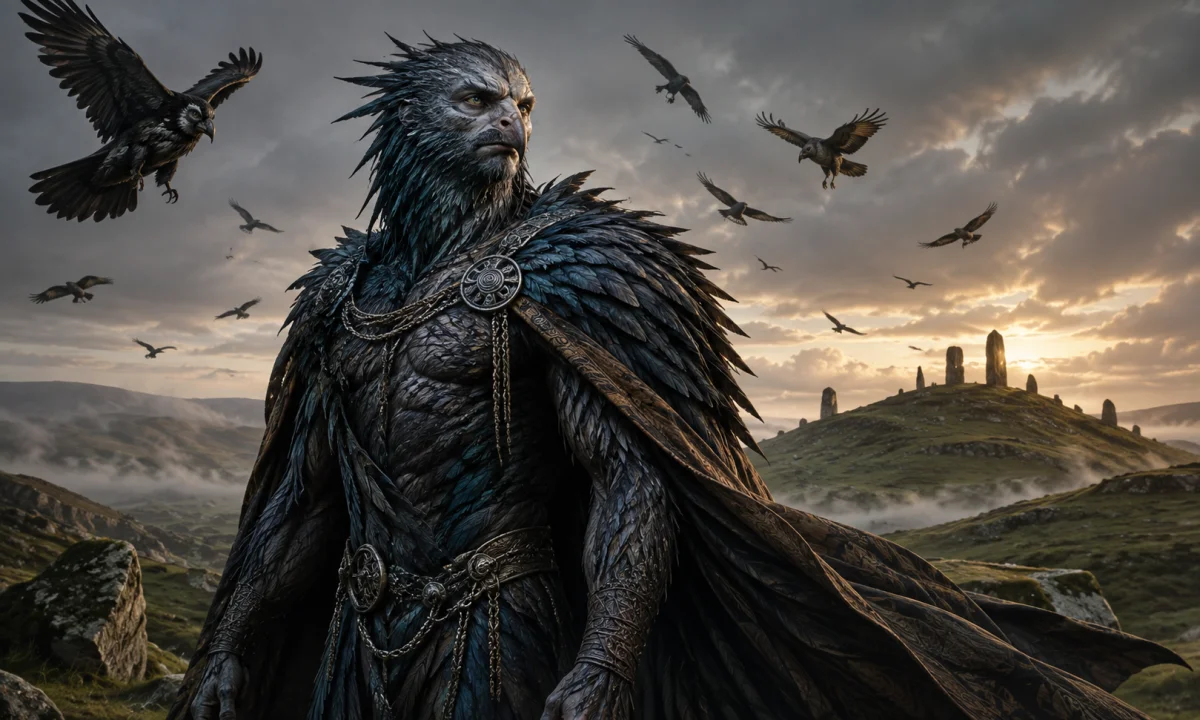
Nemglan is an obscure figure associated with Irish mythology and, above all, with the Ulster Cycle. He is generally described as a supernatural bird-being or as a ruler of birds. His most important connection is with the origin story of Cú Chulainn, although the surviving medieval material does not preserve a single, consistent account of his identity. In some interpretations Nemglan is a distinct supernatural father of the hero; in others, his role overlaps with or may be confused with that of Lugh, one of the great gods of Irish tradition.
Origins in Irish tradition
Nemglan belongs to the world of early Irish heroic and mythological literature rather than to a clearly organised pantheon. The stories in which he appears were written down by Christian scribes during the medieval period, probably from older oral and literary traditions. These texts combine heroic legend, supernatural motifs, genealogical claims and memories of pre-Christian religious ideas. As a result, figures such as Nemglan cannot always be classified neatly as either “gods” or “characters” in the modern sense.
His name is connected primarily with traditions surrounding the birth of Cú Chulainn. These traditions survive in medieval accounts commonly known by titles translated as The Conception of Cú Chulainn or The Birth of Cú Chulainn. The stories exist in variant forms, and details differ between versions. Some accounts name Lugh as the divine father of Cú Chulainn, while others introduce a bird-like supernatural being identified as Nemglan. The relationship between these figures is not explained consistently enough to establish a single definitive interpretation.
Nemglan is therefore best understood as a figure of uncertain identity within a group of related conception and birth traditions. He is not as fully developed in the surviving literature as Lugh, the Morrígan, or the Dagda. There is no extensive cycle devoted to him, and most of what is known about him depends on brief or difficult passages connected with another hero.
The name Nemglan
The meaning and grammatical history of Nemglan are not completely secure. The first element may be associated with nem, a word connected in Old Irish with heaven, sky or the upper air, while glan can suggest cleanness, brightness or purity in later Irish usage. Such an interpretation might produce a meaning resembling “bright sky” or “clear heaven,” but this should be treated as a proposed reading rather than an established translation.
Names in early Irish literature can be altered by scribal transmission, dialect, grammatical context and later editorial interpretation. A name that appears only rarely is especially difficult to analyse. The resemblance between Nemglan and other names in Irish mythology has also encouraged speculation, but similar sounds do not prove that the figures are related.
Nemglan should not automatically be equated with Nemain, one of the supernatural war figures associated with the Mórrígan. Nemglan is also distinct from Nemed, the ancestral leader of an early people in the mythological tradition, and from Nechtain, a name borne by several figures in Irish legend. These names may look similar in English transliteration, but they belong to different traditions and narrative roles.
Nemglan as a bird-being
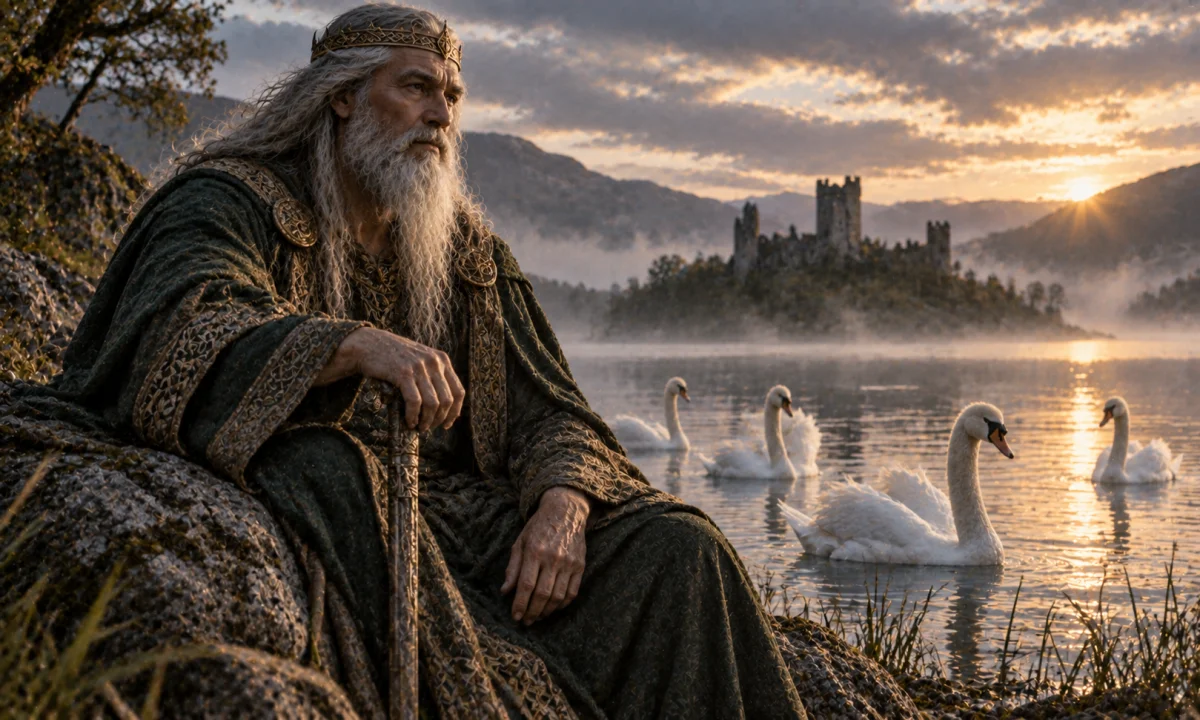
The most distinctive feature associated with Nemglan is his relationship with birds. He is often called a bird-man or a king of birds. The expression does not necessarily mean that he is simply an ordinary human who wears feathers or changes shape. In Irish mythology, birds can act as messengers, omens, supernatural lovers, hostile spirits or manifestations of otherworldly power. A bird-being may therefore stand at the boundary between the human world and the Otherworld.
Birds are particularly important in stories of transformation and divine contact. Their ability to move between earth and sky gives them a natural connection with prophecy, freedom, warfare and the passage between worlds. Flocks of birds can also signal the presence of an Otherworldly force. In heroic narratives, an apparently ordinary encounter with birds may lead a character into a supernatural adventure or reveal a hidden ancestry.
Nemglan’s title as a ruler or leader of birds places him within this symbolic landscape. It suggests authority over a supernatural flock rather than a clearly defined kingdom with borders and institutions. The title may also indicate that he is a being of the air, a divine visitor or a spirit capable of appearing in avian form. The surviving material does not provide a stable description of his face, clothing, weapons or physical body.
Claims that Nemglan possessed a particular feathered appearance, a fixed animal form or a set of magical powers beyond his association with birds should be treated cautiously. Later summaries sometimes turn brief medieval references into a more elaborate character profile than the original tradition supports.
Connection with the birth of Cú Chulainn
Cú Chulainn’s conception is told in several different ways. The hero’s mother, Deichtine, is closely connected with Conchobar mac Nessa, king of Ulster, and with the royal household of Emain Macha. In one group of traditions, Deichtine and her companions encounter supernatural birds and are drawn into an otherworldly episode. The boundaries between dream, vision and physical event are deliberately unclear.
In versions that mention Nemglan, he is associated with the supernatural circumstances surrounding Deichtine’s pregnancy. His role has led some interpreters to describe him as Cú Chulainn’s biological or divine father in that strand of the tradition. However, other versions identify the father as Lugh, the radiant and versatile god of the Túatha Dé Danann. Lugh is also strongly connected with Cú Chulainn’s ancestry and is often presented as the hero’s divine father.
The relationship between Nemglan and Lugh remains uncertain. They may represent separate figures preserved in different narrative traditions. Nemglan may also be an alternative name, title or transformed aspect in a particular version of the story. Another possibility is that scribes or later tellers placed related supernatural figures into overlapping roles. The evidence is too limited to decide confidently among these explanations.
Some accounts of Cú Chulainn’s birth include a bird or a group of birds as the immediate supernatural sign. In Irish storytelling, such an appearance can function as a declaration of otherworldly paternity. The birds do not merely decorate the scene: they mark the pregnancy and the future hero as belonging partly to a realm beyond ordinary human descent.
Cú Chulainn’s later career reinforces this liminal ancestry. He is a human warrior, but he possesses extraordinary strength, speed, skill and rage. His famous battle transformation turns him into a frightening and unnatural figure, with distorted features and a body that no longer conforms to normal human appearance. His supernatural parentage helps explain why the hero repeatedly crosses the boundaries between human, divine and monstrous states.
Relationships with Deichtine and Lugh
Deichtine is not simply a passive recipient of supernatural events. In the Ulster traditions she is a member of the ruling household, a capable organiser and a person whose actions affect the succession and identity of the hero. Stories of her pregnancy use familiar mythological themes: a woman encounters a mysterious visitor, receives a supernatural message, or becomes connected with an Otherworldly being whose identity is difficult to determine.
If Nemglan is treated as a distinct father figure, his relationship with Deichtine belongs to this pattern of divine or otherworldly conception. The surviving material does not develop a long-term marriage between them or provide a detailed biography of Nemglan. There is no firm evidence for a separate romance, household or lineage associated with the pair.
Lugh’s connection with Cú Chulainn is much more securely established in Irish heroic tradition. Lugh is a major member of the Túatha Dé Danann, renowned for his skill in many arts and for his role in the battle against the Fomorians. Cú Chulainn is sometimes described as his son, and Lugh later appears to the wounded hero during the events of the Táin Bó Cúailnge. Because Lugh already fulfils the role of divine father in important versions, Nemglan’s appearance has generated uncertainty rather than a universally accepted genealogy.
Religious and symbolic significance
Nemglan offers a glimpse of how older religious ideas could survive within medieval heroic literature. He is not presented through a formal account of worship, temple practice or priesthood. No reliable evidence shows that Nemglan had a widespread cult or that communities historically devoted rituals specifically to him. His importance is literary and mythological rather than securely documented as an independent religious tradition.
His bird associations nevertheless have religious significance in the broader context of Irish mythology. Birds frequently belong to the Otherworld and can carry messages between supernatural and human beings. Their presence may indicate that a person’s apparent identity is incomplete: a human figure may have divine ancestry, or a familiar animal may conceal a supernatural person.
Nemglan’s possible role in Cú Chulainn’s conception also reflects the heroic theme of mixed ancestry. Great heroes are often born from a meeting between an ordinary human family and a supernatural power. This pattern does not merely grant the hero magical abilities. It explains why the hero is socially important, why unusual events surround his birth and why he can act as an intermediary between different worlds.
The bird imagery may additionally contrast with Cú Chulainn’s later identity as a champion of the land. Nemglan belongs to the sky and the Otherworld, while Cú Chulainn becomes the defender of Ulster, its king and its territory. The hero’s supernatural origin and earthly duty are held together in tension throughout the Ulster Cycle.
Sources and limits of the evidence
Knowledge of Nemglan comes from medieval Irish manuscript tradition, not from a surviving pre-Christian text written by the communities who originally told these stories. The manuscripts preserve multiple versions, and the language of the earliest copies can be difficult to interpret. Scribes sometimes copied older material with changes in wording, structure or emphasis.
For that reason, statements about Nemglan should distinguish between what the texts explicitly say and what later scholars infer. The direct evidence supports an association with birds and with the conception or birth traditions of Cú Chulainn. It does not support a complete genealogy, a detailed mythology, a fixed appearance or a securely documented cult.
It is also unsafe to assume that every mention of a supernatural bird in Irish literature refers to Nemglan. Birds are common supernatural motifs, and many different beings appear in avian form. A bird episode must be connected to Nemglan by the wording and context of the particular source, not merely by resemblance.
Nemglan in modern interpretation
Nemglan has little independent presence in modern popular culture. Retellings of Cú Chulainn’s life usually focus on the hero himself, Deichtine, Lugh, Conchobar, the Morrígan and the events of the Táin. When Nemglan is included, he is often presented as a mysterious bird god, a bird king or an alternative form of Lugh.
These descriptions can be useful for modern storytelling, but they are not all equally supported by the medieval evidence. A novel, game or illustrated retelling may give Nemglan a dramatic appearance, powers or personality that are creative additions rather than traditional attributes. The traditional figure remains comparatively elusive: a name connected with birds, supernatural paternity and one of Ireland’s greatest heroes.