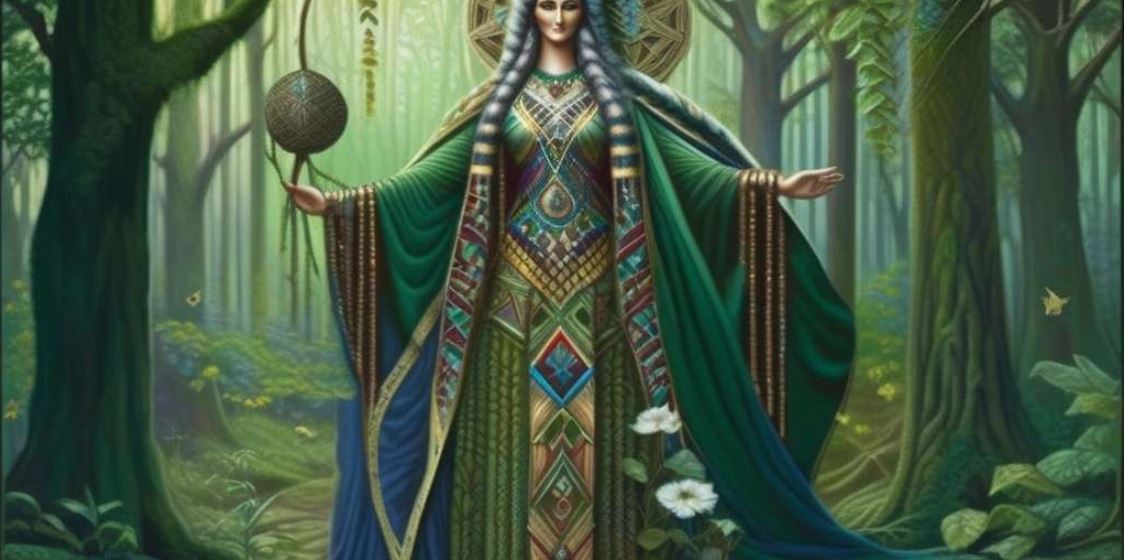
Mokosh is a significant figure in Slavic mythology, revered as the goddess of fertility, women, and the earth. She embodies the essence of femininity and is often associated with various aspects of life, including agriculture, childbirth, and domestic activities. As a protector of women, Mokosh plays a vital role in ensuring the well-being of families and the prosperity of the community. Her name translates to “moist earth” or “mother earth,” which emphasizes her connection to nature and the nurturing qualities she possesses.

The Origins of Mokosh
The origins of Mokosh can be traced back to ancient Slavic beliefs and practices. She is often depicted as a powerful goddess who has been worshiped for centuries. Her roots lie deep within the pre-Christian traditions of the Slavic people, where she was revered alongside other deities. Mokosh’s role in these early cultures was significant, as she was believed to influence the agricultural cycles and the fertility of the land.
Scholars have noted that Mokosh’s worship was widespread across Eastern Europe, particularly in regions that are now part of Russia, Ukraine, and Poland. As a goddess, she was often associated with the earth and its cycles, highlighting the importance of agriculture in the daily lives of the people. The rituals and celebrations dedicated to Mokosh often revolved around planting and harvesting, showcasing her vital role in sustaining communities.
Mokosh’s Attributes and Symbols
Mokosh is often represented with several distinct attributes and symbols that highlight her powers and responsibilities. One of her most notable symbols is the spindle, which signifies her connection to weaving and domestic arts. In Slavic culture, weaving is not just a practical skill but also a form of art that embodies the essence of life and continuity. The spindle represents the connection between the past, present, and future, as it is used to create fabric that can be passed down through generations.
 Kupala
Another important symbol associated with Mokosh is the sheaf of wheat, which emphasizes her role as a goddess of fertility and agriculture. Wheat is a staple crop in many Slavic cultures, and its abundance is crucial for survival. The sheaf of wheat represents not only physical sustenance but also the prosperity and well-being of the community. Festivals celebrating the harvest often included rituals dedicated to Mokosh, where people would offer thanks for the bounty of the land.
Mokosh in Folklore and Legends
Mokosh appears in various folklore and legends throughout Slavic cultures. These stories often depict her as a wise and benevolent figure who aids those in need. In many tales, she is portrayed as a nurturing mother who protects children and women, ensuring their safety and well-being. Her compassionate nature is a recurring theme in the folklore, highlighting the importance of family and community.
One popular legend tells of how Mokosh once walked among the people in disguise. She observed their struggles and hardships, especially during times of famine and drought. Moved by their plight, she revealed her true form and blessed the land with rain and fertile soil. This act of kindness not only saved the crops but also reinforced the bond between Mokosh and the people, illustrating her role as a guardian of the earth.
 Kremara
Rituals and Worship of Mokosh
The worship of Mokosh involved various rituals and ceremonies that celebrated her influence over life and fertility. One of the most significant rituals was held during the spring, known as the “Mokosh Festival.” During this time, women would gather to honor the goddess and seek her blessings for a fruitful year. They would prepare special foods, such as bread and honey, as offerings to Mokosh, symbolizing gratitude for her gifts.
Another common practice was the creation of Mokosh dolls, which were crafted from natural materials like straw and cloth. These dolls were often placed in homes as protective charms, symbolizing Mokosh’s presence and guidance. Families would hang these dolls in their homes or fields, believing that they would attract good fortune and fertility. The act of making these dolls was a communal activity, bringing women together to share stories and strengthen their bonds.
Mokosh and Modern Interpretations
In contemporary times, Mokosh has seen a resurgence in interest as people seek to reconnect with their cultural heritage. Many modern practitioners of Slavic paganism and folklore celebrate her through rituals and festivals that honor the old ways. This revival is often accompanied by a deeper understanding of the values Mokosh represents, such as the importance of community, family, and respect for nature.
Artists and writers have also drawn inspiration from Mokosh, incorporating her into various forms of creative expression. Literature, visual arts, and performances often highlight her attributes and stories, bringing her into the modern cultural landscape. This renewed interest not only preserves the ancient traditions but also allows new generations to appreciate the rich tapestry of Slavic mythology.
Mokosh in Comparative Mythology
When examining Mokosh within the context of comparative mythology, it becomes evident that she shares similarities with other female deities from different cultures. For instance, she can be likened to the Greek goddess Demeter, who is also associated with fertility, agriculture, and the nurturing aspects of motherhood. Both goddesses emphasize the importance of the earth and its cycles, reflecting the deep connection that ancient societies had with nature.
Furthermore, Mokosh’s role as a protector of women aligns her with figures like the Egyptian goddess Isis, who is revered for her protective qualities and maternal instincts. These parallels highlight a universal theme in mythology, where female deities often embody the life-giving and nurturing forces of nature. By studying these connections, we can gain a deeper understanding of how different cultures have interpreted similar themes throughout history.
Conclusion of Mokosh’s Significance
The significance of Mokosh in Slavic mythology cannot be overstated. As a goddess of fertility, women, and the earth, she represents the interconnectedness of life and the importance of community. Her enduring legacy is evident in the rituals, folklore, and cultural practices that continue to celebrate her essence. Through the lens of Mokosh, we can appreciate the values and beliefs of ancient Slavic societies, as well as the ongoing relevance of these themes in today’s world.