WORLD
WORLD
Meuler
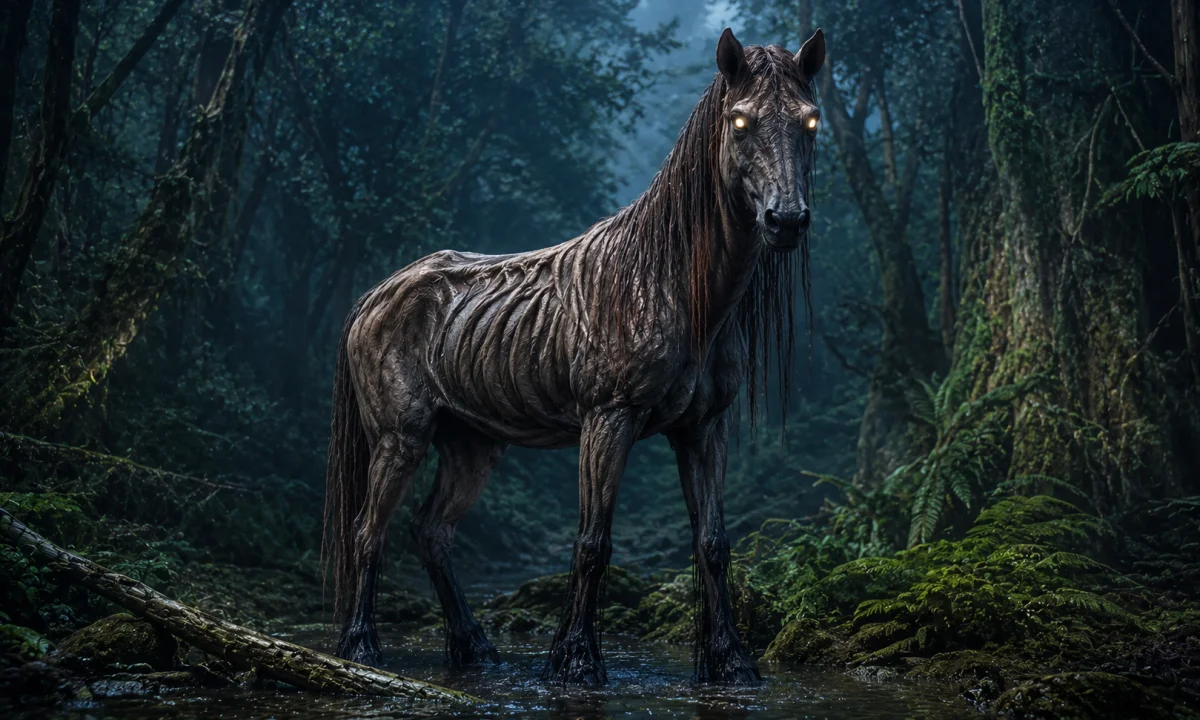
Meuler is a name associated in some modern mythological lists with Mapuche traditions of south-central Chile and adjacent Argentina. The identification is uncertain, however. The form Meuler is not a consistently documented name for a major, clearly defined being in the surviving record of Mapuche religion. It may represent a variant spelling or a transcription of Meulén or Meulen, terms sometimes connected with a whirlwind or turbulent wind. Because the evidence is limited and inconsistent, Meuler is best treated as a disputed or poorly documented figure rather than as a securely established deity with a fixed mythology.
Cultural setting
The Mapuche are an Indigenous people whose historical homeland extends across much of south-central Chile and parts of western Argentina. Their languages, customs and religious traditions have varied between communities and regions. Mapuche religious knowledge has traditionally been transmitted through oral teaching, ritual practice, family memory and the work of specialists such as the machi, who may serve as healer, ritual expert and mediator between human beings and spiritual powers.
Mapuche religious thought does not divide the world neatly into “nature” and “supernatural” in the manner often assumed by European folklore. Mountains, rivers, forests, animals, weather and particular places can possess spiritual significance and agency. Relationships between people, ancestors, spirits and the land are maintained through obligations, ritual conduct and respect for places that are spiritually powerful.
The best-known religious figures include Ngenechén, a name used for a supreme or governing divine power in some accounts; Antü, associated with the sun; Küyen, associated with the moon; and the Pillán, powerful spiritual beings whose meanings and roles vary between sources. The ngen are often described as guardian or owner spirits connected with particular natural features. These categories should not be treated as a single, universally standardized Mapuche pantheon. Local traditions and the interpretations of colonial and modern observers differ considerably.
The name Meuler and its uncertain identity
The spelling Meuler appears to be uncommon and may not reflect a standard Mapudungun form. Other versions encountered in secondary material include Meulén, Meulen and occasionally similar spellings produced by Spanish-language transcription. Mapudungun has been written in several orthographic systems, and older writers often recorded Indigenous names according to the sound distinctions and spelling conventions of Spanish. A name copied from one source to another can therefore change substantially.
There is also a more fundamental problem: a word describing a natural phenomenon can be turned into the name of a supernatural person by later cataloguers. If Meulén originally referred to a whirlwind, gust or rotating column of dust, an encyclopedic list might present it as a “spirit” or “god.” That transformation does not necessarily reflect how Mapuche speakers understood the term.
For this reason, Meuler should not automatically be classified as a god, demon or hero. The available evidence does not establish a single canonical appearance, genealogy, cult or cycle of stories. Nor is there a widely recognized Mapuche narrative in which a being called Meuler plays a central role comparable to the serpent figures Trentren Vilu and Caicai Vilu.
Association with whirlwinds
The most consistent association attached to the Meuler or Meulén name in modern summaries is the whirlwind. In many cultures, a sudden spiral of dust or leaves is interpreted as more than a simple movement of air. It can be understood as the visible trace of a spirit, the passage of an unseen force or a sign that a place has unusual power. A Mapuche interpretation of a whirlwind belongs within this wider pattern of reading weather and landscape as meaningful.
Descriptions that call Meuler a “wind spirit” should therefore be handled carefully. They may refer to a being believed to cause or inhabit whirlwinds, or they may simply personify the phenomenon itself. The distinction matters. A natural event can have spiritual significance without being represented as an individual with human motives, a stable body or a biography.
Popular retellings sometimes add details such as a small, invisible or mischievous creature that travels rapidly through the air, raises dust, frightens people or carries away objects. Such details are not securely established as part of a single traditional Meuler story. They may combine local beliefs about dangerous winds with the narrative habits of modern mythology dictionaries, websites and illustrated folklore collections.
Appearance and powers
No authoritative traditional description gives Meuler a fixed form. Artistic images may show a human-shaped spirit surrounded by dust, a shadow within a funnel of wind or a small creature moving across the ground. These are imaginative representations rather than documented features that can be confidently assigned to the figure.
The attributes most often connected with the name are consequently environmental rather than anatomical:
- movement in sudden or circular winds;
- the raising of dust, leaves or loose material;
- an ability to appear briefly and disappear without warning;
- an association with open ground, roads, fields or other exposed places; and
- the capacity to make an ordinary weather event seem spiritually charged.
Even these attributes should be regarded as a cautious reconstruction of the figure's reported association, not as a complete traditional profile. There is no secure evidence for a standard set of powers, ritual offerings, sacred calendar or distinctive emblem belonging specifically to Meuler.
Stories and traditional evidence
A major difficulty in discussing Meuler is the absence of a well-established body of narratives. Mapuche mythology was not preserved in a single canonical scripture, and many stories were recorded only after sustained contact with European colonial society. Missionaries, government officials, travellers and ethnographers often wrote down traditions through their own linguistic and religious assumptions. Some accounts were based on particular communities and should not be generalized to all Mapuche people.
In addition, oral traditions change with performance and context. A story about a whirlwind may be a local explanation, a warning to children, a comment on an unusual event or part of a larger account of spirits and place. It does not follow that every such story belongs to a named figure called Meuler.
No dependable central myth presently establishes Meuler's birth, family, enemies, marriage, death or role in the creation of the world. Claims that describe an elaborate character with a complete personality and a detailed supernatural history should therefore be treated as later elaboration unless they can be traced to a specific, reliable tradition. The lack of a famous story is not evidence that Mapuche communities had no beliefs about whirlwinds. It means only that the name and its narrative identity have not been securely preserved in the accessible record.
Possible relationship to Mapuche spiritual categories
It would be misleading to place Meuler automatically among the wekufe. In many descriptions, wekufe refers broadly to harmful or disruptive spiritual forces, though the term's meaning depends on context and translation. European-language accounts have sometimes used “demon” for a wide range of beings that do not fit neatly into Christian ideas of evil. A dangerous whirlwind might be interpreted as harmful without its associated force being a demon in the theological sense.
Nor should Meuler be equated automatically with a ngen. A ngen is commonly discussed as a guardian, owner or governing spirit of a natural place or element, but not every natural phenomenon has a documented ngen with a personal name. Assigning Meuler to this category would require evidence from a particular Mapuche tradition rather than a general assumption that all landscape phenomena have identical spiritual classifications.
The figure also should not be presented as a member of the Pillán without qualification. Pillán traditions are complex and vary regionally; the word can refer to powerful spiritual beings, often with connections to ancestors, volcanoes, storms or other forces. A modern list that labels every powerful weather spirit a Pillán risks flattening important distinctions.
Interpretation and cultural significance
If Meuler is understood through the reported Meulén association with whirlwinds, its significance lies less in a detailed character and more in the way a moment of weather can become culturally meaningful. A whirlwind is temporary, difficult to control and visually striking. It interrupts the ordinary appearance of the land, making an invisible force visible for a few seconds. Such events naturally invite explanations involving agency, warning and presence.
This does not mean that Mapuche belief should be reduced to superstition about weather. The spiritual interpretation of landscape is part of a broader worldview in which human conduct, social responsibilities and the condition of the land are interconnected. Sacred places and natural forces are not merely props in stories; they may be part of an ethical relationship between people and their surroundings.
It is also important to distinguish Indigenous religious life from the classifications imposed by outsiders. Words such as “mythological creature,” “minor god” and “demon” are convenient for modern reference works, but they can obscure the original setting of a belief. Meuler's uncertain status illustrates the problem: a term linked with a natural event may be transformed into a named monster or deity when removed from the language and community in which it was used.
Distinction from similar figures
Meuler is sometimes confused with better-known beings from Mapuche and southern South American traditions, but the available evidence does not support treating them as the same figure.
- Wekufe: a broad and context-dependent term for harmful or disruptive spiritual forces. It is not simply another name for a whirlwind.
- Pillán: a class or category of powerful beings in varying Mapuche traditions, sometimes connected with ancestors, mountains, volcanoes or storms. Meuler is not securely identified as a Pillán.
- Anchimallén: a luminous or frightening being described in some Mapuche and Chilean folklore. Its reported features differ from the whirlwind association attributed to Meuler.
- Chonchón: a flying head or birdlike supernatural figure in Chilean and southern Andean folklore, often linked in later accounts with witches. It is not a wind manifestation.
- Huilo Huilo and other regional beings: modern retellings may group unrelated Chilean figures together under the broad label of “mythical creatures.” Geographic proximity does not prove that their traditions are connected.
Modern reception
Meuler has little established presence in internationally known literature, film or games. Its modern visibility mainly comes from online mythology databases, short encyclopedia entries, lists of “South American creatures” and retellings that seek a neat identity for every unusual name. These formats often provide a picture, a fixed gender and a complete list of powers even when the original evidence is fragmentary.
Such presentations can make Meuler appear more clearly defined than it is. A responsible modern description should preserve the uncertainty surrounding the name, distinguish the possible Meulén or Meulen association from the spelling Meuler, and avoid presenting later embellishments as ancient doctrine. The most defensible interpretation is that the name may preserve a Mapuche-related belief or term associated with a whirlwind, while its status as a distinct mythological person remains unconfirmed.