WORLD

Kononatoo
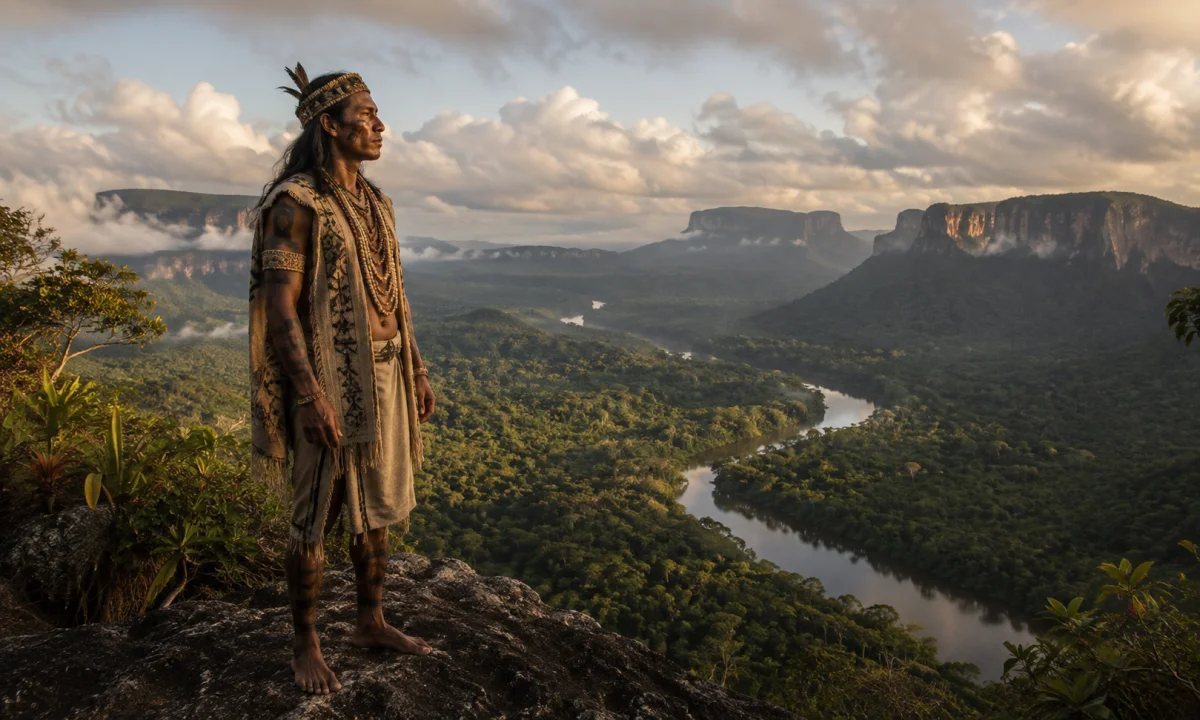
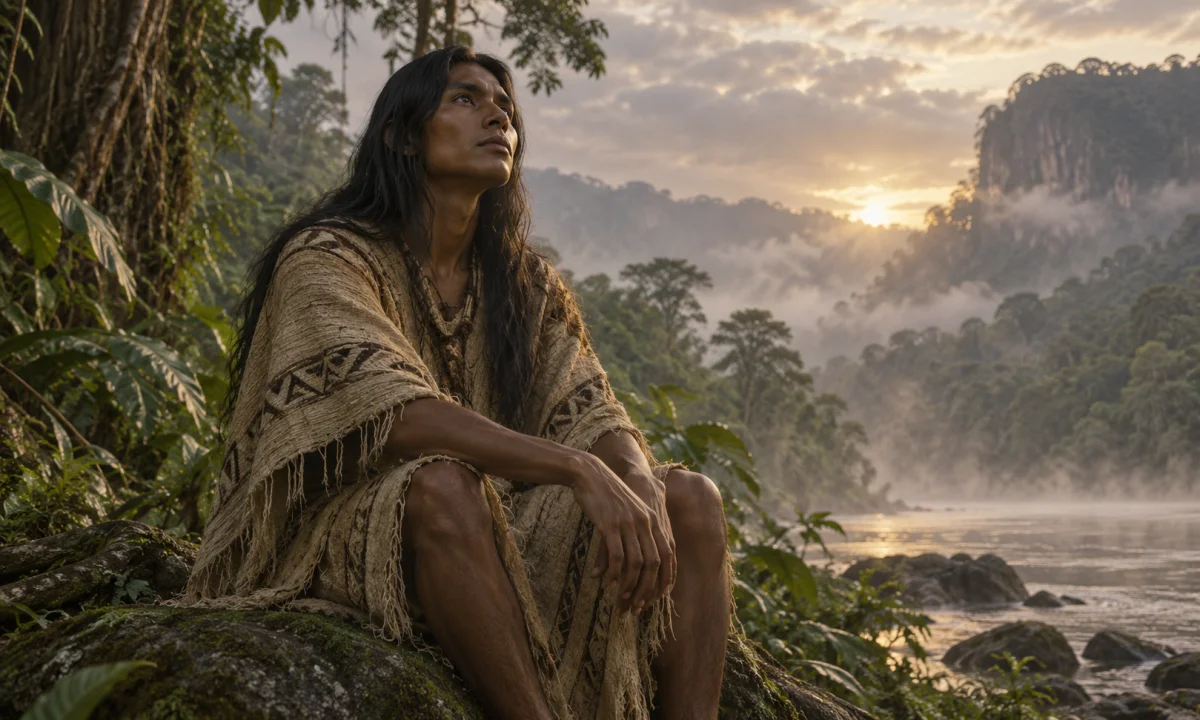
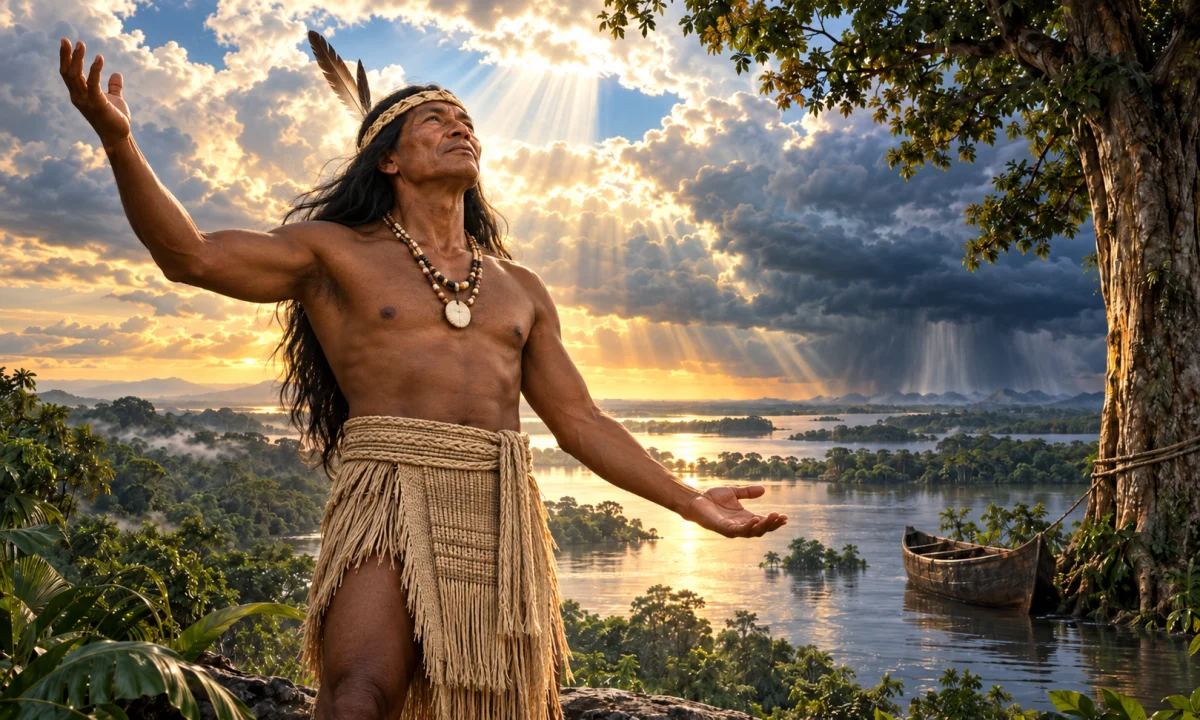
Kononatoo is a little-documented name associated in some modern mythological compilations with Indigenous traditions of northern South America. It is usually placed within the broad cultural region of the Guianas and the neighbouring Caribbean-facing mainland, but its precise people, language and traditional identity are not securely established. Unlike better-documented figures such as Makunaima, Yúcahu or Amalivaca, Kononatoo does not have a widely agreed body of stories preserved in accessible ethnographic literature.
The name therefore requires caution. Different reference works may present Kononatoo as a deity, spirit, culture hero or creator figure, while others provide little more than a name and a short description. These differences may reflect genuine variation, incomplete recording, translation problems or the habits of modern compilers who have gathered names from older books without preserving their original cultural context.
Cultural setting
Northern South America contains an exceptionally diverse group of Indigenous peoples and religious traditions. The Guianas alone have been home to communities speaking languages belonging to several unrelated or distantly related families. Among them are peoples often identified in older English-language writing as Carib or Arawak, terms that do not describe a single unified religion. Contemporary scholarship generally prefers specific names, such as Kalina, Lokono, Warao, Akawaio, Macushi, Pemón and others, when the evidence allows.
Religious traditions in this region commonly include powerful beings connected with the sky, sun, moon, water, animals, disease, fertility, death and the origin of social customs. They may also include ancestral beings, shamans or ritual specialists, dangerous spirits and culture heroes who establish the conditions of human life. A figure who appears as a “god” in a European summary might not have occupied the same category in the original tradition. Indigenous cosmologies do not necessarily divide supernatural beings into the fixed classes of gods, demons and monsters used by classical or Christian traditions.
Accounts of South American religions were recorded by missionaries, colonial administrators, travellers and later anthropologists. Their descriptions were shaped by translation, limited time in the communities concerned and the assumptions of European readers. Names were frequently written according to inconsistent spelling systems. A single being could therefore appear under more than one form, while similar names could be mistakenly treated as identical.
The name and the question of identity
The spelling Kononatoo is not sufficiently well documented to establish a universally accepted etymology. It may represent an attempt to reproduce an Indigenous word in an older orthography, and its pronunciation may not be obvious to an English-speaking reader. It is also possible that the name has been copied through several secondary works, with small changes introduced at each stage.
There is no reliable basis for treating every appearance of the name as evidence for one clearly defined pan-Indigenous deity. A name connected with a community in the Guianas should not automatically be attributed to all Arawak-speaking, Cariban-speaking or South American peoples. Nor should a brief entry in a modern dictionary be treated as equivalent to a complete oral tradition.
Some secondary presentations classify Kononatoo as a creator or origin figure. Others use the more general language of a god or spirit. Because the surviving information is so limited, these labels should be regarded as provisional rather than definitive. The safest description is that Kononatoo is a poorly documented supernatural figure whose name has been linked by later writers with Indigenous mythology in northern South America.
Attributes and mythological role
Detailed descriptions of Kononatoo’s appearance, powers and personality are not consistently preserved. There is no securely established canonical image, sacred animal, dwelling place or set of ritual symbols that can be assigned to the figure without qualification. Claims that present one particular form as universal should therefore be treated carefully.
When Kononatoo is described as a creator, the word may have a broad meaning. In comparative writing, “creator” can refer to a being who makes the world, a being who arranges an already existing world, an ancestor who brings humans into their present form or a culture hero who teaches important practices. These roles are not interchangeable. A figure who introduces fire, agriculture, language or social rules may be called a creator in a popular summary even when the original tradition presents that being primarily as an ancestor or transformer.
Likewise, the term “god” can conceal important distinctions. Some Indigenous traditions describe supernatural persons who possess knowledge and power but remain involved in the same landscape as humans, animals and ancestral beings. Their authority may depend on ritual relationships rather than on rule over a separate celestial realm. Without a fuller account of the original narratives, it is not possible to say confidently whether Kononatoo was understood as an all-powerful creator, a local spirit, an ancestor or another kind of sacred being.
Stories and variants
No single cycle of stories about Kononatoo is widely attested. Short modern entries sometimes imply a larger mythology than the available evidence supports, but a name alone cannot establish the existence of a complete narrative tradition. There is no securely documented set of episodes that can be presented as the definitive story of Kononatoo.
It is possible that the name was preserved in a local oral tradition that was never recorded in detail. Oral traditions can remain important within a community without appearing in books written for an outside audience. It is equally possible that Kononatoo entered modern reference literature through a brief missionary or ethnographic mention whose original context has been lost. These possibilities should be kept separate.
Variant accounts may also result from translation. A translator unfamiliar with the local religious system might render several different concepts with the same English word, such as “god,” “spirit” or “devil.” Conversely, a single supernatural being might receive different English descriptions in different records. Spelling differences can add another layer of confusion, especially when an original language has sounds that older European alphabets did not represent accurately.
Religious and cultural significance
The limited record makes it impossible to assign Kononatoo a specific ritual function with confidence. There is no broadly established evidence that the figure was worshipped throughout northern South America, represented in a standard form or associated with a region-wide festival. Such assumptions would turn a fragmentary name into a uniform religion that may never have existed.
Nevertheless, the uncertainty surrounding Kononatoo illustrates an important feature of the study of Indigenous mythology. Many traditions were transmitted orally, and their preservation depended on particular communities, languages and ritual circumstances. Colonial disruption, missionary pressure, population loss and the replacement of Indigenous languages all affected what was recorded and how it was interpreted. A figure may be absent from written sources not because the figure was unimportant, but because the relevant account was never collected or was recorded under another name.
Respectful interpretation also requires attention to living Indigenous communities. Traditional religion should not be treated as a collection of exotic names detached from people, land and history. Stories about supernatural beings can express law, kinship, ecological knowledge, memory and relations between human and non-human persons. A short dictionary entry cannot reproduce those dimensions.
Distinguishing Kononatoo from similar figures
Kononatoo should not be automatically identified with Makunaima, even though both names may appear in broad discussions of South American mythology. Makunaima is associated especially with traditions of the Macushi and related peoples of the Guianas and has a much better documented narrative presence. He is often portrayed as a powerful transformer or culture hero, although his character and stories vary between traditions. Similarity in geographical region or in modern descriptions such as “creator” does not prove that Kononatoo and Makunaima are the same being.
Nor should Kononatoo be confused with Amalivaca, the culture hero known from accounts of the Tamanaco people in the Orinoco region. Amalivaca belongs to a specific Indigenous tradition and is linked in recorded stories with the ordering of human life after a great flood. The fact that both figures have been described in general terms as origin or culture heroes is not evidence of a shared identity.
Figures from Taíno religion, including Yúcahu and Atabey, also belong to a different cultural and historical context. The Taíno peoples of the Caribbean had their own languages, ceremonial systems and sacred beings. A general label such as “Caribbean mythology” does not make every supernatural name from the Caribbean mainland interchangeable with a Taíno figure.
Finally, Kononatoo should not be treated as another spelling of a famous deity merely because the names look or sound alike in English. Secure identification requires evidence from the language, community and original narrative context, not resemblance alone.
Evidence and modern reference works
Most information currently circulated about Kononatoo appears to come through secondary or tertiary material rather than a widely available body of first-hand narrative texts. Short encyclopedic entries and online mythology lists often remove names from their original setting. They may also repeat one another, giving the appearance of independent confirmation when several descriptions ultimately derive from the same older compilation.
This is particularly significant for obscure mythological names. A modern list may assign a being a precise domain—such as the sun, thunder, creation or the underworld—without explaining which community used the name or how the description was obtained. Such details should not be repeated as established tradition unless they can be connected to a clear Indigenous source or a well-documented ethnographic record.
For Kononatoo, the responsible approach is to preserve the distinction between what is reported and what is known. The name has been associated with South American Indigenous mythology, probably in the broad northern region of the continent, but its exact cultural affiliation and traditional role remain uncertain. The absence of a secure narrative record is itself relevant information.
Kononatoo in popular culture
Kononatoo has not achieved a major presence in internationally distributed novels, films, games or comics. When the name appears online, it is more often in mythology databases, list-based websites or modern encyclopedic compilations than in adaptations grounded in a documented traditional cycle.
Modern retellings that give Kononatoo a fixed appearance, a detailed genealogy or a specific set of powers should therefore be understood as creative interpretations unless they identify a reliable traditional basis. A fictional portrayal may be legitimate as fantasy, but it should not be presented as an established belief of an entire Indigenous people. The distinction matters especially when a little-known sacred figure is turned into a generic “South American god” and separated from the community and history in which the name originated.