WORLD
WORLD
Makunaima
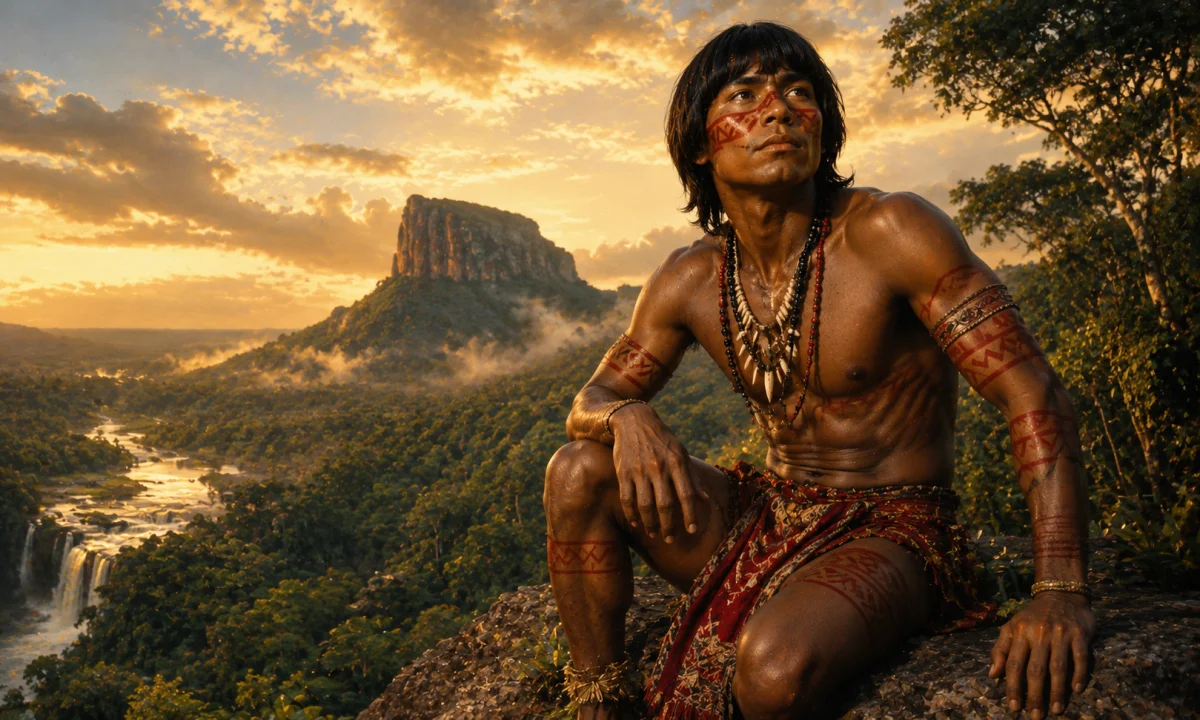
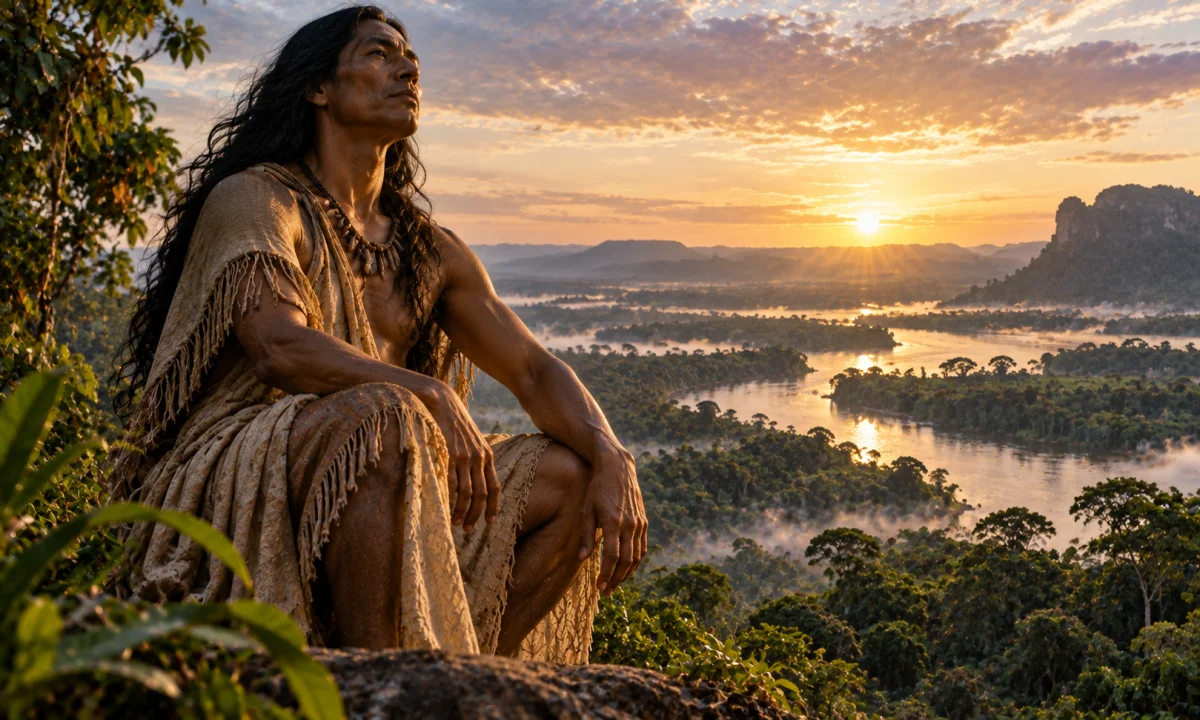
Makunaima is a major culture hero and trickster figure in traditions associated especially with the Pemon and related Kapon-speaking peoples of the Guiana region of South America. His stories are connected with the savannas, forests and table-top mountains of southern Venezuela, Guyana and northern Brazil, including the region around Mount Roraima. Makunaima is not a single character with one universally fixed biography. His name, identity, powers and relationship to other beings vary among communities and between different recorded versions of oral traditions.
Origins and cultural setting
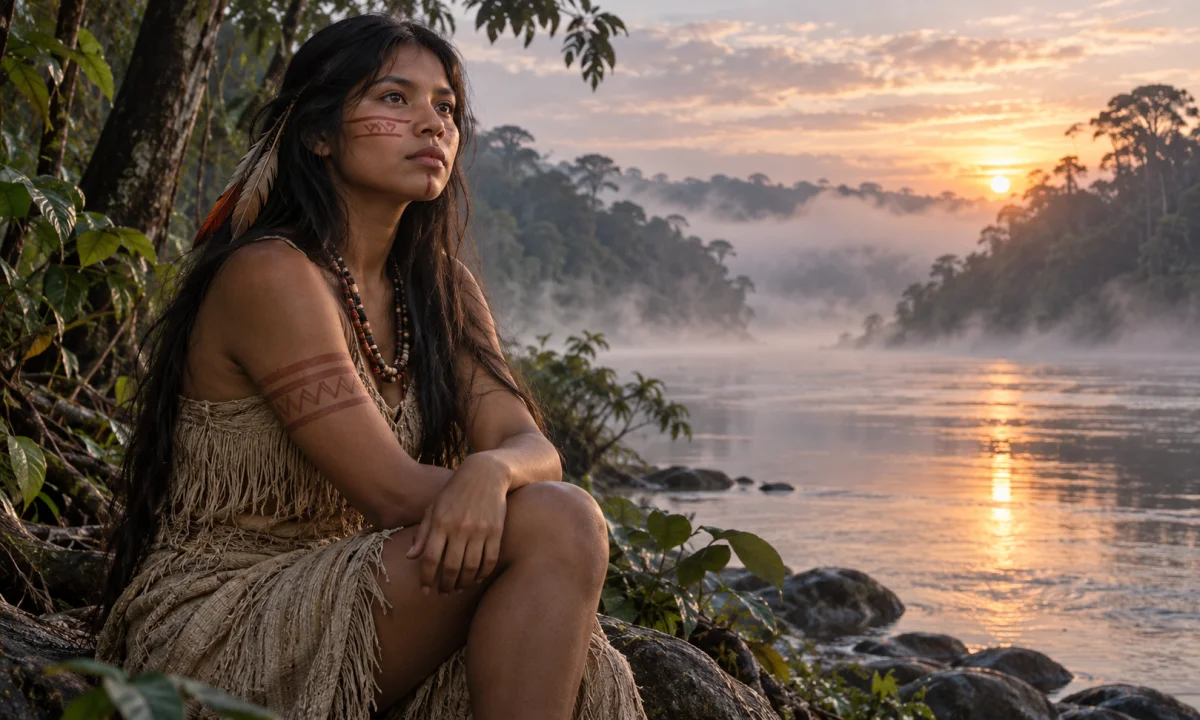
Makunaima belongs to the Indigenous mythological traditions of the Guiana Shield, a cultural region extending across parts of Venezuela, Guyana and Brazil. The Pemon are one of the principal peoples associated with his stories. Related traditions are also found among neighbouring Kapon-speaking peoples, including the Akawaio and Patamona, although names and episodes may differ from one community to another.
These traditions developed in landscapes marked by immense rivers, tropical forests and tepuis—isolated sandstone mountains with steep cliffs and flat summits. Mount Roraima is the best-known of these mountains. In Indigenous understandings, such places are not merely scenic landmarks. They may be associated with powerful beings, ancestral events and the origins of features of the natural world. Stories about Makunaima therefore often connect personal actions with the formation of landscapes, the distribution of plants, the origins of fire or the boundaries between human and non-human realms.
Much of what is known outside Indigenous communities comes from oral narratives recorded by travellers, missionaries, ethnographers and linguists. The German ethnologist Theodor Koch-Grünberg recorded and published several narratives from the Guiana region during the early twentieth century, including material that became important to later discussions of Makunaima. Such records are valuable, but they are not complete or neutral representations of a single original mythology. They reflect particular informants, languages, translation choices and the circumstances in which the stories were collected.
Oral traditions also continue to change through performance. A storyteller may emphasise different episodes, use a local name or adapt a narrative to the audience. For that reason, Makunaima should be understood as a living and varied tradition rather than as a character whose definitive form can be reconstructed from one written account.
Name and identity
The name appears in several spellings, including Makunaima, Makunaíma, Macunaima and Macunaíma. The form used may reflect the language in which a story was told, the spelling conventions of the recorder or later Portuguese usage. The accent in Makunaíma or Macunaíma is particularly associated with Portuguese-language writing, while Indigenous-language spellings may differ.
The meaning of the name is not completely settled. It is often interpreted through Pemon or related languages, but proposed translations vary. Explanations have connected it with ideas such as greatness, power, night or the ability to work in unusual ways. These interpretations should not be treated as an agreed literal definition. Translating a mythological name across related languages can obscure grammatical distinctions and cultural associations that do not have a simple equivalent in English.
Makunaima is sometimes described as a god, but that label can be misleading. In many accounts he is better understood as a culture hero, creator figure, ancestor or powerful transformer. He may also behave as a trickster: clever, disruptive, greedy, disobedient or capable of causing harm through poor judgement. These categories are not mutually exclusive in Indigenous mythologies. A figure can bring important elements of human life into the world while also creating danger and disorder.
Makunaima is often associated with a group of brothers or companions. The number of brothers, their names and their individual roles vary in different versions. Some narratives portray Makunaima as the youngest or most troublesome among them, while others give him a more dominant or exceptional role. The existence of related versions does not mean that every named brother belongs to one standard family tree.
Makunaima as transformer and culture hero
A central feature of Makunaima’s mythology is transformation. He and his brothers travel through a world that is not yet arranged in its present form, and their actions help establish the conditions in which humans, animals and plants live. Mountains, rivers, stones, trees and other features of the landscape may be explained through the deeds or punishments of powerful beings.
One widely discussed cycle concerns a great tree associated with food and cultivated plants. In versions known from Pemon and neighbouring traditions, a large tree held or concealed an abundance of edible plants. Makunaima and the other brothers cut it down, after which plants and foods became dispersed across the world. The details differ significantly between tellings: the tree may be identified by different names, the reason for cutting it may change, and the consequences may involve flood, loss or the separation of humans from an earlier state of abundance.
This episode is not simply an explanation of where crops came from. It can express the relationship between abundance and responsibility. Food that was once concentrated in one place becomes available across a wider landscape, but the transformation may also introduce hardship, labour and scarcity. Makunaima’s actions often have mixed consequences rather than producing an uncomplicated improvement.
Other narratives associate Makunaima and his companions with the acquisition or distribution of fire. In some accounts, fire is obtained from another being or taken from a creature that possesses it. In others, the story concerns the restoration of fire after humans lose access to it. Because fire stories occur in many South American traditions, individual versions must be identified carefully rather than treated as interchangeable. The broad theme is consistent with Makunaima’s role as a mediator of essential aspects of human life, but the characters and sequence of events vary.
Makunaima may also alter people or animals, turn beings into stone, or impose consequences on those who violate rules. These transformations help explain unusual rocks, mountains or other landmarks. They can also dramatise moral and social questions, including obedience, generosity, sexual conduct, treatment of relatives and the dangers of taking more than one is entitled to receive.
Trickster qualities and moral ambiguity
Makunaima’s importance does not depend on his being morally exemplary. Like many culture heroes with trickster characteristics, he can be resourceful and creative while also being selfish or destructive. He may deceive other beings, steal valuable objects, disregard warnings or provoke conflicts. His intelligence allows him to overcome obstacles, but his actions can expose the community to new dangers.
These qualities make him difficult to classify through categories such as “good god” or “evil spirit.” Makunaima’s behaviour reflects a world in which order is produced through conflict, experimentation and unintended results. The same action may provide humans with a necessary resource and simultaneously damage an earlier relationship between people and the supernatural world.
The trickster element also gives the stories a critical dimension. Makunaima can embody the consequences of impatience, arrogance or uncontrolled desire, but he may also reveal that established arrangements are not permanent. By breaking rules, he creates possibilities that would not otherwise exist. His stories therefore combine explanation, entertainment, warning and reflection on the unstable boundary between civilisation and wilderness.
Landscape, ancestry and sacred geography
Makunaima traditions are closely connected with the physical geography of the Guiana region. The tepuis appear not simply as settings but as places shaped by ancestral or supernatural activity. Rock formations, cliffs and unusual features may be interpreted as traces of mythic events. The stories give the landscape memory and agency, linking present-day travel routes and settlements with events situated in the distant mythic past.
Mount Roraima has received particular attention from outsiders because of its striking appearance and its prominence in travel writing. It is sometimes loosely described as Makunaima’s home or throne. Such descriptions can oversimplify diverse Indigenous understandings. Roraima is important in several regional traditions, and not every Pemon narrative assigns it the same role. A mountain may be an ancestral place, a dangerous location, a boundary or the setting of a particular episode without being reducible to the residence of one mythological figure.
Within Indigenous contexts, stories concerning powerful beings and sacred places may have religious, ethical and practical significance. They can communicate how people should behave toward animals, plants, rivers and particular locations. They may also be connected with ritual knowledge, restricted information or forms of authority that are not intended for unrestricted public retelling. Published versions represent only part of the knowledge held within the communities concerned.
Variants in the tradition
There is no single canonical Makunaima cycle. In some versions, he is closely associated with several brothers whose rivalry and cooperation structure the narrative. In others, he appears more independently. Some accounts emphasise his role in making the world habitable; others focus on episodes of theft, revenge, transformation or travel.
Names can change even when an episode seems similar. A being identified as Makunaima in one account may have a different name in a neighbouring tradition, while the same name may describe a somewhat different figure in another community. Translation can further blur distinctions by rendering several Indigenous terms as “god,” “spirit,” “hero” or “devil.” These differences are not minor spelling variations alone; they may reflect separate cultural systems and local interpretations.
For this reason, broad statements that Makunaima “created everything” or “is the supreme god of the Pemon” should be treated cautiously. Some retellings give him a highly cosmic role, but others present him as one powerful being among many. The surviving written records do not justify imposing one uniform theology across all Pemon, Kapon and neighbouring peoples.
Makunaima and Macunaíma in Brazilian literature
Makunaima became widely known beyond Indigenous communities through the Brazilian writer Mário de Andrade’s novel Macunaíma: o herói sem nenhum caráter, published in 1928. The title is often translated as Macunaíma: The Hero Without a Character, although the Portuguese expression also suggests a person without a fixed or stable defining character. Andrade drew on ethnographic materials and Indigenous narrative traditions, including accounts associated with Makunaima, but his novel is not a straightforward transcription of Pemon mythology.
Andrade transformed the figure for the purposes of Brazilian modernism. His Macunaíma travels through a stylised and often surreal Brazil, encounters figures from different cultural traditions and displays shifting identities. The work uses Indigenous, African, European and popular Brazilian elements in a deliberately mixed literary construction. It reflects debates about national identity and the relationship between Brazil’s cultural traditions, while also turning an Indigenous mythological figure into a vehicle for a modern author’s artistic and political concerns.
The literary Macunaíma should therefore be distinguished from Makunaima in Indigenous traditions. The novel helped preserve the name in national cultural memory, but it also detached the figure from particular communities and placed him within a project of defining “Brazilian” identity. The 1969 film adaptation directed by Joaquim Pedro de Andrade made the literary character even more prominent in Brazilian popular culture.
Modern uses of the name may consequently refer to at least three different things: a figure in Pemon or related oral traditions, the character created by Mário de Andrade, or a broader symbol used in discussions of Brazilian identity and Indigenous heritage. Treating these as identical obscures both the Indigenous religious context and the modern literary reinterpretation.
Cultural significance today
Makunaima remains relevant in discussions of Indigenous knowledge, cultural continuity and the interpretation of sacred landscapes. Contemporary Pemon and neighbouring communities may use storytelling, performance, education and cultural initiatives to maintain or explain traditions in changing social conditions. The meaning of Makunaima cannot be separated from the rights and experiences of the peoples whose ancestral territories are associated with these narratives.
Outsiders have often approached Makunaima through adventure writing, tourism and Brazilian national culture. Such approaches can turn a complex Indigenous figure into a generic “South American god,” a mysterious mountain spirit or a symbol of exotic wilderness. Those portrayals leave out the linguistic diversity, local authority and ethical teachings that give the traditions their depth.
A careful understanding keeps several layers distinct: the oral traditions of Pemon and related peoples; early ethnographic records shaped by translation and collection; later scholarly interpretations; and the literary Macunaíma created in twentieth-century Brazil. Makunaima is best approached not as a fixed character with one official story, but as a powerful and variable figure whose narratives connect transformation, food, landscape, social conduct and the uncertain origins of the human world.