WORLD
WORLD
Huallallo
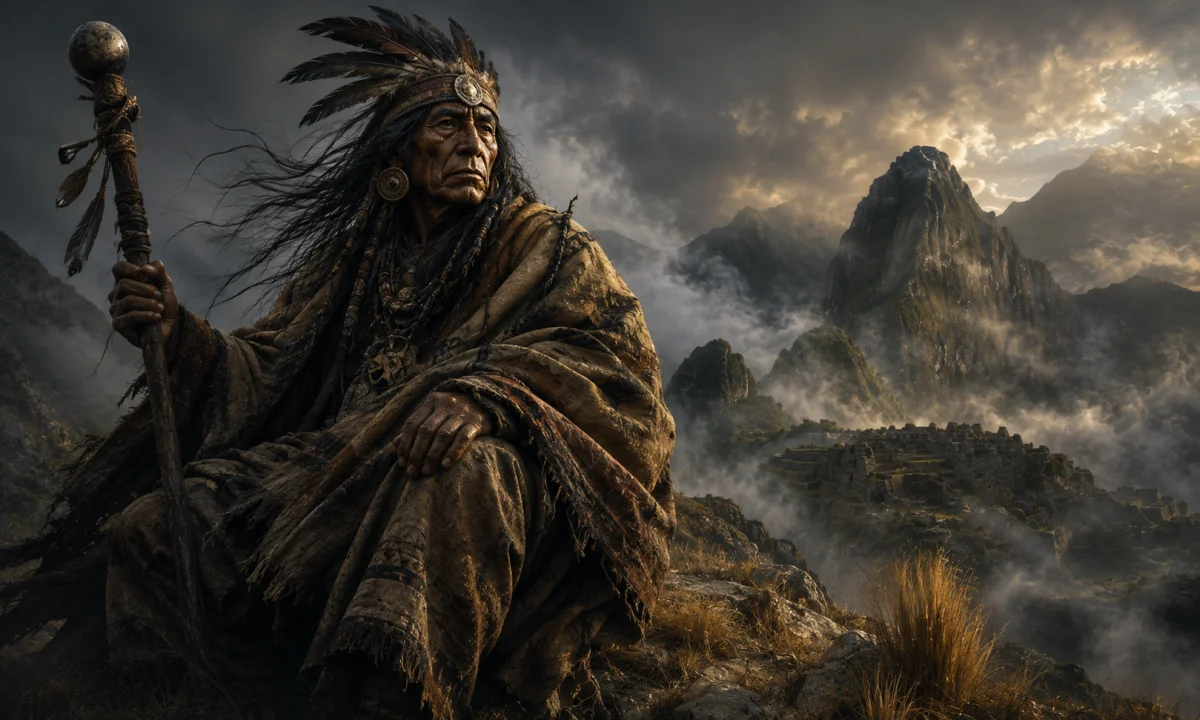
Huallallo, more fully known as Huallallo Carhuincho or, in some spellings, Wallallo Carhuincho, is a powerful sacred being in the mythology of the central Andes of Peru. He is best known from the Huarochirí Manuscript, a Quechua-language record of local religious traditions compiled during the Spanish colonial period. In that narrative, Huallallo is an ancient huaca and the principal rival of the storm and mountain deity Pariacaca.
Huallallo should not be treated as a universally defined “South American god.” His identity belongs to the religious landscape of Huarochirí and neighbouring central-Andean communities. The surviving account reflects local traditions recorded in a colonial setting, and details about his character, powers and worship are not equally certain. Later descriptions often call him a fire god or a demon, but those labels can oversimplify the older material.
Origins in Huarochirí religious tradition
Huarochirí is a mountainous region east of present-day Lima, Peru. Before and during the early colonial period, its communities maintained traditions concerning sacred mountains, springs, lakes, ancestors and powerful beings. These sacred entities were often called huacas, a broad Quechua term that could refer to a deity, a sacred place, an ancestral power or an object with religious significance.
The principal surviving record of Huarochirí mythology is the Huarochirí Manuscript, written in Quechua around the late sixteenth or early seventeenth century. Its original compiler is unknown. The text appears to preserve oral traditions from several communities, while also reflecting the circumstances of Christian evangelisation and colonial investigation. It is therefore invaluable evidence, but it is not a simple transcript of a single, unchanged pre-colonial religion.
Within the manuscript, sacred beings are closely connected with particular landscapes and communities. Their stories explain the origins of mountains, springs, rituals, social customs and relationships between local peoples. Huallallo’s story is part of this wider sacred history rather than an isolated legend about a monster or villain.
Name and identity
The name appears in varying colonial spellings, including Huallallo Carhuincho, Huallallo Carhuinchu and Wallallo Carhuincho. Spanish scribes recorded Quechua words according to changing spelling practices, and modern editions may represent the name differently. These variations do not necessarily indicate separate beings.
The meaning of the name is not entirely secure. Proposed interpretations sometimes connect Huallallo with heat, fire or other natural forces, but a definitive translation should not be assumed. Carhuincho is generally retained as part of the name or epithet rather than translated with confidence.
Huallallo is described as a huaca, not simply as a human king or an animal spirit. In the narrative world of the manuscript, a huaca could possess a personality, enter into conflict, transform the landscape and demand ritual recognition. The category does not correspond exactly to the modern Western distinction between “god,” “spirit” and “sacred object.”
Huallallo as an ancient power
In the stories associated with Huallallo, he belongs to an earlier sacred order that existed before Pariacaca became dominant. His rule is portrayed as harsh and destructive. The manuscript connects him with the eating or taking of human beings, and with customs that restrict the growth of the human population. The precise details vary in translation and interpretation, but the general image is of a powerful being whose demands place human communities under severe pressure.
Some accounts describe Huallallo as taking one child when twins were born, or as consuming the dead. These details belong to the narrative preserved in the manuscript, but they should not automatically be interpreted as evidence of a widespread historical practice. Mythic descriptions of a deity consuming people may express fear, ritual dependence, or a story about an older cosmic order rather than document ordinary social behaviour.
Huallallo is also frequently associated with fire, heat and drought. This connection is partly based on his opposition to Pariacaca, whose power is expressed through clouds, rain, hail and violent storms. The contrast between the two beings has encouraged scholars and popular retellings to describe Huallallo as a fire deity. The manuscript, however, does not present a systematic theological classification in the modern sense. His role is broader than a simple personification of fire.
The conflict with Pariacaca
The most important story about Huallallo is his conflict with Pariacaca. According to the Huarochirí tradition, Pariacaca was born from several eggs found on a mountain. His emergence marked the arrival of a new and more powerful sacred force. He challenged the authority that Huallallo had previously exercised over the region.
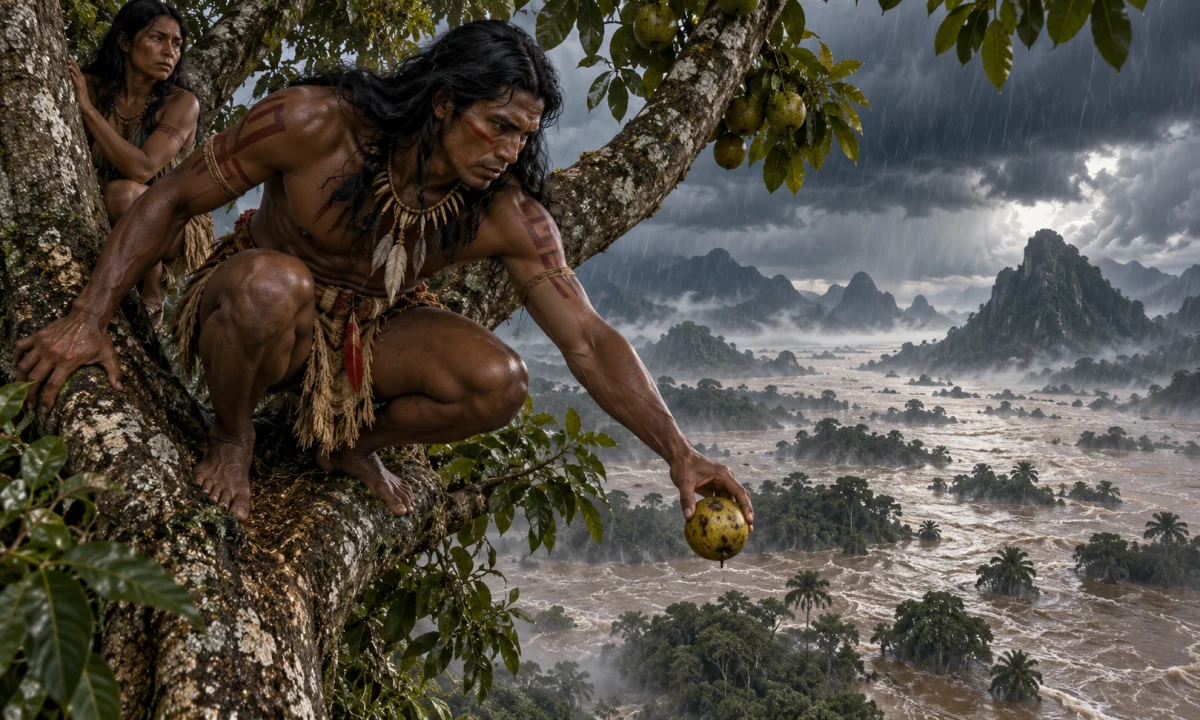
Pariacaca’s power is associated with storms and overwhelming water. In the best-known form of the story, he attacks Huallallo with torrential rain, hail and floods. Huallallo resists with heat and fire. The confrontation is therefore both a battle between two supernatural beings and a clash between opposing environmental forces: burning dryness against mountain rain.
The contest changes the landscape. As is common in Andean sacred narratives, divine conflict is not confined to an invisible realm. Mountains, valleys, rivers and settlements bear the marks of what the huacas do. The story explains the supremacy of Pariacaca and the displacement of Huallallo from the central position he once held.
Huallallo is ultimately defeated or driven away. Some versions describe him as fleeing eastward towards the forested lands beyond the Andes, commonly identified with the Antisuyu or the eastern lowlands of the Inca world. The manuscript’s geography is sacred as well as political, so this movement should not be read as a precise historical migration. It places Huallallo outside the region where Pariacaca’s authority becomes dominant.
The story does not necessarily mean that Huallallo ceased to exist. A defeated huaca could remain a dangerous or respected power even after losing supremacy. Sacred beings in Andean traditions often continue to inhabit mountains and remote places, and their influence may be redirected rather than completely destroyed.
Fire, water and the ordering of the world
The opposition between Huallallo and Pariacaca has an important symbolic dimension. Rain is essential to agriculture in the Andes, but storms, floods and hail can also destroy crops and settlements. Fire and heat may bring drought, yet fire is also a necessary and transformative force. The story does not reduce these elements to a simple moral contrast between “good water” and “evil fire.” Both represent powers capable of sustaining or threatening human life.
Huallallo’s defeat can be understood as a mythic explanation for a change in religious authority. One sacred order gives way to another, and communities must recognise a new protector. It may also preserve memories of rivalry between different local cults, communities or regions. Such interpretations remain matters of scholarship rather than explicit statements made by the original narrators.
The story’s concern with population, reproduction and the treatment of children adds another dimension. Huallallo’s regime is represented as one in which human life is limited by the demands of a consuming power. Pariacaca’s victory establishes a different order, although the manuscript does not present the change as a modern-style political reform. It is a transformation of the relationship between people, sacred beings and the natural world.
Huallallo and Pariacaca
Huallallo and Pariacaca are not interchangeable names for the same deity. They are opposing figures within the Huarochirí narrative. Huallallo represents an older and hostile power, while Pariacaca becomes the dominant storm and mountain huaca in the central part of the story.
Pariacaca himself should not be reduced to a benevolent rain god. Like other powerful huacas in the manuscript, he can punish communities, demand recognition and act violently. His victory over Huallallo establishes his authority, but the narrative does not turn him into an uncomplicated embodiment of goodness.
The relationship between the two beings also differs from the familiar pattern of a hero killing a monster. Both are sacred powers with legitimate force in the mythic universe. The conflict is closer to a struggle for cosmic and regional supremacy. Huallallo’s defeat explains why Pariacaca receives greater reverence in the traditions preserved by the manuscript, but it does not prove that every Andean community regarded Huallallo in exactly the same way.
Was Huallallo a demon?
Colonial Christian observers often described non-Christian sacred beings using terms such as “devil,” “demon” or “idol.” Modern retellings sometimes continue this habit, presenting Huallallo as a demonic fire monster. That portrayal captures his threatening behaviour in the story, but it can distort his religious status.
In the pre-Christian Andean context, Huallallo was a huaca, a sacred power associated with a particular religious and geographical system. He was not originally a demon in the Christian theological sense. His antagonistic role towards Pariacaca may reflect the perspective of communities who supported Pariacaca’s cult, and the manuscript’s language has also been shaped by colonial efforts to classify indigenous beliefs.
Calling Huallallo a “fire god” is similarly useful only as a broad modern description. It highlights the contrast with Pariacaca’s storm powers, but it should not imply that the Huarochirí tradition gives him a fixed mythology identical to that of a classical elemental deity. His identity includes authority, danger, social demands, environmental force and conflict with another huaca.
Sources, variants and limits of the evidence
Most detailed knowledge of Huallallo comes from the Huarochirí Manuscript and from modern study of the manuscript’s Quechua terminology and narrative structure. There is no complete pre-colonial temple archive or independent ancient biography of Huallallo. As a result, many claims repeated in general mythology lists are more certain than the evidence allows.
Translations can differ in the spelling of names, the description of Huallallo’s powers and the exact sequence of the battle with Pariacaca. Some editions give greater emphasis to his consumption of people; others focus on the opposition between fire and rain. Differences may result from the Quechua text itself, editorial decisions or the difficulty of translating culturally specific terms.
It is also uncertain how broadly Huallallo was worshipped beyond the communities represented in the manuscript. A figure important in Huarochirí tradition should not automatically be presented as a major deity of all the Andes, the Inca Empire or South America as a whole. Andean religions were regionally varied, and sacred beings often had authority tied to particular mountains, peoples and territories.
Cultural significance
Huallallo’s story preserves several recurring features of Andean myth. Sacred beings are linked to real landscapes; natural forces are treated as agents with intention; communities receive their customs through encounters with huacas; and changes in religious authority are expressed as transformations of the environment.
The narrative also shows that Andean mythology contains conflict between powerful sacred figures rather than a single harmonious pantheon. A deity can be feared, honoured and opposed at the same time. Huallallo’s threatening character does not make him irrelevant: his presence explains the conditions under which Pariacaca’s authority becomes meaningful.
For modern readers, the most responsible interpretation is to keep several levels distinct. The Huarochirí account is evidence for a regional Andean tradition recorded in colonial Quechua; the association with fire and drought is an interpretive description; and the image of a horned or infernal fire demon belongs mainly to later artistic or fantasy conventions, not to a securely documented ancient portrait.
Modern reception
Huallallo has not become a major figure in global popular culture in the way that some Greek, Norse or Egyptian deities have. He appears primarily in discussions of Andean mythology, translations and studies of the Huarochirí traditions, as well as in occasional modern retellings of the conflict between Huallallo and Pariacaca.
When contemporary fiction or games use Huallallo, the character may be presented as a volcano spirit, fire demon or enemy of a rain deity. Such adaptations can draw inspiration from traditional themes, but added appearances, weapons, personalities and powers should not be mistaken for details preserved in the Huarochirí tradition. The historically grounded Huallallo remains a regional huaca whose story is chiefly concerned with sacred authority, human vulnerability and the struggle between fire and storm in the central Andes.