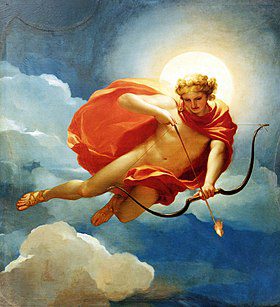
In Greek mythology, Helios is one of the most fascinating figures. He is often recognized as the personification of the sun. Helios is not just a simple representation of the sun; he embodies the sun’s daily journey across the sky. Every day, he rises from the east, traverses the heavens, and sets in the west. This journey is a significant part of the ancient Greeks’ understanding of time and nature. The sun was essential for agriculture, navigation, and daily life, making Helios a crucial deity in their pantheon.
The Origins of Helios
Helios is a child of the Titans Hyperion and Theia, which connects him to some of the most powerful figures in Greek mythology. His siblings include Selene, the moon goddess, and Eos, the goddess of dawn. This family connection highlights the natural cycle of day and night, with Helios representing the daytime and Selene the nighttime. The ancient Greeks often depicted Helios as a handsome young man, driving a golden chariot pulled by fiery horses across the sky.
 Hemera
The Greeks believed that Helios was born each day and died each night, symbolizing the sun’s rise and fall. His daily journey was not just a physical act; it was also a mythological representation of life and renewal. Each dawn brought new opportunities, while each sunset marked the end of a day. This cycle was vital for the agricultural society of ancient Greece, as it dictated when to plant and harvest crops.
Helios in Literature and Art
Helios has been a popular subject in various forms of ancient Greek literature and art. In Homer’s epic poems, Helios is mentioned several times, emphasizing his importance in the Greek worldview. For example, in the “Odyssey,” he plays a crucial role in the story of Odysseus and his crew, who encounter his sacred cattle on the island of Thrinacia. Ignoring warnings, they slaughter the cattle, leading to dire consequences.
 Hephaestus
- Helios is often depicted in ancient pottery and mosaics.
- He is portrayed driving a chariot across the sky.
- Artistic representations highlight his radiant appearance.
In addition to literature, Helios also appears in various sculptures and paintings. Many ancient artists aimed to capture the essence of the sun’s brilliance through their work. Statues often depicted him with a radiant crown, symbolizing the sun’s rays. These artistic expressions served not only as decoration but also as a way to honor and pay tribute to this significant deity.
Helios and His Chariot
One of the most iconic aspects of Helios is his golden chariot. According to myth, he drove this chariot across the sky each day, pulled by four magnificent horses named Pyrios, Aeos, Aethon, and Phlegon. Each horse represents different aspects of the sun’s journey, contributing to the vivid imagery of Helios’s daily passage. The chariot’s journey was not without its challenges, as Helios had to navigate through various obstacles, including storms and other celestial beings.
The imagery of the chariot reflects the ancient Greeks’ understanding of the cosmos. They believed that the sun moved through different regions of the sky, influencing both the weather and the seasons. Helios’s control over the sun made him a powerful figure, capable of bringing light and warmth to the earth. His chariot symbolized the balance of nature and the harmony between the celestial and terrestrial worlds.
 Hera
HeraHelios and Other Deities
Helios is often associated with other deities in Greek mythology, which helps to illustrate his significance. One of his most notable relationships is with the goddess Selene, the moon. While Helios represents the daytime, Selene embodies the nighttime, creating a natural balance between light and dark. This duality was essential for the Greeks, as it reflected their understanding of the universe’s harmony.
Another important relationship is with the Titan Helios and the hero Phaethon. Phaethon, Helios’s son, sought to prove his divine heritage by driving his father’s chariot. However, he lost control, causing chaos and destruction. This story serves as a cautionary tale about the dangers of overreaching and the importance of respecting one’s limits. It highlights Helios’s role as a father figure and protector, emphasizing the consequences of human folly.
The Worship of Helios
Helios was widely worshipped in ancient Greece, with various temples and altars dedicated to him. The most famous temple was located on the island of Rhodes, where a giant statue known as the Colossus of Rhodes once stood. This statue was one of the Seven Wonders of the Ancient World and served as a symbol of the city’s devotion to Helios. Pilgrims and worshippers would visit the temple to offer sacrifices and seek favor from the sun god.
In addition to formal worship, Helios was also invoked in various rituals and practices. Farmers would pray to Helios for good weather and abundant crops, recognizing the sun’s vital role in agriculture. Festivals celebrating the summer solstice often included ceremonies in honor of Helios, marking the longest day of the year. These celebrations reinforced the connection between the sun and the cycles of nature.
Helios in Modern Culture
Helios’s influence extends beyond ancient Greece and continues to resonate in modern culture. He has inspired countless works of art, literature, and even modern interpretations in film and television. Many contemporary stories draw on the imagery and symbolism associated with Helios, exploring themes of light, power, and the passage of time.
In literature, Helios often appears as a symbol of hope and renewal. His daily rise is a reminder that no matter how dark the night may seem, the sun will always return. This enduring image serves as a powerful metaphor for resilience and the cyclical nature of life. Additionally, Helios’s story has been reinterpreted in various forms, from fantasy novels to modern retellings of Greek myths.
Conclusion: The Enduring Legacy of Helios
Helios remains a significant figure in the landscape of mythology, representing the power and beauty of the sun. His stories and symbolism continue to captivate audiences, illustrating the timeless nature of myth. As a representation of light and life, Helios embodies the fundamental principles of existence, reminding us of the importance of balance and harmony in our lives.