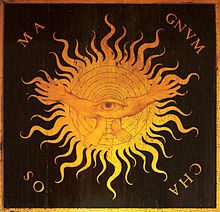
In Greek mythology, Chaos represents the primordial void, a state of nothingness from which everything else emerged. It is often depicted as a vast and dark abyss, a place that existed before the creation of the universe. The concept of Chaos is essential to understanding the beginnings of the cosmos and the subsequent creation of gods, titans, and mortals. In many myths, Chaos is not just an absence of order; it is a powerful force that holds the potential for creation. This article will explore the nature of Chaos, its role in Greek mythology, and how it connects to the broader themes of creation and existence.
The Definition of Chaos
Chaos is typically defined as a state of complete disorder and confusion. In the context of Greek mythology, however, it takes on a more nuanced meaning. It is not merely chaos in the sense of disarray; rather, it signifies a primal state that precedes order. In ancient texts, Chaos is often described as a vast expanse of emptiness, a formless void from which all things were born. This void is sometimes personified as a deity in its own right, embodying the potential for life and creation.
 Graces
The Greek word for Chaos is “khaos,” which translates to “gap” or “chasm.” This definition emphasizes the idea of a space or void that exists before creation. In this sense, Chaos can be seen as the canvas upon which the universe is painted. It is the source of all things, and everything that exists comes from this initial state of being. Understanding Chaos is crucial for grasping the subsequent stories and characters in Greek mythology.
Chaos in Hesiod’s Theogony
One of the earliest and most significant sources that describe Chaos is Hesiod’s Theogony, a poem that outlines the origins of the gods and the universe. In this work, Chaos is depicted as the first entity to exist, followed by other primordial beings. According to Hesiod, from Chaos emerged Gaia (the Earth), Tartarus (the Abyss), and Eros (Love). This progression from Chaos to these fundamental entities illustrates the transition from disorder to order.
In Hesiod’s narrative, Chaos is not simply a void but a source of creation. It is a necessary precursor to the formation of the universe. The emergence of Gaia from Chaos marks the beginning of the world as we know it. Gaia, in turn, gives birth to the sky (Uranus) and other primordial deities. This genealogy highlights the importance of Chaos as the starting point of all existence, emphasizing its role as a creative force.
 Charon
The Nature of Chaos
Chaos is often characterized by its lack of structure and form. It represents a state where nothing is defined, and everything is possible. In this sense, Chaos can be seen as a fertile ground for creation, where the seeds of existence lie dormant, waiting to be realized. This idea resonates with various philosophical interpretations of the cosmos, where Chaos is viewed as a necessary component for the emergence of order and structure.
Furthermore, Chaos embodies the concept of duality. It is both a destructive force and a source of life. While it represents confusion and disorder, it also holds the potential for new beginnings. This dual nature is reflected in many myths, where Chaos gives rise to both benevolent and malevolent beings. The interplay between creation and destruction is a recurring theme in Greek mythology, and Chaos is at the heart of this dynamic.
Chaos and the Creation of the Universe
The transition from Chaos to a structured universe is a central theme in Greek mythology. The emergence of various elements and deities from Chaos signifies the establishment of order in the cosmos. After Chaos, Gaia (Earth) and Uranus (Sky) take center stage, and their union leads to the birth of the Titans, who play a crucial role in the mythology. This transition illustrates the gradual unfolding of the universe, moving from a state of nothingness to one filled with life and complexity.
 Charybdis
In many myths, the act of creation is not a single event but a series of transformations. Chaos serves as the backdrop against which these transformations occur. The creation of the world is depicted as a gradual process, where different elements come together to form the universe. This process highlights the importance of Chaos as the initial stage that allows for the emergence of all things.
Chaos in Other Mythological Contexts
While Chaos is a prominent figure in Greek mythology, similar concepts exist in other mythological traditions. For instance, in Babylonian mythology, the primordial sea goddess Tiamat embodies chaos and is often depicted as a dragon. Her battle with the god Marduk leads to the creation of the world, mirroring the theme of chaos giving rise to order. This parallel demonstrates that the idea of chaos as a primordial force is a common motif across various cultures.
In Egyptian mythology, the concept of chaos is represented by the god Nun, who embodies the primordial waters of chaos. From Nun, the first land (the mound of creation) emerges, leading to the birth of the sun god Ra. Similar to Greek mythology, this narrative emphasizes the role of chaos as the source of creation, highlighting its significance in shaping the cosmos.
The Philosophical Implications of Chaos
The concept of Chaos extends beyond mythology into the realm of philosophy. Many ancient philosophers grappled with the implications of chaos in understanding the nature of existence. For example, the philosopher Heraclitus argued that change and chaos are fundamental aspects of the universe. He famously stated that “everything flows,” suggesting that chaos is an inherent part of life. This perspective aligns with the idea that chaos is not merely disorder but a dynamic force that drives creation and transformation.
Moreover, the concept of chaos has been explored in modern scientific theories, particularly in relation to chaos theory. This mathematical framework studies complex systems and how small changes can lead to unpredictable outcomes. The parallels between chaos in mythology and chaos in science underscore the enduring relevance of the concept in understanding the universe and our place within it.
Chaos and the Human Experience
The idea of chaos resonates deeply with the human experience. Life is often characterized by unpredictability, uncertainty, and moments of disorder. Just as Chaos in mythology gives rise to the cosmos, the chaos in our lives can lead to personal growth and transformation. Many individuals find that their most significant changes occur during chaotic periods, where they are forced to adapt and evolve.
In literature and art, chaos is frequently depicted as a source of inspiration. Many creative works explore the tension between chaos and order, reflecting the struggles and triumphs of the human condition. This exploration of chaos allows individuals to confront their fears and uncertainties, ultimately leading to a deeper understanding of themselves and the world around them.
Chaos is a fundamental concept in Greek mythology that represents the primordial void from which all existence emerges. Its role as a source of creation, destruction, and transformation is central to many myths and philosophical discussions. The exploration of chaos not only enhances our understanding of mythology but also resonates with the complexities of the human experience. By examining the nature of Chaos, we gain insight into the delicate balance between disorder and order, creation and destruction, and the ever-evolving tapestry of existence.