WORLD
WORLD
Fraoch
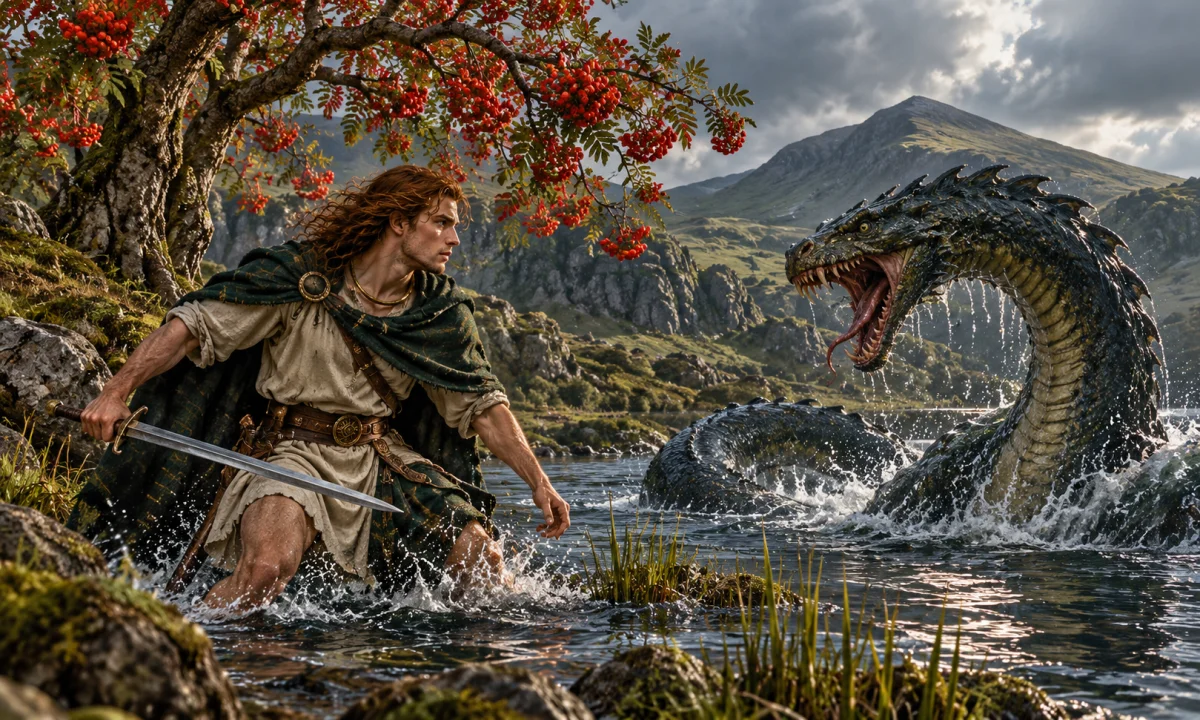
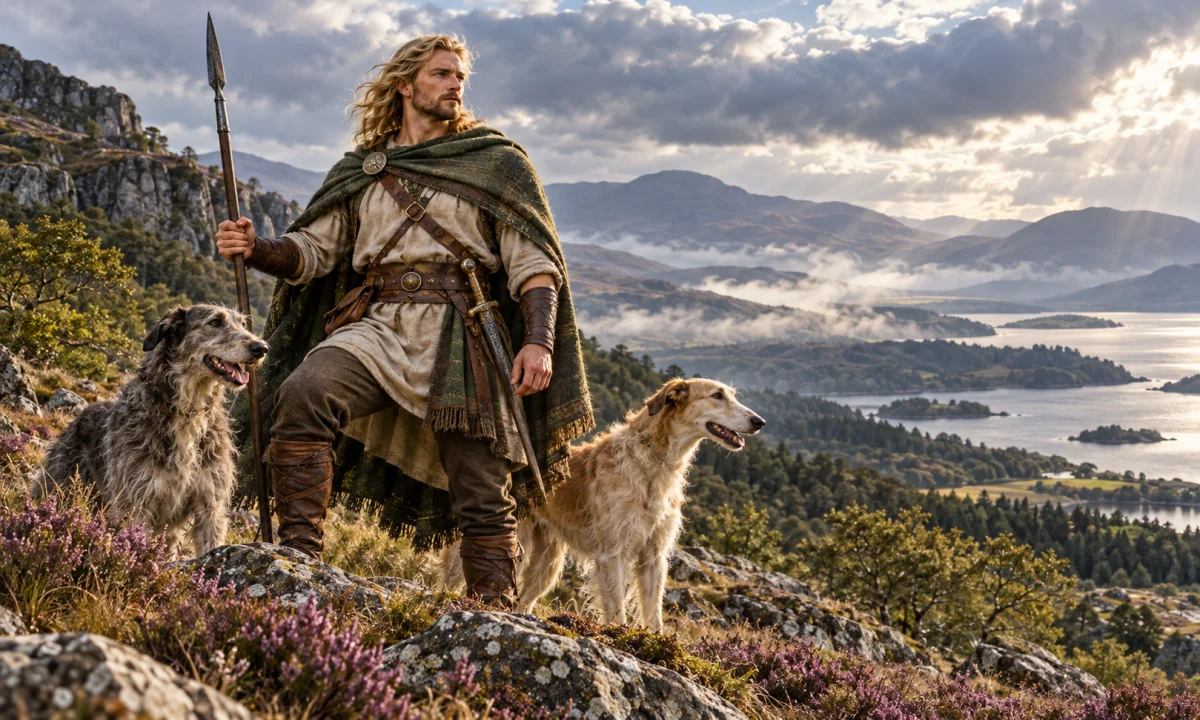
Fraoch, also written Fróech or Froech, is a heroic figure of medieval Irish literature associated especially with the tale Táin Bó Fraích, usually translated as The Cattle Raid of Fraoch. He belongs to the heroic world of Connacht and is connected by family and conflict to several major figures of the Ulster Cycle, including Medb of Connacht, Findabair, and Cú Chulainn. Fraoch is not generally presented as a god or supernatural being. He is a human warrior whose exceptional beauty, wealth, courage and skill place him among the notable champions of Irish tradition.
Fraoch in Irish tradition
Fraoch appears chiefly in narrative literature rather than in evidence for an organised religious cult. The stories that preserve his adventures were written down by medieval Irish scribes, although parts of their material may derive from older oral traditions. The surviving manuscripts are not identical, and details of genealogy, plot and chronology can vary between versions.
His principal tale is Táin Bó Fraích. The title follows the pattern of other Irish tána, or cattle raids, in which the seizure, recovery or exchange of cattle provides the framework for stories about status, marriage, warfare and political power. The tale is often associated with the group of narratives surrounding Táin Bó Cúailnge, the great cattle raid of Cooley, and is sometimes treated as a preliminary or accompanying story to that epic. Such classifications are useful, but they reflect the arrangement and interpretation of medieval texts rather than a single fixed ancient canon.
Fraoch also appears in accounts of the conflict between Connacht and Ulster. His most famous opponent in these episodes is Cú Chulainn, the champion of Ulster. The two men are portrayed as comparable figures: both are young, renowned, physically powerful and capable of extraordinary feats of combat. Their encounters help establish Fraoch as more than a minor member of the Connacht army.
Name and identity
The Old Irish form of the name is generally given as Fróech, while Fraoch is a common modern spelling. The word is associated with heather, and the name has sometimes been interpreted in relation to that plant. The precise force of the personal name in the original stories is not certain, however. It should not automatically be treated as proof that Fraoch was originally a nature spirit or a vegetation deity.
Genealogical information about him is also not entirely uniform. In the tradition most commonly associated with Táin Bó Fraích, Fraoch is the son of Idach and Bé Find. Bé Find is often connected with Medb, making Fraoch a relative—frequently described as a nephew—of the queen of Connacht. Medieval Irish genealogies often preserve several competing family arrangements, and the exact relationship can be presented differently in different texts.
Fraoch is normally associated with Connacht, although his stories take him far beyond that province. His identity is therefore both local and international within the geography of heroic literature. He belongs to the world of Connacht’s ruling and warrior elite, yet his adventures involve travel to Britain, the Alps or other distant regions depending on the version being followed.
Appearance and heroic qualities
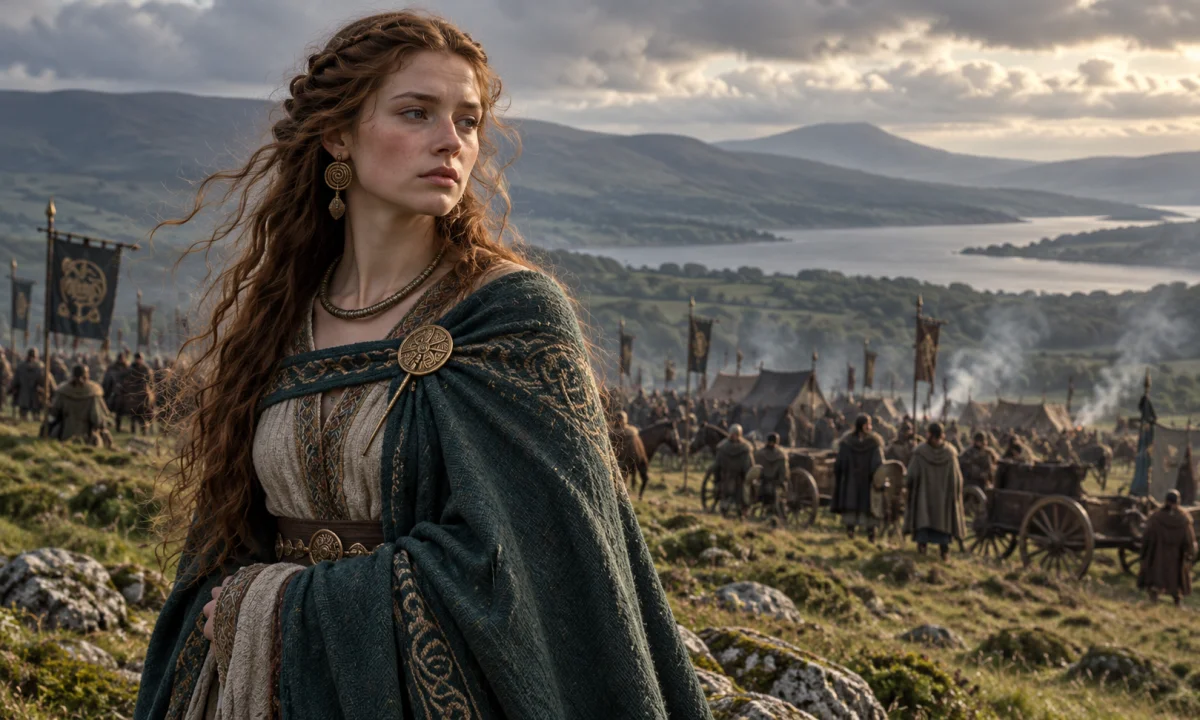
Fraoch is repeatedly characterised as exceptionally attractive. His beauty is not merely an ornamental detail: in Irish heroic literature, physical appearance often signals noble birth, social value and heroic potential. His reputation is strong enough that Findabair, the daughter of Medb and Ailill, becomes associated with his courtship.
He is also wealthy and well equipped. Cattle are central to his status, as they are to the status of many rulers and warriors in the cattle-raiding narratives. Possession of fine herds demonstrates independence and prestige, while the loss or recovery of cattle can create the central problem of an entire tale. Fraoch’s prosperity helps explain why marriage negotiations involving him are also political and economic negotiations.
His other important qualities are courage, generosity and martial skill. The stories place him among experienced warriors rather than portraying him as a magical creature. Some episodes emphasise his ability to travel, swim or endure difficult conditions, while others focus on his personal bravery in single combat. As with many Irish heroes, his greatness is measured through action: he must repeatedly prove himself before kings, queens, rival champions and his own family.
Táin Bó Fraích and the courtship of Findabair
The best-known part of Fraoch’s tradition concerns his relationship with Findabair. She is the daughter of Medb and Ailill, the royal couple who dominate the Connacht narratives. Their court is a place where marriage, wealth and military alliance are closely connected, so a romance involving Findabair cannot be separated from questions of power.
Fraoch’s arrival at the Connacht court is presented as a significant event. His reputation and appearance make him a desirable match, but the proposed union becomes entangled with demands concerning cattle and wealth. The negotiations reflect the social assumptions of heroic Ireland, where marriage could require the transfer of property and could strengthen relationships between powerful families.
The tale is not simply a love story. It combines romance with the themes of honour, obligation and material exchange. A hero may be admired for his qualities, yet still be judged according to whether he can meet the demands placed upon him. Findabair’s position is similarly complicated: she is involved in personal desire, but as a royal daughter she is also part of a dynastic strategy controlled by her parents.
Versions and summaries of the tale differ in the precise sequence of events. Some emphasise the obstacles placed before Fraoch, while others give greater attention to journeys, cattle and the recovery of members of his household. It is therefore safer to describe the story as a collection of linked adventures than as a perfectly stable narrative with one universally agreed form.
Journeys, cattle and the recovery of his family
Later portions of the tradition involve a difficult expedition connected with Fraoch’s cattle, wife and children. In these episodes, the hero’s concerns are not limited to personal fame. He must recover property and protect his household, and the journey takes him into foreign or distant territory. The geographical setting is not consistent in every retelling, but the movement beyond Ireland gives the tale an unusually broad horizon.
The rescue material also shows how the meaning of a cattle raid can change. Cattle are valuable wealth, but the recovery of a wife or child is a matter of family honour and emotional loyalty. Fraoch’s expedition therefore combines the conventions of a heroic raid with the structure of a rescue narrative. He is not merely seeking treasure; he is restoring the integrity of his household and his social position.
These adventures contain elements that can seem close to folklore: remote strongholds, dangerous crossings, foreign enemies and unusual feats of endurance. They should not be separated from the social world of the tale, however. The marvels serve to test the hero’s status, while the cattle, marriage arrangements and kinship relationships keep the story grounded in the concerns of medieval Irish aristocratic society.
Fraoch and Cú Chulainn
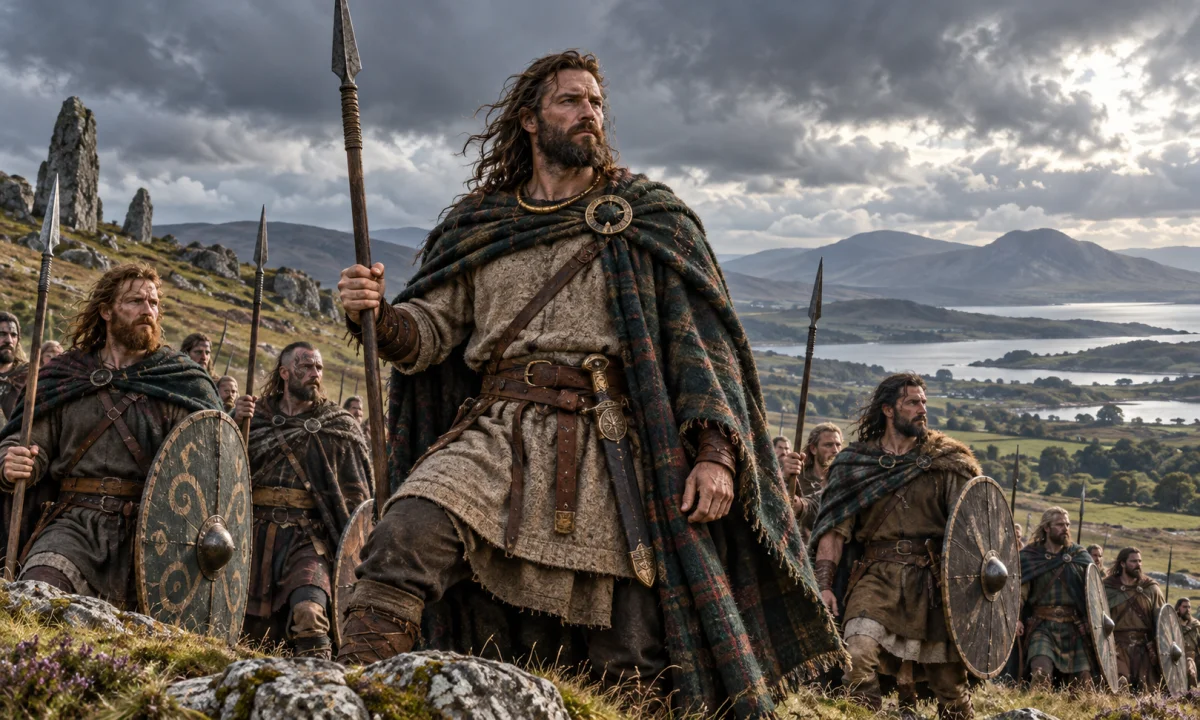
Fraoch’s place in the wider heroic tradition is especially clear in his encounters with Cú Chulainn. During the war between Connacht and Ulster, Fraoch is one of the champions associated with the Connacht forces. He meets Cú Chulainn in single combat, following the convention by which the Ulster hero confronts one opponent after another while delaying the invading army.
The combat is remembered as a contest between worthy equals rather than a simple fight between a hero and an insignificant enemy. Cú Chulainn ultimately gains the advantage, but Fraoch’s participation demonstrates his courage and rank. Some accounts describe a struggle involving water or a ford, a recurring setting in Irish heroic combat. The exact outcome and its consequences vary in the transmitted versions: Fraoch may be defeated and carried away by his companions, while other traditions give a darker result.
This uncertainty is typical of the medieval Irish narrative record. Stories were copied, shortened, expanded and combined by different scribes, and episodes could be known independently of one another. The presence of Fraoch in both his own cattle-raid tale and the larger story of the war against Ulster suggests that his character circulated across a network of related traditions rather than belonging to only one isolated narrative.
Role and symbolism
Fraoch represents the ideal of the aristocratic warrior whose value rests on several qualities at once. He is attractive, wealthy, brave and capable of loyalty. None of these qualities is sufficient by itself. Beauty attracts attention, wealth creates expectations, and courage must be demonstrated through dangerous action. His stories repeatedly place these qualities under pressure.
His connection with cattle is particularly important. In early Irish literature, cattle signify more than economic resources. They are measures of rank, objects of political competition and symbols of the prosperity of a household or kingdom. A raid can therefore be both a military act and a challenge to the honour of the people who own the herd. Fraoch’s adventures use this familiar structure to explore the obligations attached to heroic status.
The stories also reveal the importance of kinship. Fraoch’s relationship with Findabair links him to the royal family of Connacht, while his association with Medb places him within the complex network of alliance and rivalry that shapes the Ulster Cycle. His campaigns to recover family members show that heroic identity is not purely individual. A champion must defend his relatives, maintain his reputation and respond to obligations imposed by marriage and ancestry.
Although later readers may interpret Fraoch through the symbolism of heather, the surviving medieval narratives do not clearly present him as a plant god or seasonal spirit. The safer interpretation is that he is a human hero whose name may have a botanical association. Any deeper mythological interpretation remains scholarly speculation rather than an established feature of Irish religious tradition.
Literary and religious context
Fraoch’s stories were preserved in a Christian manuscript culture. The scribes who recorded Irish heroic tales were not preserving a complete transcript of pre-Christian religion. They transmitted narratives containing older themes, names and social ideals while placing them within a new literary and religious environment.
For that reason, Fraoch should not be described as an object of historical worship without evidence. His presence in medieval literature demonstrates the survival and reshaping of heroic tradition, not the existence of a known cult dedicated to him. The tales may contain echoes of earlier beliefs, but separating those elements from later literary invention is difficult and often impossible.
The label “Irish mythology” is useful in modern discussion, but the medieval material itself includes several kinds of writing: heroic saga, genealogy, romance, pseudo-history and folklore. Fraoch stands primarily within heroic saga. His stories are concerned with reputation, kinship, cattle, marriage and warfare rather than with a systematic account of the gods or the creation of the world.
Distinguishing Fraoch from similar names
The spelling Fraoch is also used in modern Irish and Scottish contexts as a personal name and in connection with heather. Not every modern use of the name refers to the heroic figure. Likewise, a character called Fraoch in a modern fantasy novel, game or retelling may combine traits from several Celtic traditions or add entirely new ones.
Fraoch should also not be confused with the many other warriors who appear in cattle-raiding tales. Irish heroic literature contains numerous names that vary in spelling between manuscripts, and similar-looking forms do not always indicate the same person. The Connacht hero of Táin Bó Fraích is specifically distinguished by his connection with Findabair, his family ties to the Connacht court, and his encounters with Cú Chulainn.
Later reception
Fraoch has never achieved the same level of modern recognition as Cú Chulainn, Medb or Fionn mac Cumhaill. He nevertheless remains an important figure for readers interested in the less familiar narratives surrounding the Ulster Cycle. Modern retellings often present him as a tragic lover, an adventurous warrior or a rival of Cú Chulainn, depending on which parts of the tradition they emphasise.
Contemporary fiction may expand his personality, simplify the conflicting manuscript evidence or turn the relationship with Findabair into a straightforward romance. Such treatments can make the story accessible, but they should be distinguished from the medieval material, where courtship, property and political obligation are inseparable. The traditional Fraoch is best understood not as a Celtic god or a generic fantasy warrior, but as a gifted and vulnerable human champion whose reputation is shaped by love, cattle, kinship and defeat.