WORLD
WORLD
Eligos
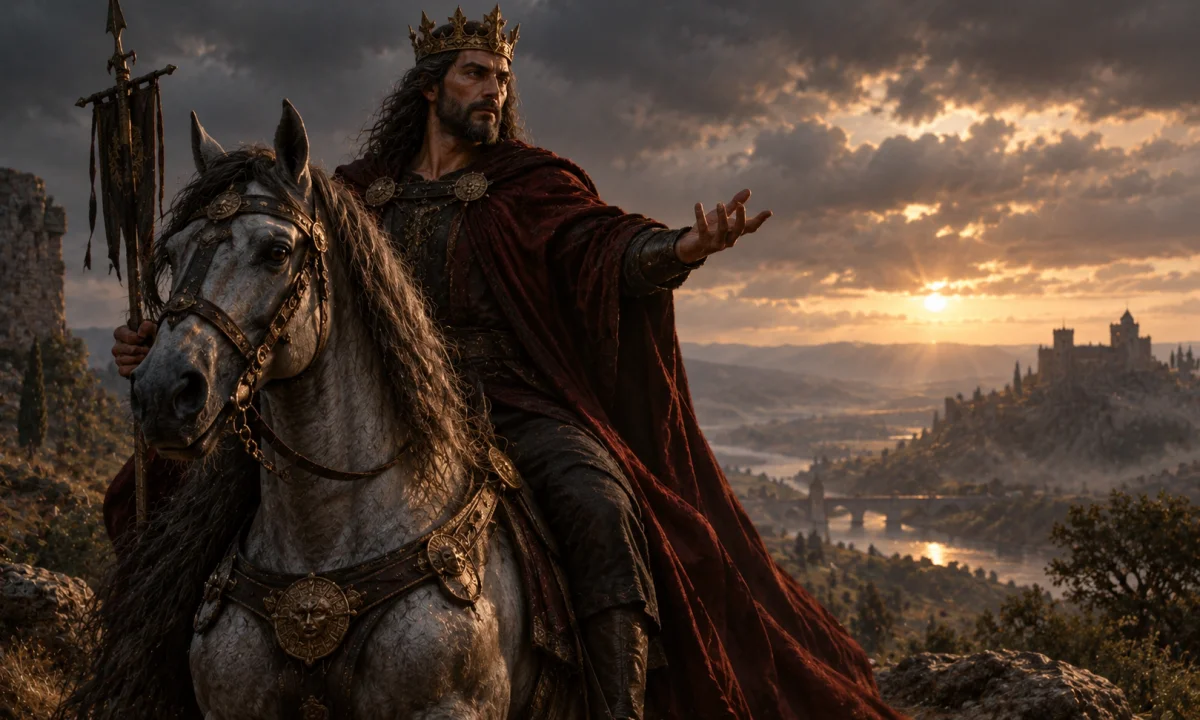
Eligos, also written Eligor or Abigor, is a demon in the ceremonial magic tradition commonly known as the Ars Goetia. He is listed as the fifteenth spirit in its catalogue and is ranked as a Great Duke of Hell. The descriptions associated with him present a striking martial figure: a handsome knight carrying a lance and a banner, with a serpent sometimes included among his identifying features. His traditional powers concern hidden matters, future events, warfare and the movements of armies.
Eligos belongs to the literature of European grimoire magic rather than to a clearly identifiable demon cult from the ancient world. His best-known description comes from a family of early modern demonological texts that classified spirits according to names, ranks, appearances and supposed magical offices. These works place him within a Christian occult framework, but they do not preserve an independent mythology about him comparable to the stories of figures such as Lucifer, Beelzebub or Asmodeus.
Origins in grimoire demonology
The principal source for Eligos is the Lesser Key of Solomon, particularly its first section, the Ars Goetia. The Lesser Key survives in manuscripts from the seventeenth and eighteenth centuries, although the materials within it draw on older magical and demonological traditions. The Ars Goetia is a catalogue of seventy-two spirits, each assigned a title, a rank, a number of subordinate spirits and a particular appearance or set of abilities.
Eligos also appears in an earlier catalogue, Johann Weyer’s Pseudomonarchia Daemonum, published in 1577. Weyer presented such beings in the context of Christian criticism of magic and the supposed activities of necromancers. His catalogue is closely related to the spirit lists later found in the Ars Goetia, although names, descriptions, numbering and details are not always identical. In Weyer’s text, the name is generally given as Eligor, while later occult editions often use Eligos or Abigor.
These sources should be understood as products of learned European magic. They combine biblical ideas about demons, medieval stories about spirits, ritual instructions, astrological and angelic correspondences, and material copied or adapted from earlier magical books. There is no strong historical evidence that Eligos was worshipped as a distinct deity in pre-Christian antiquity or that he originated in a documented local folklore tradition.
Name and variant forms
The spelling of the name varies considerably. Eligos is common in modern editions of the Ars Goetia, while Eligor is prominent in Weyer’s catalogue and in some later demonological works. Abigor is another widely used form, especially in occult writing and modern popular culture. Some authors treat these names as variants of one spirit; others use them as if they identified separate demons.
The historical relationship between the forms is not completely certain. The texts were copied by hand, translated, reorganised and printed in different languages, allowing names to change through scribal error, pronunciation and editorial preference. No secure ancient etymology establishes what the name originally meant. Proposed links with older languages or mythological figures remain speculative and should not be presented as settled fact.
For this reason, Eligos should not automatically be connected with every figure called Eligor or Abigor in unrelated traditions. In the context of the Ars Goetia, however, the names generally refer to the same catalogue entry or to closely related textual forms of it.
Rank and place in the infernal hierarchy
Eligos is called a Great Duke. This title is part of the bureaucratic structure used by grimoire writers to organise spirits into ranks resembling earthly courts and military administrations. Other spirits in the same catalogues may be kings, princes, marquises, presidents, counts, knights or dukes. These titles do not describe a consistent theology shared by all Christian traditions; they are features of a particular magical classification system.
The Ars Goetia states that Eligos commands sixty legions of spirits. A legion is a conventional numerical unit in the catalogue, not evidence of a historically recorded army or a belief held by all demonological writers. The same texts assign different numbers of legions to different spirits, creating an elaborate hierarchy for ritual and literary purposes.
Although Eligos is called a demon or spirit of Hell, the Ars Goetia does not provide a detailed account of his fall, his supposed rebellion against God or his relationship with Satan. The catalogue is primarily concerned with identification and conjuration. It gives the spirit a rank and function without supplying a complete biography.
Appearance and emblematic features
Eligos is traditionally described as a handsome knight. He carries a lance and a banner or ensign, immediately associating him with warfare, aristocratic service and command. A serpent is also included in the description in versions of the tradition. The exact punctuation and wording differ between editions, so artistic depictions may show the serpent in different positions or treat it as a separate accompanying symbol.
The knightly appearance is significant within the culture of European grimoires. Medieval and early modern writers often imagined high-ranking demons in forms that reflected earthly authority: kings, nobles, soldiers and officials. A demon appearing as an armed nobleman could suggest power, discipline and access to military knowledge. Eligos is not usually portrayed as a monstrous creature in the core textual description. His danger lies in his authority and knowledge rather than in grotesque physical features.
Modern illustrations often expand these brief details into elaborate designs. Artists may give Eligos armour, a crowned helmet, a black horse, wings, flaming weapons or an ornate military standard. Such additions can be visually effective, but they are not all part of the older written tradition. The core description identifies a knight, a lance, a banner and a serpent; many other features belong to later artistic interpretation.
Powers and functions
The traditional catalogue assigns Eligos several related abilities. He is said to reveal hidden things and to know things that are to come. These statements place him among spirits associated with secret knowledge, divination and the discovery of information that is inaccessible by ordinary means.
His other major function is military. The texts associate him with battles and with knowledge of how people will meet, assemble or organise for conflict. In some renderings, he can tell how combatants will encounter one another and bring people together for war. This does not make him a general in a recorded mythological story; rather, it describes a magical office assigned to him by the grimoire tradition.
The connection between prophecy and warfare is logical within the social world reflected by these texts. Military success depended on information about enemies, alliances, troop movements and future events. A spirit who could reveal hidden matters and foresee encounters would therefore be valuable to a person seeking political or military advantage. Eligos represents the occult knowledge of conflict more than a simple personification of violence.
The descriptions do not consistently give him powers over all forms of courage, victory or physical strength. Later summaries sometimes portray him as a general who guarantees success in battle, but the older catalogue language is narrower. It focuses on revealing information, foretelling events and explaining how people will gather or meet in warfare.
The seal and ritual context
Like the other spirits of the Ars Goetia, Eligos is assigned a distinctive seal, a diagram intended to identify or represent him in ritual operations. The seals in these books are made from letters, lines and geometric forms whose meanings are often unclear. They should not be confused with ancient archaeological symbols or universally recognised signs of a demon.
In ceremonial magic, a spirit’s seal could be drawn, engraved or displayed as part of a larger ritual arrangement. The operator might also use divine names, protective circles, ritual clothing, prayers and conjurations. The structure of these rituals reflects the paradoxical character of Solomonic magic: the practitioner attempts to command or constrain demons through the authority of God and the names of angels, rather than simply honouring the spirits as independent gods.
There is no single unchanged ritual tradition for Eligos. Manuscripts and printed editions differ in wording, diagrams and practical instructions. Modern occult practitioners may use the name and seal in ways influenced by ceremonial magic, chaos magic or personal spiritual practice, but these contemporary uses should be distinguished from the historical manuscripts.
Stories and relationships
Eligos has no substantial cycle of myths in the surviving goetic texts. He does not receive a narrative describing his birth, exploits, defeat or family relationships. The catalogue format gives short entries rather than legends. As a result, claims that he is the son, servant, rival or consort of another demon usually come from later occult invention, modern fiction or attempts to systematise the spirits beyond what the early sources actually state.
His relationship with Solomon is also primarily part of the framing tradition of the Ars Goetia. The collection presents its spirits within the broader legend that King Solomon acquired authority over demons and recorded the means of controlling them. The text does not preserve a detailed episode in which Solomon encounters Eligos, nor does it provide a developed dialogue between them.
The absence of narrative is important. Eligos is a named entry in a magical taxonomy, not a central character in a continuous religious mythology. His identity is defined by rank, appearance, seal, number of legions and assigned functions.
Religious and cultural interpretation
From the perspective of Christian demonology, spirits such as Eligos were generally understood as deceptive or dangerous beings. Medieval and early modern Christian writers often argued that demons could offer knowledge or apparent assistance while misleading human beings away from proper religious authority. A spirit’s ability to predict events did not necessarily prove genuine divine insight; it could be interpreted as trickery, observation or forbidden supernatural knowledge.
At the same time, the grimoires preserve an interest in ordering the invisible world. Their authors assigned spirits titles and duties in ways that resembled the administration of a royal court or empire. This arrangement may reflect contemporary ideas about hierarchy, patronage and specialised expertise. Eligos, as a martial duke, embodies the imagined supernatural counterpart of a powerful military noble.
His serpent has several possible symbolic associations, although none is confirmed by the texts. In Christian symbolism, serpents may suggest temptation, cunning, hidden knowledge or danger. In broader religious and mythological traditions, they can represent renewal, guardianship, wisdom or underworld power. The presence of a serpent in Eligos’s description should therefore not be assigned one universal meaning. It may simply be an emblematic feature that reinforces his association with secret knowledge and peril.
Distinguishing Eligos from similar figures
Eligos is sometimes confused with Abaddon, Asmodeus, Beelzebub or other prominent demons because modern lists group all of them under the broad heading “demons.” Their traditions are different. Abaddon appears in biblical and later apocalyptic contexts; Asmodeus has roots in Jewish and other Near Eastern traditions before becoming prominent in Christian demonology; and Beelzebub developed through biblical interpretation and later demonological writing. None of these figures is simply another name for Eligos.
Eligos should also be distinguished from Marchosias, another goetic spirit associated with martial imagery. Marchosias is described differently and occupies a different place in the hierarchy. Likewise, Andromalius is associated in the Ars Goetia with exposing theft and hidden wrongdoing, but he is not a variant of Eligos despite the shared interest in concealed information.
The name Abigor can create particular confusion. In some modern works, Abigor is treated as a distinct demon with a separate appearance or biography. Within the older goetic textual family, however, Abigor is commonly connected with Eligos and Eligor. Whether a modern author chooses to separate the names is a matter of adaptation, not proof that the early sources consistently recognised two different beings.
Later reception and popular culture
Eligos became more visible through nineteenth-century demonological dictionaries, occult revivals and later editions of the Solomonic grimoires. These works often standardised, embellished or illustrated the brief descriptions found in earlier catalogues. The image of a refined but threatening knight proved especially adaptable to artistic representations of infernal nobility.
In modern occult writing, Eligos may be approached as a spirit connected with strategy, foresight, conflict, leadership or the uncovering of concealed information. Such interpretations belong to contemporary practice and personal symbolism. They should not be projected backward as though they were universally held beliefs in the seventeenth century.
The name also appears occasionally in games, novels, comics, music and other fantasy media. Modern creators may portray Eligos as a warrior, commander, monster, summonable entity or independent character with a detailed personality. These versions can combine features from the Ars Goetia with entirely new mythology. The traditional Eligos remains the relatively concise figure described in European demonological catalogues: a Great Duke, appearing as a knight, associated with a lance, a banner, a serpent, hidden knowledge and the conduct of war.