WORLD

Edinkira

Edinkira is a name sometimes listed in modern collections of African mythology, but its identity and traditional setting are uncertain. No widely recognised corpus of African religious tradition securely establishes Edinkira as a deity, spirit, legendary animal or heroic figure. The name appears to circulate mainly without a clear account of language, community, ritual practice, mythology or historical source. It should therefore be treated cautiously rather than described as a firmly documented figure of a single African culture.
Origins and cultural setting
Africa contains thousands of distinct cultural and religious traditions. Akan, Yoruba, Igbo, Fon, Ewe, Kongo, Shona, Zulu, Somali, Amazigh and many other peoples have their own languages, sacred histories, ritual specialists and classifications of spiritual beings. The expression “African mythology” can be useful as a broad comparative label, but it does not indicate one unified mythology in which every named being belongs.
That distinction is especially important in the case of Edinkira. A name presented without a language, locality or community cannot be assigned confidently to the Akan, Yoruba, Igbo, Fon, Kongo or any other tradition. Similar-looking spellings can arise through differences in pronunciation, colonial-era transcription, translation, typesetting or online copying. A word may also be taken out of a ritual, historical or artistic context and incorrectly recast as the name of a god or monster.
Traditional African religious knowledge was often transmitted orally. Oral transmission does not mean that such traditions are unreliable; it means that information may be preserved through songs, praise poetry, initiation, ritual performance, family teaching, royal histories and specialist memory rather than through a single canonical book. At the same time, a claim about an obscure figure still requires some identifiable cultural context. Without that context, it is not possible to determine whether Edinkira represents a local spirit, a personal name, a mistranscription or a modern invention.
The name Edinkira
The spelling Edinkira does not, by itself, identify a known pan-African figure. There is no universally accepted pronunciation, meaning or etymology for the name. It is therefore unsafe to assign it a translation or to claim that it means “goddess,” “demon,” “ancestor” or “guardian” without a source in a particular African language.
One possible source of confusion is the Akan term Adinkra, associated especially with Asante and other Akan cultural traditions of present-day Ghana and Côte d’Ivoire. Adinkra refers to a system of visual symbols, cloth designs and associated proverbial meanings. It is not, in ordinary cultural usage, the name of a single mythological being. The similarity between Edinkira and Adinkra may encourage mistaken identifications, but there is no sound basis for treating the two names as equivalent.
Other similar spellings may belong to entirely different languages. African languages use sound systems and writing conventions that are not always represented consistently in English. A vowel may change in transcription, consonants may be omitted, and accents or tone marks may disappear. These changes can make unrelated names appear connected. Conversely, a single traditional name may acquire several spellings in missionary records, colonial documents, museum catalogues and later popular writing.
Identity and classification
Edinkira cannot presently be classified with confidence as a god, goddess, ancestor, nature spirit, monster, culture hero or demon. Those categories also do not correspond neatly across African traditions. For example, a being described in English as a “spirit” might occupy a very different religious position from another being translated by the same word. A river power, a deceased family member, a territorial guardian and a trickster may all be rendered as “spirit” while having different ritual roles.
Likewise, the word “mythological” can obscure the continuing religious significance of traditional figures. In many African communities, sacred beings are not merely characters in old stories. They may be connected with sacrifices, taboos, divination, healing, land, kingship, kinship or seasonal observances. It would be misleading to invent such functions for Edinkira when the relevant community and tradition have not been established.
Some modern lists place Edinkira among African gods or supernatural beings without explaining where the entry originated. Such lists are not sufficient evidence on their own. Repetition across websites can make an uncertain claim appear authoritative, especially when later pages copy the same short description. A repeated statement is not necessarily an independent record of an oral tradition.
Attributes and appearance
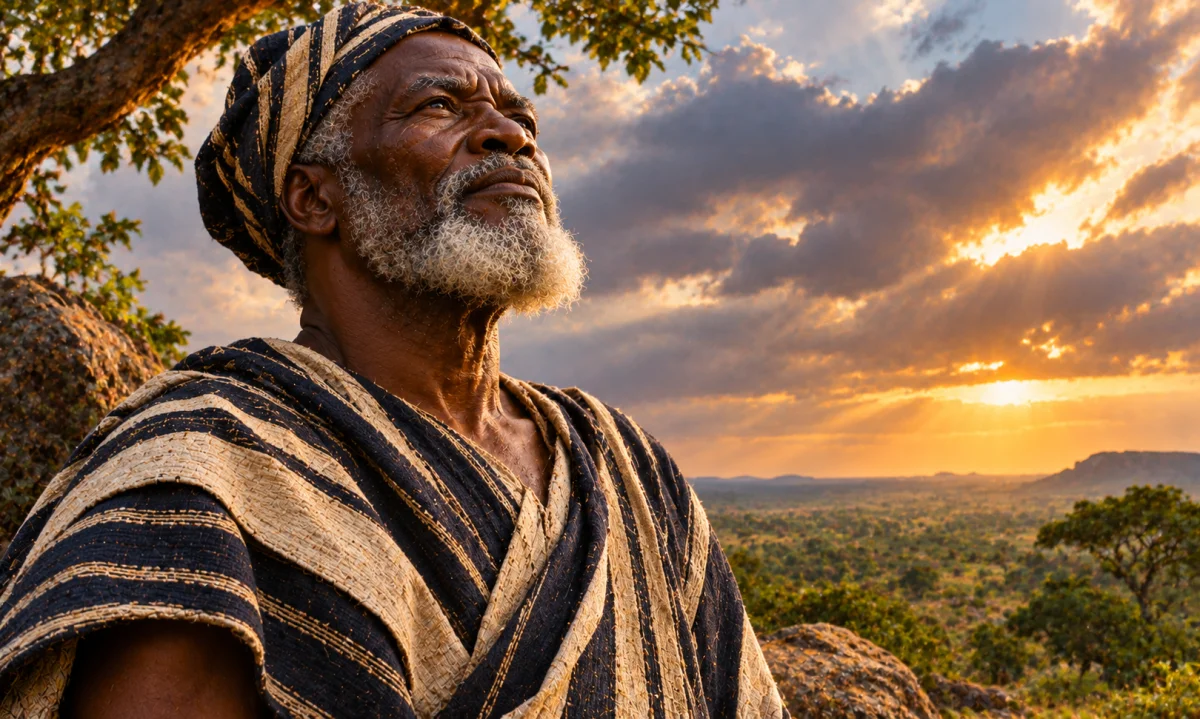
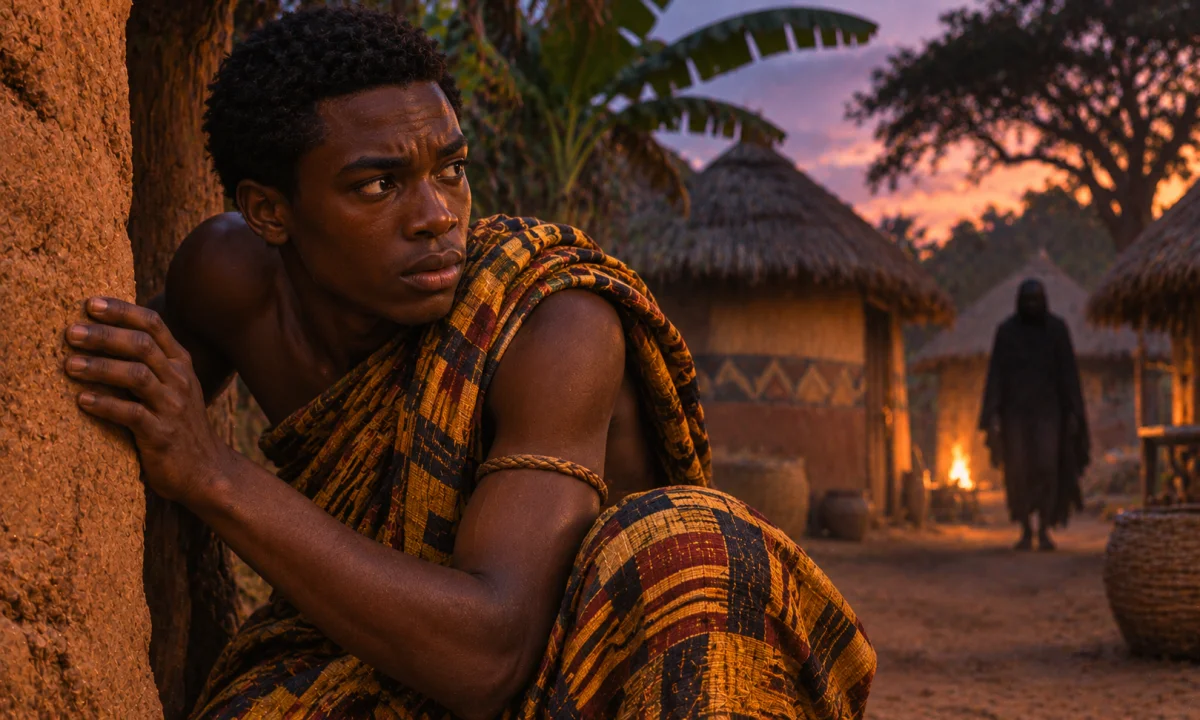
No stable traditional description of Edinkira’s appearance has been established. There is no well-attested iconography, animal form, sacred colour, emblem or physical characteristic that can safely be attributed to the figure. Images labelled “Edinkira” should therefore be regarded as modern illustrations unless their relationship to a specific community and tradition is demonstrated.
The same caution applies to supposed powers. There is no secure evidence that Edinkira controls the weather, protects childbirth, rules the dead, causes illness, governs water, guards treasure or transforms into an animal. These are common motifs in African and world folklore, but their general presence does not justify attaching them to an unidentified name.
Nor is there a reliably established sacred object or ritual associated with Edinkira. Claims involving offerings, shrines, priests, festivals or taboos would need to be tied to a named language community and documented practice. Without that information, such details remain speculation.
Stories and relationships
No widely attested cycle of stories about Edinkira is available in the standard forms associated with better-documented African figures. There is no securely established creation story, genealogy, conflict, marriage, journey or encounter that can be presented as part of a recognised Edinkira tradition.
This absence should not be overstated. A figure may belong to a small local tradition that has received little written attention, and a name may be preserved in an unpublished oral account or in a language with limited documentation. Lack of accessible evidence does not prove that no community has ever used the name. It does mean that broad claims about Edinkira’s mythology cannot currently be made responsibly.
It is also possible that the name has been detached from a longer text or altered during transmission. A personal name, place-name, title, ritual term or word for an object may be misunderstood as the name of a supernatural being. Until an identifiable narrative or cultural explanation is available, Edinkira should remain an unresolved entry rather than being given an invented biography.
Interpretation and cultural significance
The most responsible interpretation of Edinkira at present concerns the limits of classification. The name illustrates how information about African traditions can be simplified as it passes from oral or local contexts into general reference works. A short label such as “African mythology” may conceal major questions: Which people? Which language? Which region? Was the source oral, historical, religious, literary or modern? Is the spelling original? Does the community itself regard the figure as divine, ancestral, symbolic or fictional?
These questions are not merely academic. Treating all African traditions as one body of mythology can erase cultural distinctions and encourage the invention of composite figures. A being from an Akan shrine tradition should not automatically be combined with a Yoruba or Central African being simply because both are described in English as spirits. Nor should an uncertain name be supplied with attributes borrowed from famous figures such as Anansi, Eshu, Mami Wata or Nyami Nyami.
Edinkira may eventually be identifiable through a more precise record: a traditional spelling, a stated language, an oral-history account, a ritual context or an early publication that explains the name. Until such evidence is available, the figure’s cultural significance cannot be described beyond the fact that the name has entered some modern discussions of African supernatural beings.
Distinction from related names and figures
Edinkira should not be treated as another spelling of Adinkra without evidence. Adinkra is primarily associated with Akan symbolic art, cloth and proverbial expression, not with a single god or legendary creature. The resemblance of the names is insufficient to establish a relationship.
Edinkira should also not be merged with any African deity or spirit whose name happens to share a syllable or sound. African names can contain recurring elements that have different meanings in different languages. A similar spelling may therefore reflect coincidence rather than a common origin.
Finally, Edinkira should not be confused with figures created for contemporary fantasy, games, novels or illustrated mythology websites. A modern work may use the name imaginatively, but that use does not demonstrate an ancient or traditional origin. Traditional belief, historical evidence, scholarly reconstruction and creative adaptation belong to different categories and should be identified separately.
Modern reception
Edinkira has no well-established place in widely known African popular culture comparable to figures such as Anansi or Mami Wata. Its modern presence appears to depend largely on brief catalogue-style references and repeated internet entries rather than on a documented body of stories, ceremonies or artistic representations. Such references may preserve a genuine but obscure name, or they may perpetuate an earlier spelling error or unsupported classification.
Until the name can be connected with a particular people, language and tradition, the safest description is that Edinkira is an uncertain or insufficiently documented name associated in some modern sources with African mythology. More specific claims about origin, powers, appearance, worship or legendary adventures should not be presented as established tradition.