WORLD
WORLD
Cuchavira
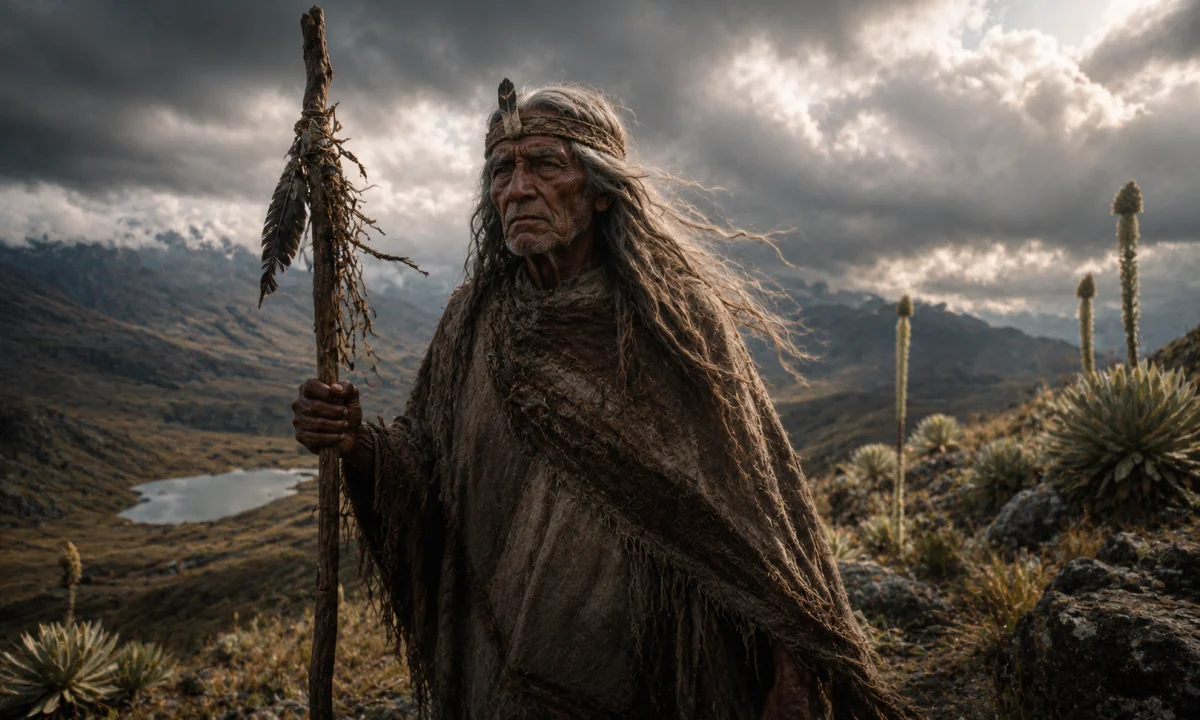
Cuchavira is a figure associated with the rainbow in the religious traditions of the Muisca, also called the Muysca, an Indigenous people of the Andean highlands of present-day Colombia. She is commonly described as a female supernatural being connected with fertility, pregnancy, childbirth and protection from illness. The name and identity are not completely uniform, however. Many modern references use Cuchaviva, while Cuchavira is another widely encountered form. Surviving information comes mainly through colonial descriptions and later interpretations rather than through a complete Muisca mythological text, so details about her character and stories remain uncertain.
The Muisca cultural setting
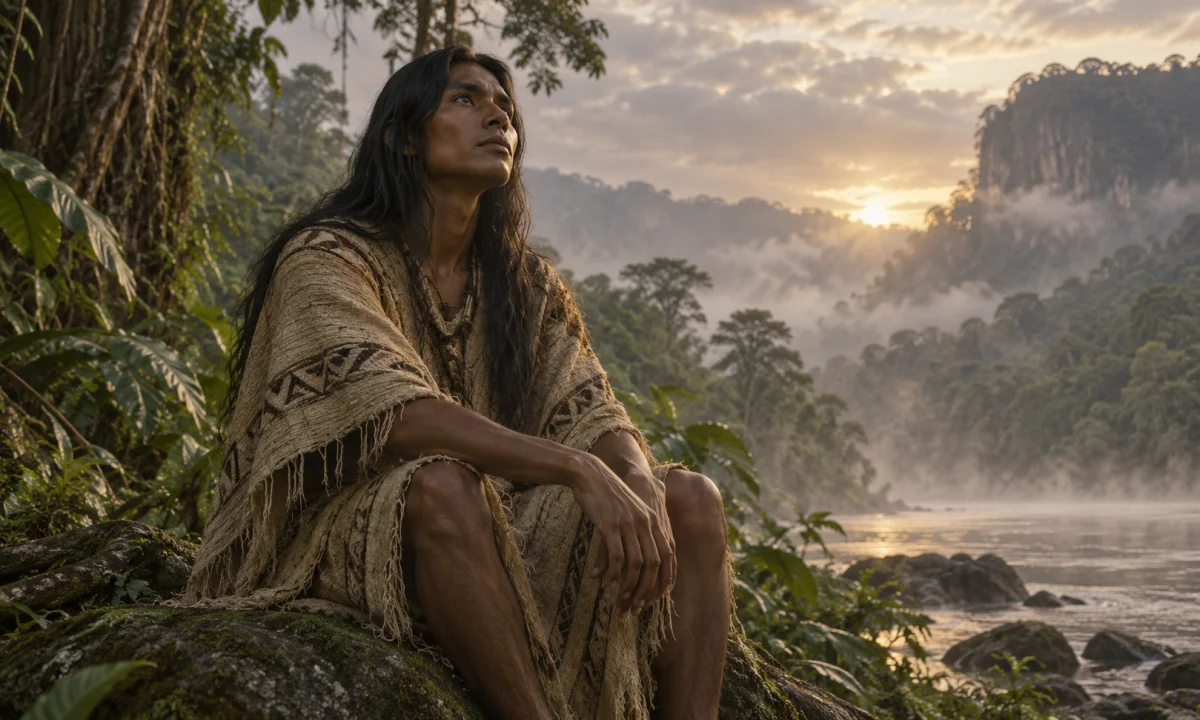
The Muisca lived chiefly on the high plateaus and valleys of the Eastern Cordillera, especially in the region now known as the Altiplano Cundiboyacense. Their communities included the important political centres of Bacatá and Hunza, corresponding broadly to the areas around modern Bogotá and Tunja. Farming, water management, trade, ritual exchange and relationships between local communities shaped their society.
Muisca religious thought gave great importance to the forces that governed agricultural life. The sun, the moon, rain, lakes, rivers, mountains and cultivated land were not merely parts of the physical environment. They were connected with sacred powers, ancestral beings and ritual obligations. Gold objects, emeralds, woven materials, food and other offerings could be placed in lakes, caves, springs or other significant locations.
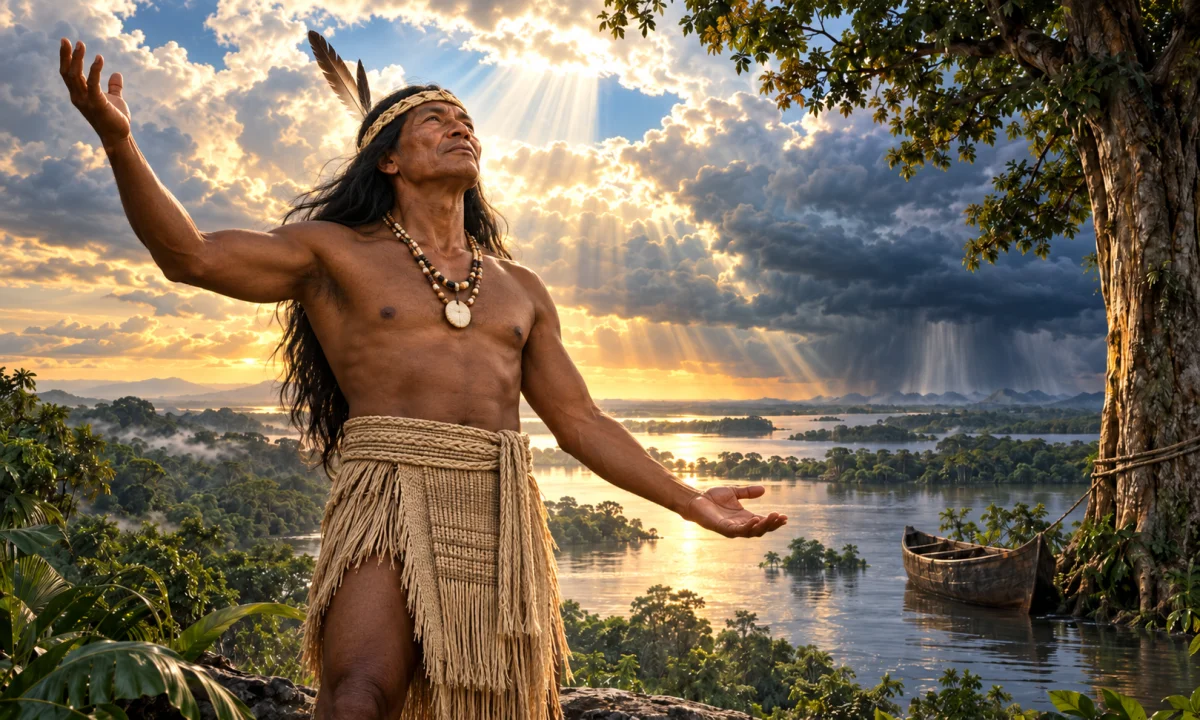
Within this setting, a rainbow could be understood as more than an atmospheric phenomenon. It appeared across the sky at a meeting point between sunlight, rain and the earth below. Its appearance could therefore suggest fertility, renewal, danger, healing or communication between different levels of the world. Cuchavira is generally interpreted within this religious environment rather than as a detached “rainbow goddess” in the modern fantasy sense.
Name and identity
The spelling Cuchavira is closely related to Cuchaviva, the form that appears more often in modern summaries of Muisca mythology. Colonial writers recorded Indigenous names according to Spanish spelling practices, and the Muisca language was not preserved in a continuous written literary tradition. As a result, differences between forms cannot always be explained with confidence. They may reflect variations in transcription, pronunciation, regional usage or later editorial choices.
The meaning of the name is also not entirely secure. It is frequently glossed as “rainbow” or interpreted as the name of a rainbow-associated being, but popular explanations sometimes present a precise translation without adequate evidence. It is safer to say that the name is traditionally connected with the rainbow than to claim a certain word-for-word etymology.
References commonly classify Cuchavira as a goddess, but that label should be used cautiously. Colonial observers often translated Indigenous sacred beings into categories such as “gods,” “goddesses,” “devils” or “idols,” even when those categories did not exactly correspond to local religious ideas. Cuchavira may have been understood as a sacred power, personified natural force or female supernatural figure. The available evidence does not provide a single, universally accepted account of her status.
Association with the rainbow
Cuchavira’s central attribute is the rainbow. In many descriptions, she is identified with the rainbow itself or with the power represented by it. This association places her among Muisca beings whose significance was closely tied to visible natural events. The rainbow could be a sign of changing weather and the return of sunlight, but its temporary appearance also made it an evocative symbol of transition.
Modern accounts often connect the rainbow’s colours with vitality, abundance and the generative powers of nature. These interpretations are plausible within the wider agricultural context, but they should not be treated as a documented Muisca doctrine unless a particular source supports them. There is no surviving canonical Muisca text setting out a complete symbolism of each colour or describing Cuchavira’s attributes in a systematic way.
Some retellings also describe the rainbow as a bridge or manifestation between the human world and the sacred realm. This image fits a broad comparative pattern found in many cultures, but it should not automatically be presented as a specifically Muisca belief. The strongest and most consistent identification is simply Cuchavira’s connection with the rainbow and with forms of protection associated with human fertility and health.
Fertility, pregnancy and childbirth
Cuchavira is especially known in modern descriptions as a protector of pregnant women and women in childbirth. She is sometimes associated more generally with fertility, children and the continuation of family life. This role has led writers to portray her as a maternal or nurturing figure, although the surviving evidence does not establish a detailed biography or a large cycle of myths about her.
The association is significant in a society whose prosperity depended on successful agriculture, healthy families and the continuation of community life. Fertility could be understood at several levels: the fertility of the soil, the growth of crops, the birth of children and the renewal brought by rain. A rainbow appearing after rainfall could naturally be interpreted as an image of restored balance or promise.
It is important, however, not to turn this symbolic connection into an unsupported list of powers. Cuchavira is sometimes described on websites as a patron of marriage, sexuality, menstruation, midwifery and every aspect of women’s health. Some of these claims may be modern expansions based on her association with childbirth rather than clearly documented Muisca tradition. Her connection with pregnancy and protection is recurrent in later accounts; more specialized attributes require caution.
Healing and protection
Several modern presentations also identify Cuchavira as a protector of the sick or a healing figure. This may reflect the broader relationship between rainbows, health and supernatural protection in accounts of Muisca religion. It may also result from later attempts to organize scattered references into a pantheon with clearly defined offices.
There is no evidence for a single Muisca religious catalogue in which every sacred being possessed one exclusive function. A being associated with fertility could also be invoked in matters of illness, birth or community well-being. Muisca ritual life involved specialists, offerings, sacred places and relationships with multiple supernatural powers, and categories such as “goddess of healing” may simplify that more complex system.
Accordingly, Cuchavira can reasonably be described as a rainbow-associated protective figure whose later interpretation includes fertility, childbirth and sometimes healing. Claims that she had a fixed temple network, a specific priesthood or a standardized set of prayers are not securely established by the surviving record.
Stories and relationship to other Muisca beings
Cuchavira does not possess a widely preserved narrative cycle comparable to the best-known stories of Bachué or Bochica. A number of modern retellings place her in the aftermath of a great flood, presenting the rainbow as her appearance after the waters receded. Because rainbows often follow storms, and because flood stories are prominent in Muisca mythology, this is an understandable interpretation. It is not clear, however, that every version of the tradition treats the rainbow figure as a separate character with a fully developed flood episode.
The flood is most famously connected with Bochica, a civilizing and ordering figure in colonial accounts of Muisca religion. In one widely circulated story, Bochica opens a passage through the mountains and allows floodwaters to escape from the Bogotá savanna. Later retellings sometimes place various sacred figures around this event, including Cuchavira. The existence of the flood story does not by itself prove a fixed relationship between Bochica and Cuchavira, and she should not automatically be described as Bochica’s companion, daughter or wife.
Cuchavira is also sometimes compared with Bachué, the ancestral mother associated with the origin of humanity and with the fertility of the land. Both figures may be presented as maternal or life-giving, but they are not the same being. Bachué has a distinct origin narrative involving the waters of Lake Iguaque, while Cuchavira is primarily identified with the rainbow. Similarities in modern descriptions should not be taken as evidence that their identities were interchangeable.
Nor should Cuchavira be merged with Huitaca, a female figure often portrayed in colonial and later accounts as rebellious, pleasure-loving or opposed to the social order associated with Bochica. Huitaca has a very different mythological profile. The surviving accounts of Cuchavira do not establish that she was a transformed Huitaca, an aspect of Bachué or another name for the moon goddess Chía.
Sources and limits of the evidence
Knowledge of Muisca religion was recorded mainly after Spanish colonisation. Missionaries, colonial officials and chroniclers gathered information from Indigenous informants, but they wrote within a Christian intellectual framework and often interpreted local practices as idolatry or superstition. Their accounts can preserve valuable names and traditions while still containing misunderstandings, selective reporting and attempts to fit Muisca beliefs into European categories.
The Muisca did not leave behind a surviving scripture or complete mythological book. Oral traditions were transmitted through communities, ritual practice, memory and local landscapes, and many were disrupted by colonisation, forced conversion and social change. Later historians, folklorists and writers have reconstructed Muisca mythology from fragments. This process has sometimes produced neat lists of deities whose boundaries may not have been so neat in the original tradition.
For Cuchavira in particular, the uncertainty concerns both the spelling and the amount of traditional material that can be securely attributed to her. The rainbow association is consistent across many modern accounts, as is the connection with women, pregnancy or fertility. More elaborate stories, genealogies and precise responsibilities may represent later synthesis. Descriptions should therefore distinguish between what is repeatedly reported and what is interpretive reconstruction.
Cultural significance
Cuchavira illustrates how Muisca religious ideas connected the environment with human welfare. The rainbow is visible but brief, dependent on the relation between rain and sunlight. Its appearance can mark the end of threatening weather while also reminding observers of the forces that sustain crops and communities. Interpreting it through a female protective figure links natural renewal with pregnancy, birth and the preservation of life.
This should not be reduced to a universal fertility symbol detached from Muisca history. The meaning of a sacred figure comes from the particular community, landscape and ritual system in which that figure is remembered. The highland environment, seasonal rain, lakes and agricultural economy all form part of the context in which a rainbow-associated being could acquire religious importance.
The figure also demonstrates why Indigenous mythologies should not be treated as fixed pantheons equivalent to the classical pantheons of Greece or Rome. Muisca sacred beings could be known through local traditions, natural manifestations and relationships with particular places. A name recorded by one colonial writer might not represent the full range of meanings held by different communities.
Modern representations
Today, Cuchavira appears mostly in educational material, popular retellings of Muisca mythology, Indigenous-themed artwork and online lists of South American deities. These representations often present her as a colourful rainbow goddess, a guardian of mothers or a symbol of feminine strength. Such portrayals can keep the name visible, but they are modern presentations rather than evidence of an unchanged ancient cult.
Contemporary interest in Cuchavira may also form part of wider efforts to recover Muisca history and Indigenous perspectives in Colombia. In that context, respectful treatment requires acknowledging the limits of colonial documentation and avoiding the invention of elaborate myths simply to make her resemble a better-documented goddess. The traditional material is meaningful precisely because it is connected to Muisca cultural history, not because it can be expanded into a complete fantasy pantheon.
Cuchavira should consequently be understood as a Muisca rainbow-associated sacred figure, commonly interpreted as female and linked with fertility, childbirth and protection. The name Cuchaviva is a frequent variant, and the surviving evidence does not support every detail found in modern summaries. Her significance lies in the meeting of sky, rain, renewal and human life within the religious world of the Muisca.