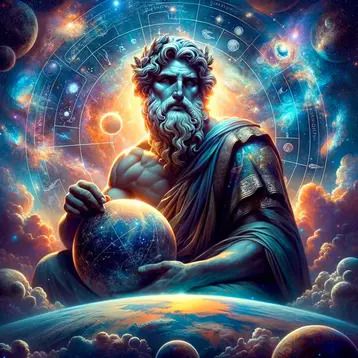
In Greek mythology, Coeus is one of the primordial Titans who played a significant role in the early cosmos. He is often associated with the intellect and the quest for knowledge. Coeus is the son of Uranus (the sky) and Gaia (the earth), making him part of the original generation of Titans. His siblings include notable figures like Cronus, Hyperion, and Oceanus. Each Titan had their own unique attributes, and Coeus is primarily recognized for his connection to intelligence and the celestial realm. This article will delve into various aspects of Coeus, exploring his lineage, significance, and the myths surrounding him.
Lineage and Family
The lineage of Coeus is quite fascinating, as it connects to some of the most powerful beings in Greek mythology. Being a child of Uranus and Gaia, Coeus is part of a divine family that includes both Titans and Olympian gods. His father, Uranus, represented the sky, while Gaia represented the earth. Together, they created many offspring, including the Titans, Cyclopes, and Hecatoncheires. Coeus, along with his siblings, played a pivotal role in the Titanomachy, the great war between the Titans and the Olympian gods.
 Cottus
Coeus had a significant relationship with his sister, Phoebe, who was also a Titaness. Together, they had two daughters, Leto and Asteria. Leto is particularly well-known for being the mother of the twin gods Apollo and Artemis. This connection to Apollo, the god of prophecy and knowledge, further emphasizes Coeus’s association with intelligence and enlightenment. The family dynamics among the Titans are complex, and understanding Coeus’s lineage helps illuminate his role in various myths.
Significance of Coeus in Mythology
Coeus’s significance in Greek mythology extends beyond his family ties. He is often associated with the concept of knowledge and wisdom. The Greeks believed that he represented the intellect that drives the pursuit of truth and understanding. In many myths, Coeus is depicted as a figure of profound insight, capable of seeing the connections between the cosmos and the human experience. This connection to knowledge made him a revered figure among the Titans.
- Intellect: Coeus embodies the quest for knowledge.
- Wisdom: His insights are sought after by both gods and mortals.
- Prophecy: Coeus’s connection to foresight is significant in various myths.
Moreover, Coeus’s name is often associated with the concept of axis or center, as it derives from the Greek word “koios,” which means “to know.” This etymology reinforces his role as a figure of knowledge. His ability to understand the workings of the universe made him a valuable asset during the Titanomachy, where strategy and foresight were crucial. Coeus’s intelligence was instrumental in the Titans’ efforts to challenge the Olympian gods.
 Comus
ComusThe Titanomachy
The Titanomachy was a monumental conflict in Greek mythology, marking the struggle between the Titans and the Olympian gods led by Zeus. Coeus played a notable role in this epic battle. The Titans, including Coeus, sought to maintain their dominance over the cosmos, while the Olympians aimed to overthrow them and establish a new order. This war was not just a physical battle but also a clash of ideologies and power dynamics.
Coeus’s intelligence was particularly valuable during the Titanomachy. His ability to strategize and foresee the movements of the Olympians allowed the Titans to mount a more effective defense. However, despite their initial strength, the Titans ultimately faced defeat. Zeus and his siblings, with the help of the Cyclopes and Hecatoncheires, managed to overthrow the Titans, leading to their imprisonment in Tartarus. Coeus’s defeat marked a significant shift in the balance of power in the Greek pantheon.
Coeus’s Role After the Titanomachy
After the Titanomachy, Coeus, like many of the Titans, was imprisoned in Tartarus. This deep abyss served as a prison for those who opposed the Olympian gods. Coeus’s imprisonment symbolizes the fall of the Titans and the rise of the Olympians as the new rulers of the cosmos. Despite his defeat, Coeus’s legacy continued to influence Greek mythology. His connection to knowledge and intellect remained significant, as future generations of gods and heroes would often seek wisdom.
 Cotytto
- Imprisonment: Coeus was confined in Tartarus after his defeat.
- Legacy: His influence persisted through various myths.
- Wisdom: Future generations sought his insights.
Even in his absence from the forefront of mythology, Coeus’s character served as a reminder of the importance of knowledge and wisdom. The themes associated with him continued to resonate throughout Greek culture, as philosophers and scholars sought to embody the ideals of intellect and understanding. Coeus’s story is not just one of defeat; it is also a narrative that highlights the enduring value of wisdom in the face of adversity.
Coeus and Other Titans
Coeus’s relationships with other Titans provide a deeper understanding of his character and significance. As a member of the Titan family, he interacted with various figures, each representing different aspects of existence. His brother, Hyperion, was associated with light, while Cronus, another brother, was linked to time and harvest. These relationships illustrate the interconnectedness of the Titans and their respective domains.
Coeus’s bond with his sister Phoebe is particularly noteworthy. Together, they embodied a duality of knowledge and prophecy. Phoebe, associated with the moon and oracles, complemented Coeus’s intellectual pursuits. Their offspring, Leto and Asteria, further enriched this lineage, connecting the themes of knowledge and divinity. The collaboration between Coeus and Phoebe showcases the importance of unity among the Titans, emphasizing how their collective strengths contributed to their roles in mythology.
Influence on Greek Culture
The influence of Coeus extended beyond mythology and into the realm of Greek culture. His association with knowledge and intellect resonated with ancient Greek philosophers, who valued the pursuit of wisdom. The idea that understanding and enlightenment could lead to a better society was a core principle in Greek thought. Coeus’s legacy became intertwined with these ideals, as he represented the importance of intellectual pursuits in a world often dominated by physical strength.
- Philosophy: Coeus inspired thinkers to seek knowledge.
- Literature: His stories influenced various literary works.
- Art: Artists depicted themes of knowledge inspired by Coeus.
In literature, Coeus’s character appeared in various works, symbolizing the timeless struggle for understanding. Poets and playwrights often referenced the Titans to explore themes of power, knowledge, and the human condition. Coeus, as a figure of intellect, became a symbol of the eternal quest for truth, inspiring countless narratives that delve into the complexities of existence. His legacy in art and literature reflects the profound impact of Greek mythology on cultural development.
Modern Interpretations of Coeus
In modern times, Coeus’s figure has been revisited in various forms of media, including literature, film, and art. Contemporary interpretations often emphasize his role as a symbol of knowledge and intelligence. In a world where information is abundant yet often misinterpreted, Coeus serves as a reminder of the importance of discernment and critical thinking. His character resonates with the challenges of navigating a complex information landscape.
Many modern authors have drawn inspiration from Coeus’s mythological background, incorporating themes of knowledge and wisdom into their works. This resurgence of interest highlights the timeless nature of Coeus’s story and its relevance in today’s society. His character often appears in fantasy novels and films, where he is portrayed as a wise mentor or a figure guiding protagonists on their quests for understanding.
Coeus in Popular Culture
Coeus’s presence in popular culture showcases the enduring fascination with Greek mythology. His character often embodies the archetype of the wise sage, providing guidance and insight to heroes and heroines. In various video games and fantasy series, Coeus may be depicted as a powerful being with vast knowledge, helping characters navigate challenges and uncover hidden truths. This portrayal reinforces the idea that wisdom is a valuable asset in any quest.
- Literature: Coeus appears in fantasy novels as a wise character.
- Film: His story is adapted in movies exploring mythology.
- Video Games: Coeus is often a guide or mentor figure.
Furthermore, the fascination with Titans, including Coeus, has led to the creation of various adaptations and retellings of their stories. These modern interpretations often highlight the themes of power, knowledge, and the consequences of ambition. Coeus’s character serves as a bridge between ancient mythology and contemporary storytelling, reminding audiences of the timeless nature of these narratives.
The Legacy of Coeus
The legacy of Coeus extends far beyond his mythological origins. His association with knowledge and wisdom has left a lasting impact on various fields, including philosophy, literature, and art. The ideals embodied by Coeus continue to resonate with individuals seeking to understand the complexities of life. His story serves as a reminder of the importance of intellectual pursuits and the value of seeking truth.
In education, Coeus’s influence can be seen in the emphasis on critical thinking and inquiry-based learning. His character inspires students and educators alike to explore the depths of knowledge and embrace the journey of discovery. The quest for understanding, as represented by Coeus, encourages individuals to question assumptions and seek deeper insights into the world around them.
Coeus in Education and Philosophy
The themes associated with Coeus have found a place in educational philosophies that prioritize inquiry and exploration. His legacy encourages a learning environment where curiosity is celebrated, and students are empowered to seek knowledge actively. This approach aligns with the ancient Greek tradition of fostering intellectual growth, emphasizing the importance of understanding the world through observation and reason.
- Inquiry-Based Learning: Coeus inspires a curiosity-driven approach.
- Critical Thinking: His legacy promotes questioning and analysis.
- Philosophical Discussions: Coeus’s ideals influence modern philosophy.
Philosophers often reference Coeus in discussions about knowledge, wisdom, and the nature of existence. His character serves as a focal point for exploring the relationship between intellect and the human experience. The discussions surrounding Coeus reflect the ongoing quest for understanding, highlighting the relevance of ancient myths in contemporary philosophical debates.
Coeus’s story is a testament to the enduring power of knowledge and the significance of wisdom in the face of challenges. His legacy continues to inspire individuals across various fields, reminding us of the importance of seeking understanding in an ever-changing world. From ancient mythology to modern interpretations, Coeus remains a symbol of the intellectual pursuit that defines the human experience.