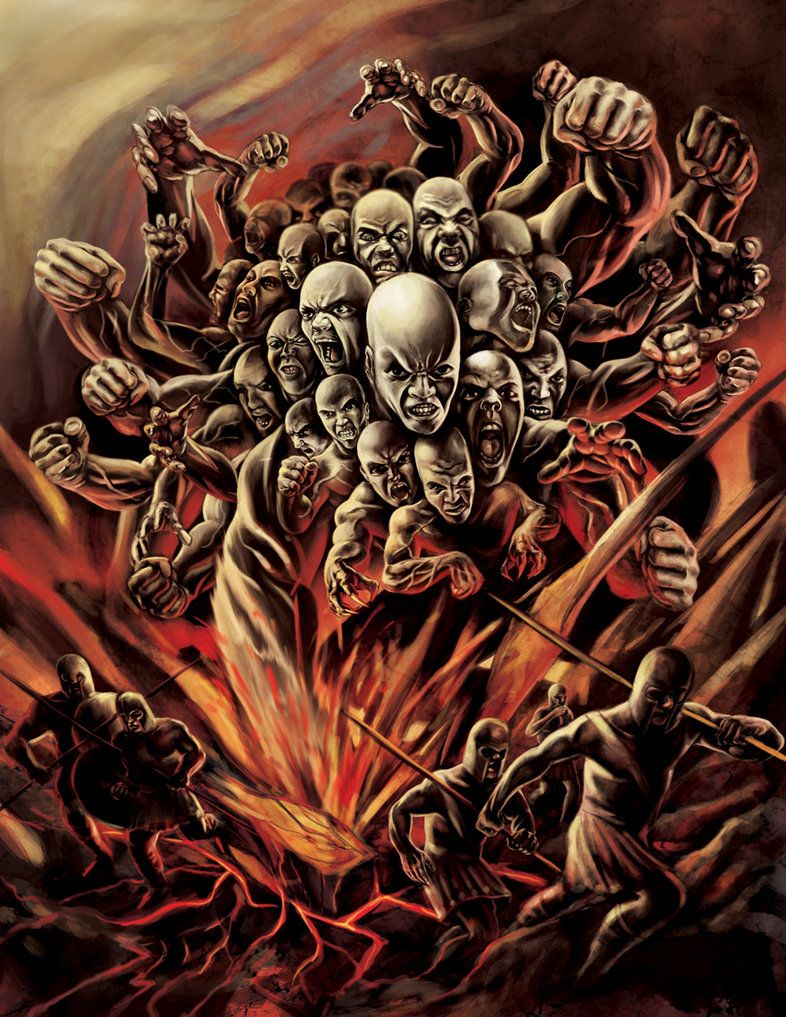
Cottus is a fascinating figure in Greek mythology, known primarily as one of the three Hecatoncheires, or “Hundred-Handed Ones.” He is often depicted alongside his brothers, Briareus and Aegaeon, as they embody immense strength and power. The Hecatoncheires were born from the primordial beings Uranus (the sky) and Gaia (the earth), making them ancient deities who played a significant role in the myths surrounding the Titanomachy, the epic battle between the Titans and the Olympian gods. Cottus, like his brothers, is described as having one hundred arms and fifty heads, a terrifying sight that exemplifies their formidable nature.
The Birth of Cottus
The story of Cottus begins with the creation of the world in Greek mythology. According to the myths, Uranus and Gaia gave birth to many offspring, including the Titans, the Cyclopes, and the Hecatoncheires. However, Uranus feared the strength of his children and imprisoned them deep within the earth, a place known as Tartarus. Cottus and his brothers were among those imprisoned, and their confinement sparked a desire for revenge against their father. This act of imprisonment set the stage for the eventual uprising of the Titans and their allies against Uranus.
 Comus
ComusCottus’s birth is often associated with the themes of fear and power. The Hecatoncheires were seen as embodiments of chaos and strength, which made them both feared and respected. Their hundred arms symbolize the overwhelming force they could unleash, while their many heads represent the vastness of their knowledge and abilities. As such, Cottus and his brothers were not just physical beings; they also represented the untamed aspects of nature that the gods had to contend with.
The Role of Cottus in the Titanomachy
The Titanomachy was a pivotal moment in Greek mythology, where the Titans, led by Cronus, battled against the Olympian gods, led by Zeus. Cottus played a crucial role in this conflict. After being freed from their imprisonment by Zeus, Cottus and his brothers became loyal allies of the Olympians. Their strength and ferocity were instrumental in the defeat of the Titans. Cottus, with his hundred arms, was particularly effective in combat, able to strike multiple foes at once, which gave the Olympians a significant advantage.
During the Titanomachy, Cottus and his brothers were said to have hurled massive boulders at the Titans, contributing to the chaos of battle. Their participation was not only about physical strength; it also symbolized the unity of the new generation of gods against the old. The Hecatoncheires represented the forces of change and the overthrow of tyranny, as they stood with Zeus against Cronus and his allies. This alliance marked a turning point in the mythological narrative, emphasizing themes of rebellion and justice.
 Cotytto
The Hecatoncheires in Literature
Cottus and his brothers appear in various ancient texts, showcasing their significance in Greek mythology. One of the most notable sources is Hesiod’s Theogony, where the origins of the gods and the creation of the world are described. In this text, the Hecatoncheires are portrayed as powerful beings who were crucial in the battle against the Titans. Their depiction in literature often emphasizes their monstrous nature, highlighting both their physical form and their chaotic energy.
In addition to Hesiod, Cottus is mentioned in works by Homer and other ancient poets. These references often focus on the fear and awe that the Hecatoncheires inspired in both gods and mortals. The imagery of Cottus with his hundred arms is striking and has been used to convey the idea of overwhelming power. Such literary portrayals helped to solidify Cottus’s place in the pantheon of Greek mythology, ensuring that his story would endure through the ages.
Cottus and the Underworld
 Cratus
In some myths, Cottus is associated with the Underworld and the darker aspects of existence. After the Titanomachy, the Hecatoncheires were said to have been placed in charge of guarding the gates of Tartarus, where the defeated Titans were imprisoned. This role highlights their connection to both chaos and order. While they were once feared for their power, they became protectors of the realm of the dead, ensuring that the Titans could not escape and threaten the new order established by Zeus.
The association with the Underworld adds another layer to Cottus’s character. He embodies the duality of strength and restraint, chaos and order. As a guardian, Cottus represents the necessity of balance in the universe. His presence in Tartarus serves as a reminder of the consequences of unchecked power and rebellion. The myths surrounding Cottus in this context invite reflection on the nature of authority and the importance of maintaining balance in the world.
Cottus in Modern Culture
The legacy of Cottus extends beyond ancient texts and into modern culture. His figure has been referenced in various forms of art, literature, and even popular media. In contemporary adaptations of Greek mythology, Cottus and his brothers often appear as symbols of strength and resilience. Their stories are reinterpreted to reflect modern themes of empowerment and overcoming adversity.
Moreover, Cottus’s image has inspired various artistic representations, from sculptures to paintings. Artists often emphasize his monstrous features and overwhelming strength, creating works that capture the imagination. In literature, Cottus’s character has been explored in novels and plays that seek to reinterpret the ancient myths for a new audience. These adaptations highlight the timeless nature of Cottus’s story and its relevance to contemporary issues.
The Symbolism of Cottus
Cottus is rich in symbolism, representing not just physical strength but also the complexities of power and rebellion. His hundred arms can be seen as a metaphor for the multitude of challenges one faces in life. Each arm symbolizes a different struggle or obstacle, illustrating the idea that overcoming adversity requires both strength and perseverance. In this way, Cottus serves as an inspiration for those facing their own battles.
Additionally, Cottus embodies the concept of unity in diversity. With his many heads and arms, he represents the idea that strength can come from collaboration and support. Just as Cottus and his brothers worked together to assist Zeus, individuals can find strength in community and cooperation. This symbolism resonates with modern values of teamwork and solidarity, making Cottus a relevant figure in today’s world.
The Legacy of Cottus
The legacy of Cottus in Greek mythology is one of power, chaos, and transformation. As one of the Hecatoncheires, he stands as a reminder of the struggles between generations and the importance of challenging the status quo. His story reflects the themes of rebellion and justice, as well as the necessity of balance in the universe. Cottus’s role in the Titanomachy and his guardianship of Tartarus showcase the complexities of his character and the multifaceted nature of power.
Moreover, Cottus’s influence can be seen in various aspects of culture, from ancient literature to modern adaptations. His representation in art and storytelling continues to inspire audiences, allowing his myth to live on. The themes associated with Cottus, such as strength, unity, and the importance of balance, remain relevant today, making him a timeless figure in the realm of mythology.
In the tapestry of Greek mythology, Cottus stands out as a powerful symbol of strength and resilience. His story, intertwined with those of his brothers and the greater narrative of the gods, highlights the complexities of power and the importance of balance in the universe. Through literature, art, and modern adaptations, Cottus’s legacy endures, inviting reflection on the nature of authority and the challenges we face in our own lives.