WORLD
WORLD
Cassiel
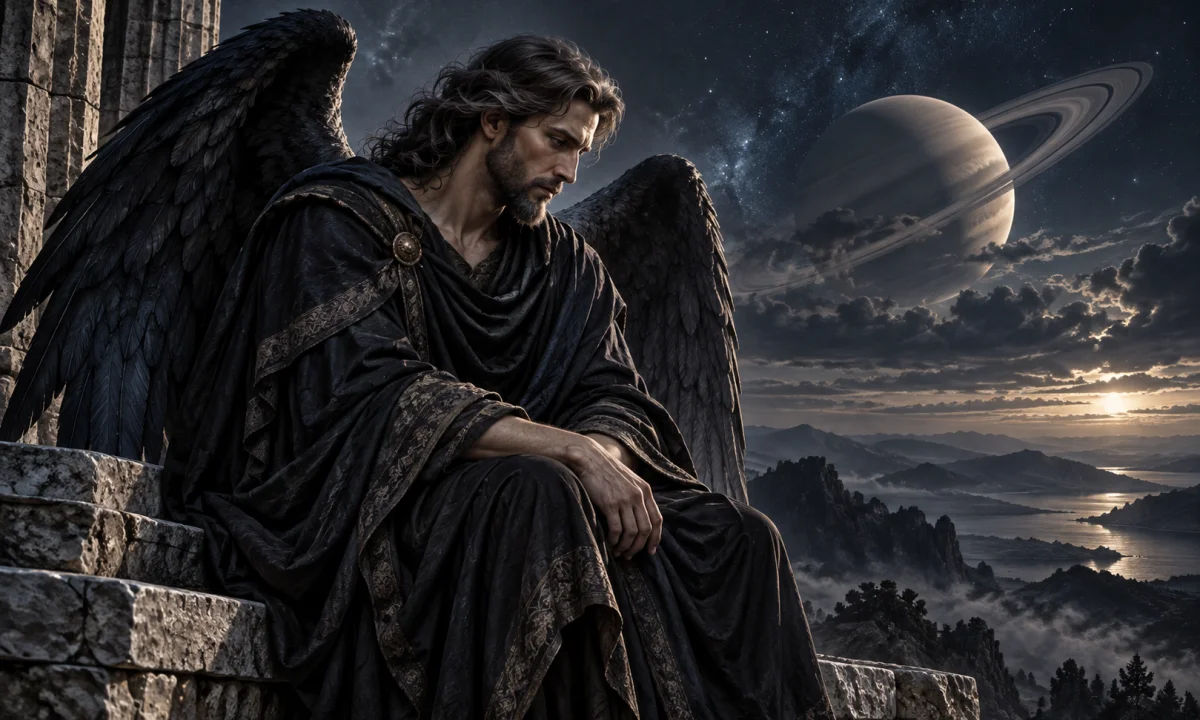
Cassiel is the name used in later Jewish mystical, Christian occult and esoteric traditions for an angel associated especially with Saturn, time, solitude and restraint. Unlike Michael, Gabriel or Raphael, Cassiel does not appear as a named angel in the Hebrew Bible or the New Testament. The figure belongs to a more complex history of angelic speculation, magical literature and astrological symbolism, in which names and attributes often vary considerably from one text or author to another.
Origins and cultural setting
Angelology developed through several overlapping traditions. Biblical writings provide a relatively small number of personal angelic names, while later Jewish, Christian and Islamic thinkers expanded the heavenly hierarchy through interpretation, visionary literature, prayer, astrology and ritual texts. The resulting lists of angels were not uniform. Different communities assigned different names, ranks, planets, days, virtues and duties to the same figure, and some names circulated in several spellings.
Cassiel belongs primarily to this later tradition rather than to the scriptural core of Judaism or Christianity. The name is related to forms such as Kafziel, Qafsiel and Qaspiel, although the relationship between every similar form is not certain. Some may represent different spellings of one name, while others may have been confused or combined by later writers. The Latin-looking form “Cassiel” became particularly familiar in Christian occult and modern esoteric writing.
Jewish mystical and magical literature contains references to angels whose names resemble Qafsiel or Kafziel. These materials include traditions associated with the heavenly palaces, angelic guardians and the structure of the heavens. They do not present one universally agreed biography of Cassiel. In some contexts, a related angel is connected with a high heaven or with the guardianship of a celestial realm; in others, the name is placed within a planetary system. Later Christian writers inherited and reorganised such material rather than simply reproducing a single ancient account.
Name and identity
The meaning of the name is disputed. It is often explained as something like “speed of God”, based on a proposed Hebrew form, but other interpretations have been suggested. The spelling “Cassiel” does not by itself establish a precise Hebrew etymology, and the transmission of angelic names across Hebrew, Aramaic, Greek, Latin and European languages introduced many changes.
The name should therefore be treated as a traditional variant rather than as evidence of a single clearly defined ancient figure. “Cassiel” may refer to a later angel associated with Saturn, while “Kafziel” or “Qafsiel” may refer to an angel in Jewish mystical sources whose attributes do not exactly match those found in Christian occult manuals. Modern reference works frequently present these names as equivalent, but that identification is a matter of tradition and interpretation rather than a fact established by a canonical scripture.
Cassiel is also sometimes called an archangel, but this title is not consistently supported across the traditions in which the name appears. In many occult classifications, the important point is not whether Cassiel belongs to a fixed biblical rank, but that the angel functions as a ruler or representative of Saturn. The designation “archangel” should consequently be understood as a later classification, not as a universally recognised status.
Cassiel and Saturn
The strongest and most recognisable association of Cassiel is with Saturn. This connection belongs chiefly to medieval and early modern Christian occultism, drawing on the older practice of linking planets with angels, days, metals, colours and spiritual powers. In these systems, Saturn was not merely a distant planet. It was a symbolic force associated with age, boundaries, limitation, severity, contemplation and the passage of time.
Saturn had an ambivalent character. Its influence could be difficult, representing delay, grief, isolation, poverty or the burdens imposed by mortality. At the same time, it could signify discipline, patience, seriousness, wisdom and the ability to endure hardship. An angel assigned to Saturn was therefore not necessarily evil or hostile. Cassiel’s traditional symbolism reflects the solemn and restrictive side of the cosmos, but it can also point toward maturity and self-command.
In many modern occult lists, Cassiel is connected with Saturday, the day named in English after Saturn. He may also be linked with the colour black, lead, winter, old age, mountains, silence and the western or northern quarter, although these details differ between systems. Such correspondences should not be treated as a single ancient doctrine. They come from particular magical and astrological frameworks, especially those that organised the seven classical planets into a ritual hierarchy.
Some lists place Cassiel among the seven planetary angels, with one angel governing each of the visible planets traditionally known in antiquity. Other lists name different angels for Saturn, including forms such as Zazel. This variation is important: there is no universal agreement that Cassiel is the sole or original angel of Saturn. In some occult traditions, Cassiel and Zazel may occupy different roles, while in others the names are used in competing systems.
Attributes and symbolism
Cassiel is commonly represented as a grave, quiet and distant angel. Unlike angels associated with healing, warfare or joyful announcement, Cassiel is connected with experiences that require patience and inward reflection. The recurring themes include:
- Solitude: the withdrawal from noise and society necessary for contemplation, though also the loneliness that can accompany separation.
- Tears and grief: awareness of loss, mortality and the emotional weight of human experience.
- Time: the slow movement of events, ageing and the consequences of actions.
- Restraint: self-control, moderation and the acceptance of boundaries.
- Endurance: the ability to persist through difficulty rather than seeking immediate results.
- Judgment: the sober recognition that choices have lasting effects.
These qualities do not necessarily make Cassiel a punitive spirit. In a symbolic reading, Saturn’s severity can protect against excess and impatience. The angel’s darkness may represent seriousness rather than moral corruption. Cassiel can therefore be interpreted as a figure of contemplative discipline: a reminder that wisdom often emerges through limitation, waiting and the recognition of impermanence.
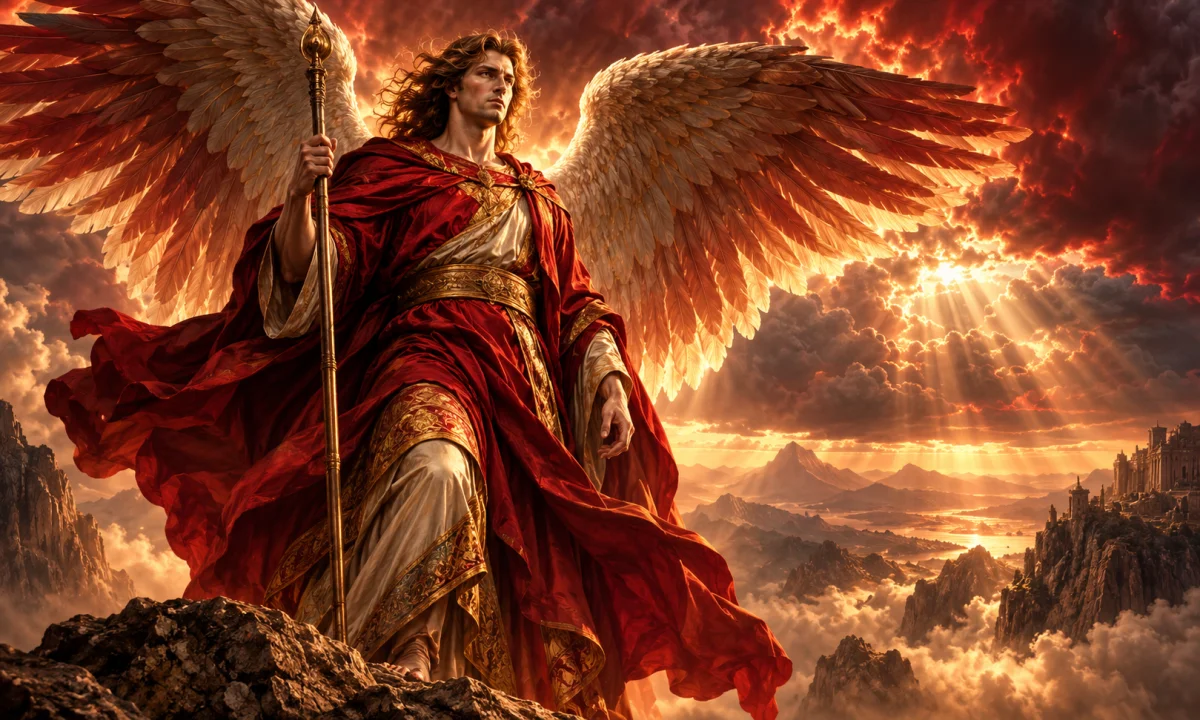
There is no stable ancient description of Cassiel’s physical appearance. Later illustrations and occult writings may portray the angel in dark robes, beside a black or lead-coloured setting, or with imagery associated with night and old age. These visual choices are symbolic inventions or artistic conventions, not details preserved in scripture. Cassiel is sometimes shown with wings like other angels, but even that conventional depiction belongs to broader artistic representations of angels rather than to a specific canonical vision of Cassiel.
Stories and roles
Cassiel has no widely accepted cycle of biblical narratives. There is no canonical story describing the angel’s creation, rebellion, conversation with a prophet or intervention in human history. References to related names in mystical literature are generally brief and concerned with angelic administration, heavenly geography or ritual invocation rather than with a developed biography.
Some Jewish mystical traditions describe named angels as guardians of heavenly gates or as rulers of celestial regions. Names resembling Qafsiel occur in this wider environment, but the details and identifications vary. A particular passage may describe an angel’s place in the heavens without assigning the Saturn symbolism later associated with Cassiel. Conversely, a planetary list may use Cassiel’s name without preserving the older Jewish context from which a similar name may have emerged.
Christian occult authors later incorporated angelic names into systems involving the seven planets, the seven days of the week and ritual hours. In these settings, Cassiel can appear as a ruling angel or spiritual intelligence connected with Saturn. The purpose of such classifications was often to organise the cosmos into a hierarchy that could be contemplated or ritually approached. These writings should be understood as products of learned magic, astrology and religious speculation, not as official teachings shared by all Christian churches.
The association with solitude is especially prominent in modern descriptions. It reflects both Saturnine astrology and a long-standing religious idea that withdrawal can produce spiritual insight. Hermits, ascetics and contemplatives were often imagined as turning away from ordinary pleasures in order to face divine judgment, mortality and the self. Cassiel’s symbolism can echo that pattern, although the angel is not the patron of a single recognised monastic order or devotional movement.
Religious and esoteric interpretation
From a religious perspective, Cassiel illustrates the difference between canonical angelology and later angelic speculation. Canonical texts establish only a limited number of named angels and do not provide a complete catalogue of heavenly beings. Mystical and occult writers, by contrast, attempted to describe the invisible world in much greater detail. Their lists can be culturally significant without being universally authoritative.
In Jewish contexts, names resembling Cassiel belong to the broad history of angelic and heavenly speculation that includes apocalyptic, mystical and magical writings. These traditions often treat heaven as a structured realm containing princes, guardians and celestial attendants. Their imagery reflects the religious concerns of the communities that produced and transmitted them, including reverence for divine majesty, the danger of approaching sacred realms and the desire to understand the relationship between earthly and heavenly order.
In Christian esoteric traditions, Cassiel’s Saturnine role gave an old astrological symbolism an angelic form. Saturn could be interpreted as the planet of limits and the angel as the intelligence or ruler associated with those limits. This approach differs from mainstream Christian theology, which generally does not require a planetary angel system and does not give Cassiel a universally recognised place in doctrine or liturgy.
Modern practitioners may regard Cassiel as a meditation figure for patience, grief, boundaries or personal transformation. Others approach the name as part of ceremonial magic or angelic astrology. These uses are contemporary religious or esoteric interpretations. They should not be projected backward as though all Jewish or Christian communities historically shared the same beliefs about Cassiel.
Distinction from similar names
Cassiel is easily confused with several other names. Castiel, for example, is a fictional angel created for modern popular culture, most notably as a character in the television series Supernatural. Although the names sound similar, Castiel is not simply a modern spelling of the traditional Cassiel. The character has a separate origin and a different personality, narrative history and set of relationships.
Cassiel should also not automatically be identified with every angel named Kafziel, Qafsiel or Qaspiel. These forms may be related through transmission, but their appearances in different texts do not always describe the same role. A reference to a guardian of a heavenly palace, a planetary angel of Saturn and a symbolic angel of solitude may derive from distinct layers of tradition that later writers brought together.
Nor should Cassiel be confused with Satan, a personification of death, or a demon merely because Saturn is sometimes associated with darkness, suffering or mortality. The traditional Saturn symbolism is morally complex. It concerns limitation and severity, but Cassiel is not consistently portrayed as a fallen angel or demonic being. In most classifications that use the name, Cassiel remains an angelic or celestial figure.
Later reception
Cassiel has remained more influential in occult, astrological and esoteric circles than in mainstream popular devotion. The figure’s appeal lies in the unusual qualities attributed to the Saturnian sphere. Rather than offering protection through military strength or healing, Cassiel represents the difficult forms of spiritual experience: waiting, ageing, mourning, solitude and the acceptance of consequences.
Modern fantasy and speculative fiction sometimes borrow the name because it sounds ancient and angelic. Such uses may retain the associations with darkness, time or melancholy, but they are creative adaptations rather than evidence about Jewish or Christian tradition. A fictional Cassiel may be a warrior, a fallen angel, a guardian or a supernatural antagonist without reflecting the historical meanings of the name.
Within the older symbolic tradition, Cassiel is best understood as a variable angelic figure shaped by Jewish mystical transmission, Christian occult classification and planetary astrology. The name does not identify one universally defined personality. Its most consistent later associations are Saturn, Saturday, solitude, restraint and the solemn passage of time, while its exact origin, rank and relationship to similarly named angels remain matters of interpretation.