WORLD

Cadair Idris Demon
The Cadair Idris Demon is not a clearly defined demon in the surviving mythology of Wales. The name is better understood as a modern or descriptive label for the supernatural dangers associated with Cadair Idris, a mountain in Gwynedd, north-west Wales. Traditional stories connect the mountain with the giant Idris, uncanny voices, dangerous lakes, prophetic dreams, madness and the strange effects of sleeping on its summit. These elements can resemble a demon legend, but Welsh tradition does not preserve a single, consistently named monster called the Cadair Idris Demon.
Cadair Idris and its cultural setting
Cadair Idris, whose name means Idris’s Chair or Idris’s Seat, is one of the best-known mountains in Welsh folklore. The older spelling Cader Idris also occurs, reflecting historical variations in Welsh orthography and pronunciation. The mountain rises in southern Gwynedd above the town of Dolgellau and the Mawddach estuary. Its steep slopes, exposed summit, glacial lakes and sudden changes in weather have all contributed to its reputation as a perilous and supernatural place.
In local legend, the mountain is associated with Idris, usually portrayed as a giant, ruler or exceptionally learned figure. The precise identity of Idris varies. Some traditions describe him as a giant who used the mountain as a chair or resting place; others connect him with a legendary ruler or astronomer. The name may preserve a memory of a figure known as Idris, but the surviving folklore does not provide one complete biography accepted across all versions.
The mountain belongs to a wider Welsh landscape of enchanted hills, lakes and passes. In Welsh storytelling, mountains are not merely scenic locations. They may be the seats of giants, meeting places of supernatural beings, entrances to otherworldly regions or sites where ordinary rules become unreliable. A story about a demon on Cadair Idris therefore belongs to a larger tradition of dangerous and spiritually charged landscapes rather than to a separate, well-defined demonological system.
Is there a traditional demon called the Cadair Idris Demon?
There is no widely attested medieval Welsh text that identifies a particular being by the English name Cadair Idris Demon. Nor is there a single traditional Welsh name that can confidently be translated as that exact title. The expression appears to be a later English description, a modern cataloguing term or a loose way of referring to the mountain’s supernatural reputation.
This distinction matters because Welsh folklore contains many named supernatural beings, including the Gwyllion, frightening female spirits associated with mountain roads, and the Tylwyth Teg, the fair folk of Welsh tradition. Neither group is identical to a “Cadair Idris Demon,” and neither should automatically be treated as the source of that label. The mountain’s stories may share themes with tales about these beings, but similarity of atmosphere does not prove identity.
The word demon also carries a particular religious and cultural meaning. In Christian writing, a demon is commonly understood as an evil or unclean spirit opposed to God. Earlier Greek terms related to daimōn could refer more broadly to a spirit or divine power, without always implying absolute evil. Welsh mountain folklore does not consistently classify the dangers of Cadair Idris in either of these technical senses. A frightening presence, a curse, a prophetic experience or a deadly supernatural place is not necessarily a demon.
The legend of sleeping on the mountain
The most famous tradition connected with Cadair Idris concerns anyone who sleeps on the mountain, especially near its summit. Depending on the version, the sleeper will awaken as a poet, a mad person or a corpse. Some accounts associate the experience with a particular night, such as Midsummer Eve, while others present it as a general danger attached to the mountain.
The three possible outcomes are often expressed in slightly different ways. The sleeper may gain extraordinary poetic inspiration, lose their reason or die before morning. These alternatives reflect three traditional ideas about contact with the supernatural:
- Poetic inspiration: the mountain grants unusual creative or prophetic insight.
- Madness: the human mind cannot safely withstand what is encountered there.
- Death: the mountain is physically or spiritually hostile to those who treat it casually.
This story is sometimes used to explain why Cadair Idris became associated with poets. It also resembles a broader folklore pattern in which a person who sleeps in an enchanted place returns changed. The transformation may be a gift, punishment or warning. In the case of Cadair Idris, the story leaves open whether poetry and madness are truly different outcomes. In older cultural contexts, visionary inspiration, prophecy and altered states of mind could be close neighbours.
Modern retellings sometimes turn the unseen force behind this experience into a single demon. Traditional versions generally do not require such a figure. The mountain itself, its spirits or an undefined supernatural power may account for the danger. Giving that power a fixed demonic identity makes the story easier to classify, but it also simplifies the ambiguity that gives the legend much of its character.
Idris, the giant of the mountain
Idris is the central legendary figure associated with the mountain’s name. His exact status is uncertain. In some accounts he is a giant whose enormous body or movements shaped the landscape. In others, he is remembered as a ruler or learned man with an interest in the stars. The traditions are not necessarily mutually exclusive, since giants in Welsh folklore can also be kings, heroes or culture-bearing figures.
The mountain’s profile is commonly explained through the image of a gigantic seat. Large stones and unusual rock formations may be interpreted as remnants of Idris’s activities or as parts of his chair. Such explanations belong to a widespread type of folklore known as giant lore, in which natural features are attributed to the actions of beings much larger and older than ordinary humans.
Idris is not normally portrayed as a demon. He may be dangerous in some interpretations because the mountain is dangerous, but he is not simply an embodiment of evil. Treating Idris and the so-called Cadair Idris Demon as the same figure therefore risks merging two different concepts: a legendary giant connected with the mountain’s name and a later label for its supernatural menace.
Lakes, spirits and uncanny encounters
Cadair Idris contains several lakes, of which Llyn Cau is particularly prominent in local legend. Its dark waters and steep surroundings have helped make it an important setting for stories of danger and mystery. As with many remote Welsh lakes, tales may describe the water as deep, unfathomable or associated with beings that do not belong to the ordinary human world.
Not every story about Llyn Cau or the mountain’s lakes identifies a monster. A lake can be uncanny simply because it is isolated, difficult to reach and visually imposing. Folklore often uses such places to mark a boundary between familiar territory and the otherworld. A traveller who encounters something there may be facing a water spirit, a ghost, a fairy being, a monster or an experience that the story deliberately leaves unexplained.
Mountain roads and passes in Wales are also associated with the Gwyllion. These spirits are often described as frightening female figures who appear to travellers, mislead them or cause terror. Their legends are connected with the broader mountain environment, including the region around Cadair Idris, but a Gwyll is not the same as a singular Cadair Idris Demon. The number, appearance and behaviour of the Gwyllion vary between accounts, and their presence should not be treated as evidence for a named demon residing on the mountain.
Appearance and powers
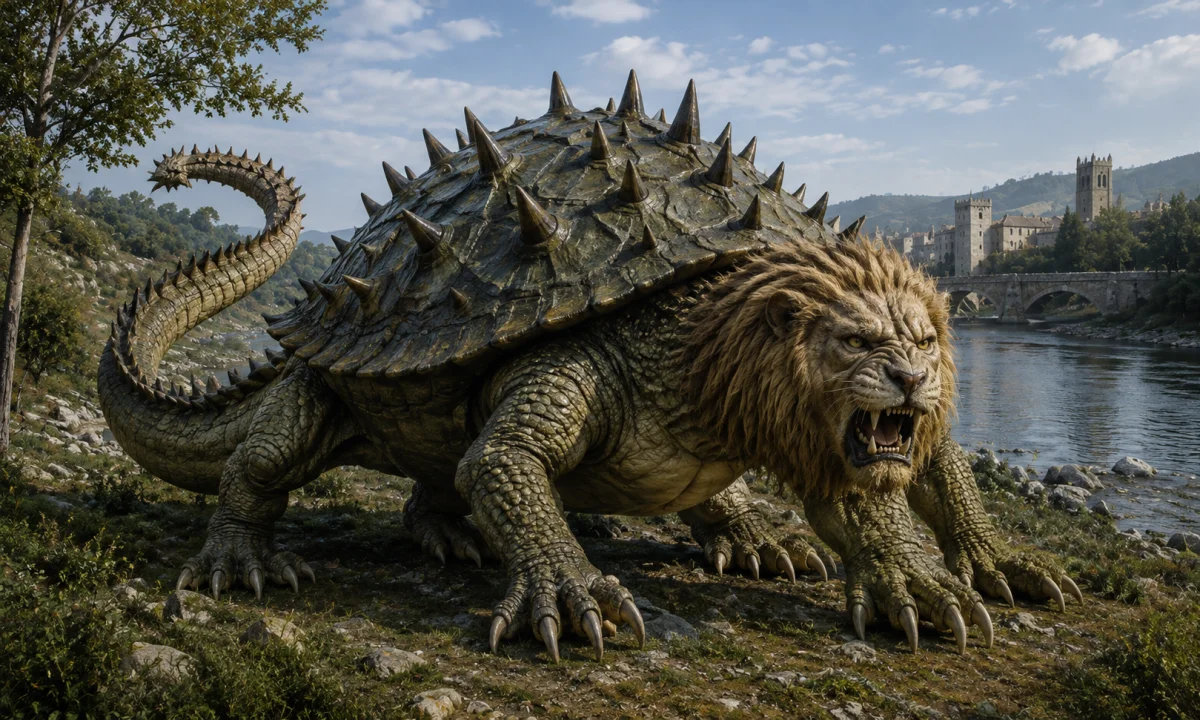
Because the Cadair Idris Demon is not a stable traditional character, it has no fixed appearance. One modern depiction may show a horned devil, while another may imagine a shadowy giant, a spectral traveller, a black animal or an invisible force on the summit. These images belong to interpretation and creative adaptation rather than to a consistent Welsh description.
The powers attributed to the supposed demon are likewise drawn from the mountain legends rather than from a defined body of myth. They may include:
- causing sleepwalkers or climbers to become lost;
- bringing madness or disturbing visions;
- granting sudden poetic ability or prophetic knowledge;
- appearing as a voice, shadow or presence in bad weather;
- guarding a lake, summit or hidden passage;
- bringing death to those who sleep in the wrong place.
These abilities should be described as motifs associated with Cadair Idris, not as an established supernatural profile. The traditional material does not provide a canonical portrait, a known family relationship, a personal weapon or a consistent method of attack. Claims that the being has a particular physical form or named origin require a modern source or adaptation to support them.
Symbolism and interpretation
The legend of Cadair Idris expresses several concerns found in Welsh folklore. The first is the danger of crossing into a place that humans do not fully understand. A person who sleeps on the mountain is vulnerable because sleep removes ordinary awareness. The sleeper cannot tell whether a dream, vision or supernatural encounter is taking place.
The second concern is the ambiguous nature of inspiration. Poetry is presented as a possible reward, but the same encounter may produce madness or death. The story therefore treats creativity as powerful rather than harmless. Exceptional knowledge may carry a cost, especially when it is acquired through contact with forces beyond human control.
The mountain can also be interpreted as a place where the boundaries between nature, legend and religion overlap. Christian communities may have described frightening spirits using the language of demons, while older local traditions could preserve ideas about giants, enchanted places and the otherworld. These layers do not form a perfectly unified belief system. They represent different periods and ways of understanding the same landscape.
From a historical perspective, the stories also reflect the real hazards of mountain travel. Exposure, exhaustion, disorientation and sudden weather changes can produce frightening experiences. Folklore does not need to be reduced to a literal explanation of these dangers, but practical risk and supernatural meaning often reinforce one another. A warning against sleeping alone on a high mountain has both physical and legendary force.
Distinguishing the figure from similar beings
The name can cause confusion with several different figures and traditions:
- Idris: the giant, ruler or learned legendary figure associated with the mountain’s name. He is not automatically a demon.
- The Gwyllion: Welsh mountain spirits, often portrayed as frightening female wanderers or misleaders. They are not a single being called the Cadair Idris Demon.
- The Tylwyth Teg: the Welsh fair folk, whose traditions are extensive and varied. They should not be identified with every supernatural presence on a Welsh mountain.
- Lake monsters: stories about uncanny waters near the mountain do not establish one standard monster belonging to the entire Cadair Idris tradition.
- Christian devils and demons: these belong to a theological category that is not identical to every dangerous spirit or enchanted place in Welsh folklore.
These distinctions are especially important in encyclopedic descriptions. A mountain may collect several legends over time without those legends becoming the biography of one creature. The supernatural reputation of Cadair Idris is better understood as a cluster of related traditions than as evidence for a single demon with a settled name and identity.
Later reception
In modern popular culture, the phrase Cadair Idris Demon can function effectively as a name for a horror creature, fantasy antagonist or paranormal legend. Games, fiction and online monster catalogues may give it an appearance, powers and personal history. Such portrayals can draw inspiration from the mountain’s folklore, especially the stories of madness, death and poetic transformation.
Those adaptations should be kept separate from the older Welsh traditions. A horned demon, a named guardian of Llyn Cau or a creature with a detailed supernatural genealogy may be a modern invention rather than a preserved element of local legend. The traditional material is more unsettling precisely because it does not clearly reveal what is present on the mountain. It offers a dangerous place, an ambiguous encounter and the possibility that the visitor may return inspired, insane or not at all.