WORLD
WORLD
Yowie
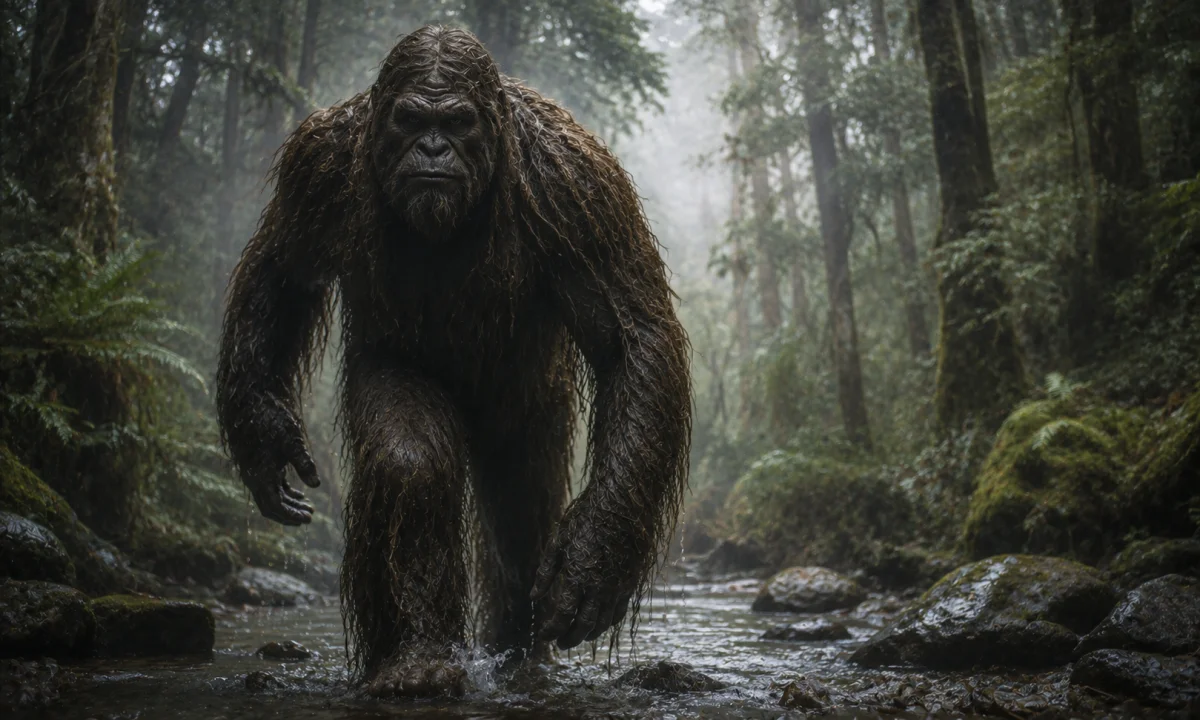
The yowie is a figure of Australian folklore commonly described as a large, hairy, human-like creature living in forests, mountains and other remote country. In modern popular culture, the name usually refers to an Australian equivalent of the North American Bigfoot or Sasquatch. That comparison is useful only at a broad level, however. “Yowie” is not the name of one universally defined being in all Aboriginal traditions, and the modern cryptid image combines several different strands of Indigenous tradition, colonial-era reports and later popular storytelling.
Origins and cultural setting
Australia contains hundreds of Aboriginal language groups, each with its own cultural traditions, sacred places, ancestral beings and systems of knowledge. Stories about dangerous, mysterious or human-like beings therefore cannot automatically be treated as parts of a single Aboriginal mythology. A creature called a yowie in one region may not be identical to a being described by a similar word elsewhere.
The word yowie entered written English through colonial descriptions and later retellings. Its exact linguistic origin and original meaning are disputed. Historical records use related spellings such as yowie, yowie-whowie, yahoo and other forms, but these records are inconsistent. Some writers connected the terms with Aboriginal words for a spirit, monster, ghost or wild being; others used them loosely for any frightening figure associated with the bush. Because many early records were written by outsiders, they often provide too little information to identify the language, community or traditional context accurately.
Aboriginal oral traditions do include accounts of beings that may be translated into English as hairy men, wild people, giants, spirits or cannibal beings. These figures can be guardians of particular places, threats to children or travellers, explanations for unusual sounds and tracks, or participants in stories about proper conduct. Their meanings depend on the traditions of specific communities. It is misleading to assume that every such being was simply an ancient version of the modern yowie.
The name and its identity
There is no single agreed definition of yowie. In present-day English, the word generally means a large, hairy, bipedal creature said to inhabit the Australian wilderness. In older usage, it may have referred to a supernatural being, a ghost, a frightening bush creature or an Indigenous figure whose original name was recorded imperfectly.
The term has also been associated with particular Aboriginal words, but proposed etymologies do not always agree. Similar-looking spellings may come from different languages, and a word recorded by a nineteenth-century observer may have been misunderstood or reshaped according to English pronunciation. For that reason, claims that “yowie” has one certain Aboriginal translation or one continuous meaning across Australia should be treated cautiously.
The modern yowie is best understood as a layered folklore figure. It has an Indigenous and colonial background, but its current identity was also shaped by newspapers, books, spoken reports, cryptozoological writing, tourism and popular entertainment. Different storytellers may mean different things when they use the name.
Appearance and reported characteristics
Contemporary accounts usually describe the yowie as a powerful, upright creature covered in dark, reddish or grey hair. Reported height varies considerably, from a large human figure to an animal several metres tall. It is often said to have broad shoulders, long arms, a heavy chest, a flattened or ape-like face and a strong smell. Some accounts describe it as silent and elusive, while others claim that it screams, grunts, whistles, knocks on trees or imitates human sounds.
These details do not form a fixed traditional canon. They are recurring features of modern sightings and retellings rather than universally preserved attributes. Descriptions of footprints are also common. Witnesses may report large, human-like tracks in mud, sand or forest soil, sometimes accompanied by broken vegetation or unexplained noises. No specimen, body or scientifically verified population of yowies has been established.
In popular narratives, the yowie is usually portrayed as shy and wary of people. Some stories present it as curious, observing campsites or travellers from a distance. Others depict it as aggressive, territorial or capable of abducting people. Such differences reflect the ordinary development of folklore: a mysterious being can become a warning against travelling alone, entering unfamiliar country or behaving carelessly in the bush.
Traditional beings and the modern yowie
Some modern accounts state that Aboriginal people have always described exactly the same creature now called the yowie. The evidence does not support such a simple pan-Australian history. Aboriginal traditions are local and varied, and many were transmitted orally rather than through a single written mythology. In addition, colonial observers frequently translated unfamiliar beings into familiar categories such as “devil,” “monster,” “ogre” or “wild man.”
In some traditions, a being translated as a hairy man may have a moral, spiritual or territorial role that is lost when it is presented merely as an animal-like cryptid. A story may concern relationships between people, ancestral law, dangerous country or obligations to particular places rather than the search for a hidden biological species. The English word yowie can therefore conceal distinctions that are important within the original cultures.
There is also a difference between traditional cultural knowledge and later reports of an unknown creature. A community’s story about a spirit or ancestral being is not the same kind of claim as a twentieth-century witness report describing tracks in a forest. Both may become part of folklore, but they should not be treated as identical evidence or interpreted by the same standards.
Colonial records and the growth of bush folklore
Written references to yowie-like beings became more visible during the nineteenth century, when settlers, journalists, travellers and amateur ethnographers recorded stories about the Australian interior and eastern forests. These accounts were often fragmentary. They might report that Aboriginal people feared a being, that a strange creature had been seen near a settlement, or that a local place-name was connected with a monster. The records rarely preserve a complete story in its original language and cultural setting.
Colonial folklore also absorbed older European ideas about wild men, giants and hairy forest beings. Settlers interpreted unfamiliar landscapes through stories already known from Europe, while Aboriginal stories were filtered through English vocabulary and colonial assumptions. The result was a changing body of tales in which Indigenous, European and local Australian elements could become intertwined.
By the late nineteenth and early twentieth centuries, newspapers helped turn isolated reports into recurring legends. A strange footprint, a missing animal or an encounter in the bush could be presented as evidence of a “wild man” or “Australian gorilla.” Such reports sometimes used sensational language and did not distinguish clearly between eyewitness testimony, rumour and deliberate entertainment.
Stories, encounters and regional variants
Yowie stories are especially associated with the forested and mountainous regions of eastern Australia, including parts of Queensland and New South Wales. Reports also occur elsewhere, but the creature does not have one fixed territory. A local story may identify the being with a particular gorge, range, creek or stretch of forest, giving the landscape a sense of mystery and danger.
Common narrative patterns include an encounter by a lone traveller, a family camping in the bush, a person walking near a creek or a group hearing heavy movements outside a settlement. The creature is often seen briefly before disappearing among trees. Other stories focus on footprints, unusual calls, damaged fences or livestock disturbances. These motifs are not proof that every report describes the same phenomenon; they are also natural products of storytelling about remote places.
Some accounts portray the yowie as a solitary animal, while others speak of family groups or communities. A few describe it as intelligent enough to understand human speech, use simple tools or deliberately mislead witnesses. These variations show how the figure can shift between monster, wild person, spirit and undiscovered animal.
Meaning and interpretation
The yowie can function as a boundary figure: it belongs neither fully to the human world nor entirely to the animal world. It is associated with places beyond ordinary settlement and with the uncertainty of the bush. In this role, it resembles many worldwide traditions about wild people and forest beings, although resemblance does not establish a shared origin.
Folklore researchers may interpret yowie stories as expressions of environmental anxiety, encounters with unfamiliar animals, misidentified tracks, pranks, hoaxes or the social circulation of dramatic stories. A large kangaroo seen in poor light, a person wearing bulky clothing, a bear-like silhouette created by vegetation, or a sequence of ordinary animal sounds can all become part of an extraordinary report. Memory and retelling may then increase the creature’s size, strength or strangeness.
Cryptozoological enthusiasts interpret the yowie differently, proposing that it could represent an undiscovered primate or a surviving population of an ancient human relative. These hypotheses have not been confirmed by accepted zoological or archaeological evidence. Australia has no verified living population of large non-human apes, and alleged footprints or photographs have not established the creature’s existence. The yowie remains a folklore and cryptid subject rather than a recognised animal species.
Distinction from similar figures
The yowie is often compared with the Sasquatch or Bigfoot of North American folklore. Both are generally depicted as tall, hairy, bipedal beings associated with forests, and modern accounts of each include sightings, tracks and calls. They are nevertheless products of different cultural and historical settings. The North American comparison became particularly influential in Australia during the twentieth century, helping to standardise the yowie as a cryptid.
The yowie should also be distinguished from the bunyip. The bunyip is a broad Australian category of frightening water-associated being found in many colonial descriptions and later popular representations. Its appearance and meaning vary widely, but it is generally linked with swamps, rivers, lagoons or billabongs. The yowie, by contrast, is usually imagined as a hairy land-dweller of forests or mountains. Some modern entertainment merges Australian monsters for dramatic effect, but the two names do not designate the same traditional figure.
Terms such as Yahoo may appear in historical discussions of yowie-like beings, but they require care. In some colonial records, similar words were used for frightening or wild figures; in modern English, “Yahoo” has other meanings, including the name of a fictional race in Jonathan Swift’s Gulliver’s Travels and a technology company. A shared spelling does not prove that all these uses refer to one creature or tradition.
Modern reception
During the twentieth century, the yowie became increasingly familiar through books about Australian mysteries, newspaper stories, radio and television discussions, tourist attractions and cryptid investigations. Its image was gradually standardised into that of a large, ape-like wilderness creature. This modern version is often presented alongside Bigfoot, the Loch Ness Monster and other alleged unknown animals.
The name has also appeared in children’s fiction, games, documentaries, novelty products and commercial branding. These adaptations may make the yowie friendly, humorous or adventurous rather than frightening. A well-known example is the use of yowie characters as colourful chocolate mascots, which belongs to commercial popular culture rather than Aboriginal tradition or historical folklore.
Contemporary creators sometimes draw on Indigenous motifs when depicting the yowie, but responsible treatment requires recognising the diversity of Aboriginal cultures and avoiding the presentation of sacred or community-specific beings as generic monsters. The term can be used in a modern Australian folklore sense while still acknowledging that it does not provide a complete translation of every local tradition concerning spirits, giants or hairy beings.
Today, the yowie occupies several overlapping positions: a figure in Australian bush lore, a modern cryptid, a subject of eyewitness stories and a symbol of the continent’s vast and difficult-to-know landscapes. Its continuing appeal comes less from a stable ancient biography than from the way different communities have used the idea of an elusive wild being to give form to mystery, danger and the limits of human knowledge.