WORLD
WORLD
Bona-dea
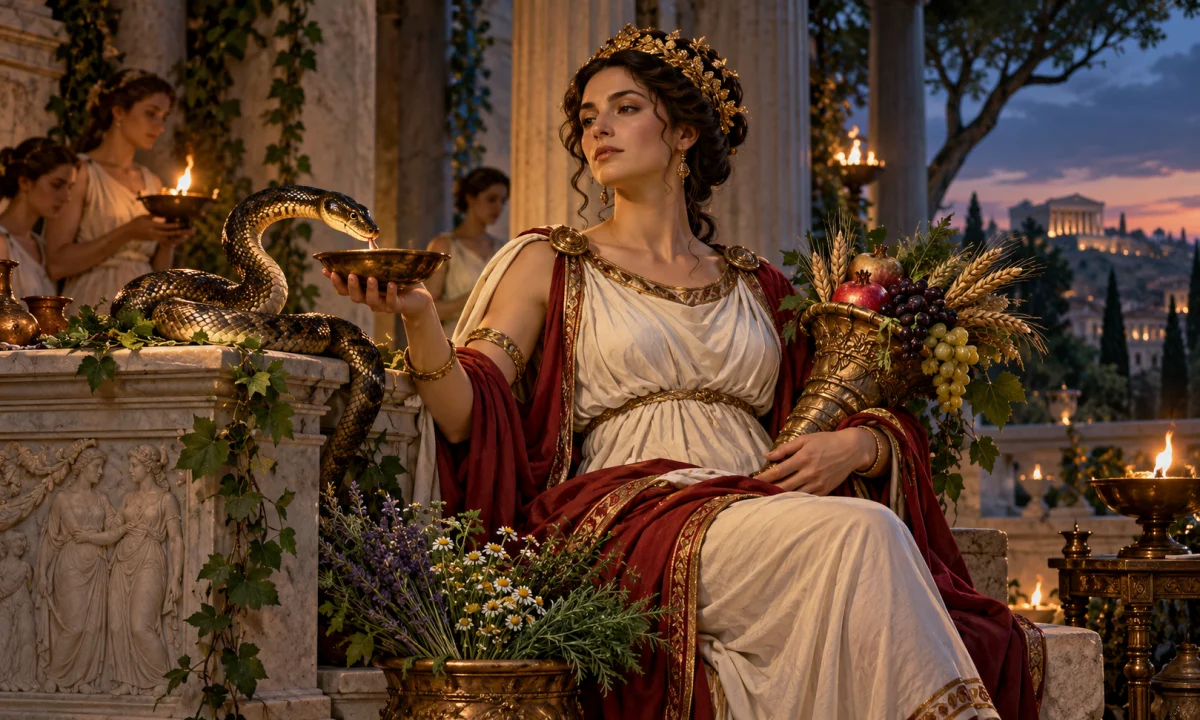
Bona Dea, whose name means “the Good Goddess,” was a Roman goddess associated with women, fertility, healing, and protection. Her worship was among the most secretive rituals of ancient Rome. Men were excluded from her principal ceremonies, religious images were hidden or covered, and even her personal name was not openly used. As a result, Bona Dea is known less through a single clear myth than through scattered accounts of Roman writers, evidence about her festivals, and later scholarly interpretation.
Origins and cultural setting
Bona Dea belonged to the religious world of the Roman Republic and Empire. She was worshipped especially by Roman women, although her cult also had significance for the wider community and, in some traditions, for the health and security of the Roman state. Her principal sanctuary stood on the Aventine Hill in Rome, a district strongly associated with plebeian religious and political life. The exact foundation date of the temple is uncertain, but the cult was established by the late Republic and continued into the imperial period.
Roman religion did not usually separate “mythology” from public ritual as sharply as modern categories often do. A deity’s importance could depend on festivals, priesthoods, sacred spaces, ritual rules, and practical functions rather than on a large body of surviving stories. Bona Dea is a particularly clear example. Ancient authors describe her ceremonies and taboos in greater detail than they preserve myths about her origin or actions.
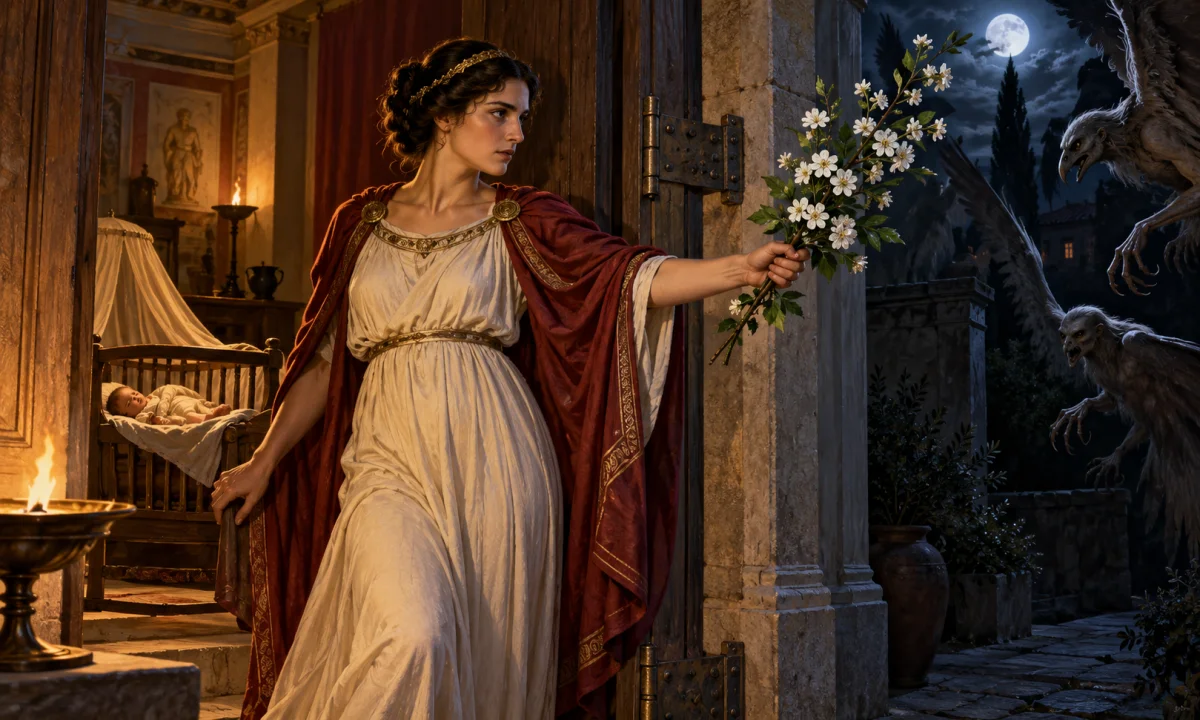
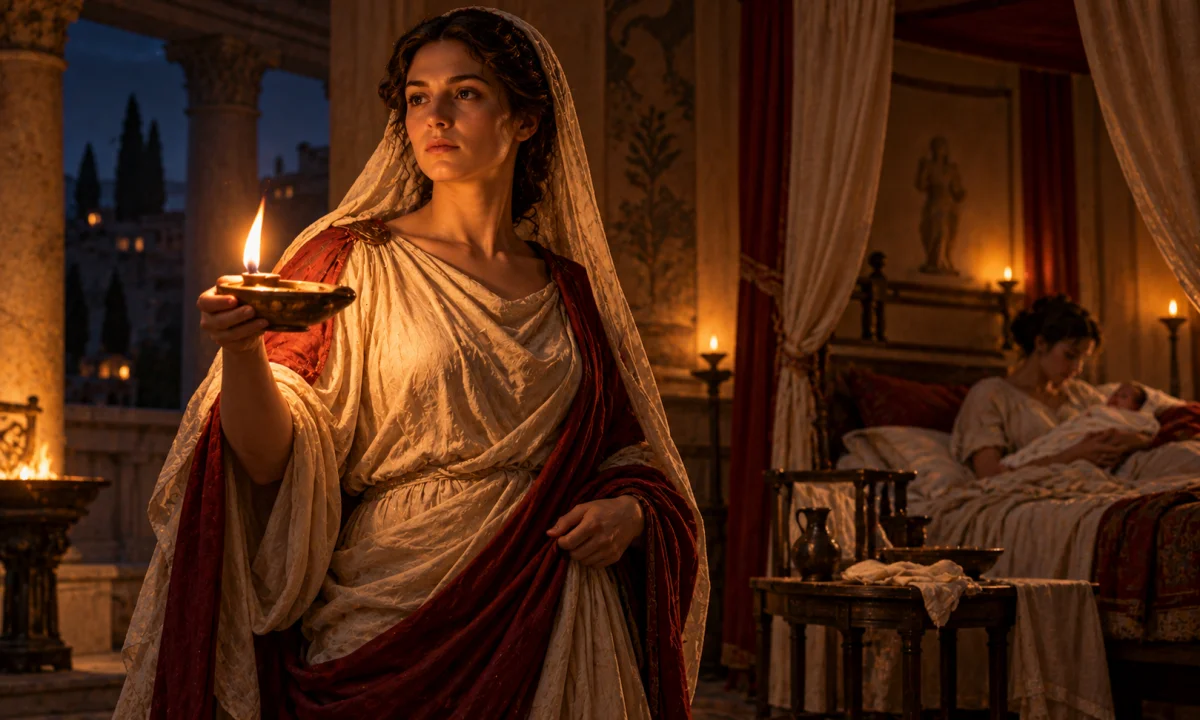
Her main annual celebration took place during the night of 3–4 December. The ceremony was held in the house of a senior Roman magistrate, usually the serving consul or another prominent official. His wife traditionally hosted the event, while the ritual itself was conducted by women, including members of the Vestal Virgins. The household was prepared as a sacred space: male members were removed, male animals were excluded, and objects considered unsuitable for the goddess were concealed or removed.
The name “Good Goddess”
Bona Dea is Latin for “Good Goddess,” but it may be a title rather than the deity’s original personal name. Roman sources preserve several different explanations for the title and for the goddess’s identity. Some writers connect her with Fauna, the female counterpart of Faunus; others identify her with a virtuous woman named Fauna or with a daughter or wife of Faunus. These accounts do not agree with one another, and none can be treated as a certain biography.
Ancient writers also say that the goddess had a secret or unspoken name. In Roman religious practice, withholding a deity’s true name could protect sacred knowledge and prevent improper use of divine power. The secrecy surrounding Bona Dea may therefore have been part of her cult from the beginning, although the surviving sources do not allow the original form of this rule to be reconstructed with confidence.
The name has several modern forms. Bona Dea is the usual Latin spelling, while Bona-dea may appear in English reference works. The hyphenated form is not a separate goddess. Likewise, “Good Goddess” is a translation of the Latin title and should not be confused with an independent deity from another tradition.
Identity and classification
Bona Dea is sometimes described as a fertility goddess, a women’s goddess, a healing goddess, or a goddess of the earth. Each description reflects part of the evidence, but none fully defines her. Roman religious categories were flexible, and a deity could have several overlapping responsibilities.
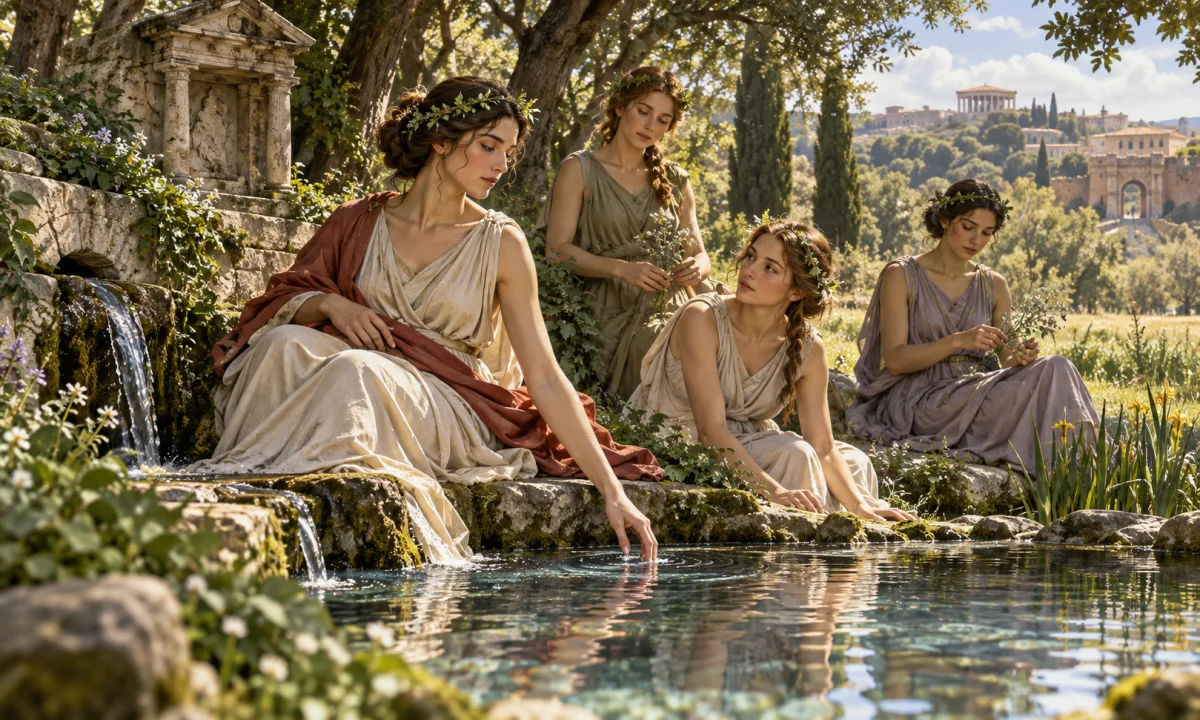
Her worship was particularly connected with women’s health and fertility. Ancient testimony associates her with childbirth, the growth of plants, medicinal remedies, and the protection of women. Some accounts also suggest that she could heal the sick. Her ceremonies included offerings of wine, incense, herbs, and other substances, although the meanings of individual offerings are not always clear.
The cult also had a political dimension. Because the principal ceremony took place in the official residence of a Roman magistrate, the ritual linked women’s religious authority with the public life of the state. The women who performed the ceremony did not hold political office, but they controlled the sacred space for the night and carried out rites believed to benefit Rome. The presence of the Vestal Virgins reinforced the ceremony’s connection with the religious institutions of the Roman community.
It is therefore misleading to treat Bona Dea simply as a private household goddess. Her worship was conducted by women, but it was not merely domestic. The location, personnel, and public status of the host connected the ceremony with Rome’s civic religion.
Festivals and ritual restrictions
The December festival is the best-known expression of Bona Dea’s cult. The host’s house was decorated in a manner appropriate to a sacred celebration. Ancient descriptions mention vines, flowers, foliage, and other forms of plant decoration. The ceremony included music, feasting, sacrifice, drinking, and ritual actions performed under the supervision of the women responsible for the rite.
A striking feature of the festival was the replacement or disguise of wine. Because wine was regarded as unsuitable for women in certain Roman contexts, the drink used in the ceremony was referred to by a different name, often “milk” in the surviving accounts, even though it was wine. This practice shows how Roman ritual could preserve a substance while changing its social and symbolic classification.
Myrtle was traditionally forbidden in the ceremony. One myth explains the prohibition by claiming that Fauna or Bona Dea was beaten with a myrtle branch by her husband or father after drinking wine in secret. The story is not consistent across ancient authors, and it may be an etiological myth created to explain an existing ritual rule. In the December celebration, myrtle was replaced by other plants, while vines and flowers were used to decorate the space.
Snakes were also associated with Bona Dea’s worship. Ancient Roman religious art and ritual often connected snakes with the earth, renewal, healing, and the protection of sacred places. Snakes appear in descriptions of the goddess’s sanctuary and festival, but their exact role is uncertain. They should not automatically be interpreted as symbols of evil. In the context of Bona Dea, they may have reflected healing or fertility, though the evidence does not establish one exclusive meaning.
Men were excluded from the central ceremony, and representations or references to men were removed from the ritual environment. Ancient reports say that male animals were not sacrificed and that pictures or statues of male figures were covered. Musical instruments or objects associated with men could also be altered or hidden. These details may have created a temporarily female sacred world, but the surviving descriptions are too limited to explain every rule with certainty.
The scandal involving Publius Clodius Pulcher
The most famous historical episode connected with Bona Dea occurred in 62 BCE. During the December festival, the young politician Publius Clodius Pulcher entered the house where the ceremony was being held. He was reportedly disguised as a woman, although the details of his disguise vary in the ancient accounts. He was discovered and accused of violating the sacred rites.
The incident became a major political and legal scandal. Clodius was prosecuted for sacrilege, but he was acquitted after a controversial trial. Marcus Tullius Cicero gave evidence against him, and the affair contributed to the long hostility between Cicero and Clodius. Julius Caesar, whose wife Pompeia had hosted the ceremony, divorced her even though she was not accused of wrongdoing. Caesar’s reported explanation—that his wife must be above suspicion as well as innocent—became one of the best-known sayings associated with the episode, although the exact wording comes through later literary transmission.
The scandal is valuable evidence for the public importance of the ritual, but it must be read cautiously. The ancient accounts were written by men with political and moral purposes, especially Cicero and Plutarch. Their narratives emphasize disguise, sexual transgression, scandal, and elite conflict. They do not provide a neutral description of how ordinary female worshippers understood Bona Dea. The incident also does not mean that the entire cult was primarily concerned with sexual secrecy. Rather, Clodius’s alleged intrusion violated a ritual boundary that had legal, religious, and political importance.
Myths and supposed relationships
There is no single canonical myth of Bona Dea. Roman authors offered several stories to connect her with more familiar figures. In one tradition, she was Fauna, the wife of Faunus. In another, she was Faunus’s daughter. Some accounts portray her as an exceptionally chaste and virtuous woman who became divine after death or after receiving divine honor. Other versions focus on her drinking wine, her punishment with myrtle, or the secrecy of her name.
These stories should not be combined into one continuous biography. The name Fauna itself may have been shaped by the desire to provide a feminine counterpart to Faunus, while “Good Goddess” could function as an honorific that avoided revealing the deity’s hidden name. Ancient Roman writers often interpreted unfamiliar or secret cults by connecting them with better-known gods and mythic families. Their explanations may preserve older traditions, but they may also reflect later attempts to rationalize an obscure ritual.
Bona Dea is sometimes linked with Ops, Ceres, Tellus, Juno, or other female deities because of shared associations with fertility, earth, women, or healing. Such comparisons can be useful for studying Roman religion, but they do not prove that these goddesses were identical. Roman deities could share functions without being interchangeable. Bona Dea’s unusual female-only ritual and her hidden identity distinguish her cult from the better-documented worship of these other goddesses.
Appearance and symbols
No universally accepted ancient image of Bona Dea survives. She may have been represented as a mature or dignified woman, but attempts to identify particular statues as Bona Dea remain uncertain. Her cult’s secrecy makes visual evidence especially difficult to interpret. A figure holding a cornucopia, a vessel, a snake, or agricultural plants may represent Bona Dea, but those attributes also belonged to several other Roman goddesses.
The most commonly associated symbols are therefore drawn from ritual rather than from securely identified portraits. These include snakes, healing vessels, plants, wine or milk, and agricultural abundance. The goddess’s name itself expresses benevolence, while her associations with women, childbirth, and remedies suggest protection and life-giving power.
Her connection with animals is also complex. Some modern descriptions call her a goddess of animals because snakes were present in her sanctuary and because ancient accounts mention living creatures in ritual contexts. The evidence is stronger for snakes, healing, fertility, and female protection than for a general dominion over all animals.
Sources and historical evidence
Knowledge of Bona Dea comes primarily from Roman literary sources, inscriptions, archaeological remains, and evidence about Roman calendars and priesthoods. Important literary discussions appear in works by Cicero, Plutarch, Macrobius, and other authors, but these writers lived at different times and had different purposes. Some described events they considered historical; others collected antiquarian explanations or traditional stories long after the cult had developed.
Literary descriptions must therefore be separated from direct evidence. A statement that Bona Dea was Fauna is an ancient interpretation, not a securely established fact about the goddess’s origin. Similarly, a story explaining the ban on myrtle may be a ritual aetiology rather than a memory of an actual divine event.
Inscriptions and archaeological evidence confirm that Bona Dea was worshipped in the Roman world, but they do not reveal every detail of the secret rites. The limited evidence also makes it difficult to determine how much the cult changed over time. Practices in the late Republic may not have been identical to those in the early imperial period, and local observance outside Rome could vary.
Religious and social significance
Bona Dea’s cult is significant because it demonstrates that Roman women could exercise substantial authority within religious ceremonies. Women organized the event, controlled access to the sacred space, prepared offerings, and performed rites associated with the welfare of Rome. This authority existed within a society where women generally lacked formal political office, making the festival an important religious sphere of female leadership.
At the same time, it would be anachronistic to describe Bona Dea’s worship simply as a movement of female independence in the modern sense. The ceremony was embedded in Roman family structures, public office, social rank, and ideas about sexual propriety. Its host was connected to the state through her husband’s office, and the ritual’s rules reflected Roman concerns about gender, status, and ritual purity.
The exclusion of men also requires careful interpretation. It did not necessarily mean that Bona Dea rejected men in every context or that male worshippers could never have any relationship with her cult. The surviving evidence mainly concerns one central ceremony, not every form of devotion. The female-only character of that event was a specific ritual arrangement rather than proof that the goddess had no significance beyond women’s religious life.
Distinctions from similar figures
Bona Dea should not be treated as simply another name for Fauna. The two figures were associated by some Roman authors, but the relationship is uncertain and varies by source. Faunus was a Roman god connected with woodland, prophecy, and pastoral life; Fauna’s status and identity are much less stable. Bona Dea’s cult has its own ritual history and should not be reconstructed solely from stories about Faunus.
She is also distinct from the Greek goddess Demeter and the Roman Ceres. All may be associated with fertility or abundance, but Ceres had major public festivals, agricultural mythology, and a different ritual structure. Bona Dea’s hidden name, women-only ceremony, healing associations, and connection with the official household set her apart.
Nor should Bona Dea be confused with later uses of the phrase “good goddess” as a generic title for benevolent female deities. The Latin title refers to a particular Roman cult, even though its exact original personal name may have been deliberately concealed.
Later reception
Bona Dea has received renewed attention from historians of Roman religion, gender, ritual secrecy, and the social roles of women. Scholars debate whether her cult preserved very old Italian religious elements, whether its mythology was largely constructed by later Roman writers, and how far its rituals can be compared with other women-centered ceremonies in the ancient Mediterranean. These remain interpretations rather than settled conclusions.
She appears far less often in modern popular culture than figures such as Venus, Minerva, or Diana. When she is adapted in modern fiction, games, or contemporary discussions of ancient goddesses, she is often portrayed as a secretive fertility or healing deity surrounded by women. Such portrayals may draw on genuine features of the Roman evidence, but they commonly simplify the contradictions among ancient sources and turn a complex civic ritual into a generalized image of a hidden “women’s goddess.”