WORLD
WORLD
Baradiel

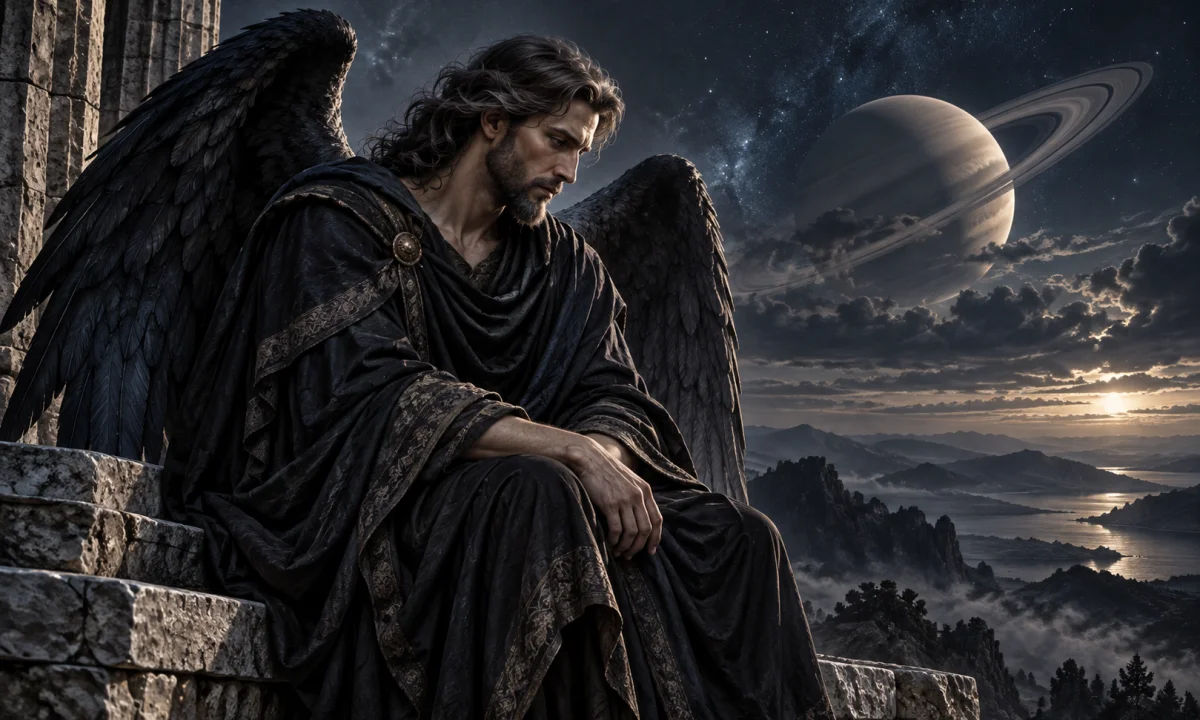
Baradiel is an obscure angelic name associated, in some later angelological traditions, with hail and other forms of severe weather. Unlike Michael, Gabriel, Raphael or Uriel, Baradiel does not belong to the small group of angels consistently named in the Hebrew Bible or the New Testament. The name appears mainly in later Jewish and esoteric catalogues of angels, where its spelling, rank and responsibilities are not completely stable.
Origins and religious setting
Baradiel belongs to the broad history of angelology: the practice of describing, classifying and naming heavenly beings who serve God, carry messages, guard places or people, and administer aspects of the created world. Angelology developed over many centuries through biblical interpretation, Jewish mystical writing, liturgical traditions, magical texts, Christian theology and later occult speculation. As a result, not every angelic name has the same status or cultural history.
The name Baradiel is not found among the principal named angels of the Bible. There is no widely accepted biblical story in which Baradiel appears, and no major universally recognized feast, prayer or scriptural narrative is devoted to the figure. Its presence belongs instead to the more specialised and sometimes fluid traditions that assigned personal names to angels connected with natural phenomena.
Weather has an important place in Jewish and Christian religious imagination. Rain, thunder, wind, lightning, snow and hail can be understood both as natural processes and as signs of divine sovereignty. Biblical passages frequently describe God as controlling storms and using them in acts of judgment, protection or revelation. Hail is particularly prominent in the story of the plagues of Egypt, in poetic descriptions of divine power, and in apocalyptic imagery.
These traditions created a setting in which later angelologists could imagine particular angels as administrators or messengers associated with weather. Such a role does not necessarily mean that an angel was worshipped as a weather deity. In Jewish and Christian frameworks, angels remain servants of God rather than independent gods. A figure such as Baradiel therefore belongs to a model of the cosmos in which created spiritual beings may carry out divine commands in the natural world.
The name Baradiel
The most common interpretation connects Baradiel with the Hebrew word barad, meaning “hail,” combined with the divine element -el, meaning “God” or referring to the God of Israel. On that reading, the name may be understood approximately as “hail of God,” “God’s hail” or “the hail of God.” Angelic names ending in -el are common in Jewish and Christian angelology, although the exact grammatical meaning of an individual name can be uncertain.
The name is not always transmitted consistently. Forms may differ because angelic catalogues were copied, translated, transliterated and rearranged over long periods. Baradiel can also be confused with other names beginning with similar consonants, especially Barachiel or Baraquiel. Similar spelling does not establish that these names refer to the same being. Barachiel, whose name is usually associated with blessing, has a separate identity in traditions that recognize him, while Baradiel is generally connected with hail or storm phenomena.
The precise earliest appearance of the name is difficult to establish from the surviving material commonly circulated today. Modern lists often repeat angelic names without identifying their manuscript context, date or chain of transmission. Consequently, claims that present Baradiel as a universally recognized archangel, a standard figure in ancient Judaism or a clearly defined biblical being should be treated cautiously.
Classification and status
Baradiel is generally described as an angel of hail, rather than as one of the universally acknowledged archangels. Some later lists place the figure among angels responsible for meteorological events, while other compilations give the name a more general association with storms or atmospheric forces. There is no single authoritative hierarchy that fixes Baradiel’s rank.
In some occult and devotional systems, angels are assigned to days, months, zodiacal signs, planets, hours or particular natural elements. Baradiel is occasionally given such additional associations in modern reference works and esoteric websites. These assignments are not consistent across sources and should not be treated as a single ancient doctrine. They reflect the tendency of later angelological systems to organise large numbers of names into elaborate celestial classifications.
Nor is there a stable consensus about whether Baradiel should be called an archangel. The word “archangel” has a narrower meaning in some religious contexts and a much broader meaning in others. In popular angel books, any prominent or specialised angel may receive the title, but that usage does not demonstrate that Baradiel held the same status in an ancient religious tradition.
Association with hail and storms
Baradiel’s defining attribute is hail. Hail is a natural phenomenon with a strong symbolic charge in biblical literature. It can represent destructive power, divine judgment and the breaking of human pride. At the same time, storms display the grandeur and mystery of creation, reminding human beings that the forces governing the world exceed ordinary human control.
The biblical plague of hail in Exodus presents a storm as an instrument of judgment against Egypt. The narrative describes thunder, fire and hail as manifestations of divine power, but it does not name an angel called Baradiel as the force behind them. Other biblical poems portray hail as belonging to God’s storehouses or weapons, again without assigning it to a named intermediary. This distinction matters: the imagery of hail is ancient and scriptural, while the attribution of hail to Baradiel belongs to later angelological interpretation.
As an angel of hail, Baradiel may be understood symbolically in several ways:
- Divine power over nature: the figure represents the belief that weather ultimately remains under divine authority.
- Judgment and warning: hail can signify a force that interrupts complacency and exposes human vulnerability.
- Protection through controlled danger: a destructive storm can also be restrained or directed according to a higher purpose.
- Hidden order: naming an angel of hail expresses the idea that apparently chaotic natural events belong to an intelligible cosmic order.
These interpretations describe the symbolism surrounding the figure rather than a fixed set of powers found in a single canonical text. No standard narrative establishes that Baradiel creates every hailstorm, commands all weather or acts independently of God.
Stories and relationships
Baradiel has no widely preserved cycle of myths comparable to the stories of Michael’s battle with the dragon, Raphael’s journey with Tobias or Gabriel’s announcements in biblical and Islamic tradition. References to Baradiel tend to be brief classificatory entries rather than developed narratives. The figure is usually identified by function instead of by biography.
There is also no stable family relationship linking Baradiel to other angels. Angelic catalogues sometimes group names according to the phenomena they govern, the regions they inhabit or the ranks they are believed to occupy. Such grouping should not be mistaken for kinship. In Jewish and Christian theology, angels are normally created spiritual beings, not members of a divine family in the mythological sense used for gods and heroes.
Some modern accounts add details about Baradiel’s appearance, temperament, celestial dwelling or ritual invocation. These descriptions vary considerably and often lack a clear connection to identifiable ancient texts. A cautious account should therefore separate the core recurring association—hail—from later imaginative elaborations.
Baradiel and Jewish angelology
Jewish angelology contains many named angels beyond the few figures familiar from biblical narratives. Names appear in apocalyptic writings, mystical texts, protective formulas, cosmological speculation and magical traditions. Some angels are connected with heavenly palaces, stars, seasons, diseases, virtues or natural forces. The boundaries between formal theology, mystical speculation and practical magic can differ from one work to another.
Within this wider environment, Baradiel can be understood as part of a tendency to personify the administration of the natural world. Such personification does not turn weather into an independent divine power. Rather, it places natural processes within a hierarchy ultimately governed by God. The name’s apparent connection with Hebrew barad reinforces the association with hail, but the existence of that linguistic connection alone does not prove a particular ancient doctrine or a continuous line of belief.
It is also important not to treat every list of angelic names as equally representative of Judaism. Some lists were produced in explicitly esoteric or magical settings; others were copied by later writers who reorganised earlier material. A name may therefore have a genuine history in Jewish angelology without being part of mainstream Jewish prayer, law or communal worship.
Christian and esoteric reception
Christian writers inherited biblical images of angels governing, announcing or carrying out divine acts, but Christian traditions have generally focused devotion on a smaller number of named angels. Michael, Gabriel and Raphael have the strongest recognition in many Christian communities, while other names have been accepted or rejected differently by different churches.
Baradiel does not have a uniform place in Christian doctrine. Where the name appears in Christian-influenced angelic systems, it is usually through later angelological or occult compilations rather than through central liturgical texts. Esoteric authors often expanded angelic hierarchies by assigning spirits to planets, elements, weather patterns, virtues and periods of time. Baradiel’s association with hail fits this classificatory approach.
Such systems can be historically interesting without being treated as official religious teaching. A catalogue may preserve an old name while giving it new attributes, or it may combine material from Jewish, Christian, magical and astrological sources. The appearance of Baradiel in a modern occult list therefore shows reception and reinterpretation, not necessarily evidence for the figure’s original role.
Distinguishing Baradiel from similar names
Several angelic names are easily confused with Baradiel:
- Barachiel: commonly associated with blessings and sometimes counted among archangels in later Christian and Eastern European traditions. The similarity of the names does not make Barachiel and Baradiel the same angel.
- Baraquiel or Barakiel: variant forms may be connected with lightning in some angelological lists. Their relationship to Baradiel is uncertain, and the names should not automatically be merged.
- Uriel: a major angelic figure in several Jewish and Christian traditions, sometimes associated with heavenly illumination, wisdom or fire. Uriel is not another name for Baradiel.
- Hail deities in other cultures: mythologies around the world include gods or spirits associated with storms, rain and hail. These beings arise from different religious systems and should not be identified with an angel from Jewish or Christian angelology.
Transliteration makes confusion more likely. Hebrew names can be represented in Latin letters in several ways, and scribal errors can alter a consonant or vowel. Even so, a similar-looking name does not automatically indicate a variant spelling. The historical context of each occurrence must be considered before two figures are identified.
Cultural significance
Baradiel is significant less because of a large body of stories than because the name illustrates how religious cultures have sought to interpret the natural world. Hail is both ordinary and threatening: it forms through physical processes, yet historically it could destroy crops, injure people and appear as a sudden assault from the sky. Giving such a force an angelic administrator places it within a moral and cosmic framework.
The figure also demonstrates the difference between canonical tradition and expanded angelology. A name may be meaningful within mystical, esoteric or folkloric traditions without having the status of scripture. Baradiel is best treated as a minor and variably attested angelic figure whose principal traditional association is hail, not as a universally recognized archangel with a fixed mythology.
Modern popular culture
Baradiel has only a limited presence in mainstream popular culture. The name may appear in fantasy fiction, role-playing games, online angel dictionaries and modern spiritual writing, where it can be given a dramatic appearance, a personality or additional powers over storms. These portrayals are creative adaptations unless they can be traced to a particular historical tradition.
Modern readers may also encounter claims that Baradiel governs a specific month, zodiac sign, colour, gemstone or angelic order. Such details belong to particular contemporary systems and are not universal attributes. The most careful identification remains the simplest one: Baradiel is a little-known angelic name, probably formed from a Hebrew word for hail and the divine element -el, associated in later angelology with hail or storm phenomena.