WORLD
WORLD
Azbogah

Azbogah is a little-known angelic name associated with Jewish angelology and later esoteric traditions. Unlike Michael, Gabriel, Raphael or Uriel, Azbogah does not belong to the small group of angels whose names and stories are firmly established across the Hebrew Bible and major Jewish liturgical traditions. The surviving information is limited, variable and often transmitted through angelological lists, mystical speculation and modern reference works.
Descriptions of Azbogah commonly present the figure as a high-ranking angel connected with judgment, the forgiveness of sins and the condition of souls after death. These associations should be treated cautiously. Different sources use variant spellings, assign different duties to the name, and do not always distinguish Azbogah from closely related forms such as Azbuga. There is no single, universally accepted account of the angel’s identity, appearance or place in the heavens.
Origins and religious setting
Azbogah belongs to the broad field of Jewish angelology: the study and imagination of heavenly beings within Jewish religious, mystical and folkloric traditions. Jewish ideas about angels developed over many centuries. They appear in biblical passages, Second Temple Jewish writings, rabbinic discussions, mystical texts, magical traditions and later compilations of angel names.
These traditions do not form one completely unified system. Some texts describe angels as messengers of God, while others portray them as guardians, heavenly scribes, warriors, administrators or attendants surrounding the divine throne. Mystical writings may arrange the heavens into multiple levels and assign particular angels to each region. Other works focus on the secret names, seals or liturgical functions of angels.
Azbogah is not a prominent figure in the Hebrew Bible. Nor is the name central to the best-known narratives of Jewish scripture. The angel is instead associated with later and more specialised forms of angelological material, where names may survive in lists without an extended narrative. Such lists sometimes preserve very old traditions, but they can also reflect copying errors, changes in pronunciation, reinterpretation or the efforts of later writers to organise diverse material into a systematic hierarchy.
For that reason, Azbogah should not be treated as though the figure had a complete mythology comparable to that of major biblical angels. The available tradition is fragmentary. Claims about the angel’s precise rank or responsibilities often depend on which spelling and source tradition a writer is following.
The name Azbogah and variant spellings
The spelling Azbogah is one of several forms connected with this angelic name. Azbuga is especially important because some accounts treat it as an alternative spelling of Azbogah, while others present the forms separately. English transliteration can vary when a name passes from Hebrew letters into Latin characters, and differences may arise from manuscript readings, pronunciation or the conventions used by individual authors.
The exact meaning of the name is uncertain. It is sometimes given a speculative interpretation based on possible Hebrew elements, but no single etymology has achieved broad agreement. An apparent resemblance to other names beginning with Az- is not, by itself, proof that the figures are related. Angel names can resemble one another without sharing an origin or function.
It is therefore safer to describe Azbogah as a traditional angelic name with uncertain etymology than to assign it a definite translation. The uncertainty is part of the history of the name rather than a problem that can be solved simply by selecting one modern spelling.
Identity and classification
In later accounts, Azbogah is generally classified as an angel of considerable rank. Some descriptions connect the name with a group of powerful heavenly judges. Other accounts associate Azbogah with the seventh heaven or with an elevated region of the celestial world. These claims are not consistent enough to establish one fixed position in Jewish cosmology.
Several popular summaries describe Azbogah as one of a small number of great angels involved in judging the dead. Some also say that the angel possesses many names, sometimes giving the number as seventy. Such details belong to a strand of Jewish and occult angelological lore in which heavenly beings may have secret, multiple or liturgical names. The number should not automatically be understood as a biographical fact. In religious symbolism, numbers such as seventy can suggest fullness, multiplicity or an extensive sacred authority.
The strongest recurring theme is the connection with judgment and forgiveness. Azbogah is sometimes said to forgive the sins of the dead, or to participate in the assessment of souls. These ideas place the angel within a moral and judicial structure rather than presenting Azbogah primarily as a warrior, healer or messenger.
Even this description requires qualification. Jewish teachings about judgment and forgiveness are fundamentally centred on God, divine justice, repentance and mercy. An angel acting in such a context would be understood as a servant or agent of divine authority, not as an independent deity. Azbogah should consequently be interpreted within a strict monotheistic hierarchy: the angel’s authority, if recognised, is delegated and subordinate to God.
Role in judgment and forgiveness
The idea of an angel connected with the forgiveness of the dead reflects a wider religious concern with what happens to a person after earthly life. Jewish traditions contain many different discussions of judgment, the world to come, the resurrection of the dead and the fate of the righteous and wicked. Not all of these discussions use the same language or describe the afterlife in the same way.
Within later angelological imagination, a figure such as Azbogah can represent the heavenly administration of moral order. The angel may be pictured as examining a soul, recording or weighing its deeds, or carrying out a decision made within the divine court. In this interpretation, Azbogah embodies the belief that human actions have lasting significance and that justice is not limited to visible earthly events.
The association with forgiveness adds an important counterpoint to judgment. A purely punitive figure would represent only the severity of divine law. An angel connected with pardon suggests that judgment may also include mercy, repentance or the release of guilt. This does not mean that every account of Azbogah gives the angel a universal power to erase sins. Rather, the motif reflects a theological tension familiar in Jewish tradition: divine justice and divine compassion must be understood together.
Some modern descriptions call Azbogah an “angel of the dead,” but that phrase can be misleading if it suggests a single, standard office recognised throughout Judaism. Jewish traditions contain several figures associated with death, the soul or the afterlife, yet their roles differ. Azbogah’s reputed function is better described as judicial or penitential than as a simple personification of death.
Appearance and powers
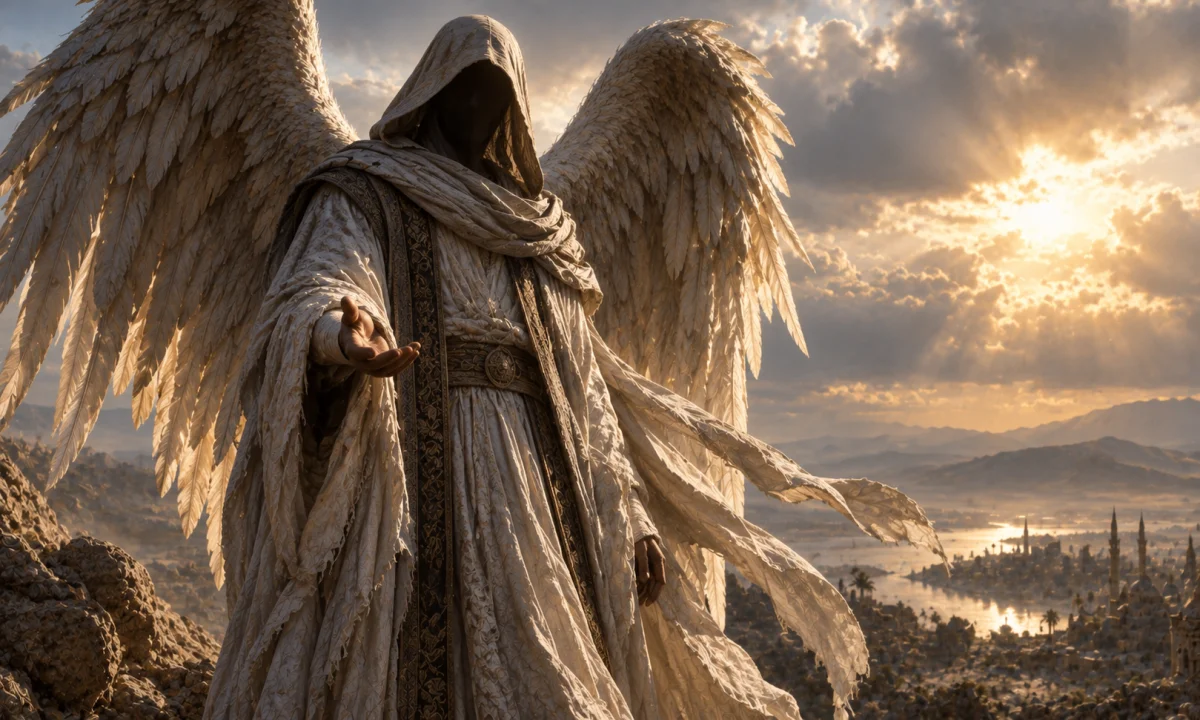
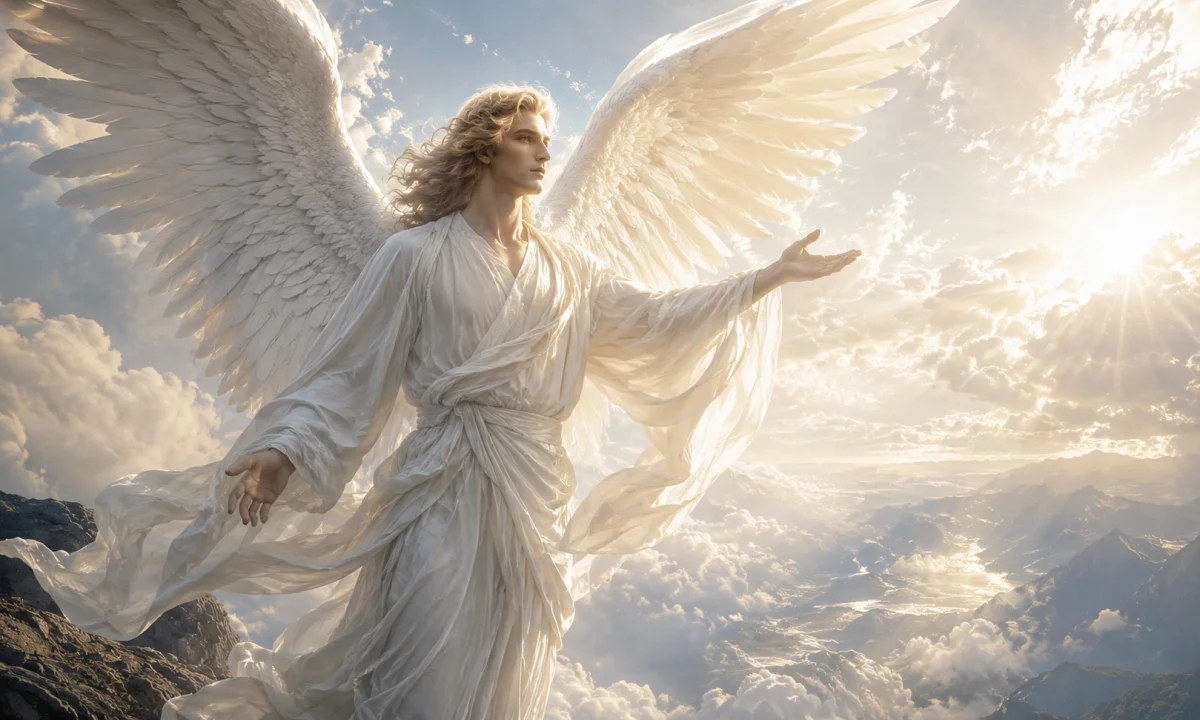
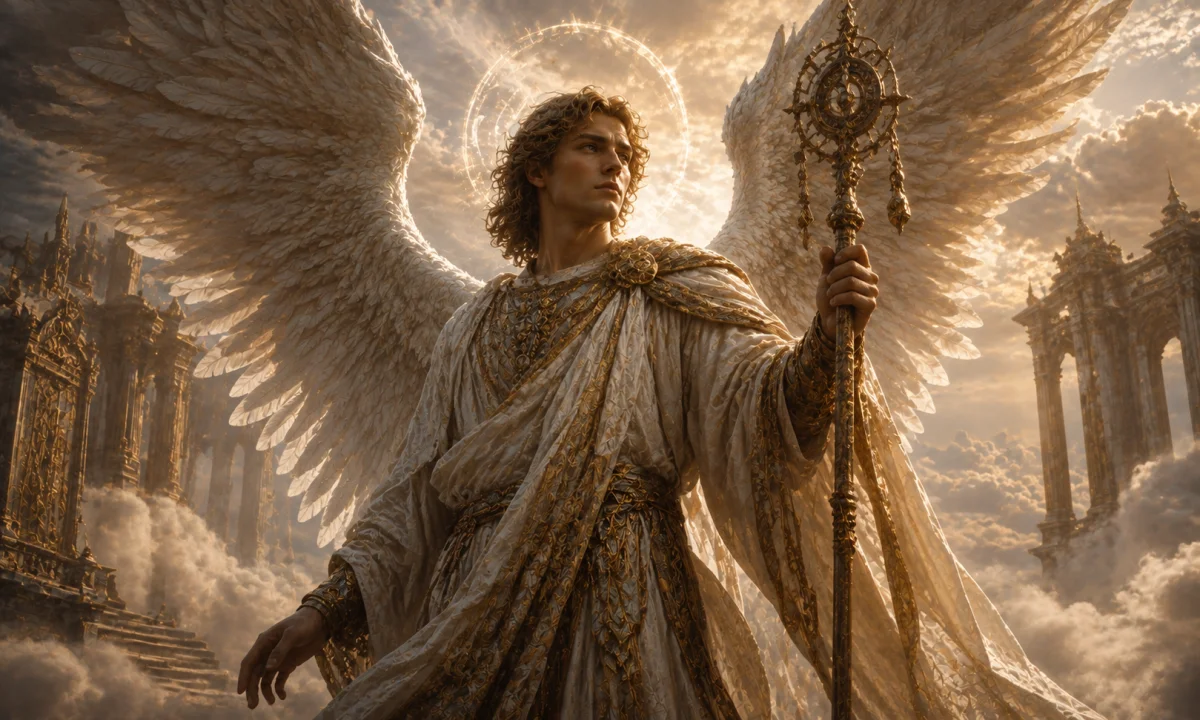
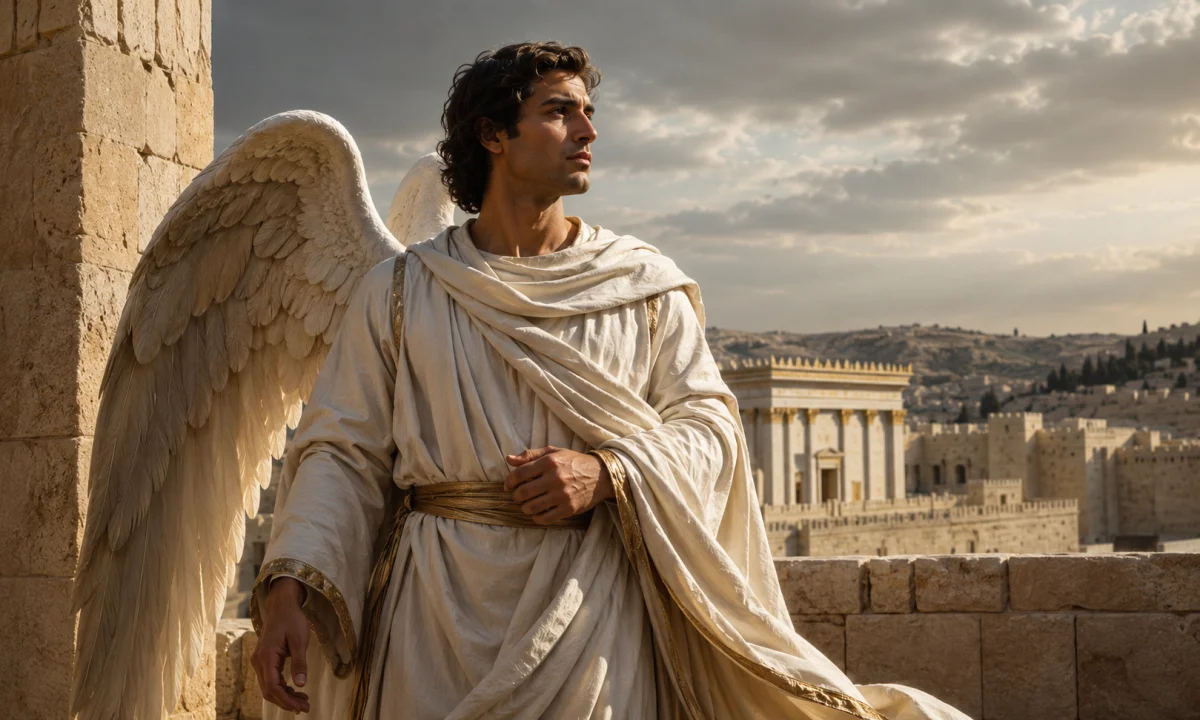
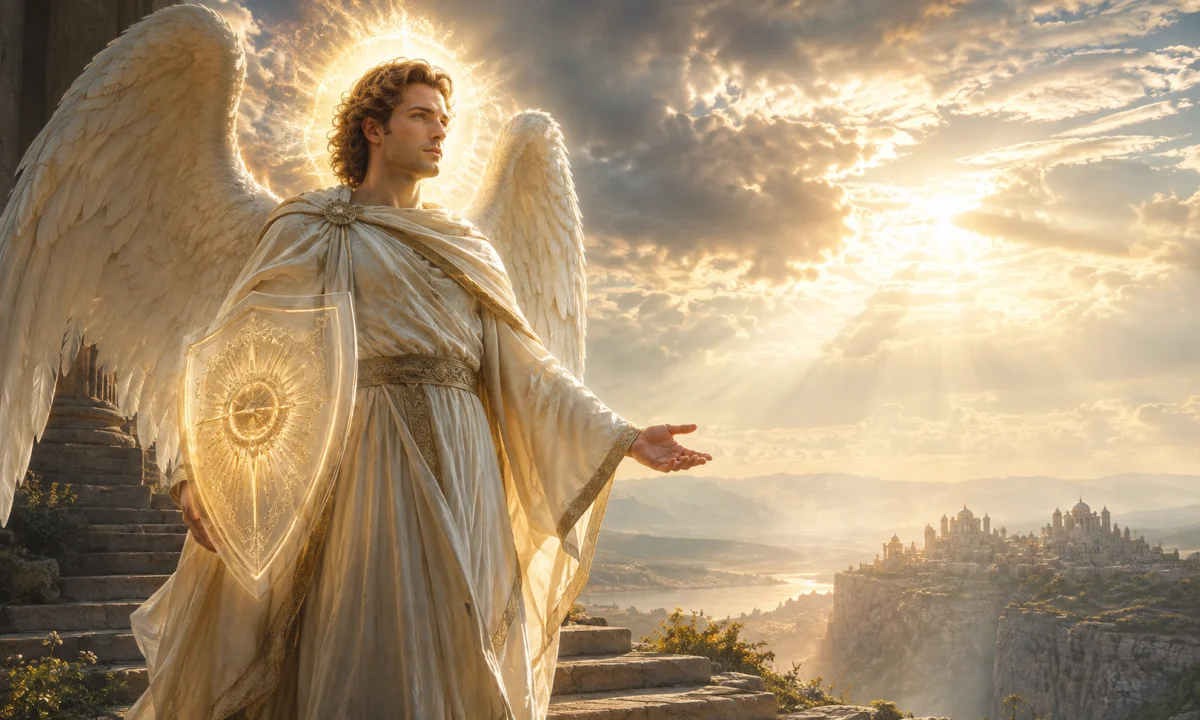
No stable traditional description of Azbogah’s physical appearance has survived. The angel is not consistently portrayed with a particular number of wings, a distinctive colour, a weapon, an animal form or a special garment. Artistic images found in modern books or online collections therefore usually represent the illustrator’s invention or a general visual language for angels, rather than an inherited iconographic tradition.
The same caution applies to claims about Azbogah’s powers. The recurring attributions are authority in heavenly judgment, knowledge of the moral state of souls and a role in forgiveness or absolution. These are functions rather than displays of supernatural ability. There is no well-established cycle of stories in which Azbogah performs a standard set of miracles.
Descriptions of the angel as possessing many names may imply unusual knowledge or authority, especially in mystical traditions where knowledge of a sacred name has spiritual importance. However, the presence of this motif does not provide a reliable physical portrait. It also does not mean that every list of secret angel names refers to Azbogah.
Stories and relationships
Azbogah has no widely known narrative cycle. There is no generally accepted account of the angel’s creation, a famous encounter with a prophet, a battle against a demon or a personal relationship with a major biblical hero. The absence of such stories is significant. It shows that Azbogah’s importance lies mainly in classification and function rather than in dramatic narrative.
Some accounts place Azbogah among a council or group of heavenly judges. The exact membership of such groups varies, and the lists should not be assumed to represent one official angelic court. Jewish mystical and magical writings frequently organise angels into ranks, palaces or heavenly offices, but different texts can use different arrangements.
Azbogah is also sometimes mentioned alongside other angelic names in catalogues of the heavens. A name’s appearance in such a catalogue does not necessarily establish a close relationship between the figures listed together. They may simply occupy neighbouring entries or share a broad category, such as guardians of a heavenly chamber or attendants of a divine throne.
Azbogah in relation to similar names
Confusion surrounding Azbogah is increased by the similarity of several angelic and demonic names. The forms Azbogah and Azbuga may represent the same traditional name in different spellings, but the evidence does not justify treating every occurrence as identical without qualification.
Azbogah should also be distinguished from Azazel. Azazel is a separate figure associated in different Jewish traditions with the scapegoat ritual, the wilderness, a fallen angel or a rebellious heavenly being. The resemblance between the names does not establish a shared identity. Azbogah is likewise not the same as Azrael, the familiar name of the angel of death in later Jewish, Islamic and popular traditions. Azrael has a much more developed modern profile, whereas Azbogah remains obscure and textually uncertain.
Nor should Azbogah be confused with Abaddon, Samael or other figures sometimes linked with death, punishment or the underworld. Similar associations do not make different beings interchangeable. Angelic names often acquire overlapping functions in later summaries, but their histories may be separate.
Religious and cultural significance
Azbogah illustrates how religious traditions can preserve a name even when its narrative background is incomplete. In Jewish angelology, a figure need not have a long story to express an important idea. The image of a heavenly judge who may also be connected with forgiveness reflects questions about responsibility, divine justice and the fate of the soul.
The tradition also demonstrates the difference between scriptural prominence and later religious imagination. A name may be absent from the central biblical narratives yet still become meaningful within mystical, folkloric or esoteric systems. At the same time, later popularity should not be mistaken for ancient certainty. Many modern lists of angels gather material from texts of different dates and purposes, sometimes presenting speculative attributions as though they belonged to one coherent system.
Azbogah’s obscurity makes careful language particularly important. It is reasonable to say that the name is associated in some Jewish-derived angelological traditions with judgment and forgiveness. It is not reasonable to claim that all Jewish communities have always recognised Azbogah in the same way, or that a single canonical doctrine defines the angel’s office.
Later reception and modern use
Azbogah occasionally appears in modern books and websites devoted to angels, occult correspondences, ceremonial magic or lists of supernatural beings. These sources may assign the angel a colour, planetary connection, magical seal, day of the week or detailed hierarchy. Such additions are generally modern interpretations rather than features securely documented across older Jewish traditions.
Azbogah has not become a major figure in mainstream film, television, novels or games. When the name appears in contemporary fantasy or occult fiction, it may be used because its sound suggests an ancient or mysterious angelic power. A fictional portrayal may transform Azbogah into a warrior, antagonist, guardian or cosmic judge, but those roles should not be read back into the limited traditional material.
The most responsible modern presentation keeps three levels separate: the uncertain historical evidence for the name, the later religious and esoteric interpretations built around it, and any creative adaptation. In traditional context, Azbogah is best understood as an obscure angelic figure associated—depending on the source—with heavenly rank, judgment and forgiveness, rather than as a fully documented character with a fixed biography.