WORLD
WORLD
Ariel
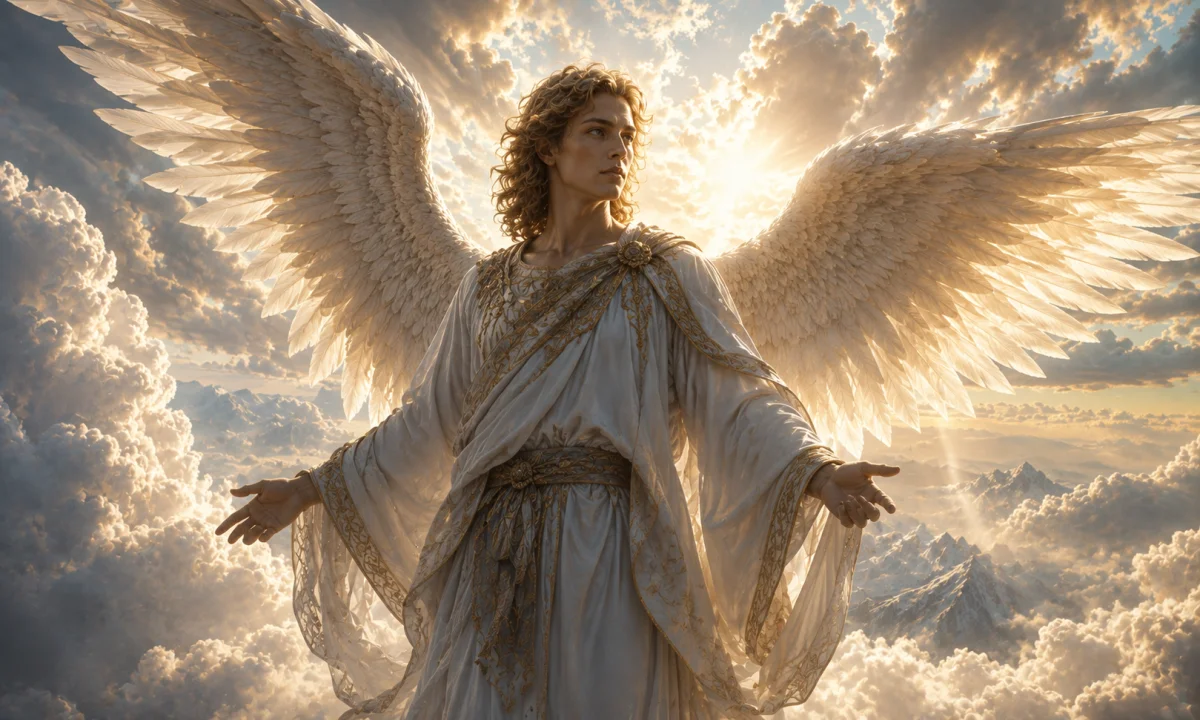
Ariel is a name with several different uses in Jewish and Christian religious history. In the Hebrew Bible, Ariel is not clearly presented as a personal angel. The name is used chiefly as a symbolic or poetic designation for Jerusalem, and possibly for an altar or altar hearth. In later Jewish mystical, magical and Christian esoteric traditions, Ariel is sometimes treated as an angelic being, but the details of this figure vary considerably. Ariel is also known from Shakespeare’s The Tempest, where the name belongs to a supernatural spirit rather than to a figure from established biblical angelology.
The name Ariel in ancient Hebrew tradition
Ariel is usually derived from Hebrew ʾAriʾel or ʾAriel. The first element is commonly connected with ʾari, “lion,” while El means “God.” On that basis, Ariel is often explained as “lion of God” or “lion of the divine.” However, the exact meaning is not completely certain in every biblical occurrence. In some contexts, the word may instead refer to a sacred hearth, an altar, or the upper surface of an altar.
Ancient Hebrew words were written without the vowel markings used in later editions, and several related terms can be transliterated in more than one way. As a result, Ariel, Ari’el, and Ar’el may represent different scholarly interpretations of the same or related forms. The spelling alone does not prove that every occurrence refers to one individual being.
The most important biblical use appears in the Book of Isaiah. Isaiah 29 addresses “Ariel,” describing it as the city where David encamped. The passage then announces distress, mourning and divine judgment before promising eventual deliverance. In this setting Ariel is generally understood as a symbolic name for Jerusalem, the city associated with David and the temple. The text does not introduce Ariel as an angel who visits the prophet or acts independently in heaven.
Isaiah’s wordplay may draw on more than one possible meaning. If Ariel means “lion of God,” it evokes strength, royal symbolism and the protection associated with Judah’s capital. If it refers to an altar hearth, it may allude to Jerusalem as the place of sacrifice and temple worship. Biblical scholars therefore debate the precise nuance, although the reference to Jerusalem is widely recognised.
Ariel in the Hebrew Bible
A symbolic name for Jerusalem
Isaiah 29 begins by addressing Ariel and immediately identifies it with the city connected to David. The city is commanded to continue its annual festivals, yet it will experience humiliation and danger. The imagery is deliberately paradoxical: a place of worship and royal memory becomes a place of mourning. The name may carry an ironic force, presenting Jerusalem as either a “lion of God” brought low or a sacred altar surrounded by judgment.
The passage belongs to the prophetic tradition in which cities, nations and communities are sometimes personified. Jerusalem can be addressed as a woman, a daughter, a mother, a city or a worshipping community. Ariel functions in a similar way. The text does not require the reader to imagine a separate angelic personality behind the name.
Possible altar imagery
A related term appears in Ezekiel’s vision of the restored temple, especially in the description of the altar in Ezekiel 43. English translations differ in how they render the Hebrew word. Some preserve a form such as “Ariel,” while others translate it with expressions such as “altar hearth” or “hearth of God.” The word may describe the altar’s central surface or the place where sacrifices were burned.
This connection helps explain why later interpreters have associated Ariel with fire, sacred worship and the temple. It is important, however, to distinguish the biblical term for an altar or altar hearth from the later idea of Ariel as a named angel. The connection is interpretive rather than a straightforward narrative identification.
Other biblical occurrences
The Hebrew Bible contains additional personal names or expressions that resemble Ariel. In Ezra 8, Ariel is the name of a man associated with the return from exile, although the passage gives no reason to identify him with an angel or with the symbolic Ariel of Isaiah. In 2 Samuel 23, a difficult phrase is sometimes translated as referring to “Ariel of Moab” or to two “sons of Ariel.” The Hebrew wording and the resulting translations are uncertain, and this occurrence has produced different interpretations.
These examples show why similar spellings should not automatically be combined. A biblical personal name, a poetic name for Jerusalem, a term connected with an altar and a later angelic figure may reflect different stages of language and interpretation.
Is Ariel an angel?
In the canonical books of the Hebrew Bible and the New Testament, Ariel is not given the clear profile of a major named angel such as Michael, Gabriel or Raphael. The best-known biblical references do not describe Ariel as a messenger, guardian, warrior or heavenly court official. For that reason, calling Ariel a biblical angel without qualification is misleading.
The angelic Ariel belongs primarily to later traditions. Jewish mystical and magical writings sometimes preserve names of angels that are absent from the biblical canon. These texts do not form a single uniform system, and their angel lists, functions and spellings differ. Ariel may appear in some later compilations as a powerful spiritual being, but the descriptions are not consistent enough to establish one universally accepted doctrine.
Later Christian occult writers also adopted the name. In ceremonial magic and related systems, Ariel has been associated at different times with the natural world, animals, the elements, hidden knowledge, protection or particular directions and planetary structures. Such associations often come from Renaissance, early modern or modern esoteric classifications rather than from ancient biblical passages. They should be described as developments in occult angelology, not as settled teachings shared by Judaism or Christianity as a whole.
Later Jewish and esoteric interpretations
Jewish mystical traditions frequently explore the meanings of divine names, angelic names and symbolic correspondences. Within that broad environment, Ariel could be understood through the combined images of the lion, divine strength, the temple and sacred fire. Some later texts and practitioners treat Ariel as an angelic power connected with the earth or the forces of nature. Others place emphasis on judgment, protection or the sanctity of Jerusalem.
There is no single authoritative “Ariel tradition” comparable to the well-defined roles of Michael, Gabriel or Raphael in major religious narratives. A particular description may belong to a specific mystical manuscript, magical handbook or modern occult system. Claims that Ariel is universally the angel of one particular element, season, direction or natural domain usually reflect one classification scheme rather than an ancient consensus.
The use of Ariel in modern angel books and devotional practices often expands these associations. Ariel may be presented as a guardian of animals, wilderness or environmental care, or as an intermediary who helps people seek courage and spiritual independence. These meanings can be personally or culturally significant, but they are modern or esoteric interpretations and should not be confused with the limited biblical evidence.
Symbolism associated with Ariel
The lion
If the name is read as “lion of God,” the lion becomes its most obvious symbol. In the religious symbolism of the ancient Near East, lions could represent royal authority, military strength and dangerous power. In the Hebrew Bible, lion imagery is used in several different ways: it can suggest courage and kingship, but it can also represent violence, threat or divine judgment.
Ariel’s leonine meaning therefore does not automatically make the figure benevolent or warlike. It depends on the context in which the name is interpreted. For Isaiah, the name may reinforce Jerusalem’s royal and sacred status while also heightening the shock of its impending suffering.
Fire and the altar
If Ariel is connected with the altar hearth, fire becomes another important symbol. Sacrificial fire in ancient Israelite worship represented the ritual presentation of offerings, and the temple altar was part of a highly regulated religious system. Later writers sometimes transformed this imagery into a more general association with purification, divine presence or spiritual power.
Such later symbolism should not be projected back into Isaiah as though the prophet were describing a distinct angel of fire. The biblical context concerns Jerusalem and temple worship; the angelic interpretation developed through subsequent acts of translation, speculation and religious imagination.
Nature and the created world
Modern esoteric and spiritual traditions often associate Ariel with animals, wilderness and the protection of the natural world. This usage may draw indirectly on the name’s perceived strength and on the idea of an angel governing earthly life. It is not based on a clear biblical story in which Ariel protects animals or commands nature.
The natural-world image has nevertheless helped make Ariel a popular name in contemporary angelology. It presents the figure as a guardian of living things and as a symbol of reverence for the earth. That meaning belongs to later reception rather than to the earliest surviving references.
Ariel and Jerusalem
The connection with Jerusalem remains the most securely ancient and religiously significant meaning of Ariel. Isaiah’s use of the name reflects a prophetic understanding of the city as both sacred and accountable. Jerusalem possesses the temple, the memory of David and a central place in the religious life of Judah, yet it is not exempt from criticism or judgment.
This tension is central to prophetic literature. Sacred status does not guarantee political security, and ritual observance does not remove the need for justice and faithfulness. Ariel can therefore be read as a name that compresses Jerusalem’s identity into a single image: a city of divine worship, royal power and impending vulnerability.
The name also illustrates how biblical traditions can transform geography into theology. Jerusalem is not merely a location in Isaiah; it is addressed as a living participant in a relationship with God. The poetic name Ariel gives the city a dramatic and layered identity without creating a separate supernatural character.
Ariel in literature and popular culture
The best-known literary Ariel appears in William Shakespeare’s play The Tempest. Shakespeare’s Ariel is a magical spirit who serves Prospero after being released from imprisonment in a tree. Ariel can change form, move through the air, produce music and manipulate storms and illusions. The character seeks freedom and eventually receives it.
Shakespeare’s Ariel is not a direct portrayal of the biblical Ariel. The play draws on Renaissance ideas about spirits, magic and the supernatural, but it does not present a standard Jewish or Christian angelic biography. The character’s name may evoke older associations with a spirit or with the Hebrew word, yet the role and personality are Shakespearean creations.
Modern fantasy, novels, games and films sometimes use Ariel as the name of an angel, celestial warrior, nature spirit or magical being. These adaptations may combine the name’s possible meanings—lion, divine strength, fire, Jerusalem and nature—with wholly new stories. They belong to popular culture rather than to the ancient religious traditions in which the name first appears.
Distinguishing Ariel from similar names
Ariel is often confused with several other names because transliteration from Hebrew and related languages is not uniform.
- Uriel: Uriel is a distinct angelic name found in several later Jewish and Christian writings. Uriel is not simply another spelling of Ariel, although the names can look similar in English.
- Ar’el and Ari’el: These forms may represent variant transliterations or different readings of Hebrew words. Their exact relationship depends on the passage and the tradition using them.
- Jerusalem: In Isaiah, Ariel functions as a name or epithet for Jerusalem rather than as an independent angelic person.
- The altar hearth: In the temple vision of Ezekiel, a related form may describe part of the altar. This is a cultic object or architectural feature, not necessarily a named spirit.
- Ariel of Shakespeare: The spirit in The Tempest is a literary character and should not be treated as evidence for biblical angelology.
Ariel’s history is therefore best understood as a series of related but non-identical uses. It begins in biblical language associated especially with Jerusalem and possibly with the altar, then develops through later mystical, magical, literary and popular traditions. The image of Ariel as a named angel is real within some later systems, but it is not the only meaning of the name and is not clearly established by the Bible itself.