WORLD
WORLD
Araton
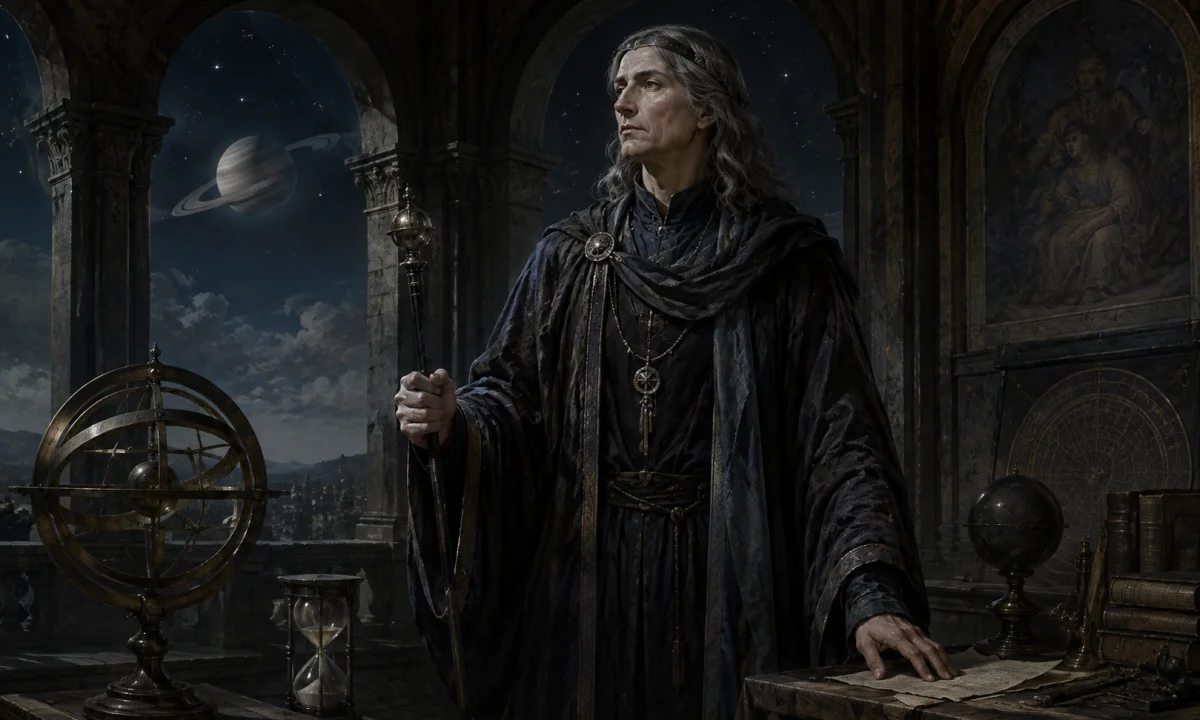
Araton is an obscure and uncertain angelic name. It does not belong to the established angelologies of the Bible, the Qur’an, or the principal Jewish, Christian, and Islamic traditions. In modern occult and esoteric lists, Araton is sometimes presented as an angel or spirit associated with the planet Saturn. However, many such references appear to be variant spellings, abbreviations, or mistakes involving Aratron, a planetary spirit described in Renaissance magical literature.
The distinction matters. Aratron is a documented figure in the occult tradition of the Arbatel of Magic, a sixteenth-century work of Christian-influenced ceremonial magic. Araton, by contrast, has no clearly established independent mythology, biography, or body of traditional stories. Treating the two names as automatically identical can make a later occult spelling appear to have an older and more substantial history than the evidence supports.
The name Araton and the problem of identification
The spelling Araton occurs sporadically in modern catalogues of angels, esoteric websites, occult reference works, and lists of planetary beings. These sources do not always agree about what Araton is. Some describe the name as an angel of Saturn; others use it as a shortened or alternative form of Aratron. A few lists provide an alleged meaning or a specific office without identifying an ancient text in which that information appears.
There is no widely accepted etymology for Araton. The name is not securely derived from a known Hebrew, Aramaic, Greek, Arabic, or Latin angelic expression. Proposed meanings found in popular occult material should therefore be treated cautiously. A name can look traditionally “angelic” because it ends in a familiar form, but that appearance is not proof of an ancient linguistic origin.
The best-supported interpretation is that Araton is either:
- a variant spelling of Aratron;
- a shortened form created in later occult or popular reference lists; or
- an obscure modern name whose original source has not been securely identified.
At present, the third possibility cannot be completely excluded, but there is not enough evidence to reconstruct a separate Araton tradition. No standard collection of religious scriptures or medieval angelological writings gives Araton a clearly defined identity comparable to Michael, Gabriel, Raphael, Uriel, or other better-attested figures.
Aratron and Renaissance planetary magic
The strongest historical association connected with the name Araton is the figure Aratron. Aratron appears in the Arbatel of Magic, published in Latin in the sixteenth century. The work belongs to a learned magical culture that combined Christian ideas about divine order with astrology, Neoplatonic philosophy, ritual practice, and older magical traditions.
The Arbatel describes seven powerful beings known as the Olympic spirits. Despite the name, they are not the gods of classical Greek mythology. They are planetary intelligences or spirits assigned to the seven traditionally recognized planets: Saturn, Jupiter, Mars, the Sun, Venus, Mercury, and the Moon. In this system, Aratron is associated with Saturn.
Aratron is therefore more accurately called a planetary spirit or Olympic spirit than an angel in the terminology of the original magical system. Later writers, especially those working within broad “angelology” or modern ceremonial magic, sometimes place the Olympic spirits in the same general category as angels. That classification reflects later interpretation rather than a simple description of the original text.
Saturn had a complex symbolic role in medieval and Renaissance astrology. It was associated with old age, boundaries, limitation, time, melancholy, death, agriculture, endurance, and hidden or subterranean things. Saturn was not simply a symbol of evil. Its difficult qualities could also represent patience, discipline, seriousness, authority, and the ability to endure hardship.
Attributes associated with Aratron
Descriptions of Aratron usually derive from the Saturnine character of Aratron in the Arbatel, rather than from an independent story about a being named Araton. In occult interpretation, the figure may therefore be connected with:
- Saturn and the astrological sphere of Saturn;
- time, age, mortality, and the limits of earthly life;
- discipline, patience, austerity, and endurance;
- secrecy, contemplation, isolation, and hidden knowledge;
- boundaries, foundations, stones, and enduring structures; and
- the more difficult experiences associated with delay, loss, melancholy, and restriction.
These are symbolic associations, not universally accepted religious attributes. They come from astrological and magical theories in which planets were believed to express spiritual qualities. They should not be presented as a fixed profile shared by all Jewish, Christian, Islamic, or esoteric traditions.
Some summaries of Aratron or Araton claim that the being can transform objects, reveal hidden matters, command subordinate spirits, or confer knowledge of particular arts. Such claims are generally connected with descriptions of Aratron in occult literature and with later magical elaboration. They are not part of a stable mythology with a consistent set of stories. Different modern sources may assign different powers to the name, and many do not distinguish between the original planetary spirit and a later “angel of Saturn.”
Appearance and symbolism
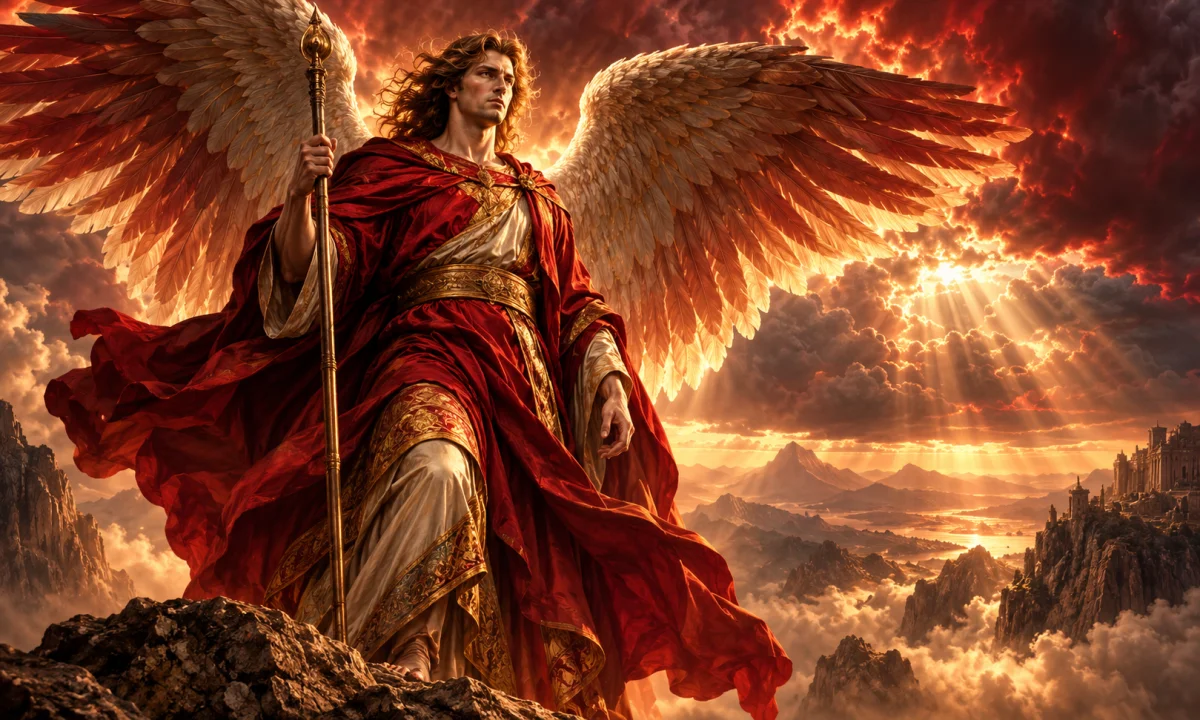
No canonical physical appearance is assigned to Araton. Neither the uncertain name nor the better-attested Aratron has a standard form comparable to the winged figures commonly seen in Christian art. Modern artists may depict such a being as a dark-robed angel, an elderly ruler, a crowned spirit, or a figure surrounded by Saturnine symbols. These images are imaginative interpretations rather than inherited iconography.
If Araton is treated as a spelling of Aratron, visual symbolism often draws on traditional representations of Saturn. The figure may be shown with dark colours, stone, an hourglass, a sickle, a staff, or signs of age. Each symbol has a different background. The hourglass suggests time and mortality; stone suggests permanence and heaviness; the sickle can refer to harvest, Saturn’s agricultural associations, or the destructive passage of time.
Such imagery should not be confused with the attributes of the Roman god Saturn or the Greek god Cronus. The planetary spirit Aratron developed within a later magical framework that borrowed and reorganized astrological and classical symbolism. Aratron is not simply another name for Saturn, and Araton is not automatically a classical deity.
Religious and cultural setting
The culture that produced the Arbatel did not draw a sharp modern boundary between religion, astrology, philosophy, and magic. Its author wrote within a Christian intellectual environment, yet the work also used planetary correspondences and ritual concepts that had roots in late antique and medieval esoteric traditions. The Olympic spirits were presented as part of a structured cosmic order rather than as characters in a mythological narrative.
This background explains why later readers sometimes call Aratron an angel. In many modern discussions, “angel” is used broadly for any benevolent, elevated, invisible, or celestial intelligence. Historically, however, different traditions distinguish among angels, demons, planetary intelligences, spirits, saints, gods, and personified cosmic forces. The terminology of the Arbatel should be respected rather than replaced with a more familiar category.
There is also no strong basis for assigning Araton to a particular ancient nation or language. Claims that the name is definitively Hebrew, Babylonian, Egyptian, Persian, or biblical are not supported by a generally recognized source tradition. The presence of an unfamiliar name in an angel list does not establish an ancient origin. Names can be copied, transliterated, abbreviated, corrupted, or newly coined over time.
Stories, relationships, and hierarchy
Araton has no preserved myth cycle. There are no widely recognized stories describing a birth, rebellion, descent to earth, battle, prophecy, or relationship with a human prophet. Nor is there an established family relationship linking Araton with Michael, Gabriel, Raphael, Lucifer, or any other major angelic figure.
When the name is identified with Aratron, its “relationships” are organizational rather than narrative. Aratron is one of seven Olympic spirits, each connected with a planet. The other names commonly given in that system are Bethor for Jupiter, Phaleg for Mars, Och for the Sun, Hagith for Venus, Ophiel for Mercury, and Phul for the Moon. These beings form a planetary arrangement, not a divine family tree.
Modern occult practitioners may assign Aratron a place in ritual hierarchies involving planetary hours, days, colours, metals, seals, or astrological signs. Such systems vary considerably. They should be described as later magical practice or personal esoteric interpretation, not as universally recognized angelic doctrine.
Araton compared with similar names
Araton and Aratron
This is the most important distinction. Aratron has a recognizable place in Renaissance planetary magic. Araton is much less securely documented. Some writers use the shorter spelling as if it were interchangeable with Aratron, but the two forms should not be treated as separate beings without evidence. When a source gives Araton the attributes of the Saturnine Olympic spirit, it is probably drawing on Aratron.
Araton and Uriel
Some modern angel lists associate various planetary functions with archangels, including Uriel and Saturn. This does not make Araton another name for Uriel. Uriel has a much older and broader history in Jewish and Christian apocryphal and mystical traditions, while the Araton-Aratron material belongs primarily to obscure or later occult classification.
Araton and the angel of Saturn
“Angel of Saturn” is not a single universally accepted title. Different magical and astrological systems assign Saturn to different angels, archangels, spirits, or intelligences. Aratron may be called an angel of Saturn in some modern sources, but that wording reflects a particular esoteric system and should not be generalized to all angelology.
Araton and the Roman god Saturn
Araton is not a traditional name of the Roman god Saturn. The connection with Saturn arises through planetary magic and astrology, not through Roman mythology. Confusing the two erases the historical difference between a classical deity and a later occult planetary spirit.
Interpretation and cultural significance
The uncertain figure of Araton illustrates how names can move between religious, magical, and popular contexts. A name first encountered in an occult list may later be described as a biblical angel, a demon, an archangel, or a guardian spirit, even when no historical source supports the change. Repeated copying can give a rare spelling the appearance of an established tradition.
Interpreted through the Saturnine symbolism associated with Aratron, the name can represent the spiritual meaning of limits. Saturn’s imagery asks how people respond to time, ageing, responsibility, grief, isolation, and the consequences of their choices. In a constructive reading, these themes may suggest patience, maturity, restraint, and the creation of foundations that endure. In a darker reading, they evoke fear, stagnation, oppression, and despair.
These interpretations are symbolic rather than evidence of a historical cult of Araton. There is no reliable indication of an ancient religious community devoted to a being under that exact name. The figure’s significance lies chiefly in the way later occult traditions classify celestial powers and in the modern tendency to collect and reorganize names from different magical sources.
Later use and modern representations
Araton has little established presence in major literary, cinematic, or gaming traditions. The name may appear in modern fantasy, role-playing material, occult fiction, online angel directories, or independently created systems of supernatural beings. In these settings, it can be portrayed as a powerful angel, a guardian of forbidden knowledge, a ruler of darkness, or a cosmic servant of Saturn.
Such portrayals are creative adaptations. They should not be used as evidence for an ancient appearance, personality, or religious role. When a modern work presents Araton as a fully developed character, details such as wings, armour, gender, powers, alliances, and moral alignment usually belong to that work’s fictional world rather than to a documented tradition.
For historical and religious purposes, the most responsible description is therefore limited: Araton is an obscure and uncertain angelic name, probably connected in many modern sources with Aratron, the Saturnine Olympic spirit of Renaissance magic. Beyond that association, its identity, origin, meaning, and attributes remain unconfirmed and should be presented as disputed rather than as established angelology.