WORLD
WORLD
Bethor
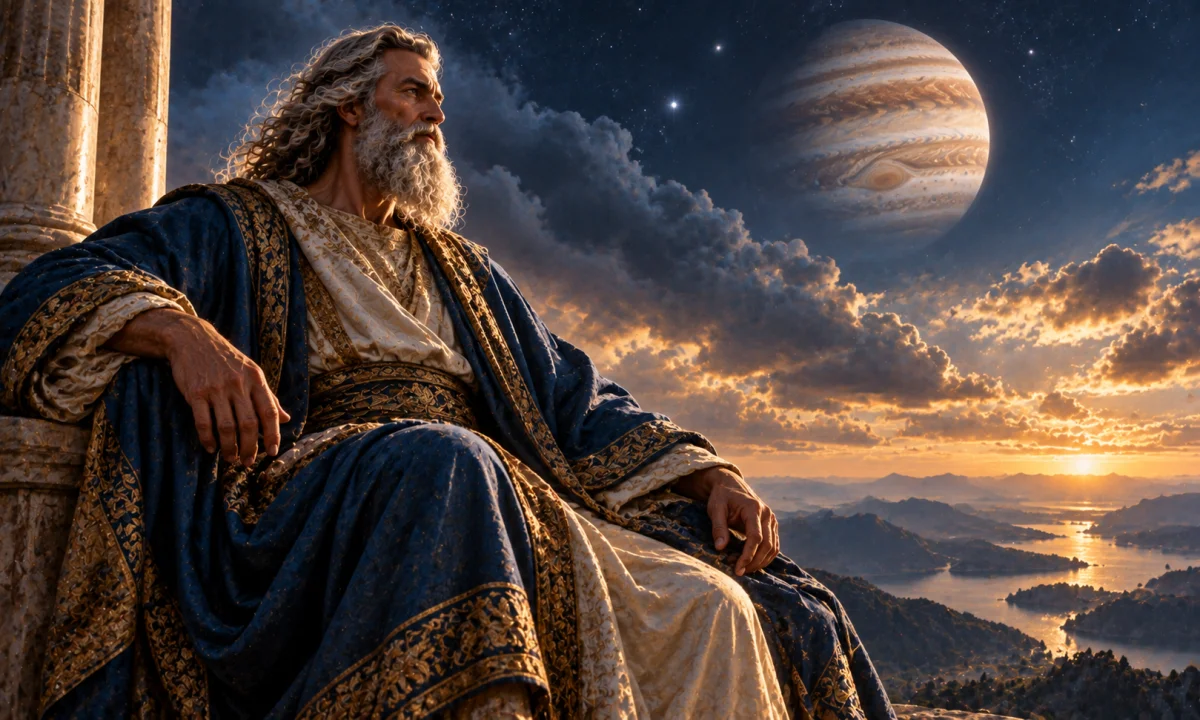
Bethor is an Olympic spirit in the Renaissance magical tradition, especially in the sixteenth-century grimoire Arbatel of Magic. He is associated with the planet Jupiter and with the qualities traditionally attributed to Jupiter in astrology: authority, prosperity, honour, expansion, justice and political influence. Although Bethor is sometimes listed under the broad category of angels, he is not an angel named in the Bible, the Qur’an or the principal angelic traditions of Judaism, Christianity or Islam. His identity belongs more specifically to Western esotericism and ceremonial magic.
Origins in Renaissance magic
Bethor’s best-known source is the Arbatel of Magic, also known by its Latin title Arbatel de magia veterum. The work was printed in the late sixteenth century, usually dated to 1575, although its authorship and precise circumstances remain uncertain. It presents itself as a Christian form of magical instruction and combines biblical language, astrological ideas, moral teaching and occult practice.
The Arbatel is different in tone from many later grimoires. It does not focus primarily on commanding demons or describing elaborate spirit hierarchies. Instead, it presents a system of spiritual beings connected with the seven classical planets. These beings are called Olympic spirits. The term “Olympic” refers to a celestial or planetary order rather than to the gods of ancient Greek Olympus, and Bethor should not be identified with the Greek god Zeus or with the Roman god Jupiter.
The work describes seven principal Olympic spirits, each associated with one of the seven planets visible to ancient and medieval observers:
- Aratron, associated with Saturn
- Bethor, associated with Jupiter
- Phaleg, associated with Mars
- Och, associated with the Sun
- Hagith, associated with Venus
- Ophiel, associated with Mercury
- Phul, associated with the Moon
This arrangement reflects the importance of planetary symbolism in premodern astrology. The planets were understood not merely as physical objects but as powers that shaped time, temperament, social roles and earthly events. Bethor therefore represents a planetary intelligence or spirit of Jupiter within a Renaissance occult framework, rather than a universally recognised angelic personality.
Name, identity and classification
The spelling Bethor is the most familiar English form, but occult manuscripts and later editions may vary in their presentation of names. The origin and meaning of the name are not securely established. It is sometimes treated as a constructed or revealed magical name rather than a word with a demonstrable etymology in Hebrew, Greek, Latin or another ancient language.
There is no reliable evidence that Bethor is an ancient biblical or Jewish angel whose name was later preserved by the Arbatel. Attempts to connect him directly with named figures from earlier religious traditions are speculative. Similar-looking names in magical texts, angelological lists or modern occult writing should not automatically be treated as references to the same being.
In the terminology of the Arbatel, Bethor is an Olympic spirit. Some modern catalogues place him among angels because they use “angel” as a broad label for non-human spiritual beings. That classification can be convenient for website categories or modern occult systems, but it should not obscure the historical distinction. Bethor belongs to a planetary hierarchy within Renaissance esotericism, not to the standard choirs of angels developed in Christian theology.
Bethor and the planet Jupiter
Bethor’s character is shaped by the traditional symbolism of Jupiter. In ancient astrology, Jupiter was associated with growth, abundance, law, kingship, religious authority, generosity and good fortune. It was commonly regarded as a beneficent planet, especially in contrast with the more difficult influences attributed to Saturn and Mars.
Accordingly, Bethor is presented as a spirit connected with advancement and high status. The Arbatel associates him with promotion to positions of authority, favour from rulers and the ability to reconcile powerful people. These claims should be understood as statements within the magical text, not as historical evidence that such powers were demonstrated or accepted by all religious communities.
Jupiter’s symbolism also explains Bethor’s connection with wealth and social opportunity. The spirit is described as being able to provide resources, increase prosperity and assist with honourable advancement. In a Renaissance setting, such benefits were closely tied to relationships with courts, officials, patrons and institutions. “Success” did not necessarily mean private financial gain alone; it could include a respectable office, protection by a powerful person or recognition within religious or civic society.
Jupiter was also associated with wisdom, law and orderly government. Bethor’s traditional profile consequently includes themes of justice, diplomacy and the maintenance of hierarchy. His sphere is not usually portrayed as wild or destructive. It is the sphere of authority made legitimate, beneficial and expansive, at least in the idealised language of planetary magic.
Appearance and visual symbolism
The Arbatel gives Bethor a recognisable but limited visual description. He is said to appear in human form wearing a royal or regal robe and riding upon a bear. This image combines several layers of symbolism.
The royal clothing expresses Jupiter’s connection with kingship, dignity and public authority. It indicates that Bethor is not imagined as a humble household spirit or a wandering ghost, but as a high-ranking figure whose appearance reflects power and sovereignty. The bear may signify strength, command and the untamed force placed under royal control. It also contributes to the impressive and emblematic character of the vision rather than providing a naturalistic portrait.
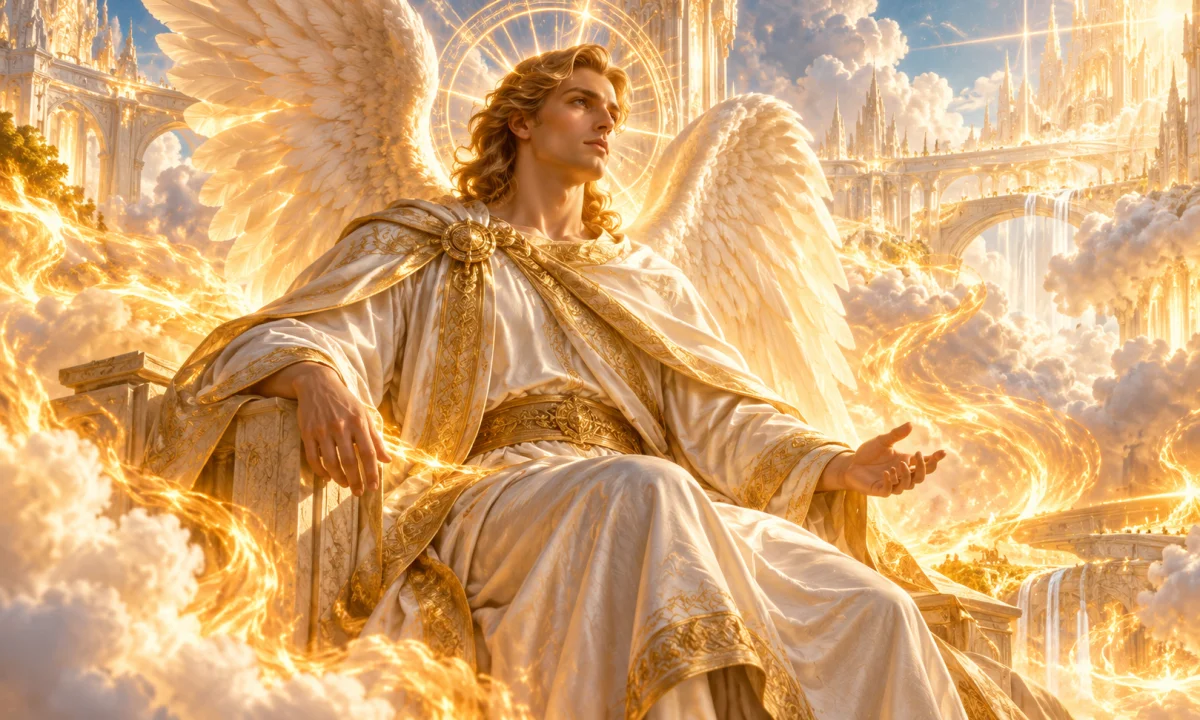
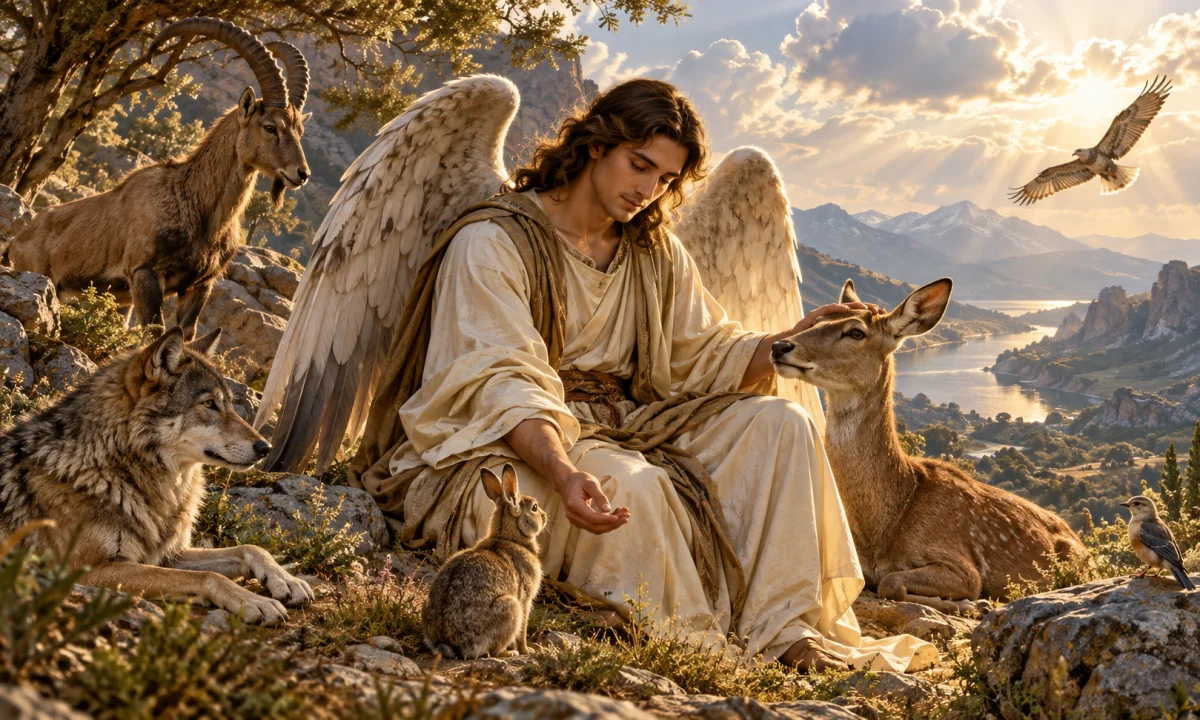
Later illustrations often give Bethor a more elaborate appearance, sometimes presenting him as a crowned ruler, a blue-robed celestial figure or a conventional winged angel. These images do not all come directly from the Renaissance source. Many belong to later occult art, modern magical books or digital fantasy design. A winged human figure is therefore a common modern representation, but it should not be treated as the only traditional form of Bethor.
The Arbatel also assigns Bethor a distinctive magical character or seal. In ceremonial magic, such a diagram functions as a sign of identification and as a ritual emblem. Its use belongs to the practical instructions of the grimoire and should not be confused with a religious symbol recognised across Christianity or Judaism.
Traditional powers and functions
The powers attributed to Bethor reflect both Jupiter’s astrological meanings and the practical concerns of early modern occultists. The Arbatel portrays him as capable of granting or influencing several forms of worldly success:
- High office and advancement: Bethor is associated with promotion to important civil or ecclesiastical positions.
- Favour from rulers: He may be invoked in connection with kings, princes and other figures of authority.
- Reconciliation: His influence includes the settling of disputes or the restoration of agreement between powerful people.
- Prosperity: Jupiter’s connection with abundance appears in claims concerning wealth, resources and material increase.
- Protection and assistance: Like other planetary spirits in the system, Bethor is presented as having subordinate beings or helpers who can carry out particular tasks.
- Medicinal and natural knowledge: The text links planetary spirits with forms of practical or occult knowledge, including the preparation of beneficial substances.
These descriptions are not a consistent biography or a collection of stories about Bethor. They are functional claims in a magical manual. The source is concerned with what a practitioner might request from a planetary spirit, not with narrating Bethor’s birth, family, battles or moral development.
The Arbatel also gives Bethor a numerical association. He is connected with the number forty-two, a figure that appears in the text’s account of his jurisdiction. Interpretations differ over how literally or symbolically this material should be read. The number belongs to the internal structure of the grimoire and does not establish an older mythological tradition surrounding Bethor.
Astrological timing and ritual context
Bethor’s planetary nature links him with Thursday, the day traditionally governed by Jupiter, and with the planetary hours of Jupiter. In systems of planetary magic, the day and hour were considered appropriate times for work involving authority, prosperity, legal matters, learning, protection or social advancement.
Such timing formed part of a broader astrological worldview. Practitioners viewed the planets as governing different qualities of time, and a ritual was thought to be more harmonious when performed during the period belonging to the relevant planet. Bethor’s association with Jupiter therefore involved more than a name and a seal; it placed him within a complete network of colours, metals, numbers, plants, sacred names and ritual intentions.
The surviving tradition does not provide one universally standard ritual for contacting Bethor. Different editions and later magical systems add instructions that may not be present in the original work. Modern practitioners may combine Bethor’s name with planetary prayers, talismans, incense, astrological hours or visualisation. These combinations represent later interpretation and practice, not a single unchanged ritual inherited from antiquity.
Relationship to Christianity and angelology
The Christian language of the Arbatel can make Bethor appear closer to orthodox angelology than he actually is. The text presents magic within a religious universe that includes God, divine providence, spirits and moral responsibility. Nevertheless, the Olympic spirits do not fit neatly into the angelic orders described by theologians such as Pseudo-Dionysius, whose hierarchy includes seraphim, cherubim, thrones, dominions, virtues, powers, principalities, archangels and angels.
Bethor is not one of the named archangels, and he has no established place among the seven archangels sometimes associated with the days of the week. In particular, he should not be confused with Michael, Gabriel, Raphael, Uriel or other figures from Jewish and Christian angelic traditions. His planetary role may resemble the functions assigned to certain archangels in later occult correspondences, but resemblance does not prove identity.
The use of Christian terminology in Renaissance magic reflects the period’s intellectual and religious environment. Occult authors often combined biblical ideas with astrology, Neoplatonism, Hermetic philosophy, medieval magical traditions and popular beliefs. Their systems may therefore look religious without representing the official teaching of any single church.
Bethor compared with other planetary beings
Bethor is most easily confused with other figures connected with Jupiter. The Roman god Jupiter and the Greek Zeus share the planet’s name and many of its symbolic qualities, including kingship, sky power and authority. Bethor is not simply another name for either deity. His role is that of a spirit in a Christianised Renaissance magical hierarchy, while Jupiter and Zeus are gods of ancient polytheistic religions with their own myths, cults and genealogies.
He may also be confused with later occult figures assigned to Jupiter, such as planetary angels or intelligences that appear in other magical systems. Names such as Johophiel, Jophiel or other Jupiter-related beings may occur in separate traditions, but spelling similarity or a shared planetary association does not make them forms of Bethor. Different grimoires use different hierarchies, names and classifications.
Bethor should likewise be distinguished from Barachiel, an angel sometimes associated with blessings or with the planet Jupiter in later Christian and occult correspondences. Barachiel belongs to a different stream of angelological tradition, and the two names do not represent a single figure. Modern reference works sometimes place several planetary beings side by side, which can create the impression of a unified ancient system that did not historically exist.
Historical significance
Bethor is significant because he illustrates the way Renaissance occult writers reorganised older ideas into new spiritual systems. The figure combines astrological symbolism, Christian cosmology, magical ritual and the social ambitions of early modern Europe. His powers concern not only supernatural wonder but also patronage, rank, protection, wealth and influence—matters of immediate importance in a society structured by courts, churches and hereditary authority.
The Arbatel also shows that early modern magic could be presented as disciplined, morally framed and intellectually ordered. Bethor is not described through a large cycle of legends. Instead, he occupies a defined place in a system in which each planetary spirit has a particular sphere, timing and set of effects. This systematic quality helped the Olympic spirits remain attractive to later occult writers.
Later occult reception
Bethor continued to appear in European and English-language occult literature after the publication of the Arbatel. Later magicians incorporated the Olympic spirits into broader systems of planetary magic, often adding correspondences drawn from the Kabbalah, tarot, alchemy or ceremonial ritual. In these later contexts, Bethor may be described as an angel, intelligence, ruler or planetary force, depending on the author’s preferred terminology.
These adaptations should be separated from the original Renaissance material. Modern occult writers do not always agree about Bethor’s colour, rank, seal, attendants, divine names or exact ritual procedure. Some portray him as a benevolent guide of prosperity and wisdom, while others emphasise authority, legal power or disciplined expansion. Such variations show how the figure has been reinterpreted rather than revealing a single fixed tradition.
Bethor has also appeared in modern fantasy art, esoteric fiction, role-playing games and online lists of angels and demons. These uses may borrow his name, Jupiter association or royal imagery while inventing new stories and powers. A fictional portrayal should therefore be identified as a modern adaptation, not as evidence for the historical beliefs recorded in the Arbatel of Magic.