WORLD
WORLD
Arael
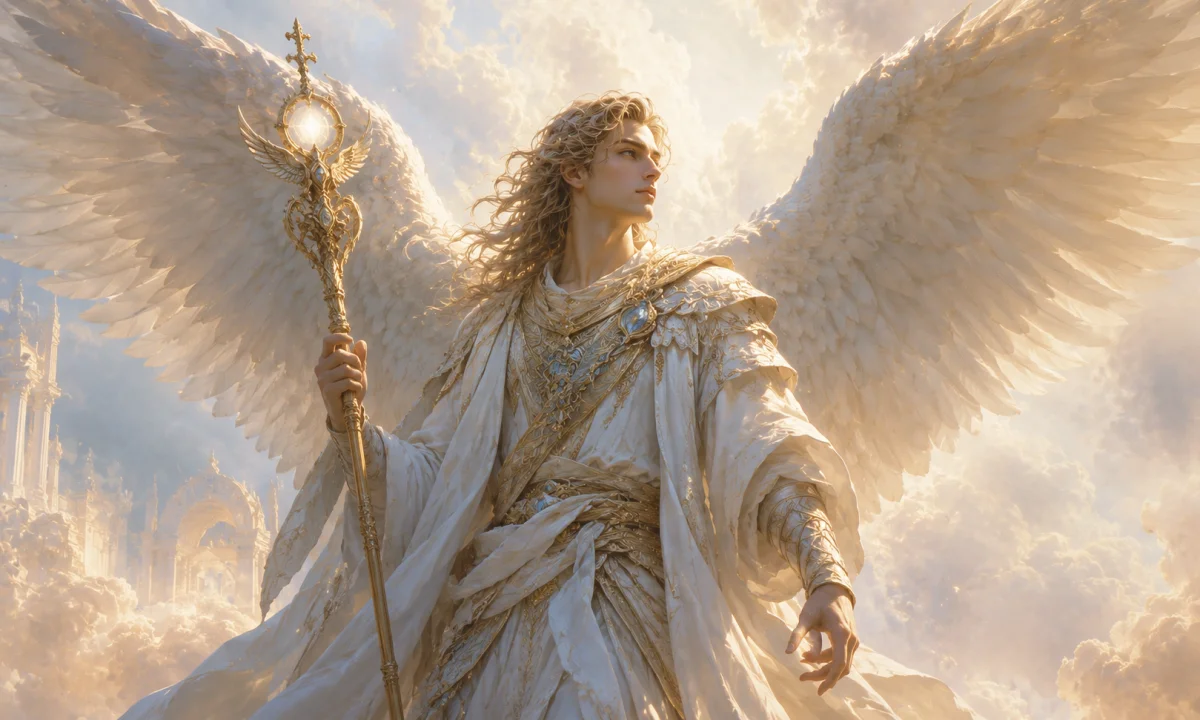
Arael is an uncertain and relatively minor name in angelological tradition. Unlike Michael, Gabriel, Raphael or Uriel, Arael does not possess a consistent identity in the major Jewish, Christian or Islamic scriptures. The name appears mainly in later lists of angels, esoteric writings, devotional classifications and modern reference works, where its spelling, meaning and supposed duties vary considerably. In some contexts, Arael is treated as a form of Ariel; in others, it is connected with Arahel or presented as an independent angel. These identifications are not universally accepted.
Because the name has no single, stable biography, claims about Arael’s appearance, rank, powers or heavenly office should be treated cautiously. Many descriptions repeated in modern angel dictionaries and online lists belong to later occult or popular traditions rather than to ancient scripture. A careful account must therefore distinguish the older religious setting from subsequent attempts to organize, classify and expand the angelic world.
The name Arael and its uncertain identity
The spelling Arael is often understood as a variant of a name formed from the Hebrew element El, meaning “God” or referring to God. It is sometimes associated with Ariel, a name commonly interpreted as “lion of God,” although the precise linguistic history of the forms is not straightforward. Transliteration from Hebrew and other Semitic languages can produce several English spellings, particularly when vowels are represented inconsistently.
Arael is also sometimes confused with Arahel, a name found in certain later lists of the seventy-two angels associated with the divine name. The forms Arael, Arahel and Ariel may appear close to one another in English, but similarity of spelling does not by itself prove that they originally referred to the same figure. Different authors have used angelic names flexibly, adapting them to their own systems of Hebrew transliteration, numerology or ritual classification.
There is no universally recognized “standard” form of Arael. Some sources present the name as an angel in its own right, while others use it as an alternative spelling for Ariel. Arael should not automatically be assigned every attribute associated with Ariel, Arahel or any other similarly named being.
Scriptural and religious background
Arael is not a prominent named angel in the Hebrew Bible, the New Testament or the Qur’an. This absence is important. The angelic figure described under the name Arael belongs primarily to later angelological and esoteric traditions, not to the central scriptural narratives of Judaism, Christianity or Islam.
The closest well-known biblical name is Ariel. In the Book of Isaiah, “Ariel” is used in connection with Jerusalem, described poetically as a place or symbolic name. The passage does not clearly present Ariel as an angelic individual. In later Jewish and Christian interpretation, however, Ariel became an angelic name and acquired a variety of associations. Some traditions connected Ariel with nature, the earth, animals, protection or hidden knowledge, though these roles developed unevenly and should not be transferred automatically to Arael.
Jewish religious literature contains many discussions of angels, including their names, ranks, duties and relationships to human beings. Yet Jewish angelology was never a single, universally fixed system. Biblical texts, rabbinic writings, mystical works, magical manuals and later folklore often give different names or functions to similar classes of heavenly beings. A name appearing in one late list does not necessarily represent a figure accepted throughout Jewish tradition.
Christian angelology developed in a similarly layered way. Biblical angels, apocryphal writings, theological classifications and medieval or early modern occult catalogues all contributed to the large number of angelic names known today. Arael belongs, where it appears, to the less stable margins of this wider tradition rather than to the central hierarchy recognized by most churches.
Arael in later angelological and esoteric lists
Later writers frequently attempted to assign every angel a precise rank, day, planet, element, virtue, colour or human concern. These systems were especially influential in Western ceremonial magic and in works that combined biblical names with Jewish mystical terminology, astrology and numerology. In such settings, Arael may appear as a variant spelling, a secondary form of another angel’s name or an entry in a catalogue whose organization differs from that of other catalogues.
The so-called seventy-two angels connected with the divine name provide one important context for confusion. Medieval and early modern angelological systems derived names from three verses in the Book of Exodus, traditionally arranged in groups of seventy-two Hebrew letters. Later interpreters associated each resulting name with an angel and supplied additional attributes. The names were transliterated into Latin, French, English and other languages in many different ways. As a result, one angel may have several spellings, and similar spellings may occasionally be treated as separate names.
Arahel is often included in discussions of this seventy-two-name tradition, whereas Arael may appear as a shortened or altered form in other sources. The exact relationship between these names depends on the individual system being used. It is therefore misleading to speak of a single ancient doctrine concerning Arael’s office or powers.
Some modern lists describe Arael in terms of intellectual understanding, learning, revelation or the discovery of hidden truths. Other lists connect related names with moral discipline, memory, friendship or protection. These assignments are products of particular occult and devotional systems, not attributes securely preserved in an ancient narrative about Arael. They may be meaningful within those systems, but they should be labelled as later interpretations.
Supposed appearance and nature
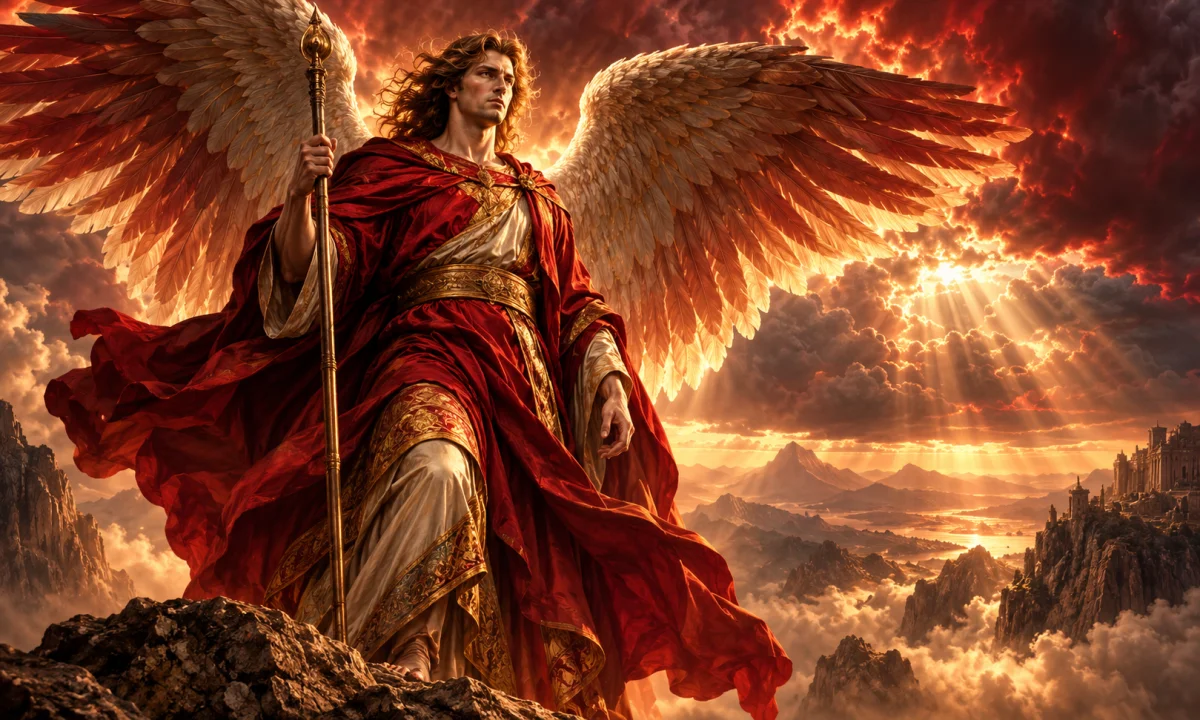
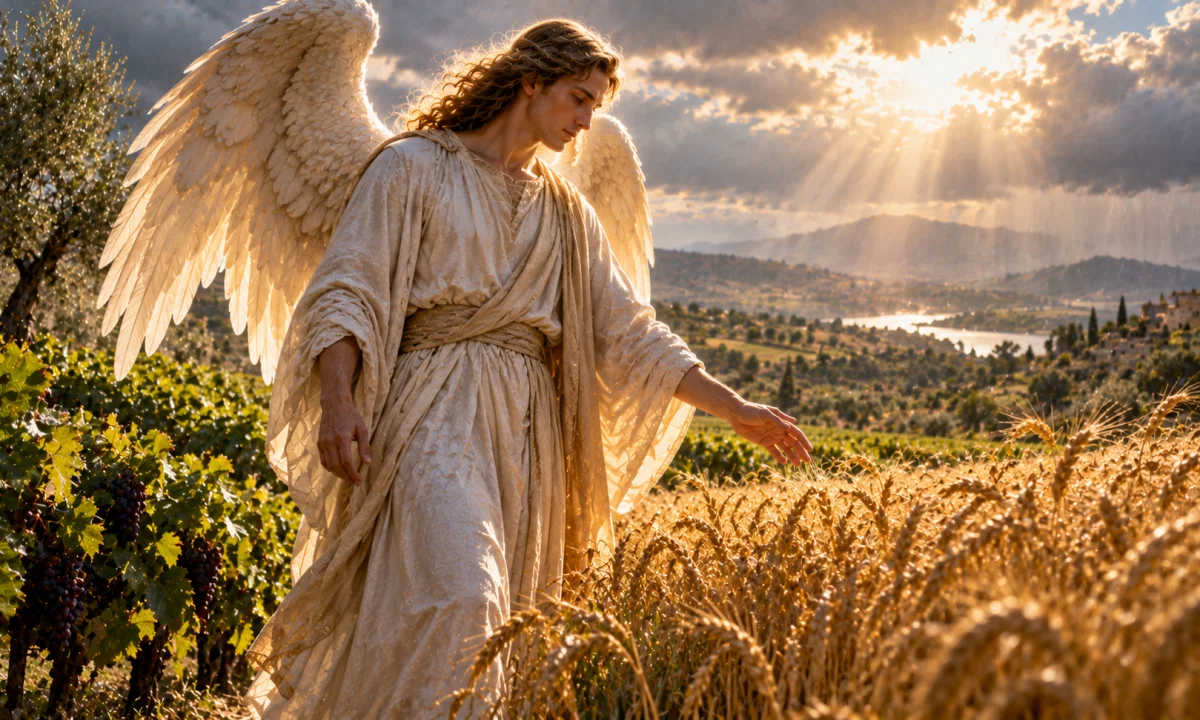
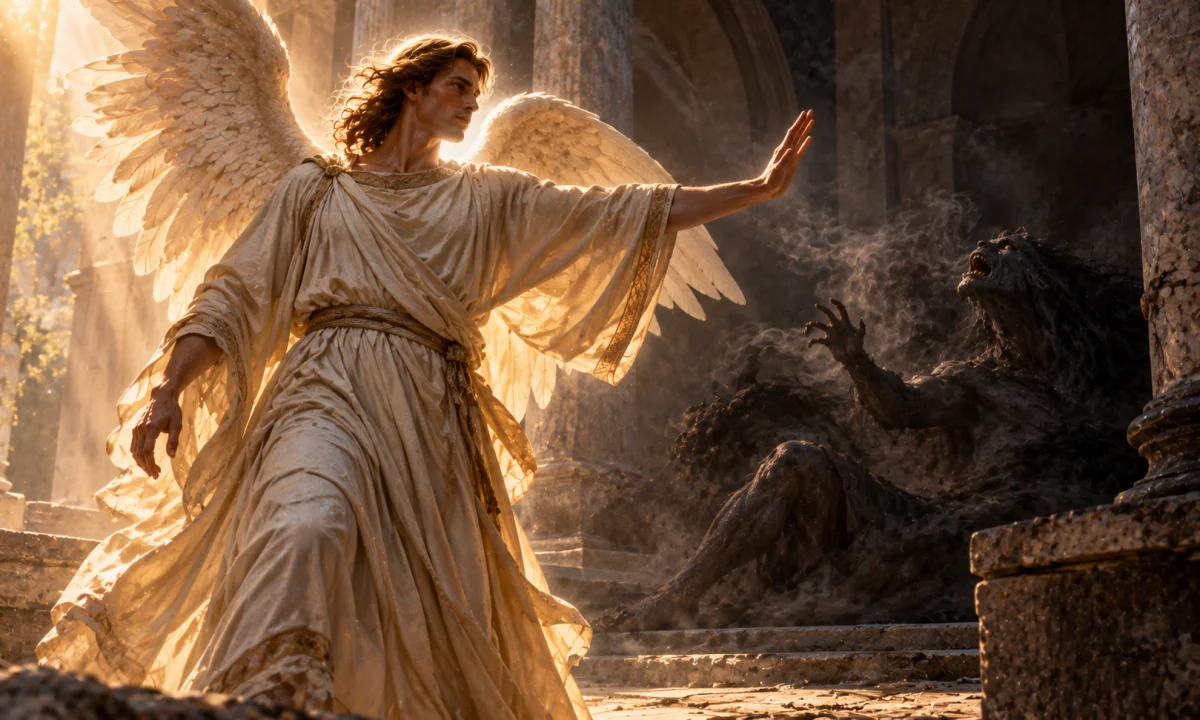
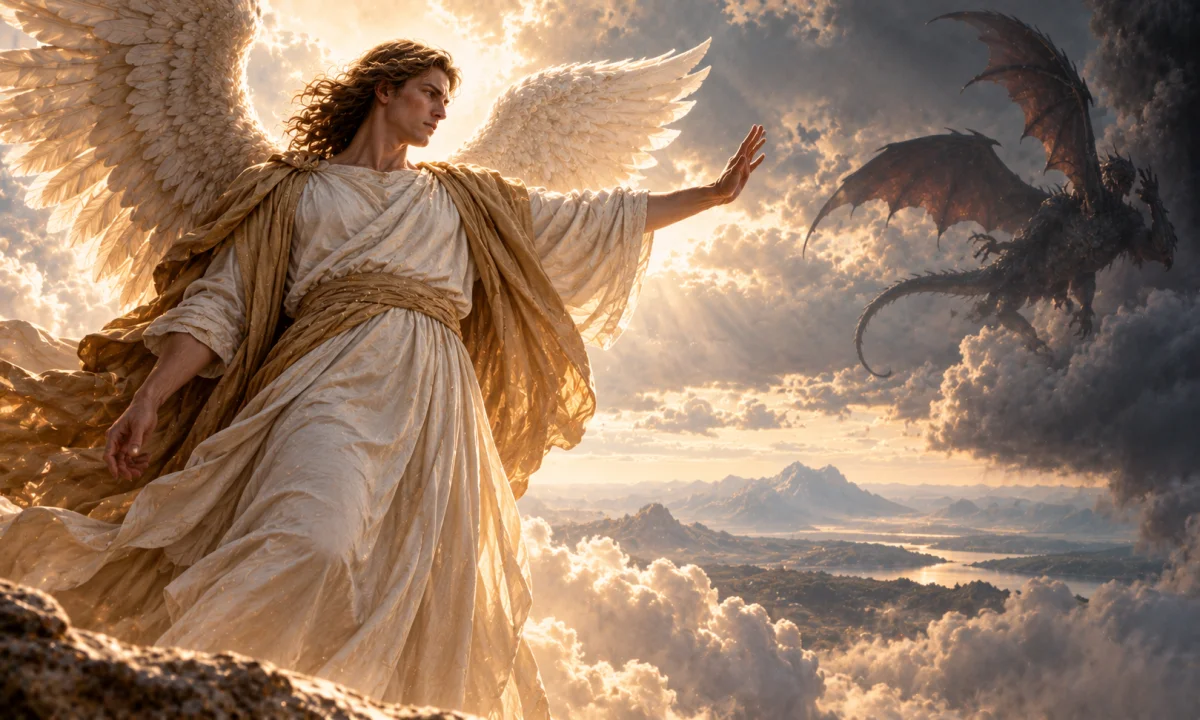
No ancient story provides a standard physical description of Arael. There is no established iconography showing how this angel should look, and no widely accepted tradition gives Arael a distinctive object, animal, garment or emblem.
Where Arael is identified with Ariel, writers may borrow Ariel’s symbolic association with a lion because of the commonly proposed meaning “lion of God.” This does not establish that Arael was traditionally portrayed as a lion-headed angel or as an angel accompanied by lions. Such images belong to symbolic interpretation, artistic invention or modern fantasy rather than to a documented, universal tradition.
In general, Arael is described as a spiritual or heavenly being rather than as a human-like figure with a detailed biography. Angelic language in Jewish, Christian and Islamic traditions is often symbolic and functional: angels announce, guard, punish, heal, praise, record or carry out divine commands. Later authors sometimes turned these functions into fixed personal identities, but Arael has not acquired a stable role comparable to Michael as a warrior, Gabriel as a messenger or Raphael as a healer in some Christian and Jewish traditions.
Roles attributed to Arael
The duties assigned to Arael vary according to the source. Common modern descriptions may include:
- guidance in the search for knowledge or spiritual understanding;
- protection during personal or religious study;
- assistance in recognizing truth, error or hidden meaning;
- mediation between divine wisdom and human thought; and
- association with natural or earthly forces when Arael is treated as a form of Ariel.
These roles should not be presented as a single inherited doctrine. They reflect the tendency of later angelological writers to give each named angel a specialized sphere of influence. In older religious traditions, angels may perform several tasks, and their identities are often defined by a particular story rather than by a permanent “portfolio.” Arael’s supposed functions are therefore best understood as interpretive associations rather than firmly established religious facts.
Some esoteric systems also connect angelic names with particular hours, seasons, planets or signs of the zodiac. Such correspondences are not consistent across sources, and there is no broadly accepted astrological profile for Arael. Claims that Arael rules a specific day, month or zodiac sign should be attributed to the relevant later system rather than treated as part of general angelic tradition.
Relationship to Ariel
Ariel is the figure most likely to be confused with Arael. Ariel has a longer and more recognizable history as a name associated with Jerusalem in Isaiah and, later, with an angel in Jewish mystical, Christian esoteric and occult writings. Depending on the source, Ariel has been linked with the natural world, animals, elemental forces, healing, protection and hidden wisdom.
The relationship between the two names is uncertain. Arael may be a variant spelling produced by transliteration or copying; it may be a deliberate alteration used in a particular angelic catalogue; or it may have been treated as an independent name by later writers. There is no general religious authority that settles the matter. An account of Ariel should not be silently rewritten as an account of Arael.
The distinction is especially important because modern angel lists often repeat names without explaining their origins. A name can move from one list to another while its attributes change, eventually giving the impression of a continuous ancient tradition where the evidence actually shows a series of later reinterpretations.
Relationship to Arahel and other similar names
Arahel is another potentially related name. In systems based on the seventy-two divine names, Arahel is commonly assigned a particular place in the sequence and given a set of symbolic or moral associations. The spelling may be shortened, altered or confused with Arael in some secondary works.
Other names that may be mistaken for Arael include Azrael and Arariel. Azrael, whose name is often interpreted as “whom God helps,” is a much more widely known figure in Islamic and later Jewish and Christian folklore. In popular culture Azrael is frequently called the angel of death, although the exact form and prominence of that role vary among traditions. Azrael is not simply a longer spelling of Arael.
Arariel appears in some Jewish mystical and magical traditions as an angel associated with waters or with other specialized functions, depending on the source. Its resemblance to Arael is mostly a matter of sound and spelling. There is no sound basis for merging Arael, Arahel, Ariel, Azrael and Arariel into one figure.
Religious significance and interpretation
Arael’s significance lies less in a body of stories than in the way later traditions constructed angelic knowledge. The name illustrates how angelology developed through the interaction of scripture, commentary, mystical speculation, ritual practice and translation. As writers tried to name and classify the invisible world, they preserved some names, altered others and created new relationships among them.
For believers who use later angelic classifications devotionally, Arael may serve as a name associated with wisdom, contemplation or spiritual protection. Such use can be personally or religiously meaningful without proving that the same attributes belonged to an ancient, universally recognized angel. The distinction between devotional interpretation and historical evidence is particularly important for minor angelic names.
From a historical perspective, Arael is best described as a variable angelological name. It has a place in certain later traditions, but it does not have a stable scriptural identity, a canonical biography or an agreed rank in the heavenly hierarchy. Its meaning changes according to the text, language and religious or occult system in which it appears.
Arael in modern popular culture
Arael is far less prominent in popular culture than names such as Michael, Gabriel, Lucifer, Azrael or Uriel. When the name appears in fantasy novels, role-playing games, comics or online fiction, it is often used because it sounds angelic or resembles Ariel and Azrael. Writers may portray Arael as a warrior, guardian, fallen angel, messenger or supernatural ruler, but these portrayals are modern inventions unless they deliberately draw on a specific later occult source.
Modern depictions may also combine attributes from several similarly named beings. A fictional Arael might be given Azrael’s association with death, Ariel’s association with nature or Arahel’s place in a seventy-two-angel system. Such combinations can be effective storytelling, but they should not be mistaken for evidence of a single traditional figure.
In historical and religious discussions, the most accurate description is therefore a restrained one: Arael is a disputed or variant angelic name found chiefly in later angelological traditions, with no universally accepted origin, identity or set of powers. Its resemblance to better-known names explains much of its modern profile, but resemblance alone does not establish that all of these figures are the same angel.