WORLD
WORLD
Anahel

Anahel is a rare and uncertain angelic name found chiefly in later esoteric and occult lists rather than in the Bible or other major canonical religious scriptures. The spelling is sometimes treated as a variant of Anael, an angel associated in Western ceremonial magic with the planet Venus, but the two names are not consistently distinguished across sources. As a result, Anahel does not possess a single, stable identity, mythology or set of attributes accepted throughout Jewish, Christian or Islamic tradition.
Origins and religious setting
Angels appear in several religious traditions, but the names, ranks and duties assigned to them differ greatly according to period and community. In the Hebrew Bible, only a small number of angels are named directly, most notably Michael and Gabriel in later biblical books. Christian scripture also preserves a limited number of personal angelic names. Large catalogues of angels developed later through Jewish mystical writing, Christian angelology, liturgical traditions and Renaissance ceremonial magic.
Anahel belongs to the uncertain outer edges of this naming tradition. It is not generally recognized as the name of a distinct angel in the biblical canon, and there is no widely accepted ancient narrative centred on an angel called Anahel. The name is more often encountered in lists of angels, planetary correspondences or modern compilations of esoteric names. Such lists frequently preserve variant spellings, transmit names through several languages and combine material from different historical systems.
The available evidence therefore requires caution. A reference to Anahel may represent:
- a spelling variant of Anael;
- a form influenced by the better-known name Haniel or Hanael;
- a copying or transliteration variation in an occult catalogue;
- or, in some cases, an attempt to present Anahel as a separate angel without a strong older textual basis.
These possibilities should not be treated as proven stages in a single historical development. The name’s precise origin is uncertain, and different sources may be referring to different figures.
The name Anahel and variant spellings
Angel names were transmitted in Hebrew, Aramaic, Greek, Latin, Arabic and European vernaculars. Transliteration between these languages can alter vowels, consonants and word endings. A name that appears as Anael in one list may appear as Anahel, Anaël, Hanael or another form in a later source. Modern books and websites may also standardize names differently or repeat an earlier spelling without explaining its origin.
The ending -el is common in names associated with Jewish and Christian angelology. It derives from El, a Hebrew term for God and a component of many biblical names, including Gabriel, Michael and Raphael. The presence of this ending does not by itself establish that a name is ancient, biblical or authentically Hebrew. It only places the name within a broad naming pattern used by many religious and esoteric traditions.
Anahel should also be distinguished from Anahel as a proposed independent figure and from names that merely resemble it. Similarity in spelling does not demonstrate identity. In particular, Anahel should not automatically be equated with Haniel, Anael, Anafiel or any angel appearing in Jewish mystical literature under a related-looking name.
Anahel and Anael in Western esotericism
The most common interpretation of Anahel connects the name with Anael, an angel of Venus in Western occult correspondence systems. In these systems, the seven classical planets were associated with angels, divine names, spirits, metals, colours, days and hours. Venus represented attraction, affection, beauty, harmony, fertility, pleasure and the arts. An angel assigned to Venus could therefore be invoked or discussed in relation to these symbolic themes.
Planetary angelology is not a single ancient doctrine. It developed through the interaction of biblical interpretation, late antique cosmology, Jewish and Christian angelic speculation, astrology and Renaissance ceremonial magic. The associations found in one magical handbook may differ from those in another. The spelling Anahel may occur in later lists that assign Venusian qualities to Anael, but the evidence does not establish a universally accepted “Anahel system.”
When Anahel is described as a Venusian angel, the description usually reflects symbolic correspondence rather than a story from scripture. The angel’s role is inferred from the qualities of Venus within astrological and magical thought. This is different from claiming that an ancient religious text describes Anahel as a heavenly ruler of love or beauty.
Attributes and symbolism
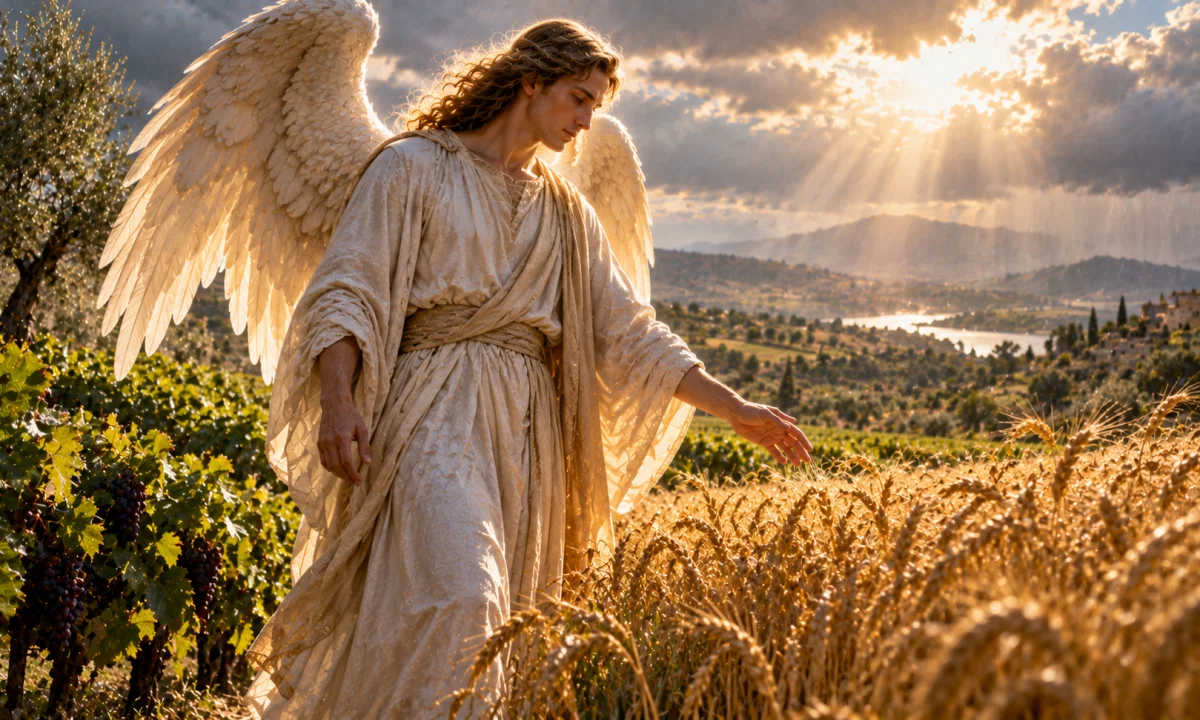
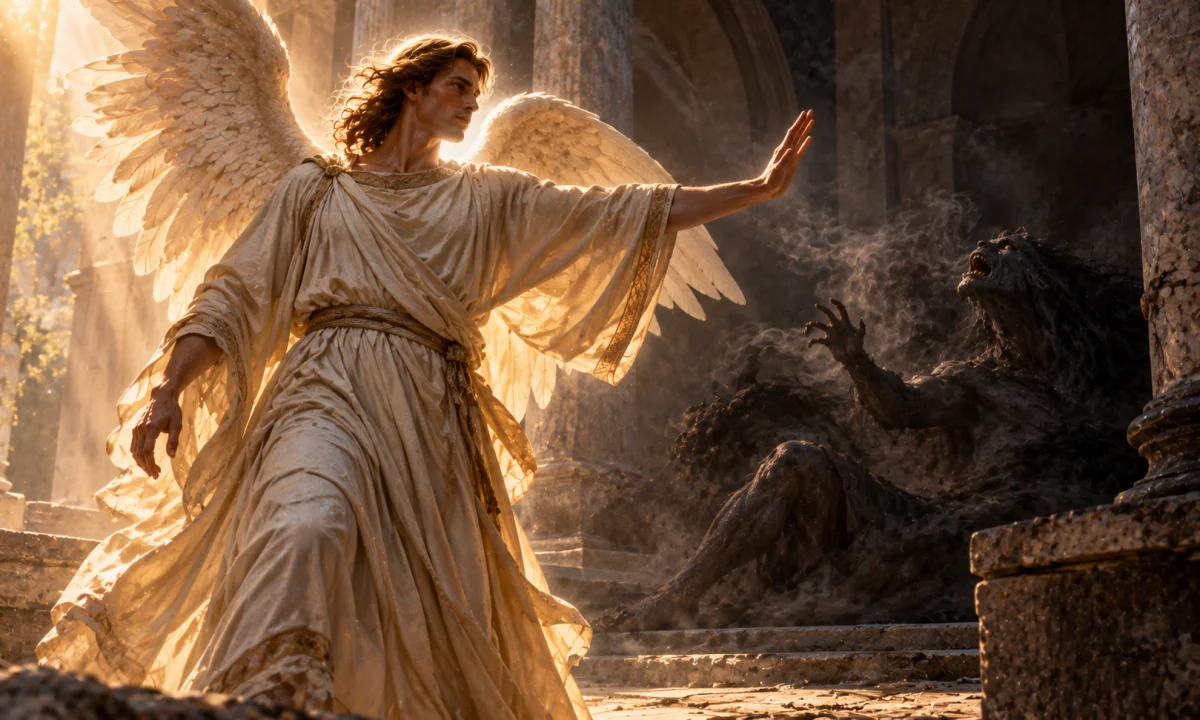
Because Anahel lacks a consistent traditional mythology, descriptions of appearance and personality vary or are absent. There is no standard ancient portrait comparable to the many artistic representations of Michael, Gabriel or other better-known angels. Images of Anahel found in modern occult or fantasy contexts are therefore usually artistic inventions or adaptations rather than inherited iconography.
In sources that connect Anahel with Anael and Venus, the following symbolic qualities may be associated with the name:
- love, affection and emotional attachment;
- beauty, grace and sensual attraction;
- peace, reconciliation and social harmony;
- music, poetry and other arts;
- fertility and the generative aspects of nature;
- the planet Venus and the day traditionally associated with it, Friday.
These associations belong to the planetary and astrological framework in which the name appears. They should not be presented as universal attributes of Anahel in all angelic traditions. A source that treats Anahel as an independent angel may assign different qualities, while another may not mention the name at all.
Some modern descriptions also portray Anahel as a guardian of relationships, a guide to artistic inspiration or a protector of emotional healing. These ideas are compatible with the symbolism of Venus, but they are generally modern devotional or esoteric interpretations rather than established episodes from an old religious tradition.
Stories and relationships
No widely recognized ancient story describes Anahel’s creation, deeds, fall, appointment or relationship with a named prophet, saint or other angel. The absence of such stories is significant. Many famous angels are known through particular scriptural scenes or through developed bodies of commentary. Anahel, by contrast, is usually encountered as a name in a catalogue or correspondence table.
There is also no stable tradition placing Anahel within a particular angelic hierarchy. Some occult systems organize angels according to planets, zodiacal signs, hours or days. Other systems use ranks such as archangels, cherubim, thrones and dominions. A name appearing in a planetary list cannot automatically be assigned a rank in the hierarchies described by Christian theologians such as Pseudo-Dionysius, nor can it be assumed to hold the same rank in Jewish mystical traditions.
Likewise, claims that Anahel is a spouse, companion, subordinate or rival of another angel should be treated cautiously unless a specific historical source supports them. Such relationships commonly arise in modern summaries that combine unrelated lists or expand a symbolic association into a narrative.
Distinguishing Anahel from related names
Anael
Anael is the name most likely to be confused with Anahel. In Western occult and astrological traditions, Anael is frequently associated with Venus. Some modern writers use Anahel as an alternative spelling, while others present the two as separate names. There is no universal rule deciding between these interpretations. A careful description should identify the spelling used by a particular source rather than silently treating the names as identical.
Haniel and Hanael
Haniel, also written Hanael or similar forms, is a more widely discussed angelic name in Jewish and Christian esoteric traditions. Haniel is often associated in later sources with grace, beauty, joy or the planet Venus. Because these themes overlap with descriptions of Anael and Anahel, modern angel lists sometimes merge them. The overlap does not prove that all three names originally referred to one figure. Their histories and textual appearances need to be examined separately.
Anafiel
Anafiel is another distinct name found in Jewish mystical and angelological material. It has sometimes been confused with shorter forms beginning with Ana-. Anafiel should not be identified with Anahel merely because the names resemble one another. The presence of similar sounds or the ending -el is insufficient evidence of a shared identity.
Angels in Islamic tradition
Anahel is not a standard, widely recognized angelic name in the Qur’an or in the central body of Islamic angelology. Islamic traditions include many angels, but names and attributes should not be transferred from European occult lists into Islam without evidence. A modern source may place Anahel in an Islamic-looking setting, yet that presentation would require separate verification and should not be assumed to represent established Islamic belief.
Religious significance and interpretation
Anahel illustrates the difference between canonical angelology, mystical speculation and occult correspondence. In canonical traditions, an angel’s identity is usually grounded in scripture, liturgy or long-standing theological interpretation. In mystical traditions, names may emerge through visions, meditative practices, angelic hierarchies or interpretations of sacred language. In ceremonial magic, angels may be organized according to planets, zodiacal signs, hours and ritual purposes.
These categories sometimes influence one another, but they are not interchangeable. A name used in a Renaissance magical list is not automatically an angel of biblical religion. Conversely, a modern practitioner may use Anahel devotionally and find the name meaningful even when its historical documentation is limited. Historical uncertainty does not prevent contemporary symbolic use, but it should be stated clearly.
The Venusian interpretation gives Anahel a place within a broader tradition of assigning spiritual meaning to the visible heavens. Venus has long been connected with brightness, desire, beauty and cyclical appearances in the sky. In Western esoteric thought, an angelic name linked to Venus can represent the idea that natural forces and human virtues have a celestial or spiritual correspondence. This is a philosophical and symbolic interpretation, not evidence that Anahel was worshipped as a goddess or that the angel possessed a universally defined cult.
Later reception
Anahel is more likely to appear in modern occult manuals, angel-name dictionaries, spiritual practice and fantasy-oriented material than in mainstream religious teaching. Contemporary authors may describe the figure as an angel of love, artistic ability, emotional balance or personal transformation. These portrayals often draw on the Venus connection associated with Anael, Haniel or related angelic names.
Modern popular culture sometimes uses obscure angel names because their unfamiliarity allows writers and artists to create original characters. A fictional Anahel may therefore be a celestial warrior, guardian, messenger or supernatural antagonist with little connection to historical angelology. Such uses belong to creative adaptation and should be distinguished from religious or esoteric tradition.
The safest historical description is that Anahel is an uncertain and sparsely documented angelic name, probably connected in some modern and occult contexts with variant forms of Anael. Its supposed attributes—especially love, beauty, harmony and Venusian symbolism—depend on the source. There is no single authoritative tradition that establishes Anahel’s appearance, rank, biography or relationships with other angels.