WORLD
WORLD
Amon
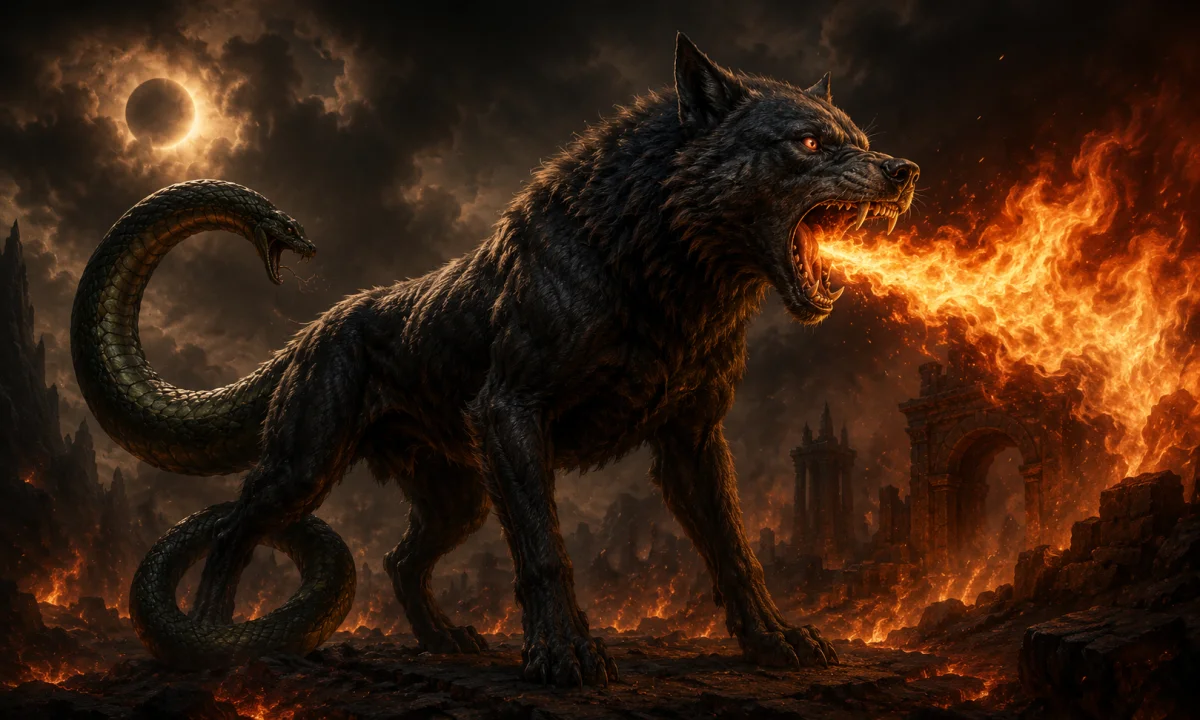
Amon, also spelled Aamon in some sources, is a demon listed in early modern European grimoires, most famously in the Ars Goetia, the first section of the Lesser Key of Solomon. He is described as a marquis of Hell who commands forty legions of spirits. The texts associate him with knowledge of past and future events, the creation or restoration of love, and the reconciliation of disputes. His most distinctive form combines a wolf, a serpent, fire, and features associated with a dog or raven.
Origins in European demonology
Amon belongs to the tradition of Christian demonological catalogues rather than to a clearly documented ancient religion. His best-known description appears in the Ars Goetia, a grimoire preserved in manuscripts from the seventeenth and eighteenth centuries, although its material draws on older magical and demonological traditions. The work presents seventy-two spirits, assigning each a name, rank, appearance, powers, number of subordinate legions, and a seal used within the grimoire’s ritual system.
The Ars Goetia is not an ancient account of a pre-Christian deity. It reflects the worldview of European ceremonial magic, in which spirits were classified according to a hierarchy modelled partly on earthly titles such as kings, princes, dukes, and marquises. Within that framework, Amon is a marquis. The title indicates his position in the grimoire’s infernal hierarchy, not a historically verified office in an older supernatural system.
A closely related description occurs in Johann Weyer’s Pseudomonarchia Daemonum, a sixteenth-century catalogue of demons. Weyer’s work is one of the important predecessors of the later Ars Goetia, and its account of Aamon includes many of the same features: a wolf-like appearance, a serpent’s tail, fire, the ability to take a human form, knowledge of past and future matters, and the power to reconcile conflicts or create affection. The wording and ordering differ between texts, as they do throughout the manuscript tradition.
Name and spelling
The name appears in several forms, including Amon, Aamon, and, in some related occult contexts, Ammon. Spelling was not fully standardized in early modern manuscripts and printed grimoires, so variation does not necessarily indicate a different being. Modern editions and reference works often use “Amon” because that is the form familiar from the Ars Goetia, while “Aamon” is also common in translations and older demonological catalogues.
The name is sometimes connected by modern writers with Amun, the ancient Egyptian god whose name was rendered in Greek and Latin as Ammon or Ammon-Ra. This resemblance has encouraged theories that Amon preserves a distorted memory of an Egyptian deity. However, the evidence does not establish a direct historical continuity between the Egyptian god and the demon of the grimoires. Amun was a major Egyptian god associated with kingship, hiddenness, and the creative power of the divine; Amon in European demonology is an infernal spirit with a very different role. Similar spellings alone are not sufficient to identify them as the same figure.
Amon should also be distinguished from Amaymon, another name found in demonological and magical literature. Amaymon is generally presented as a king or powerful ruler in certain ritual systems, while Amon is usually a marquis. Their names and descriptions have sometimes been confused in later occult writing, but the two entries are not automatically interchangeable.
Appearance and symbolic features
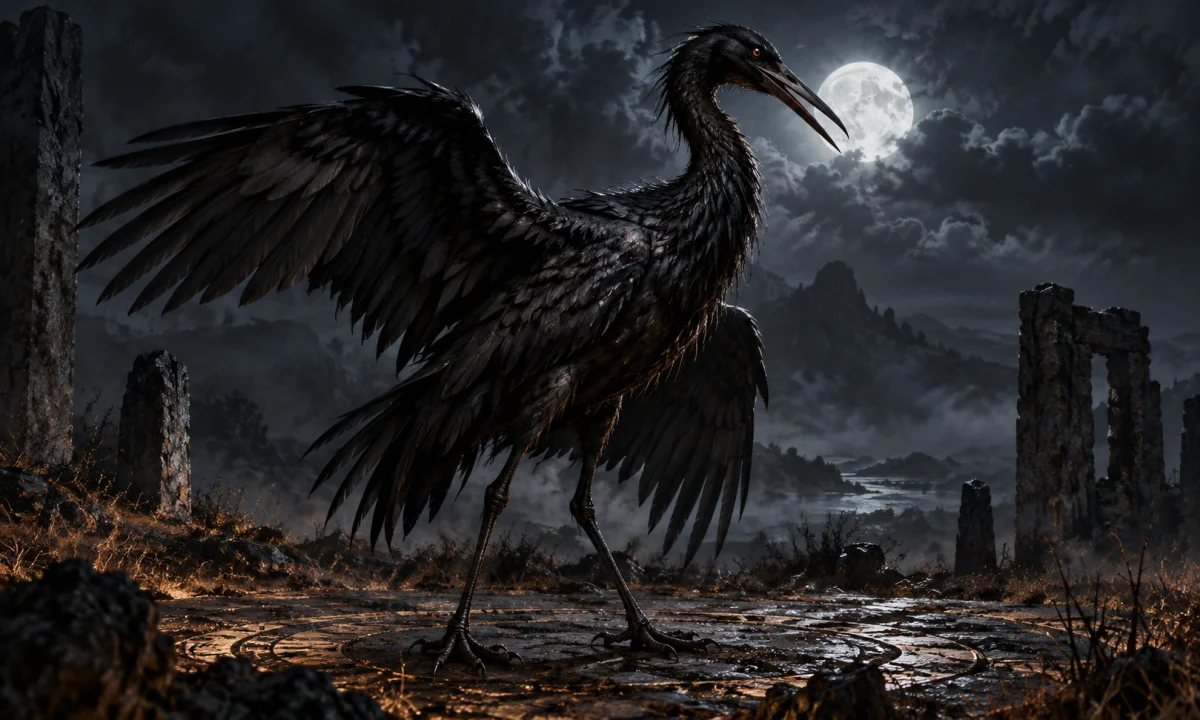
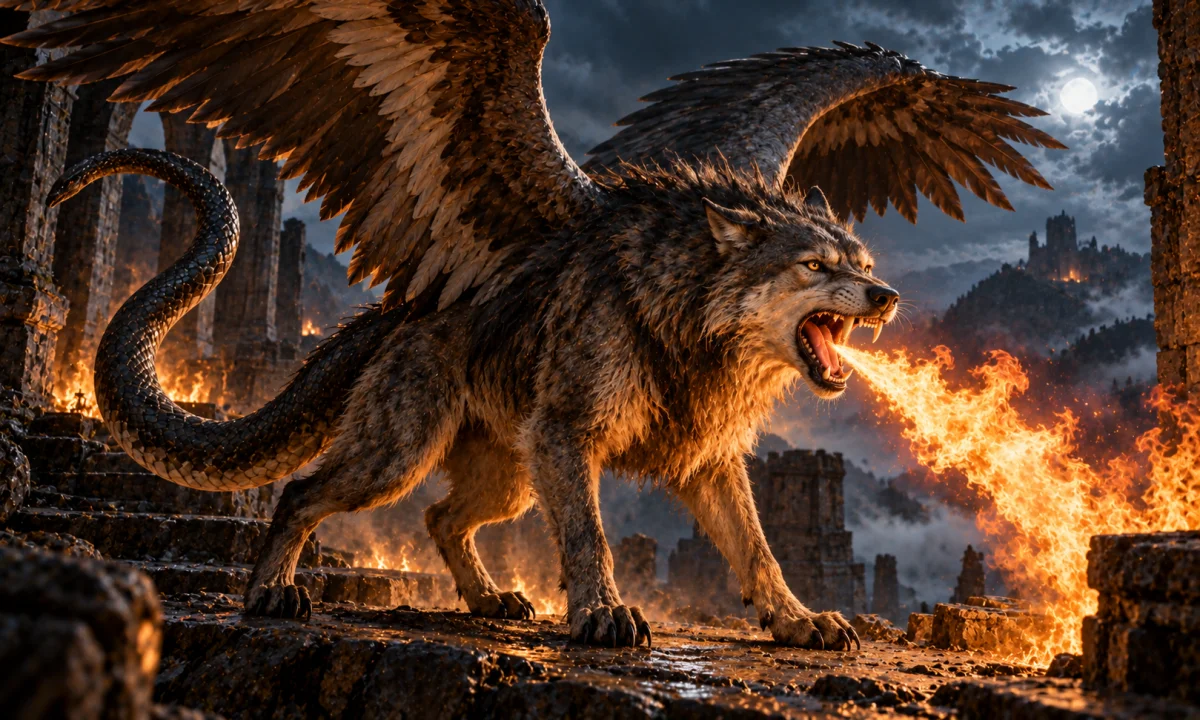
The standard Goetic description gives Amon a composite and unsettling form. He first appears like a wolf with a serpent’s tail, and fire comes from his mouth. The text then describes a change into a human-like shape with features associated with a dog or canine teeth and, in some versions or interpretations, a raven-like head. Because the wording varies between editions and related sources, the exact arrangement of these features is not entirely consistent.
The image is characteristic of grimoire demonology, where spirits frequently combine parts of different animals. Such forms are not necessarily intended as zoological descriptions. They communicate strangeness, danger, and the spirit’s resistance to ordinary categories. The wolf suggests predation and wildness; the serpent often evokes concealed knowledge, danger, or transformation; and fire marks the being as destructive or infernal within a Christian symbolic system.
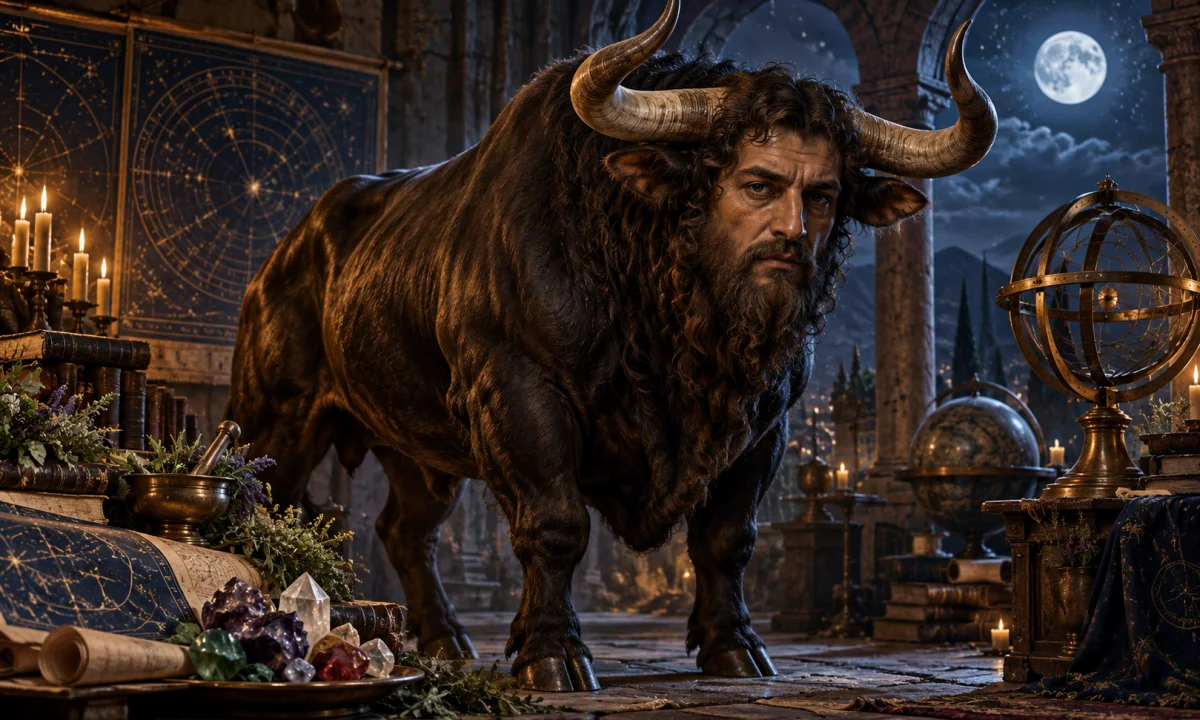
Illustrations produced in later editions of demonological books have contributed heavily to modern ideas about Amon’s appearance. Artists did not always follow the wording of the grimoires closely, and the visual details can differ substantially from one image to another. A picture of a wolf-bodied creature, a horned humanoid, or a figure with a raven’s head may all be labelled Amon in modern books, even though no single standardized portrait exists across the historical sources.
Rank and powers in the Ars Goetia
In the Ars Goetia, Amon is identified as the seventh spirit in the catalogue and is assigned the rank of marquis. He is said to command forty legions. The number belongs to the grimoire’s system of spiritual administration and should not be treated as independently verifiable evidence about a historical belief tradition.
His first major ability is the revelation of past and future events. This places him among the spirits associated with hidden knowledge and divination. The wording does not provide a philosophical explanation of how he knows such things, nor does it present a developed mythology about his origins. Like many entries in the catalogue, it gives a concise ritual description rather than a narrative biography.
Amon is also said to be able to procure love and to reconcile disagreements between friends and enemies. This is an unusual combination of frightening appearance and socially restorative function. The spirit is not presented solely as a destroyer or tempter; in the grimoire’s practical framework, he can be summoned for purposes involving affection, reconciliation, and the repair of relationships.
The sources do not provide a substantial cycle of myths about Amon. There is no widely preserved ancient story explaining his birth, family, allegiance, or deeds outside the catalogue tradition. His identity is defined primarily through rank, appearance, powers, and ritual classification. This makes him different from legendary demons such as Lucifer or figures with extensive narrative traditions. Amon is principally a catalogued spirit of ceremonial magic, not the central character of a broad body of folklore.
Ritual context
Within the Goetic system, each spirit is associated with a seal or emblem and is approached through a structured ritual involving divine names, protective boundaries, formal commands, and other elements of ceremonial magic. Amon’s seal is reproduced in manuscripts and modern editions of the Ars Goetia, but the historical sources do not demonstrate that such a symbol belonged to an ancient cult of Amon.
The ritual system reflects a theological tension common in Christian magic. The operator invokes God and uses sacred authority to compel or control spirits regarded as demonic. In this setting, the demon’s title and powers do not imply worship of Amon as a god. They belong to a practice that treats demons as subordinate supernatural beings who may be constrained through ritual authority.
Historical evidence for actual encounters with Amon is not available in the same way that manuscript evidence is. The surviving texts show that occult authors copied, rearranged, and adapted lists of spirits, but they do not verify the existence of the beings described. Claims about Amon’s powers therefore belong to the history of magical belief and literature, rather than to established historical fact.
Interpretations of Amon’s role
Amon’s association with love and reconciliation has led some interpreters to view him as a spirit of mediation beneath his threatening exterior. The grimoire does not explicitly say that his animal form symbolizes emotional conflict or social disorder, so such readings remain interpretive rather than textual conclusions. Still, the contrast is notable: a fiery wolf-serpent is assigned powers that can bring people together.
His connection with knowledge of past and future also places him within a common pattern of demonological literature. Spirits in these catalogues often possess specialized abilities that resemble the services of angels, saints, or planetary intelligences in other magical systems. The same practical desire—to obtain knowledge, influence affection, resolve conflict, or gain material results—could be expressed through different religious and occult classifications.
The hybrid body can likewise be understood within the broader visual language of medieval and early modern demonology. Demons were often imagined as distortions or combinations of natural forms, emphasizing their separation from the orderly creation described in Christian theology. Amon’s wolf, serpent, fire, canine, and avian features make him an example of this deliberate symbolic hybridity.
Distinguishing Amon from Amun and other similar figures
- Amon of the Ars Goetia: an early modern grimoire spirit, usually ranked as a marquis and associated with forty legions, prophecy, love, and reconciliation.
- Amun of ancient Egypt: a major Egyptian deity whose name is often rendered Amun, Amun-Ra, Ammon, or related forms in different languages and periods. He is not historically identical with the Goetic demon.
- Amaymon: a separate figure in demonological and magical texts, commonly assigned a royal rank in traditions where he appears. Similar spelling has encouraged confusion with Amon.
- Aamon in related demonological catalogues: generally the same grimoire spirit as Amon, with spelling and descriptive differences caused by manuscript and editorial variation.
The Egyptian connection is especially important because the names are visually close and later occult authors sometimes blended material from different traditions. Ancient Egyptian religion had its own concepts of gods, dangerous spirits, protective beings, and the afterlife; these should not be retroactively reorganized according to the infernal hierarchy of European grimoires.
Later reception and popular culture
Amon has remained recognizable mainly through occult publishing, modern editions of the Ars Goetia, esoteric art, role-playing games, fantasy fiction, and horror media. Modern adaptations often expand his abilities, give him a personal history, or portray him as a major ruler, warrior, or shape-shifting antagonist. These additions are creative reinterpretations rather than features securely established by the older texts.
Contemporary fiction also sometimes uses “Amon” for characters unrelated to the Goetic spirit or the Egyptian god. A name alone does not prove that a character draws from either tradition. When an adaptation includes the wolf, serpent, fire, forty legions, or the power to reconcile lovers and enemies, the connection with the Ars Goetia is more apparent; otherwise, the resemblance may be limited to borrowed spelling.
In the historical tradition, Amon is best understood as a compact entry in the literature of European ceremonial demonology: a marquis with a hybrid animal form, infernal rank, and powers concerning divination and human relationships. His significance lies less in a large body of myth than in the way grimoires classified and symbolically represented spirits at the intersection of Christian theology, learned magic, manuscript culture, and later occult imagination.