WORLD
WORLD
Akriel

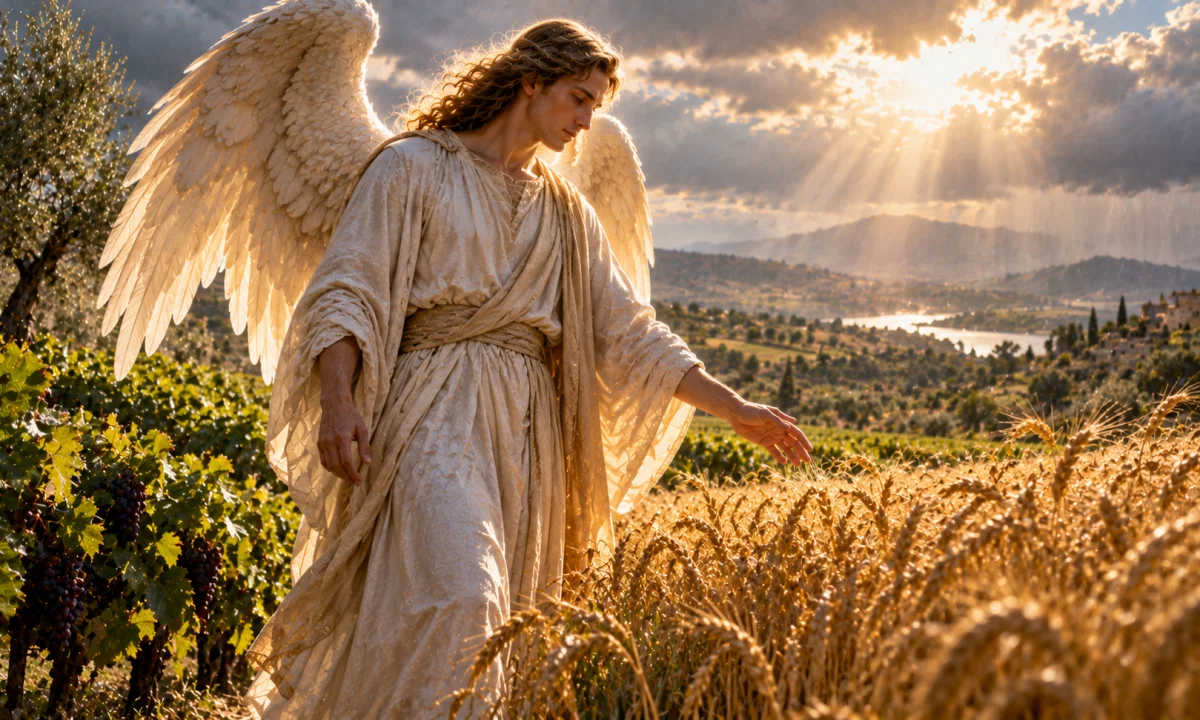
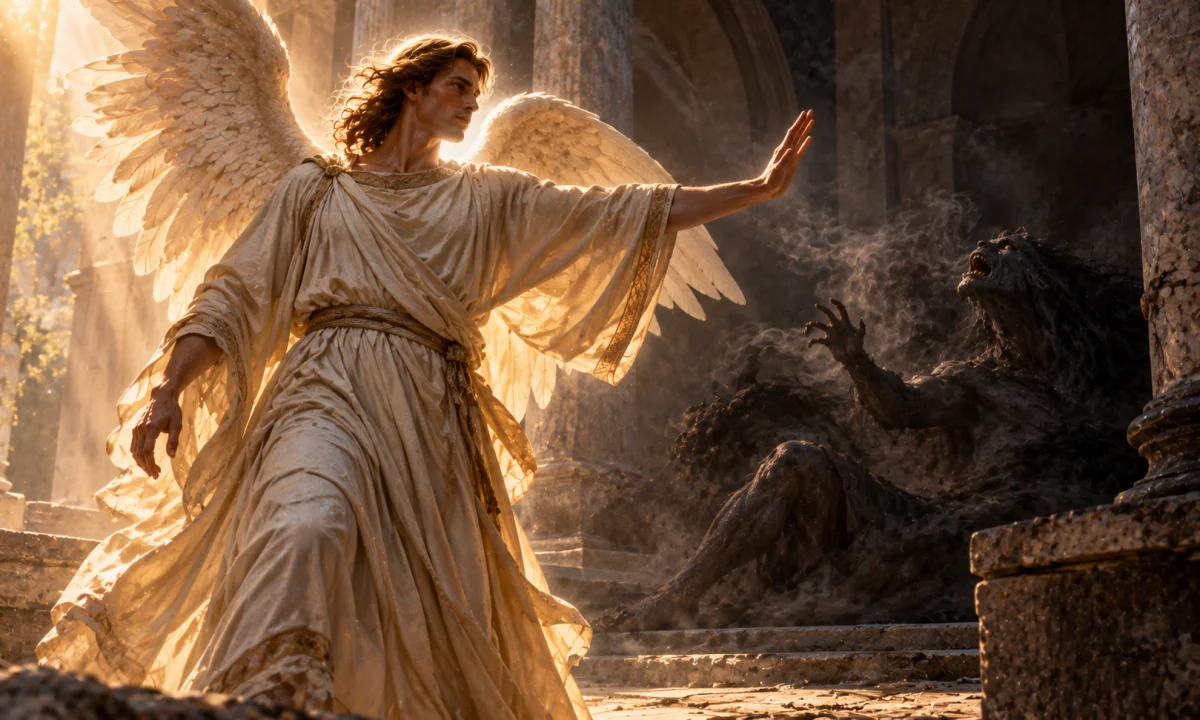
Akriel is a name found in modern lists of angels and angelic beings, but its place within traditional religious literature is uncertain and not securely established. Unlike major angels such as Michael or Gabriel, Akriel does not appear as a widely attested figure in the core canonical scriptures of Judaism, Christianity, or Islam. Where the name does appear, it is usually in later esoteric, angelological, or popular compilations, and the spelling, status, and even identity of the being may vary from source to source.
Because of that uncertainty, Akriel is best understood as part of the broader history of angelic interpretation rather than as a universally recognized figure with a single fixed role. In traditions that mention or list such names, angels often function as messengers, guardians, heavenly attendants, or symbolic agents of divine power. Akriel belongs to that larger religious and literary world, but the surviving evidence for the name is limited and uneven.
Origins and religious setting
The study of angels is not limited to one faith or one text. Jewish, Christian, and Islamic traditions each include angels, though they describe them differently and do not always share the same names or ranks. In the Hebrew Bible, angels appear primarily as divine messengers or agents. Later Jewish interpretation, apocalyptic literature, Christian liturgy, and medieval speculation expanded angelology into elaborate hierarchies. Within those later traditions, many angel names circulated in lists, prayers, magical texts, visionary writings, and devotional works.
Akriel seems to belong to that expanded environment rather than to the main biblical corpus. For that reason, it is important to distinguish between attested traditional usage and later compilations. A name included in an angel list is not necessarily evidence of a single ancient cult, stable doctrine, or widely accepted theological role. Some angelic names emerge from manuscripts, mystical texts, or later esoteric traditions, and may exist in variant spellings or with different assigned functions.
That uncertainty applies to Akriel. The name is encountered in modern reference works and online catalogs of angels, but reliable evidence for a fixed classical tradition is sparse. In practice, the name may reflect one of several processes common in angelic lore: textual variation, transliteration differences, speculation by later authors, or the incorporation of names from secondary traditions into popular angel lists.
Name and identity
The spelling Akriel is not itself proof of a single original form. Angel names often shift as they pass between languages and alphabets, especially when moving through Hebrew, Greek, Latin, and modern European languages. A name may appear with different vowels or consonants depending on the manuscript tradition, the translator, or the compiler. In such cases, a modern spelling can conceal a more complex history.
The meaning of Akriel is also uncertain. Many angelic names in Jewish and Christian traditions end in elements associated with God, such as -el, a common theophoric ending derived from Hebrew usage. That ending usually suggests a relationship to the divine, but it does not, by itself, reveal a specific function or rank. A name ending in -el might indicate divine service, rather than any particular office among the angels.
It is therefore safer to say that Akriel is an angelic name of uncertain origin and function than to assign a confident meaning that the surviving evidence does not support. Some modern discussions treat the name as if it belonged to a stable angelic hierarchy, but that is often a later interpretive choice rather than an ancient consensus.
Sources and textual status
No major canonical scripture prominently features Akriel as a well-known named angel. That absence matters. In the study of religious traditions, the difference between a figure in a foundational text and a figure in a later list is significant. Canonical presence usually gives a character stronger theological authority and wider recognition. By contrast, names that appear only in secondary or esoteric material often remain localized, obscure, or disputed.
Akriel is typically discussed in relation to such secondary material. Depending on the source, the name may be presented as one of many angelic names, as a protective spirit, or as part of a hierarchical system of heavenly beings. However, those uses do not necessarily agree with one another. One text may treat the name as authoritative, while another may simply repeat an earlier list without explaining its origin.
Because of this, scholars and careful readers approach Akriel with caution. It is possible to speak of the name as part of the history of angelology, but not always possible to identify a single original tradition behind it. In religious history, that kind of ambiguity is common. Many angel names have travelled through manuscript copying, translation, mystical speculation, and popular repetition, leaving a trail that is real but difficult to map precisely.
Roles and attributes
There is no universally accepted traditional description of Akriel’s appearance, powers, or duties. Where the name is included in angelic catalogues, such catalogues may assign roles typical of angels in general: mediation between heaven and humanity, protection, guidance, judgment, or the carrying out of divine commands. These are broad angelic functions, not evidence of a uniquely defined Akriel in the surviving early sources.
In some later interpretive settings, angels with similar names are linked to wisdom, secrecy, healing, protection, or authority over particular spiritual domains. Such attributions may reflect symbolic patterns rather than a firmly fixed tradition. Because the documentation for Akriel is limited, it is not responsible to present any one of these functions as certain.
When angel names become part of mystical systems, their attributes may be expanded in imaginative ways. They may be associated with colors, directions, celestial spheres, liturgical seasons, or virtues. Those associations are usually specific to a given school of thought and should not be mistaken for an original universal doctrine. Akriel is best approached with that distinction in mind: the name may carry symbolic meaning in later systems, but the historic basis for such meanings is not always clear.
Place in angelic hierarchies
Some traditions organize angels into ranks such as archangels, principalities, powers, virtues, dominions, thrones, cherubim, and seraphim. Others divide them differently, or avoid rigid classification altogether. When Akriel appears in modern angel lists, it may be placed into one of these frameworks, but such placement should be treated cautiously unless a specific source explicitly does so.
Without clear and consistent evidence, Akriel cannot be confidently assigned to a standard rank across the major religious traditions. That uncertainty is not unusual. Many angel names survive in only a few texts, and later compilers often attempt to fit them into existing hierarchies. The result can be a respectable but secondary classification, not a universally inherited one.
In religious studies, this matters because angelic rank often reflects theology as much as narrative. A name placed among archangels, for example, gains a different significance from one listed among ordinary messengers. For Akriel, no stable traditional consensus is visible enough to support such a precise classification.
Symbolism and interpretation
Even where historical evidence is thin, angelic names often acquire symbolic resonance. Akriel may be understood by modern readers as a name suggestive of divine service, hidden knowledge, or heavenly mediation, especially because of its angelic form and structure. Such readings, however, belong more to interpretation than to documented tradition.
In religious symbolism, angels often represent the closeness of the divine without collapsing God into a human image. They are messengers, but also signs that the sacred can address the world. If Akriel is mentioned in a devotional, esoteric, or imaginative context, the name may serve that same symbolic function: a marker of transcendent presence, authority, or protection.
At the same time, scholarship requires restraint. Symbolic meaning should not be confused with attested doctrine. A later reader may find spiritual value in Akriel, but that does not mean an ancient community held the same view. The history of angelology is full of such layers, where inherited names are reinterpreted in new settings.
Variants and possible confusions
Akriel can be difficult to discuss because angelic names are frequently unstable in spelling and transmission. A similar-looking form may refer to a different being, or the same tradition may appear under a different transliteration. Care is needed not to merge Akriel with unrelated figures simply because the names resemble one another.
This caution is especially important in angel studies, where names such as Ariel, Akeriel, or other forms may appear in overlapping lists or secondary sources. Resemblance does not establish identity. Some names are etymologically connected, while others are entirely separate. Without secure textual evidence, it is safer to treat Akriel as distinct and to avoid forcing equivalences.
Confusion can also arise because modern compilations sometimes standardize names that were once fluid. A name may be presented as if it were uniform across Judaism, Christianity, and occult literature, when in fact it belongs to only one narrow strand or to a much later synthesis. Akriel should be understood in that light: a name in circulation, but not a figure with a universally fixed dossier.
Historical and cultural significance
The significance of Akriel lies less in a well-documented narrative role than in what the name reveals about the history of angel belief. Angel names often illustrate how religious communities imagine the interface between the human and the divine. They also show how texts move across languages and centuries, accumulating meaning as they go.
Akriel represents one of the many angelic names that live in the borderland between scripture, commentary, mysticism, and popular devotion. Such names are culturally important even when their origins are obscure, because they demonstrate the flexibility of religious tradition. Communities do not only preserve fixed lists; they also adapt, reinterpret, and expand them.
For historians of religion, a figure like Akriel highlights the difference between presence in tradition and centrality in tradition. A name may be present in certain streams of literature without being a dominant or mainstream angelic figure. That distinction helps prevent overstatement and keeps the subject grounded in evidence.
Modern popular culture and contemporary interest
In modern popular culture, angel names often appear in fantasy novels, role-playing games, online encyclopedias, spiritual blogs, and art communities. Akriel may surface in such settings as a name chosen for its angelic sound and its aura of mystery. In some cases, modern use gives the name a life independent of any older textual tradition.
That contemporary presence should be separated from the historical record. A modern appearance does not confirm ancient authority, and a modern spiritual interpretation does not prove earlier usage. Still, the continued circulation of names like Akriel shows how angelic lore remains flexible and attractive. People are drawn to names that seem to carry a sense of hidden sacred history, even when that history is fragmentary.
Modern usage may also blur the line between devotional practice and fiction. A name can function as a character name, a spiritual symbol, or an item of esoteric vocabulary. Akriel may move among those contexts without retaining a single stable meaning. That is typical of many lesser-known angelic names in contemporary culture.
How Akriel is best understood
Akriel is best approached as an uncertain angelic name within later religious and esoteric traditions, rather than as a major figure with a fully preserved ancient biography. The name belongs to the wide and varied history of angelology, where some beings are securely rooted in scripture and others survive only in scattered references, lists, or later interpretation.
That uncertainty does not make the name unimportant. On the contrary, it shows how religious traditions grow through transmission, adaptation, and re-reading. Akriel illustrates the way an angelic name can endure even when its original setting is unclear, and how such a name can continue to attract spiritual, literary, and cultural interest long after the earliest sources have faded from view.