WORLD
WORLD
Aglaurus
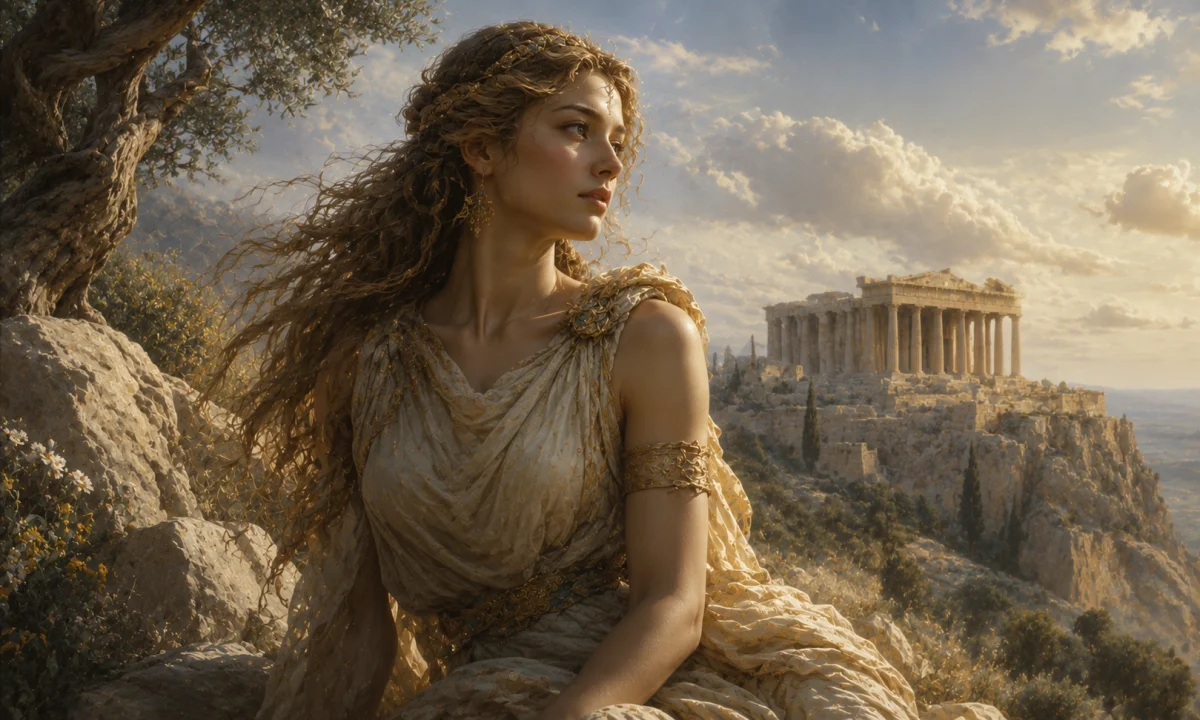
Aglaurus, also written Aglauros or Aglaura, is a figure in Greek mythology associated with Athens, the Acropolis and the royal family founded by Cecrops. She is best known as one of the daughters of Cecrops who were entrusted with the infant Erichthonius, a mysterious child connected with Athena and the origins of Athenian kingship. Her story combines secrecy, sacred guardianship, disobedience and the dangerous consequences of looking into matters hidden from human eyes.
Aglaurus is not a single, fully consistent character in every ancient source. Greek myths preserve several different traditions about her. In one important version, she and her sister Herse open a concealed chest containing Erichthonius and are driven to madness. In another, especially famous from Ovid’s Metamorphoses, Aglaurus becomes an embodiment of envy and is transformed into stone after obstructing the god Hermes. A further Athenian tradition presents Aglaurus as a heroic or sacred figure who sacrificed herself for the city. These versions overlap in name and family connections but should not be treated as though they were originally one uniform narrative.
Name and identity
The name appears in Greek in forms related to Aglauros, while Latin and later English usage commonly give Aglaurus. The spelling varies because Greek names were transmitted through different systems of transliteration and through Latin adaptations. The precise meaning of the name is uncertain. It has often been connected with Greek words associated with brightness, splendour or radiance, but the etymology is not secure enough to define her character with certainty.
Aglaurus is most often described as a daughter of Cecrops, the first legendary king of Athens. Cecrops was represented as partly human and partly serpent, an unusual form that expressed his deep connection with the land of Attica and with the archaic identity of Athens. His daughters were usually named Aglaurus, Herse and Pandrosus. Some genealogical traditions also include a son, Erysichthon, although the daughters are more important in the surviving stories surrounding Erichthonius.
There is a potential source of confusion because some traditions give the name Aglaurus to Cecrops’ wife as well as to one of his daughters. The mother is sometimes called Aglaurus, daughter of Actaeus, while the daughter bears the same or a closely related name. The two figures are distinct when both appear in a genealogy. The daughter is the Aglaurus involved in the stories of Erichthonius, Herse and Hermes.
Athenian setting and religious context
Aglaurus belongs particularly to the mythic and religious landscape of ancient Athens. Her family was associated with the Acropolis, the city’s principal sacred height, where Athena was worshipped as patron goddess and where the legendary beginnings of Athenian civilization were located. Stories about Cecrops and his daughters helped explain the city’s ancient institutions, sacred places and claims to autochthony—the belief that the Athenians were, in an important symbolic sense, born from their own land rather than descended from foreign settlers.
Her relationship to the Acropolis was not only literary. Ancient Athens had a sanctuary of Aglaurus on the northern or northeastern side of the Acropolis, near a steep area associated with the old myths of the Cecropids. The sanctuary’s exact arrangement and earliest history are not completely clear, but its existence shows that Aglaurus was more than a character in a story. She received local religious attention as a figure connected with the protection and identity of the city.
Later Athenian tradition also connected the sanctuary with the oath taken by young citizens, particularly the ephebes, who underwent military training. The oath expressed loyalty to Athens and a commitment not to abandon the city or dishonour its arms. Details of the ceremony vary in the evidence, and the relationship between the oath and older Aglaurus traditions cannot be reconstructed with certainty. Nevertheless, the association reflects a significant transformation of her mythic role: the daughter who once stood at the edge of forbidden knowledge could also become a guardian of civic duty and communal survival.
The secret of Erichthonius
The best-known Greek narrative involving Aglaurus concerns the birth or discovery of Erichthonius. In Athenian myth, Hephaestus attempted to pursue Athena, but the goddess resisted him. In some accounts, Hephaestus’ semen fell upon the earth, and from the earth a child was born. Athena then took responsibility for the infant. Because Erichthonius was linked with both the earth and the goddess, he became an important ancestor of Athenian kings and a symbol of the city’s indigenous origins.
Athena placed the infant in a chest or basket and entrusted him to the daughters of Cecrops. She instructed them not to open it. Pandrosus obeyed the command, while Aglaurus and Herse yielded to curiosity and looked inside. Ancient accounts differ in the details of what they saw. The child may be described as having one or more serpents entwined around him, or as possessing a serpent-like form. The imagery connects Erichthonius with the earth, with Cecrops and with the protective serpent traditionally associated with the Acropolis.
When Aglaurus and Herse saw the forbidden contents, they were seized by madness. In the version preserved by the mythographer Apollodorus, the two sisters threw themselves from the Acropolis and died. Pandrosus, who had respected Athena’s command, survived. The story is therefore not simply a warning against curiosity. It also contrasts the sisters’ responses to divine secrecy: Pandrosus represents obedience, while Aglaurus and Herse cross a boundary imposed by a goddess.
Other ancient references do not preserve the episode in exactly the same form. Some allude to the daughters’ death without giving a complete narrative, and others focus on the civic meaning of their sacrifice. As a result, the precise sequence of events should not be assumed to have been identical in every Athenian tradition. The central elements—Cecrops’ daughters, a concealed child, a command not to look and a fatal encounter with serpent imagery—remain the most stable features.
Aglaurus and the death of the Cecropids
The death of Aglaurus and Herse from the Acropolis gives the myth a distinctly Athenian geography. The cliff is not an imaginary setting detached from the city; it is a real and sacred landscape that turns family tragedy into part of the city’s foundation story. Athenian myths often placed important events on the Acropolis, linking divine action, royal ancestry and the physical territory of the polis.
In some traditions, Aglaurus’ death is interpreted as an act of self-sacrifice for Athens rather than merely as punishment for disobedience. A story circulated in which the city faced danger or war and an oracle declared that Athens could be saved if Aglaurus gave her life. She then threw herself from the Acropolis. The details and date of this tradition are uncertain, and it is not always easy to separate it from accounts of the death of the Cecropid sisters after the discovery of Erichthonius.
These differing accounts reveal two contrasting ways in which the figure could be understood. One presents Aglaurus as a transgressor who suffers for opening a sacred container. The other presents her as a willing protector who gives herself for the community. Greek heroic and religious traditions often allowed the same local figure to carry both threatening and exemplary meanings, particularly when myths developed around an existing sanctuary.
The story of Hermes and Herse
Aglaurus has another important role in Ovid’s Metamorphoses, where she appears in a story involving her sister Herse and the god Mercury, the Roman counterpart of Greek Hermes. This account is a Roman literary treatment of Greek myth rather than a neutral record of an earlier Athenian cult narrative.
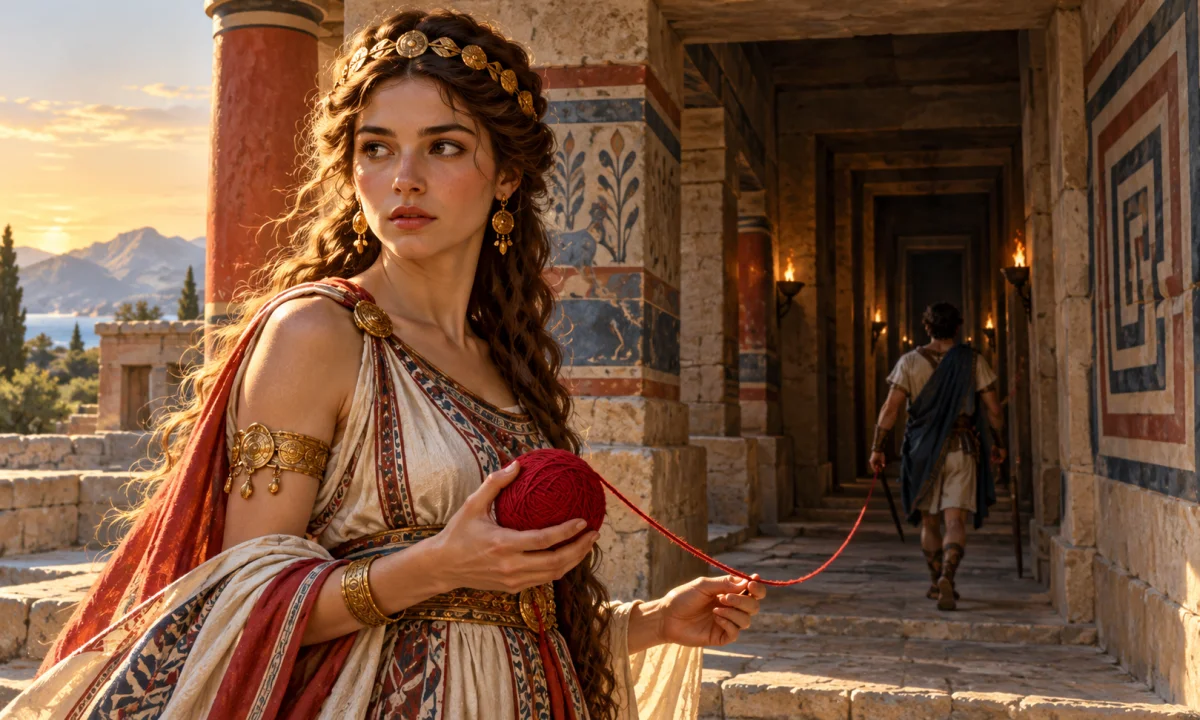
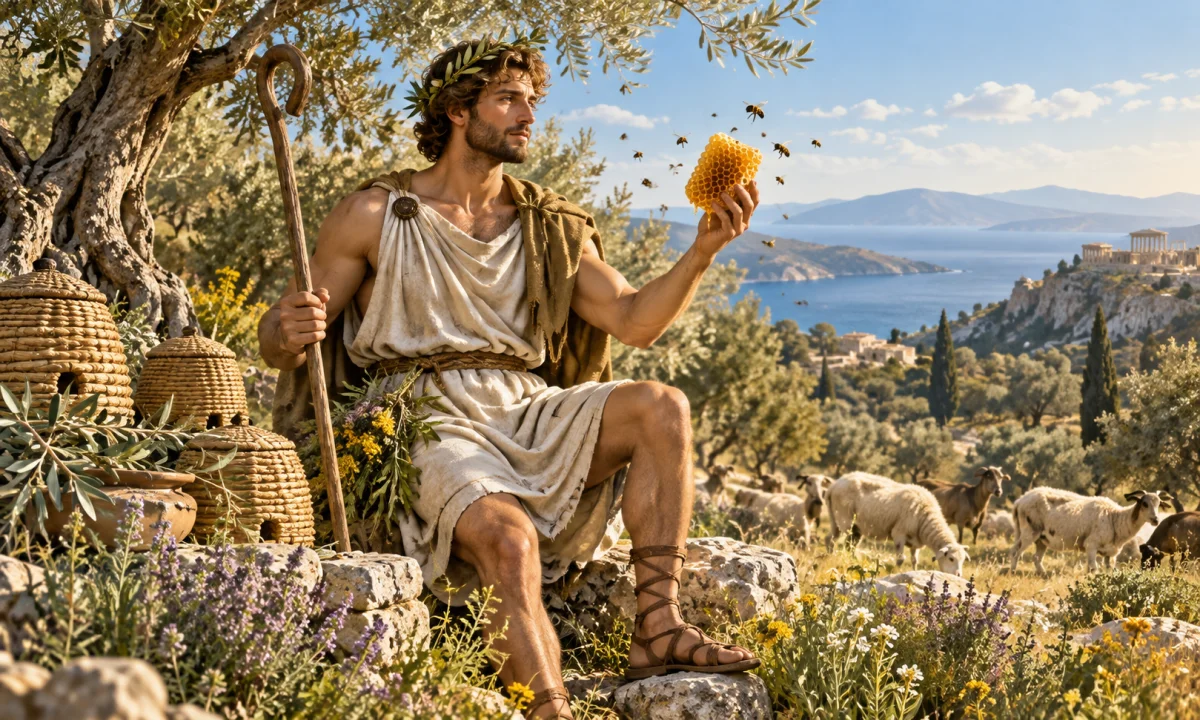
Mercury sees Herse during a procession in honour of Athena and falls in love with her. He approaches the household of Cecrops and asks Aglaurus to arrange a meeting with her sister. Aglaurus demands payment before she will help him. Mercury gives her gold, but the gift does not satisfy her. Instead, her hostility and jealousy become more intense, particularly because she wishes to prevent Herse from receiving the god’s attention.
Mercury seeks the assistance of Envy, personified as a destructive force. Envy infects Aglaurus with a poisonous state of mind, causing her to brood over her sister’s good fortune. When Mercury returns, Aglaurus blocks the entrance and refuses to move. In response, he transforms her into stone. Ovid describes this change as the final expression of her inward condition: she has become rigid, emotionally closed and incapable of yielding.
This version makes Aglaurus an allegorical figure for envy, obstruction and the corrosive effects of comparison. It is substantially different from the Erichthonius story. The two narratives share the same family and the same name, but the Ovidian episode does not simply repeat the older account of the forbidden chest. It reshapes Aglaurus for a poem concerned with metamorphosis, divine desire and the transformation of psychological states into physical forms.
Attributes and symbolism
Aglaurus has no universally fixed appearance or set of powers comparable to those of major Olympian gods. She is generally represented in myth as a human princess or a sacred heroine. Her significance comes from her position within Athenian genealogy and from the symbolic roles assigned to her in different stories.
- Guardian of a secret: In the Erichthonius myth, she belongs to a group entrusted with knowledge that must remain hidden. The closed chest marks the boundary between divine or sacred mystery and ordinary human curiosity.
- Cecropid princess: As a daughter of Cecrops, she connects the early royal family of Athens with the Acropolis, the earth and the serpent imagery of indigenous Athenian ancestry.
- Figure of dangerous curiosity: Her decision to open the chest illustrates the possibility that curiosity can become an act of impiety when it violates a divine command.
- Civic protector: In traditions of her self-sacrifice, Aglaurus becomes a heroine who gives her life for Athens and helps explain the honour paid to her sanctuary.
- Personification of envy: In Ovid’s narrative, she is not a goddess of envy in an established Greek cultic sense. Rather, the poet uses her as a mortal character transformed by envy into stone.
The serpent associated with her most famous story should not be treated as Aglaurus’ personal animal or as evidence that she was herself a serpent goddess. The serpent belongs primarily to the symbolism of Erichthonius, Cecrops and the earth-born identity of Athens. Likewise, her sanctuary does not prove that Aglaurus was worshipped as an Olympian deity. She is better described as a local sacred figure or heroic member of Athens’ mythic royal lineage, although the boundaries between hero, heroine and divine power could be fluid in Greek religious practice.
Relationships with the other Cecropids
Aglaurus is most often discussed alongside her sisters Pandrosus and Herse. Their names and contrasting actions helped ancient audiences distinguish different responses to sacred responsibility. Pandrosus is commonly associated with obedience and with the preservation of the secret entrusted by Athena. Herse, whose name is often connected with dew, participates with Aglaurus in the fatal opening of the chest in the best-known version.
The sisters may also preserve traces of older religious ideas connected with fertility, moisture and the care of the land, although interpretations of their names and functions remain debated. The Arrephoria, an Athenian ritual involving young girls who served Athena, has sometimes been discussed in relation to the Cecropid myths and to the movement of girls through hidden passages near the Acropolis. The evidence does not justify treating the ritual as a direct reenactment of the story of Aglaurus, but both the ritual and the myth involve secrecy, female attendants, the Acropolis and objects that must not be openly revealed.
Aglaurus’ relationship with Athena is especially important. Athena is the one who entrusts the chest to the sisters, and Aglaurus’ fate depends on how she responds to the goddess’ command. The story therefore reinforces Athena’s authority over the city and over the boundaries of sacred knowledge. At the same time, the myth helps transfer prestige from the goddess to the Athenian royal family: Erichthonius, protected by Athena and linked with the daughters of Cecrops, becomes an ancestor of the city’s rulers.
Ancient sources and interpretation
The story of Aglaurus survives through mythographic, poetic and antiquarian material rather than through a single canonical Greek scripture. The mythographer Apollodorus preserves the principal account of the concealed Erichthonius and the deaths of Aglaurus and Herse. Euripidean drama and other classical references show that the Cecropid story was known in Athens, though tragic poets could reshape inherited material for their own purposes. Pausanias, writing in the Roman period, provides valuable evidence for the sanctuary and the local traditions associated with it.
Ovid’s account is especially influential for later European literature and art, but it must be read within its Roman poetic context. His Aglaurus is shaped by the themes of the Metamorphoses: desire produces conflict, envy becomes an almost physical poison and a moral condition becomes a literal transformation. It would be misleading to use Ovid’s version as proof that all Greek worshippers understood Aglaurus primarily as the personification of envy.
Modern interpretations often focus on the tension between women’s restricted access to sacred knowledge and the punishment imposed when that knowledge is sought. Such readings can be illuminating, especially because Aglaurus and her sisters are placed at the centre of an origin story controlled by Athena and connected with male political succession. However, the surviving evidence does not provide a single ancient explanation of the myth’s meaning. Its themes may include obedience, initiation, civic identity, the danger of violating divine boundaries, and the protection of the city.
Distinguishing Aglaurus from similar figures
Aglaurus should not be confused with Aglauros as though the differing spellings indicated a separate mythological being. They are normally variant forms of the same name. The daughter Aglaurus should, however, be distinguished from the older Aglaurus who may appear as the wife of Cecrops and mother of the Cecropid sisters.
She should also be distinguished from Pandrosus, whose name is closely linked with the same chest episode but whose role is usually that of the obedient sister. Herse is another separate sister, although her story often becomes intertwined with Aglaurus’ because both are said to have opened the chest and died together. Finally, Aglaurus is not the same figure as Envy, or the Greek personification Nemesis-like forces sometimes associated with jealousy. In Ovid, Envy influences Aglaurus, but Aglaurus remains a mortal Cecropid who is transformed by that influence.
Later reception
Aglaurus has had a smaller modern presence than Athena, Medusa or the major Olympian gods, but her stories remain important to the study of Athenian mythology. The scene of the Cecropid sisters opening the forbidden chest appears in classical art, Renaissance treatments of Ovid and later works interested in secrecy and metamorphosis. The stone transformation from the story of Hermes and Herse is particularly suited to artistic interpretations of envy as a visible, bodily condition.
In modern retellings, Aglaurus may be presented as a tragic princess, a guardian of a dangerous secret or a symbol of jealousy. These are legitimate creative emphases, but they do not represent a single ancient characterisation. The older traditions preserve a more complicated figure: an Athenian royal daughter associated with sacred prohibition, the serpent-marked origins of Erichthonius, a sanctuary on the Acropolis and, in some accounts, the ultimate defence of her city.