WORLD
WORLD
Adamanthea

Adamanthea is not a widely established figure in Greek mythology, and the name itself appears to be rare, obscure, and potentially variant in transmission. Because of that, any discussion of Adamanthea must begin with caution: the surviving ancient Greek record does not present her as a major goddess, heroine, or standard mythological character in the way that figures such as Athena, Artemis, or Hera are represented. Instead, Adamanthea belongs to the difficult borderland of Greek mythic naming, where a form may appear in later reference, in local tradition, or in modern retellings without a large body of ancient narrative attached to it.
The name is often encountered in contexts where Greek mythological names are reconstructed, adapted, or confused with similar-sounding figures. In some modern usage, Adamanthea is treated as a divine or semi-divine female being associated with concealment, protection, or the raising of the child Zeus, but these associations should be handled carefully because they are not securely grounded in a well-attested ancient myth under that exact name. The safest approach is to treat Adamanthea as an uncertain or sparsely attested name within the wider sphere of Greek mythic tradition rather than as a firmly established character with a fixed biography.
Name and identification
Adamanthea is a name that suggests antiquity through its Greek form, but the identity attached to it is not securely standardized in surviving mythological literature. One reason for the uncertainty is that Greek myth frequently preserves multiple local versions of the same story, and later writers sometimes preserve rare names that do not become part of the common canon. In such cases, a figure may be known from a passing mention, a genealogical note, a scholastic tradition, or a later retelling rather than from a full narrative.
Because of this, Adamanthea should not automatically be identified with other female figures whose names resemble hers, nor should she be merged with the better-known mythic nurse figures associated with Zeus’s infancy. Greek myth includes several women linked to the hidden upbringing of divine children, and modern sources sometimes blur them together. That kind of blending is especially risky here, because the record for Adamanthea is too thin to support confident identification with any single canonical role.
When a name is as elusive as Adamanthea, scholars and editors must distinguish between three different possibilities: a genuinely ancient but obscure mythic figure, a later literary or scholastic creation, or a modern reconstruction inspired by Greek naming patterns. The available evidence does not allow a fully confident choice among those possibilities in all cases. What can be said with confidence is that Adamanthea is not a prominent Olympian deity or a standard heroine of the Panhellenic mythological tradition.
Cultural and mythological setting
Greek mythology was never a single fixed body of stories. It was a living network of local cults, epic poetry, ritual practice, and literary retellings. A figure like Adamanthea, if ancient, would have existed within that fluid environment, where names could vary by region and story function could be carried by more than one character. Many Greek mythic beings are known only in fragments because the surviving evidence is uneven: some names are preserved in epic, others in scholia, inscriptions, lexica, or much later compilations.
That cultural setting matters, because an obscure figure does not necessarily mean an unimportant figure in her original context. Local traditions often preserved divine nurses, nymphs, and protective women connected to births, sanctuaries, mountain caves, springs, and hidden children. Such figures often served symbolic roles rather than dominating long narratives. If Adamanthea belongs to that world, her significance would likely lie in protection, concealment, nurture, or liminal guardianship rather than in heroic conquest or cosmic rule.
Greek myth also regularly used female figures to embody the safe passage of vulnerable divine or royal children. This pattern appears in stories of secret upbringing, substitution, and concealment from a threatening father or rival power. In that broader context, a figure like Adamanthea would make cultural sense as a caretaker or protector. Yet that does not mean the name can be linked with certainty to any single mythic episode unless the source evidence explicitly supports it.
Surviving evidence and uncertainty
For Adamanthea, the principal scholarly issue is the scarcity and ambiguity of evidence. There is no large, self-contained ancient myth cycle centered on this figure in the way that there is for Persephone, Medea, or Ariadne. The name is not among the most familiar names in the standard epic tradition, and it is not a character whose story is commonly told in the major mythographic summaries that shape popular understanding of Greek mythology.
That kind of obscurity requires a careful distinction between attested tradition and inference. It is tempting to assign a full set of attributes to an obscure name by analogy with other figures, but that would go beyond the evidence. In mythology, resemblance is not proof. A name associated with nurture or protection does not automatically mean the figure was a goddess, a nymph, a mortal woman, or a personification.
When modern encyclopedic or devotional sources describe Adamanthea, they may do so with confidence greater than the surviving ancient evidence warrants. Some modern presentations treat her as a divine mother figure or a guardian of Zeus in infancy, but those descriptions often rest on interpretive reconstruction rather than a strong ancient narrative record. Responsible treatment of the name therefore requires noting uncertainty openly rather than smoothing it over.
Possible roles and symbolic associations
Even with limited evidence, certain symbolic possibilities can be discussed without pretending they are certain facts. If Adamanthea is connected in any way with a nurturing or protective function, then her role would fit a very common Greek mythic pattern: the hidden preservation of life against destructive forces. In that pattern, the caretaker stands between danger and the child, acting as an intermediary figure who enables future divine order.
Greek myth often assigns symbolic importance to concealment. A child hidden in a cave, on a mountain, or in a remote sanctuary is not merely safe; the concealment signals a transition from vulnerability to destiny. Female protectors in such stories can represent the continuity of life, the power of care, and the quiet force that sustains the future gods and heroes. If Adamanthea belongs to this symbolic field, her meaning would be closer to guardianship than to rule.
Another possible association is with the broader category of local or minor divine figures who are not central in literary myth but remain meaningful in regional or ritual settings. Such beings may receive offerings, be remembered in genealogies, or be invoked in stories about place and lineage. Their cultural importance can be modest in the literary record while still being real within particular communities.

Relationship to Zeus and infancy myths
Adamanthea is sometimes connected in modern retellings with the infancy of Zeus, the most famous child-protection narrative in Greek mythology. That story, in its well-known form, involves Zeus being hidden from Cronus, who feared being overthrown by one of his children. Various figures across Greek tradition participate in that concealment, including divine and semi-divine caretakers whose names differ depending on source and version.
Because multiple women and nymphs are associated with Zeus’s early life, it is easy for a rare name to be attached to that story even when the ancient basis is weak. If Adamanthea is linked to Zeus at all, the connection should be treated as one variant within a broader network of traditions, not as a universally accepted myth. Greek myth does not always preserve a single definitive infant-caregiver; different regions and authors preserved different names and emphases.
In such narratives, the caregiver’s role is highly significant. She protects the future ruler of the gods, keeping him hidden from the devouring power of the older generation. The story dramatizes succession, renewal, and the defeat of primordial fear by orderly divine kingship. A figure linked to that episode would therefore carry symbolic weight even if her own name remained obscure.
Appearance, powers and iconography
There is no securely established ancient iconography for Adamanthea. No standard set of visual attributes can be assigned to her with confidence from the surviving record. She is not known, on the basis of secure evidence, by an emblem, sacred animal, or canonical artistic type comparable to those associated with major Olympian gods.
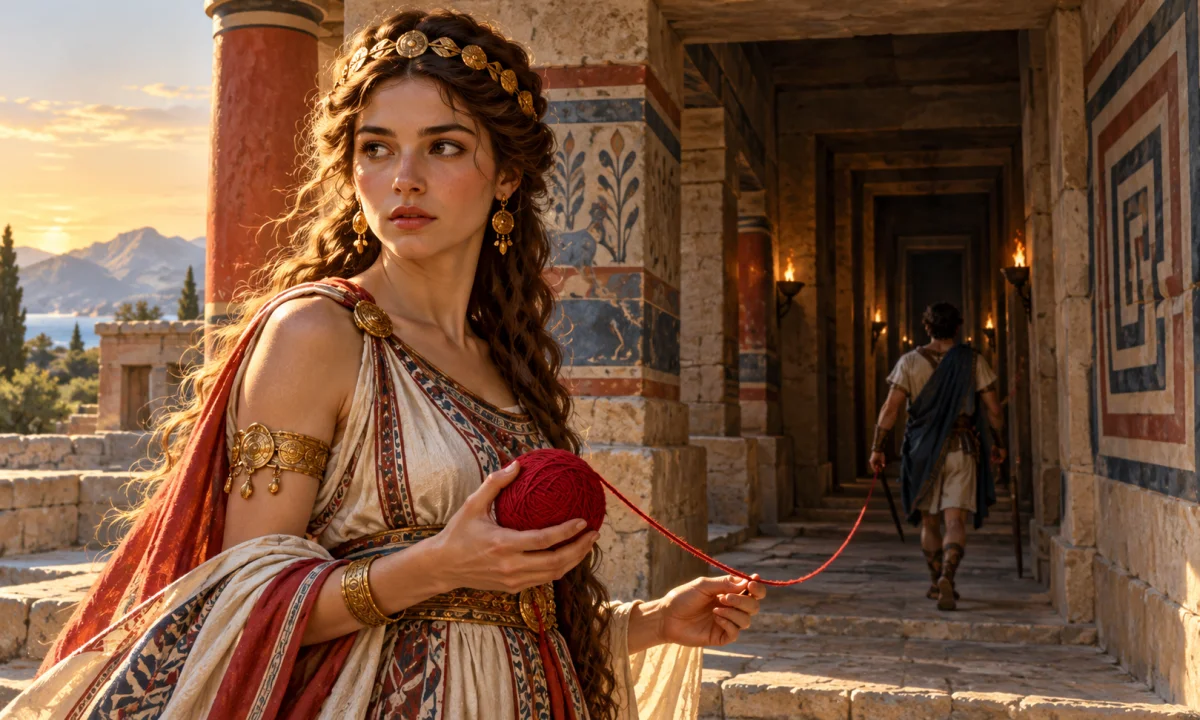
If later tradition imagines her as a guardian or nurturing deity, artists and modern illustrators may depict her with maternal or pastoral features: a protective posture, a cloak, a cave or mountain setting, or an association with infancy and concealment. Those, however, are interpretive choices rather than fixed elements of ancient tradition. They should be understood as modern or speculative visualizations unless tied to a particular ancient source.
Likewise, no reliable tradition grants Adamanthea a clearly defined supernatural power set. In Greek myth, power is usually expressed through story function, cult status, or symbolic action rather than through the sort of formalized abilities common in modern fantasy. If Adamanthea is a protective figure, her power is best understood as guardianship, secrecy, or preservation, not as a catalog of magical skills.
Interpretation in scholarship
Scholarly caution is especially important for obscure mythological names. A rare name can survive in an abbreviated notice, a late compendium, or a conflated tradition, and later readers may overinterpret it. In the case of Adamanthea, the lack of a strong ancient narrative makes it difficult to build a robust profile. Scholars and editors therefore tend to separate the name itself from the fuller stories sometimes attached to it in modern usage.
From a literary and cultural perspective, the name may still be valuable even without a secure storyline. It illustrates how Greek myth preserved not only famous gods and heroes but also smaller figures whose roles supported larger myths. It also shows how easily later tradition can expand an obscure name into a more elaborate character, especially when the name seems to fit a familiar mythic pattern.
Adamanthea also offers a useful reminder that mythology is not always a matter of fixed “characters” in the modern sense. Ancient traditions often operated through motifs, functions, and local cult memory. A name may point to a role in a ritual or narrative ecosystem that is now only partially visible. That absence of detail is itself part of the historical reality of the tradition.
Distinction from similar names and figures
Adamanthea should not be confused with similarly named or similarly functioning mythic beings. Greek and later mythological literature includes a large number of female figures connected with infancy, protection, caves, mountains, and divine nurture. Because of that overlap, names are sometimes misremembered or reassigned in modern retellings.
Care should also be taken not to confuse Adamanthea with the Greek word adamant, which refers to extremely hard material and, in later literature, often carries connotations of indestructibility. A similarity of sound does not establish identity or etymology. The mythic figure, if ancient, is not simply a personification of hardness unless a source explicitly says so.
Nor should Adamanthea be merged with goddess-like protectors from other traditions, such as those from Mesopotamian, Roman, or later esoteric systems. Mediterranean mythologies often share themes, but shared themes are not shared identities. Keeping those boundaries clear helps preserve both accuracy and the distinctive texture of Greek myth.
Modern reception and popular culture
Adamanthea has little presence in mainstream modern retellings of Greek mythology, which usually focus on more famous figures with stronger ancient narratives. Where the name does appear today, it is often in fantasy writing, role-playing settings, niche mythological reference works, or creative reinterpretations that seek an evocative ancient sound. In those modern settings, the figure may be expanded into a goddess, seer, guardian, or hidden mother figure.
Those later adaptations are culturally interesting but should not be mistaken for traditional Greek evidence. Modern authors often create fuller biographies for obscure mythic names because the names themselves invite imaginative development. In Adamanthea’s case, the rarity of the tradition makes her especially open to reinterpretation, but also especially vulnerable to misrepresentation.
For readers encountering the name in modern media, the key question is whether the work is presenting a genuine ancient tradition, a speculative reconstruction, or a wholly new invention inspired by Greek myth. Adamanthea may function beautifully as a literary or game character, but her ancient status remains uncertain and should be described with that uncertainty intact.
Why the name matters
Even an obscure or uncertain figure can illuminate Greek myth in important ways. Adamanthea draws attention to the less visible side of mythology: the local, the fragmentary, the variant, and the half-preserved. Greek religion and myth were sustained not only by famous stories but also by the many smaller names and roles that helped transmit divine memory across places and generations.
The figure also highlights the difference between ancient tradition and modern expectation. Contemporary readers often want a single origin story, a stable visual identity, and a clear place in the mythic hierarchy. Ancient material rarely cooperates with that desire. Adamanthea stands as a reminder that some mythic names survive only as traces, and that those traces deserve to be described carefully rather than inflated beyond what the sources support.
In that sense, Adamanthea belongs to the broader cultural history of Greek mythology as much as to any specific tale. Her significance lies partly in the questions her name raises: what survived, what was lost, what was localized, and what later readers supplied from analogy or imagination. Those questions are central to the study of Greek myth, especially when the figure in question is as elusive as Adamanthea.