WORLD
WORLD
Acheron
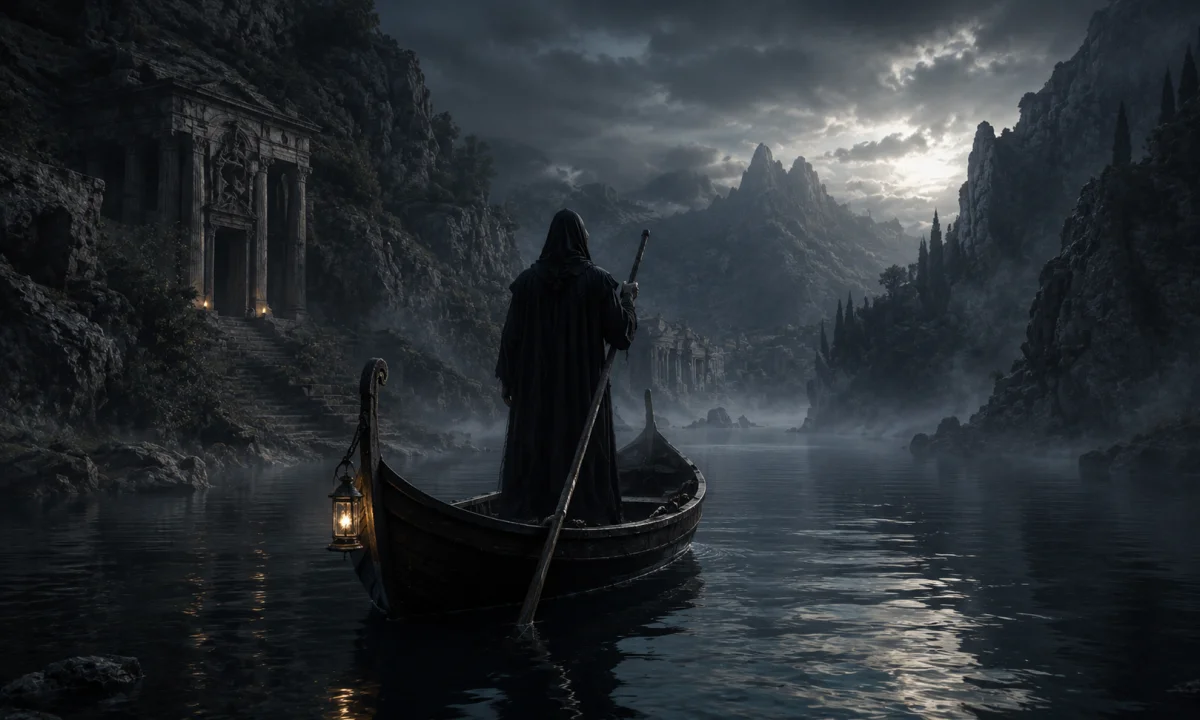
Acheron is best known in Greek mythology as a river of the underworld, one of the great boundary streams associated with the realm of the dead. In later tradition it could also be imagined as a place, a power, or even a name for the underworld itself, but its oldest and most secure identity is as a chthonic river linked with mourning, passage, and the afterlife. Acheron belongs to the wider Greek religious imagination of rivers that separate the world of the living from the domain of the dead, and it appears in poetry, philosophy, and later literary tradition with meanings that are sometimes overlapping and sometimes distinct.
Origins and cultural setting
In Greek thought, rivers were not only physical landscapes but also sacred beings and symbols of divine force. Acheron is part of that tradition. The river is associated with the underworld, the realm ruled by Hades and Persephone, where the dead were thought to dwell after death. Greek religion did not present a single, uniform map of the afterlife, and the role of Acheron varies across sources. Sometimes it is one of several underworld rivers; sometimes it is the route by which souls travel; sometimes it stands metonymically for the underworld itself.
Surviving references to Acheron appear in archaic and classical Greek poetry, in later mythographic and philosophical writing, and in Roman literature that inherited and reshaped Greek ideas. Because the Greek tradition developed over many centuries, Acheron is not a figure with one fixed story or personality. It is better understood as a mythic landscape feature that gained theological, symbolic, and literary importance.
There is also a real river named Acheron in northwestern Greece, in Epirus. Ancient and modern readers have often connected the mythic river with that physical landscape, and ancient local traditions did associate the region with the entrance to the underworld. At the same time, the mythological Acheron should not be reduced to the real river: the relationship between place, cult, and story is complex, and ancient authors did not always mean the same thing when they used the name.
Name, meaning, and identity
The Greek name is usually understood as connected with grief, pain, or distress, though etymology in ancient names is often uncertain and later explanations may be speculative. In mythic usage, that association suits the river’s role as a boundary crossed by the dead. The name Acheron therefore evokes sorrow, lamentation, and the emotional atmosphere of death rather than a bright or heroic divine presence.
In classical and later sources, Acheron may refer to:
- a river in the underworld;
- the boundary or channel souls cross after death;
- in some texts, a part of the underworld or a poetic name for Hades;
- by extension, a place of gloom and death.
This flexibility is typical of Greek mythic geography. Acheron is not a personified god in the same way as a major Olympian, although Greek and later writers could treat rivers as divine beings. It is more accurate to describe Acheron as a chthonic river-divinity or underworld river than as a fully developed anthropomorphic deity with separate myths and cult in the usual sense.
Appearance and symbolic character
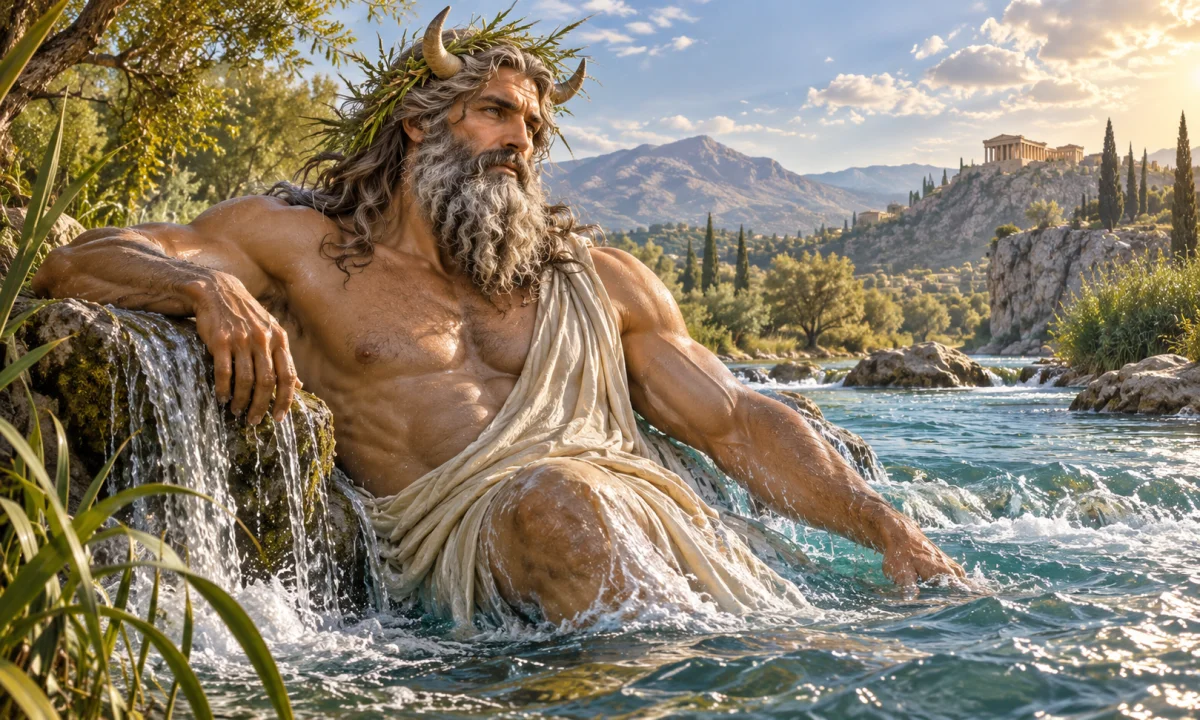
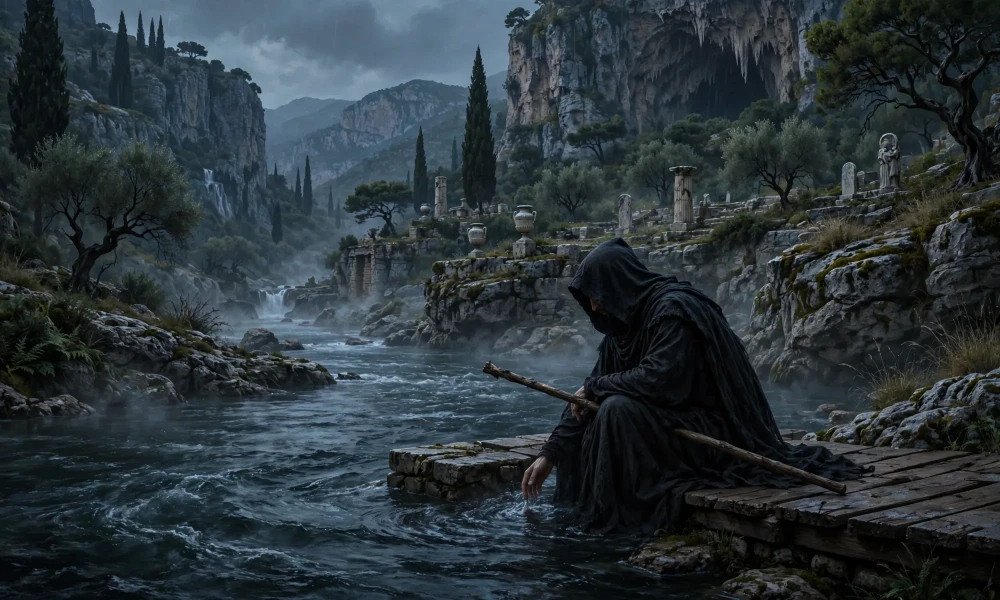
Ancient descriptions do not present Acheron with a single standard appearance. As a river, it is imagined through its function and atmosphere: dark water, hidden channels, impassable borders, and a landscape removed from ordinary human life. In poetry and philosophical writing, underworld rivers often acquire symbolic qualities rather than detailed physical descriptions. Acheron is associated especially with darkness, lamentation, and the transition from life to death.
Because Greek underworld geography could include multiple rivers, Acheron is often discussed alongside Styx, Cocytus, Phlegethon, and Lethe. Each carried a distinct symbolic charge, though the categories were not always fixed. Acheron is commonly the river of sorrow or pain, while Styx is the river of oath and dread, Cocytus the river of lamentation, Phlegethon the river of fire, and Lethe the river of forgetfulness. These distinctions become clearer in later literary and philosophical traditions than in the earliest layers of myth.
In some accounts, the dead cross Acheron in a boat carried by Charon, the ferryman of Hades. That image became one of the most enduring scenes in Greek and Roman imagination. Charon is not the same being as Acheron; rather, he is the ferryman associated with the river. The crossing emphasizes that death is a passage requiring payment, direction, or divine sanction.
Role in the afterlife
Acheron’s main mythological function is as a threshold. It marks the separation between the mortal world and the underworld. The dead must cross it, or somehow pass through it, to enter the domain of Hades. In this respect it embodies the Greek understanding of death as travel into a hidden region rather than annihilation. The river is not merely a scenery detail; it is a sign that the dead have entered a new and irreversible condition.
Different authors place the river differently within the underworld geography. In some traditions, souls wait by its banks. In others, it is one of the waterways that structure the subterranean realm. In later literature, the image of crossing Acheron becomes a potent metaphor for dying itself. The phrase can stand for the final journey every human must make, which explains why it appears so often in moral, poetic, and philosophical contexts.
Acheron’s role is also moral and emotional. Unlike rivers associated with life, fertility, or purification, it represents separation, loss, and the undoing of earthly ties. Its symbolic field is not purely negative, however. In Greek religion, death was not simply an evil to be denied; it was a necessary part of cosmic order. Acheron therefore belongs to the structure of the world rather than to chaos alone.
Important stories and literary traditions
Acheron does not dominate a single mythic narrative the way a heroic figure might, but it appears in many significant literary contexts. Homeric poetry and later epic traditions helped establish the underworld as a place with distinct geography, and Acheron belongs to that landscape. In later Greek and Roman literature, the river becomes increasingly vivid as a poetic image and an emblem of the dead.
One recurring tradition connects Acheron with the journey of souls. The dead travel by boat across the river, under the guidance of Charon, after proper burial rites have been performed. This detail underscores the importance of funerary practice in Greek culture. A person who lacked proper burial could become a troubling or homeless dead figure, unable to complete the passage smoothly. In that broader framework, Acheron is part of the religious logic linking the living, the dead, and ritual duty.
Another tradition gives Acheron a cosmological role beyond the underworld. In some ancient philosophical and mythographic accounts, underworld rivers were also imagined as powerful boundary waters in the earth or beneath it, tied to the circulation of subterranean forces. Such ideas reflect attempts to reconcile myth with natural observation, speculation about caves and springs, and theories about the hidden structure of the world. The details vary widely, and no single explanation should be imposed on all sources.
In Roman literature, especially in the poetic tradition influenced by Greek models, Acheron often stands for the underworld more broadly. Latin writers could use it as a grand, sombre name for death’s domain, even when the precise geographical distinctions among underworld rivers were not being carefully maintained. This poetic usage strengthened Acheron’s lasting reputation in later European literature.
Relationship to Charon, Hades, and the underworld rivers
Acheron is most often discussed in relation to other underworld figures and places. It is connected especially to Charon, the ferryman, who transports the dead across the water. This relationship is a matter of function rather than kinship. Charon is a mythic helper or gatekeeper; Acheron is the crossing itself.
The river is also linked to Hades, the god and realm of the dead. In many contexts, “Hades” can mean both the deity and the underworld as a place, which sometimes creates confusion. Acheron belongs to that place, but it is not identical with Hades himself. Likewise, Acheron should not be conflated with the Styx, although later tradition often groups them together and literature may blur the distinction for effect.
The underworld rivers are one of the clearest examples of how Greek myth organizes abstract experience through landscape. Each river expresses a different aspect of mortality. Acheron, with its association with sorrow, stands near the emotional core of death: the separation of loved ones, the silence after burial, and the passage beyond return.
Local tradition and the real river in Epirus
The name Acheron also belongs to a real river in Epirus, in northwestern Greece. Ancient local traditions associated the area with the underworld and with deathly or chthonic powers. This is one reason the mythic river and the geographic river have long been discussed together. The landscape around the river, with its springs, gorges, and difficult terrain, could easily support the imagination of a liminal or sacred place.
Still, caution is needed. Ancient writers did not always mean the same river, the same place, or the same level of mythic abstraction when they said “Acheron.” Some references are literary and symbolic; others may preserve local beliefs or attempts to anchor myth in geography. The surviving evidence does not allow every detail to be resolved confidently. What can be said with confidence is that the name had both mythological and geographical life in Greek antiquity.
Interpretation and cultural significance
Acheron has enduring significance because it condenses a set of fundamental Greek concerns: the fate of the soul, burial custom, the boundaries of human life, and the emotional reality of grief. Greek religion did not offer a single modern-style doctrine of the afterlife. Instead it worked through ritual, local belief, poetic imagery, and philosophical reflection. Acheron belongs to all of these domains.
As a symbol, Acheron is effective because it is both concrete and abstract. A river is a real boundary one can imagine crossing, yet in myth it becomes the threshold between living presence and postmortem existence. That combination allowed ancient poets and later writers to use Acheron for scenes of fear, solemnity, longing, and fate. It could be invoked to make death feel geographically real and emotionally immediate.
In philosophical writing, especially where the soul’s journey and the moral meaning of death are under discussion, underworld imagery could be used metaphorically. Acheron then stands not only for a literal afterlife route but for the human encounter with mortality itself. Even when later thinkers moved away from traditional mythic geography, the symbolic power of the name remained.
Distinctions from similar figures and names
Acheron is sometimes confused with other underworld entities or places. The distinction matters:
- Styx is a different underworld river, strongly associated with oaths and divine solemnity.
- Cocytus is associated with lamentation and wailing.
- Phlegethon is associated with fire.
- Lethe is associated with forgetfulness.
- Hades is the underworld and also its ruler, not the same as Acheron.
- Charon is the ferryman who crosses the river, not the river itself.
It is also important not to merge Acheron with unrelated beings in other mythologies or with modern fantasy uses of the name. Similar-sounding names in other cultures are not the same figure and should not be treated as such. In Greek tradition, Acheron is a specific underworld river with a broad symbolic field, not a generic term for any dark place or any death deity.
Later reception and modern use
Acheron continued to appear in European literature, art, and learned discourse after antiquity because classical underworld imagery remained influential. Medieval and early modern readers inherited Greek and Roman myth through literary education, and Acheron became one of the standard names used for the realm of the dead or for a grim passage to it. The name also appears in modern poetry, fiction, music, and games, usually as a symbol of death, dread, or hidden depths.
Modern popular culture often uses Acheron more freely than ancient tradition did. Sometimes the name is attached to a place, weapon, ship, planet, or character without close connection to Greek religion. Those uses draw on the river’s reputation but are not themselves part of ancient myth. In some cases, modern works deliberately evoke the underworld crossing and the ferryman motif; in others, the name is simply borrowed for its sombre sound and classical resonance.
Because the ancient tradition is not a single fixed story, modern adaptations have considerable latitude. What remains consistent is the core image: Acheron as a boundary of death, a river through which the mortal world gives way to the unknown country of the dead.