
In Buddhist mythology, Akshobhya is one of the five Dhyani Buddhas, each representing a different aspect of enlightenment and wisdom. Akshobhya is particularly known for his unwavering nature and deep meditation. His name translates to “the Imperturbable,” which reflects his ability to remain calm and composed in the face of adversity. This quality makes him a symbol of inner peace and stability. In various Buddhist traditions, he is often depicted as a blue figure, symbolizing the depth of the ocean and the vastness of the sky. His image serves as a reminder for practitioners to cultivate mindfulness and to overcome the disturbances of the mind.
Origins and Symbolism of Akshobhya
The origins of Akshobhya can be traced back to the Mahayana Buddhism tradition, where he is venerated as a celestial Buddha. He is believed to reside in the eastern direction, in a pure land known as Abhirati. This pure land is characterized by its serene environment, where beings can achieve enlightenment more easily. The symbolism associated with Akshobhya is rich and multifaceted. He represents the wisdom of the mirror, which reflects all things without attachment. This aspect teaches practitioners to observe their thoughts and emotions without becoming entangled in them.
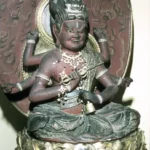 Aizen Myo’o
In iconography, Akshobhya is often depicted sitting on a throne, with a serene expression on his face. He holds a vajra in his right hand, symbolizing the indestructible nature of his wisdom. The vajra is also a symbol of compassion, showing that true wisdom is always accompanied by kindness. His left hand typically rests on his lap in a meditative pose, reinforcing his association with deep meditation and tranquility. The blue color of his body represents the vastness of the sky and the depth of the ocean, indicating that his wisdom encompasses all aspects of existence.
Akshobhya in Buddhist Texts
Akshobhya is mentioned in several important Buddhist texts, including the Lotus Sutra and the Vimalakirti Nirdesa Sutra. These texts highlight his role as a protector of beings who seek enlightenment. In the Lotus Sutra, he is depicted as a figure who embodies the principle of non-attachment. This teaching is central to Mahayana Buddhism, where practitioners are encouraged to let go of their desires and attachments to achieve a state of liberation.
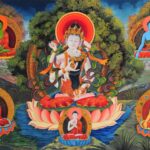 Adi-buddha
In the Vimalakirti Nirdesa Sutra, Akshobhya’s qualities are celebrated through various stories that illustrate his compassion and wisdom. He is portrayed as a being who is not swayed by the dualities of pleasure and pain, success and failure. This aspect of his character serves as an inspiration for practitioners who aim to cultivate a similar state of mind. By studying the teachings and stories associated with Akshobhya, individuals can learn to develop a balanced approach to life’s challenges.
Rituals and Practices Involving Akshobhya
Many Buddhist practitioners engage in rituals and practices that honor Akshobhya. These practices often include meditation, chanting, and offerings. Meditation on Akshobhya is particularly popular, as it helps practitioners cultivate a sense of calmness and stability. During meditation, individuals visualize Akshobhya, focusing on his blue form and the qualities he represents. This visualization can aid in developing a deeper understanding of one’s own mind and emotions.
- Chanting: Chanting mantras associated with Akshobhya is a common practice. These mantras are believed to invoke his blessings and guidance.
- Offerings: Practitioners often make offerings at altars dedicated to Akshobhya, including flowers, incense, and food, as a way to express gratitude and devotion.
- Retreats: Many Buddhist centers offer retreats focused on the teachings of Akshobhya, allowing practitioners to immerse themselves in his wisdom.
These rituals not only help in connecting with Akshobhya but also serve as a means to cultivate a community of practitioners who share similar goals. Engaging in these practices can foster a sense of belonging and support among individuals who are on their spiritual paths.
 Acala
AcalaAkshobhya and the Path to Enlightenment
Akshobhya embodies the qualities that are essential for the journey toward enlightenment. His teachings emphasize the importance of mindfulness and equanimity. Practitioners are encouraged to cultivate these qualities in their daily lives to navigate the ups and downs of existence. By practicing mindfulness, individuals can become more aware of their thoughts and emotions, allowing them to respond rather than react to life’s challenges.
Equanimity, on the other hand, refers to the ability to maintain a balanced state of mind, regardless of external circumstances. Akshobhya’s teachings encourage practitioners to develop this quality by letting go of attachment to outcomes and embracing the present moment. This approach can lead to a profound sense of peace and clarity, which are essential for achieving enlightenment.
Akshobhya in Different Buddhist Traditions
Akshobhya is revered in various Buddhist traditions, including Tibetan Buddhism, Zen Buddhism, and Pure Land Buddhism. In Tibetan Buddhism, he is often depicted in thangka paintings and is associated with specific rituals and practices. The Tibetan tradition emphasizes the visualization of Akshobhya during meditation, allowing practitioners to connect with his qualities on a deeper level.
In Zen Buddhism, Akshobhya’s teachings are integrated into the practice of zazen or seated meditation. Zen practitioners often reflect on his qualities of calmness and stability while sitting in silence. This reflection can help individuals develop a deeper understanding of their own minds and cultivate a sense of peace.
Pure Land Buddhism places a strong emphasis on the concept of rebirth in a pure land, and Akshobhya is seen as a guiding figure for those seeking a favorable rebirth. Devotees often recite his name and engage in devotional practices, believing that this will help them attain a rebirth in his pure land, where enlightenment is more easily achieved.
The Legacy of Akshobhya
Akshobhya’s legacy continues to inspire countless practitioners around the world. His teachings on inner peace, compassion, and wisdom resonate with individuals seeking to navigate the complexities of life. Many modern practitioners draw upon his teachings as a source of strength and guidance in their spiritual journeys. The practices associated with Akshobhya serve as a reminder of the importance of cultivating a calm and stable mind, which is essential for personal growth and transformation.
Moreover, Akshobhya’s influence can be seen in various art forms, including paintings, sculptures, and literature. Artists often depict him in ways that highlight his serene demeanor and profound wisdom. These artistic representations serve as a source of inspiration for practitioners and can be found in temples and monasteries across different cultures.
As a central figure in Buddhist mythology, Akshobhya represents the qualities of calmness, wisdom, and compassion. His teachings continue to guide practitioners on their paths to enlightenment, reminding them of the importance of mindfulness and equanimity. Through rituals, meditation, and the study of his teachings, individuals can cultivate a deeper understanding of themselves and the world around them, ultimately striving for a state of inner peace and enlightenment.