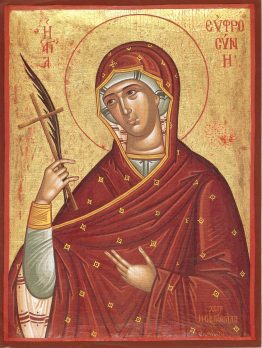
St. Euphrosyne is a significant figure in Christian mythology, particularly within the traditions of Eastern Orthodox Christianity. Her life and legacy are surrounded by tales of faith, devotion, and miraculous events. Euphrosyne is often celebrated for her piety and commitment to God, which led her to live a life of asceticism. This article delves into the various aspects of her life, the historical context surrounding her story, and the impact she has had on Christian culture.
Life of St. Euphrosyne
The story of St. Euphrosyne begins in the early Christian era, a time when many individuals sought to live a life dedicated to God. Born into a wealthy family, Euphrosyne had all the comforts of life at her fingertips. However, she felt a deep yearning for something more profound than material wealth. This desire led her to make a pivotal decision: she chose to abandon her life of luxury and embrace a life of asceticism. This was not an easy choice, as it meant leaving behind her family and the societal expectations placed upon her.
 St. Euphrasia
Euphrosyne’s journey into asceticism was marked by her desire to serve God wholeheartedly. She cut her hair, disguised herself as a man, and took the name Euphrosynus. This transformation allowed her to enter a monastery, where she could dedicate her life to prayer and contemplation. Her decision to disguise herself was not just a physical change; it symbolized her complete renunciation of worldly life. Euphrosyne’s story is a powerful reminder of the lengths to which individuals may go in their pursuit of spiritual fulfillment.
The Monastic Life
Within the monastery, St. Euphrosyne flourished in her spiritual journey. The monastic life was characterized by strict discipline, prayer, and community living. Euphrosyne embraced these elements wholeheartedly. She spent countless hours in prayer, seeking to deepen her relationship with God. Her dedication to monastic practices earned her the respect of her fellow monks. They recognized her deep spirituality and commitment to the monastic way of life.
In addition to her personal prayers, Euphrosyne also engaged in various acts of service within the monastery. She took on responsibilities that involved caring for the sick and assisting in the daily chores of the community. This service not only reflected her commitment to her faith but also her compassion for others. Euphrosyne’s actions exemplified the Christian principle of love and service to one’s neighbor, showcasing her as a model for all who aspire to live a life of faith.
 St. Eulalia Of Barcelona
Miraculous Events
Throughout her life, St. Euphrosyne was associated with numerous miraculous events. These miracles served to highlight her deep faith and connection with God. One of the most notable miracles attributed to her is the healing of a sick monk in the monastery. According to the accounts, Euphrosyne prayed fervently for the monk’s recovery, and through her faith, he was miraculously healed. This event not only strengthened the faith of those around her but also solidified her reputation as a holy woman.
Another remarkable event involved a vision that Euphrosyne had during her time in the monastery. She reportedly experienced a divine revelation that guided her in her spiritual journey. This vision inspired her to deepen her prayer life and encouraged her to pursue a more profound understanding of God’s will. Such experiences were not uncommon in the lives of saints, as they often serve to illustrate the close relationship between the divine and those who seek to live a holy life.
Legacy and Veneration
The legacy of St. Euphrosyne continues to be celebrated in various Christian traditions. She is recognized as a saint in the Eastern Orthodox Church, and her feast day is observed on September 25. During this day, many believers honor her memory through special prayers, services, and reflections on her life. Her story serves as an inspiration to countless individuals who seek to deepen their faith and live a life of devotion.
 St. Eugene I
St. Euphrosyne’s veneration extends beyond her immediate community. Over the centuries, her life has been an example for those seeking to live a life of holiness. Many churches and monasteries are dedicated to her, where her story is shared with new generations of believers. In these places, her life is not just remembered; it is celebrated as a model of Christian virtue and commitment to God.
Symbolism and Iconography
In Christian art, St. Euphrosyne is often depicted in a manner that reflects her monastic life and spiritual journey. She is typically shown wearing the garments of a monk, symbolizing her commitment to a life of asceticism. Artists often include elements that represent her miraculous deeds, such as a healing monk or scenes from her visions. These visual representations serve as reminders of her profound faith and the impact she had on those around her.
Additionally, certain symbols are associated with St. Euphrosyne. For example, the cross is a significant emblem in her iconography, representing her dedication to Christ and her willingness to bear the burdens of her faith. The inclusion of the cross in her depictions serves as a powerful reminder of the sacrifice involved in living a life devoted to God. Through these artistic expressions, the legacy of St. Euphrosyne continues to inspire and guide believers in their spiritual journeys.
St. Euphrosyne in Literature and Culture
The story of St. Euphrosyne has also found its way into literature and cultural expressions. Various hagiographies, or biographies of saints, recount her life and miracles. These texts serve not only to inform readers about her story but also to inspire them to emulate her virtues. In many cultures, her life is a source of inspiration for writers, poets, and artists who seek to capture the essence of her faith and devotion.
Moreover, St. Euphrosyne’s story is often referenced in sermons and teachings within the church. Clergy members highlight her life as an example of true devotion and the pursuit of holiness. Her experiences resonate with many believers, encouraging them to reflect on their spiritual journeys. Through these discussions, her legacy continues to live on, fostering a deeper understanding of what it means to follow Christ.
St. Euphrosyne stands as a beacon of faith in Christian mythology. Her life exemplifies the transformative power of devotion and the pursuit of holiness. Through her story, we are reminded of the importance of faith, service, and the miraculous possibilities that arise from a deep relationship with God. As we reflect on her legacy, we are encouraged to seek our own paths of spiritual fulfillment and to embrace the virtues she embodied.