WORLD
WORLD
Wuraka
Wuraka is a name associated in some modern lists with Australian Aboriginal mythology, but its identity is not securely established in the surviving record. Unlike better-documented figures such as Baiame, Bunjil, Daramulum, or Tiddalik, Wuraka does not have a consistently recorded story, appearance, language affiliation, or religious function that can be presented as universally accepted. Different secondary references may describe Wuraka in different ways, while some provide no cultural or linguistic context at all.
This uncertainty is important because there is no single Aboriginal mythology shared by all Indigenous peoples of Australia. Aboriginal nations and language groups have their own traditions, sacred places, ancestral beings, ceremonies, and systems of knowledge. The word Dreaming, often used in English to describe these traditions, refers broadly to relationships among ancestral events, Country, law, kinship, and continuing spiritual reality. It does not represent one uniform mythology or a single pantheon of gods.
The problem of identifying Wuraka
The name Wuraka appears to circulate chiefly through general compilations of Australian Aboriginal mythological names rather than through a clearly identifiable body of published traditional narratives. Such compilations sometimes list a name without stating the Aboriginal nation, language, community, region, or original storyteller associated with it. In other cases, later summaries attach roles or characteristics that are not consistent from one account to another.
There is therefore no reliable basis for treating Wuraka as a pan-Aboriginal deity. It is also unsafe to assign the name automatically to a particular region merely because its spelling resembles the name of an Aboriginal people, language, place, or personal name. Australian Indigenous languages are diverse, and similar-looking spellings in English may have unrelated origins.
The spelling itself may also reflect the limitations of older transcription systems. Aboriginal languages were commonly written down by outsiders using inconsistent conventions, especially before communities developed or adopted standard orthographies. A single traditional name could consequently appear in several forms. Conversely, two different names could be made to look similar when recorded by people unfamiliar with the language.
Aboriginal cultural and religious context
In many Aboriginal traditions, ancestral beings are not simply “gods” in the sense familiar from classical European mythology. They may be creators, law-givers, culture heroes, animal ancestors, landscape beings, weather powers, or presences connected with particular sites. Their actions explain the formation of Country and establish rules governing social life, ceremonial responsibilities, marriage, ecological knowledge, and relations between human and non-human beings.
A being’s significance is usually inseparable from its community and Country. A story may belong to a particular custodial group and may not be intended for unrestricted retelling. Some knowledge is public, while other knowledge is restricted according to age, gender, initiation status, descent, or ceremonial authority. Written summaries made for a general audience can therefore omit important context or reveal only a small part of a tradition.
These features make it misleading to construct a fixed “profile” for Wuraka using familiar categories such as a supreme god, monster, demon, or nature spirit unless a specific Indigenous tradition supports that classification. An isolated name does not establish a complete mythology around it.
Name, origin, and classification
The origin of the name Wuraka has not been securely established in the broadly available record. No dependable general identification links it to one particular Aboriginal language group or nation. Its meaning should therefore not be guessed from the spelling, and it should not be translated as “creator,” “spirit,” “serpent,” or any other descriptive term without evidence from the relevant language and community.
Some reference works use the broad label “Australian Aboriginal mythology” for names collected from very different regions. This label can be useful for organising material, but it can also conceal major differences. A figure from the Kimberley, the central desert, Arnhem Land, the Murray–Darling region, or southeastern Australia cannot automatically be treated as part of the same religious system.
Wuraka is best described cautiously as an uncertain or poorly documented mythological name. That description is not a judgement about the importance of the tradition from which the name may come. It reflects the limited information that has survived in accessible written form and the difficulty of separating Indigenous tradition from later cataloguing.
Attributes and appearance
No stable traditional description of Wuraka’s appearance can be confirmed. In particular, there is insufficient evidence to state confidently that Wuraka was a giant, a serpent, a bird, a human-like ancestor, a water being, a sky spirit, or an evil creature. Those kinds of descriptions are sometimes attached to unidentified Aboriginal mythological names in popular retellings, but they should not be transferred to Wuraka without a specific and trustworthy tradition.
The same caution applies to supposed powers. There is no securely established account that Wuraka created the world, controlled rain or storms, guarded the dead, caused illness, abducted children, founded a social custom, or shaped a particular landscape. Such functions are common subjects in Aboriginal sacred narratives, but their presence elsewhere does not demonstrate that they belong to Wuraka.
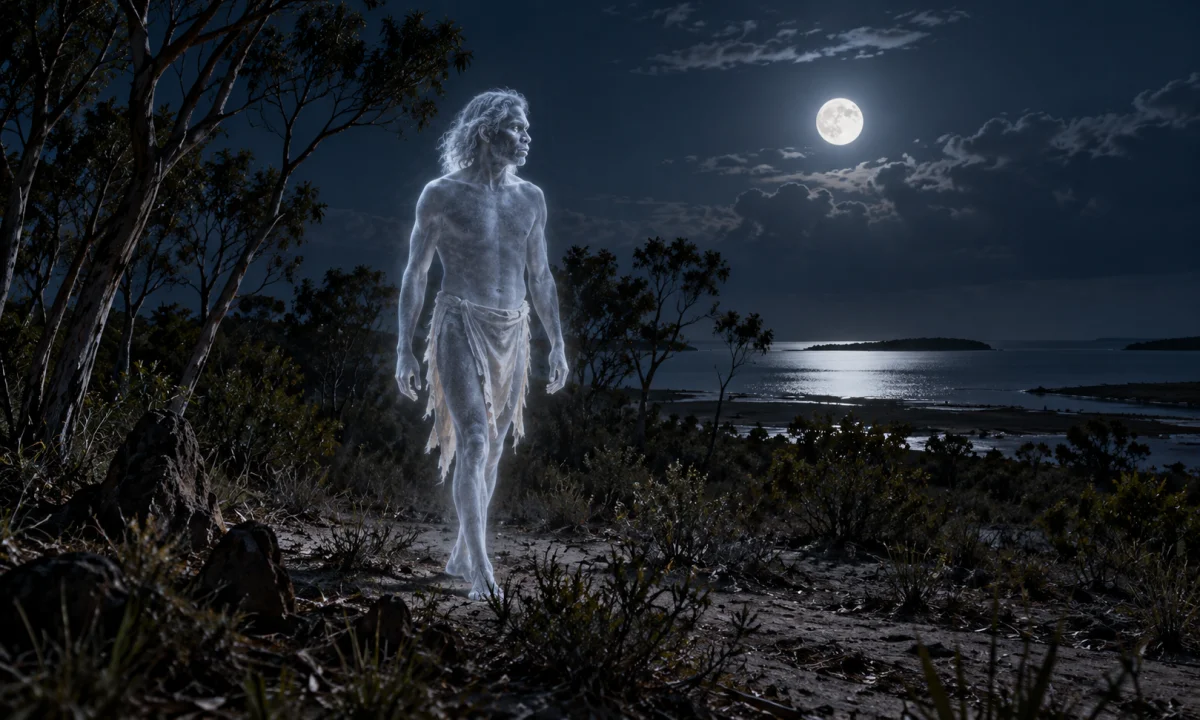
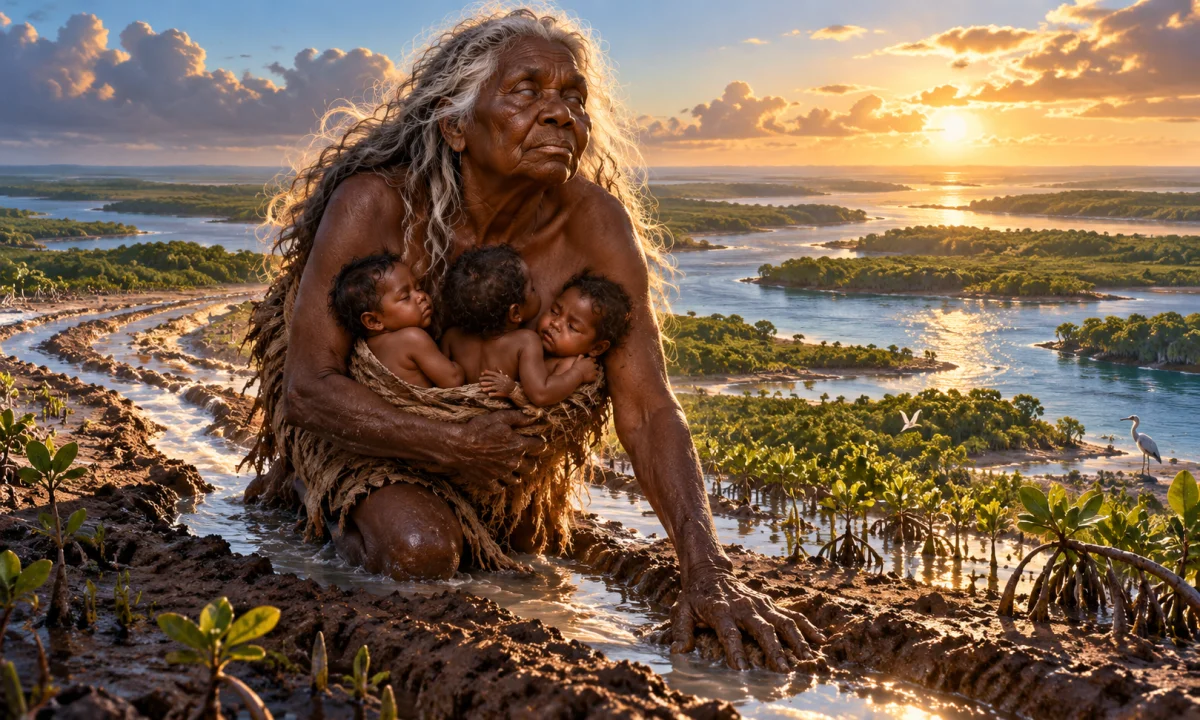
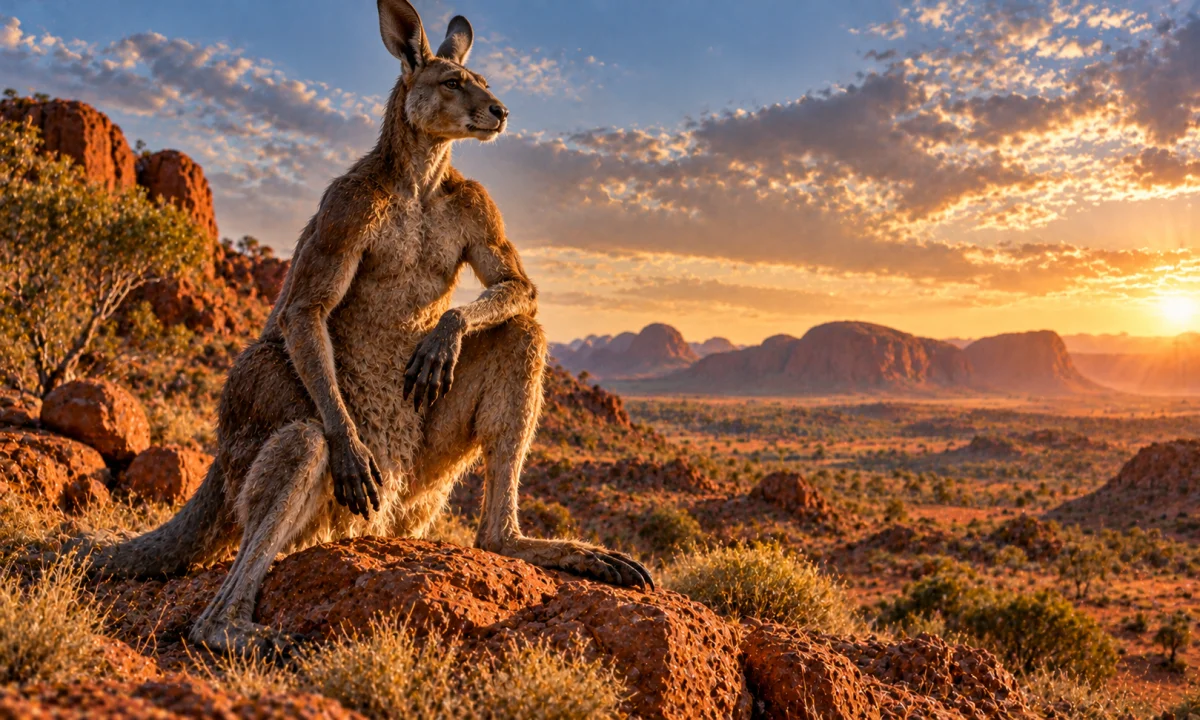
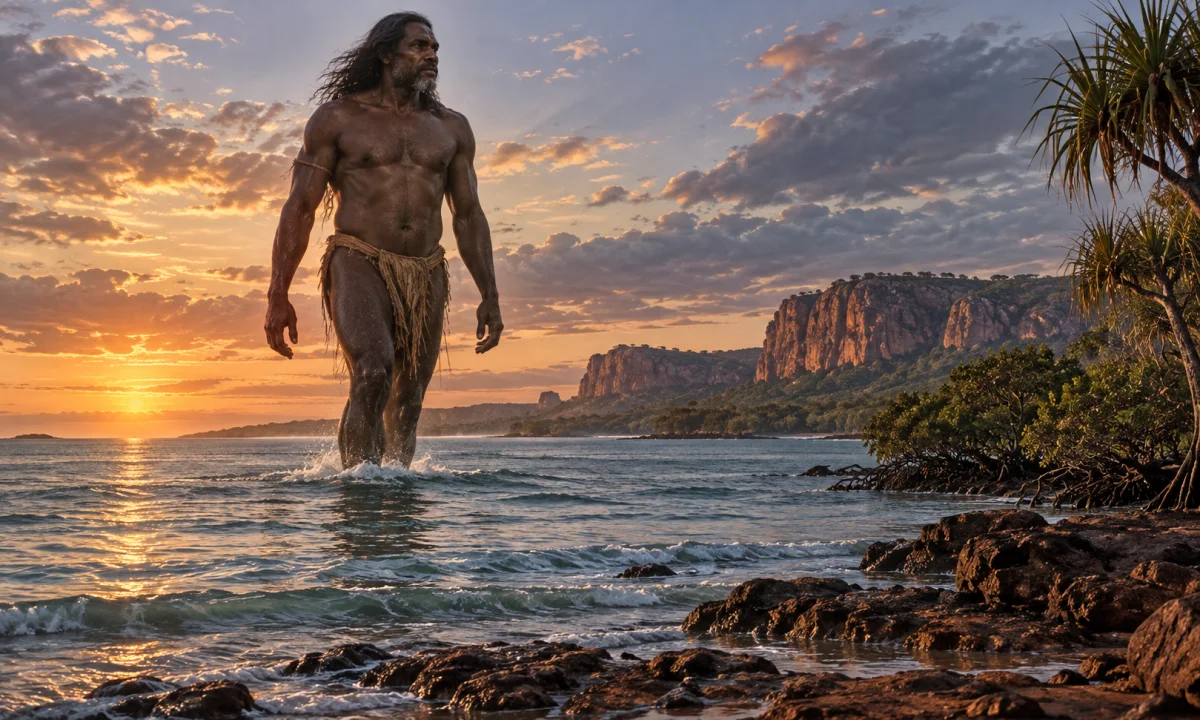
It is also inappropriate to illustrate or describe Wuraka with a generic “Dreamtime” image and present that image as traditional. Aboriginal visual traditions are associated with particular communities, artists, ceremonial contexts, and cultural permissions. A generic monster, serpent, or masked ancestor may create a misleading impression when no traditional appearance has been documented.
Stories and relationships
No widely attested cycle of stories places Wuraka in a clearly defined relationship with other well-documented ancestral beings. There is no secure basis for describing Wuraka as the companion, enemy, child, spouse, or rival of figures such as Baiame, Bunjil, Daramulum, the Rainbow Serpent, Tiddalik, or the Wawalag Sisters. Similarities between names in a list do not establish a relationship between the beings.
Nor is there a confirmed narrative that can be safely presented as the story of Wuraka. A short anecdote found in an unsourced retelling might represent a local oral tradition, a mistranscription, a conflation with another name, or a modern invention. Without information about the community, language, collector, and circumstances of recording, its status cannot be determined.
This does not mean that no community has ever used the name or that no story connected with it exists. Aboriginal knowledge has often been transmitted orally, through ceremony, teaching, performance, and relationships with Country rather than through texts intended for general publication. Some traditions were poorly recorded, while others were deliberately kept private. The absence of a well-known written account is not proof that a figure had no cultural importance.
Possible causes of confusion
Wuraka may be confused with other names because English-language collections frequently simplify spelling and classification. A compiler may copy a name from an earlier list without preserving its original context. Later websites may then repeat the same entry, making an uncertain claim appear established through repetition. This process can produce a detailed-looking biography that has no traceable foundation in an identified Indigenous tradition.
Confusion may also arise with names beginning with similar sounds, or with the names of Aboriginal groups and places. The resemblance between Wuraka and another word does not demonstrate a connection. Even when two forms are related, their meanings and ceremonial uses may be very different.
Wuraka should also not be automatically equated with the Rainbow Serpent. Rainbow Serpent traditions are found in many parts of Australia, but they are not one single story or one universally named being. Local ancestral beings associated with water, fertility, rain, rivers, and creation have different names and distinct cultural histories. Using “Rainbow Serpent” as a universal substitute for any uncertain Aboriginal figure erases those differences.
Likewise, Wuraka should not be treated as another name for Tiddalik. Tiddalik is a well-known frog character in a specific southeastern Australian tradition, especially through a story about drinking all the water and being made to laugh. Its popularity in children’s books has led some audiences to regard Tiddalik as representative of Aboriginal mythology as a whole, but that is not an accurate interpretation.
Interpretation and cultural significance
The most responsible interpretation of Wuraka at present is an evidential one: the name belongs to the history of how Aboriginal mythological material has been recorded, classified, and circulated, but its precise traditional identity remains uncertain. This distinction matters because a catalogue entry is not equivalent to an Indigenous account.
When a name is detached from Country and community, it can be turned into a fictional character with a standard set of supernatural powers. That approach may be convenient for encyclopaedias or fantasy fiction, but it changes the nature of the material. Aboriginal ancestral traditions are not merely collections of colourful characters; they are systems of law, memory, responsibility, and belonging.
A culturally careful discussion should therefore preserve the uncertainty rather than fill it with invented detail. It should identify Wuraka as a name of unclear attribution, avoid assigning a nation or language without evidence, and distinguish traditional knowledge from modern summaries. If a particular community later provides a documented interpretation, that account would take precedence over generic classifications.
Wuraka in modern reference culture
Wuraka has no substantial, widely recognised presence in mainstream film, television, literature, games, or popular religious practice. Where the name appears in modern online material, it is more likely to be part of a list of mythological names than a character with a developed body of stories. Repeated online descriptions should not be mistaken for independent confirmation.
Modern creators who wish to use the name should avoid presenting an invented character as an authentic Aboriginal deity. A respectful fictional work would make clear that it is an original interpretation, seek appropriate cultural consultation where relevant, and avoid borrowing sacred symbols or ceremonies without permission. It would also be preferable to identify a fictional setting rather than implying that all Aboriginal peoples share one mythology.
For WorldMythos, Wuraka is consequently best catalogued as an uncertain figure in the broad category of Australian Aboriginal mythology, with its exact origin, identity, attributes, and traditional stories left open until they can be connected to a specific and reliable cultural record.