WORLD
WORLD
Widjingara
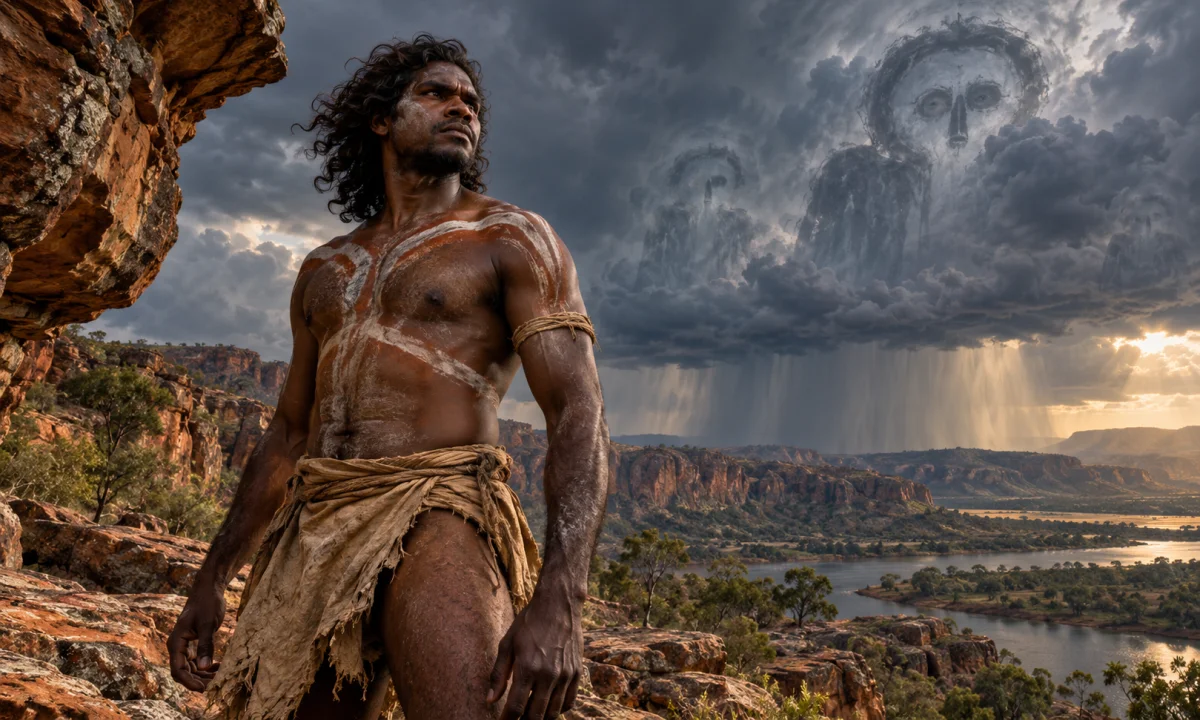
Widjingara is a name associated in some modern English-language references with Australian Aboriginal mythology, but its identity is not securely established across the traditional records of any single Aboriginal nation. Unlike well-documented figures such as the Rainbow Serpent, Bunjil, Baiame or the Wondjina, Widjingara does not have a consistently recorded story, appearance or religious function. The name may reflect a local tradition, an uncertain transcription from an Aboriginal language, or a later compilation that has detached a name from its original cultural setting.
Cultural setting
“Australian Aboriginal mythology” is a broad modern label for the religious traditions of hundreds of Aboriginal nations and language groups. These traditions are not one mythology with a single pantheon. Each community has its own histories, sacred places, ancestral beings, ceremonial laws and restrictions on the communication of religious knowledge.
Many Aboriginal traditions describe a foundational period often called the Dreaming or Dreamtime in English. These English terms are useful but imperfect. They can suggest a distant age of fantasy, whereas Aboriginal understandings commonly connect ancestral events with the continuing structure of the world: landscapes, species, social obligations, law, ceremony and relationships between people and Country. An ancestral being may therefore be at once a character in a narrative, a force associated with a place, a source of law and a presence encountered through ceremony.
Names recorded by outsiders frequently present difficulties. Aboriginal languages contain sounds that English spelling does not represent consistently, and early collectors often wrote down names according to their own hearing and orthographic habits. A name could also be translated rather than recorded in its original form. Some sacred names were restricted, while other names were known only within a particular community or ceremonial context. These factors make it unsafe to treat every name in a general mythology list as though it belonged to a universally shared Aboriginal belief system.
The name Widjingara
The spelling Widjingara is not attached to a single, widely agreed definition in the accessible body of Aboriginal ethnographic and cultural writing. General reference works and internet-based mythology lists sometimes present it as the name of an Aboriginal supernatural being, but they do not consistently identify the community, language, place or original narrative associated with it.
That uncertainty is important. It does not prove that the name is meaningless or inauthentic. A tradition can be genuine while remaining poorly documented in English. It does mean that claims about Widjingara’s precise nature should be treated cautiously unless they can be connected to a particular Aboriginal community and to its own cultural authorities.
There is also no sound basis for automatically treating Widjingara as another spelling of Wandjina, Wanjina or similar names. The Wondjina are ancestral beings associated especially with Aboriginal peoples of the Kimberley region of Western Australia, and their representation, stories and cultural significance have been documented in a specific regional context. A resemblance between spellings is not enough to establish identity. Widjingara should therefore remain a separate and uncertain entry rather than being merged with the Wondjina tradition.
Identity and classification
Some popular lists classify Widjingara as a spirit, monster, ancestral being or supernatural person. None of these classifications can be regarded as a generally accepted traditional definition. In Aboriginal cultural contexts, such categories are often inadequate even when a particular figure is well documented. A being may be described in English as a “spirit” while also functioning as an ancestor, creator, guardian of a site or embodiment of a natural process.
The word “god” is especially misleading when applied indiscriminately. Aboriginal ancestral beings are not necessarily gods in the sense of members of a fixed heavenly family or a universal hierarchy. Their significance is usually relational and local. A figure’s importance may arise from its connection with a waterhole, mountain, animal species, ceremonial law or ancestral journey rather than from rule over a general domain such as war, love or the sea.
For this reason, Widjingara should not be assigned a standard portfolio such as “god of death,” “creator of humanity” or “spirit of the forest” without reliable evidence from a named tradition. Nor is there a firmly established description of Widjingara’s gender, physical form, powers or role in creation stories.
Stories and attributes
No single, widely attested narrative cycle about Widjingara can be identified with confidence. In particular, there is no secure basis for presenting a detailed biography, genealogy or set of adventures as though these belonged to a pan-Aboriginal tradition.
Descriptions sometimes repeated in unspecialised sources may portray Widjingara as a threatening being or as a supernatural figure connected with remote places. Such accounts are difficult to evaluate when they provide no language-group attribution, no locality and no indication of whether the information comes from an Aboriginal storyteller, an early ethnographer or a modern compiler. A short entry copied from one reference work can easily become a supposedly ancient “legend” after being repeated on multiple websites.
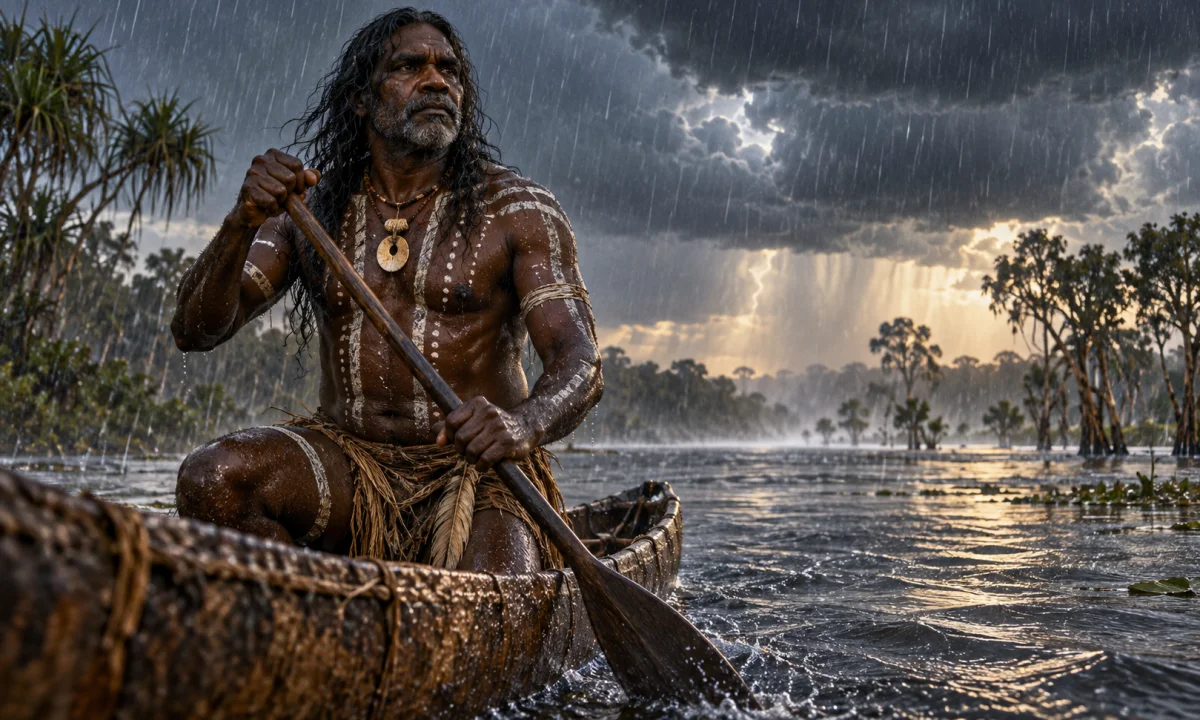
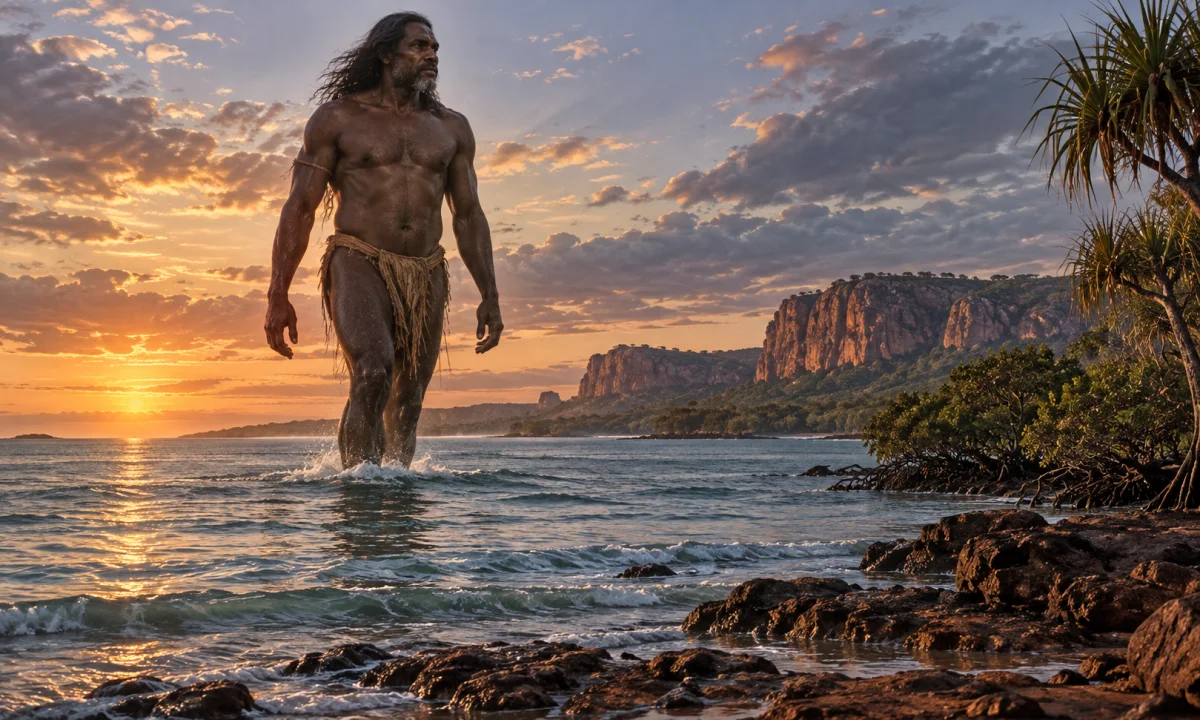
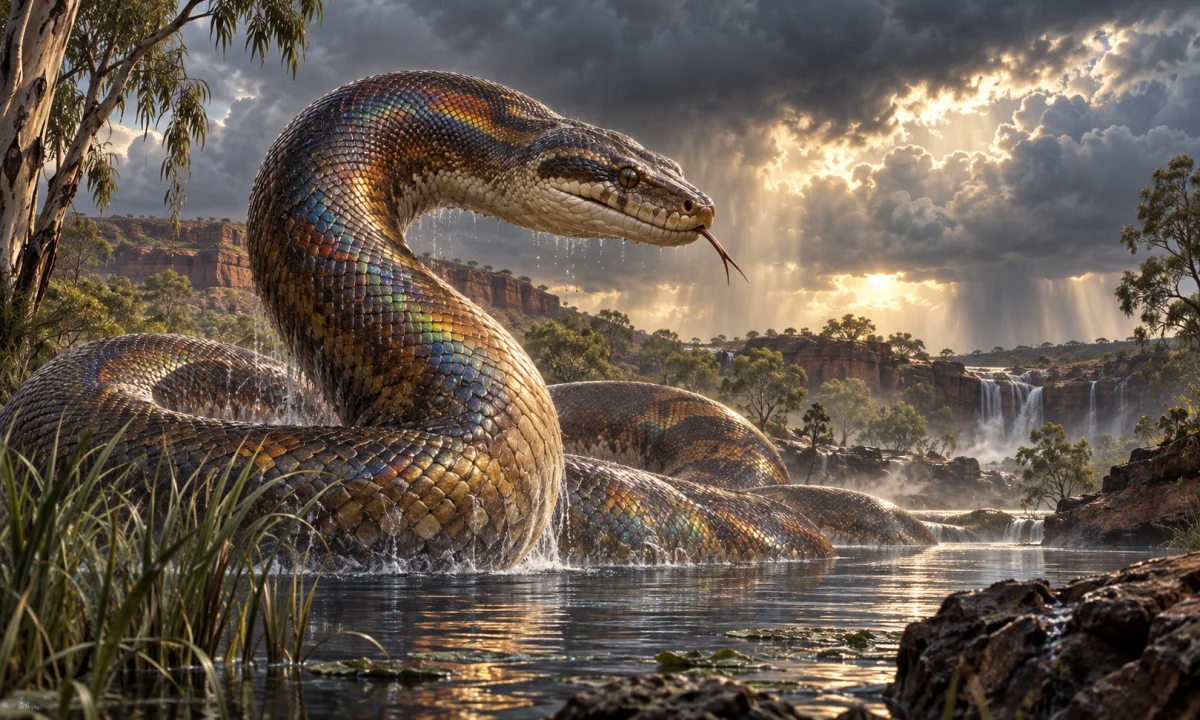
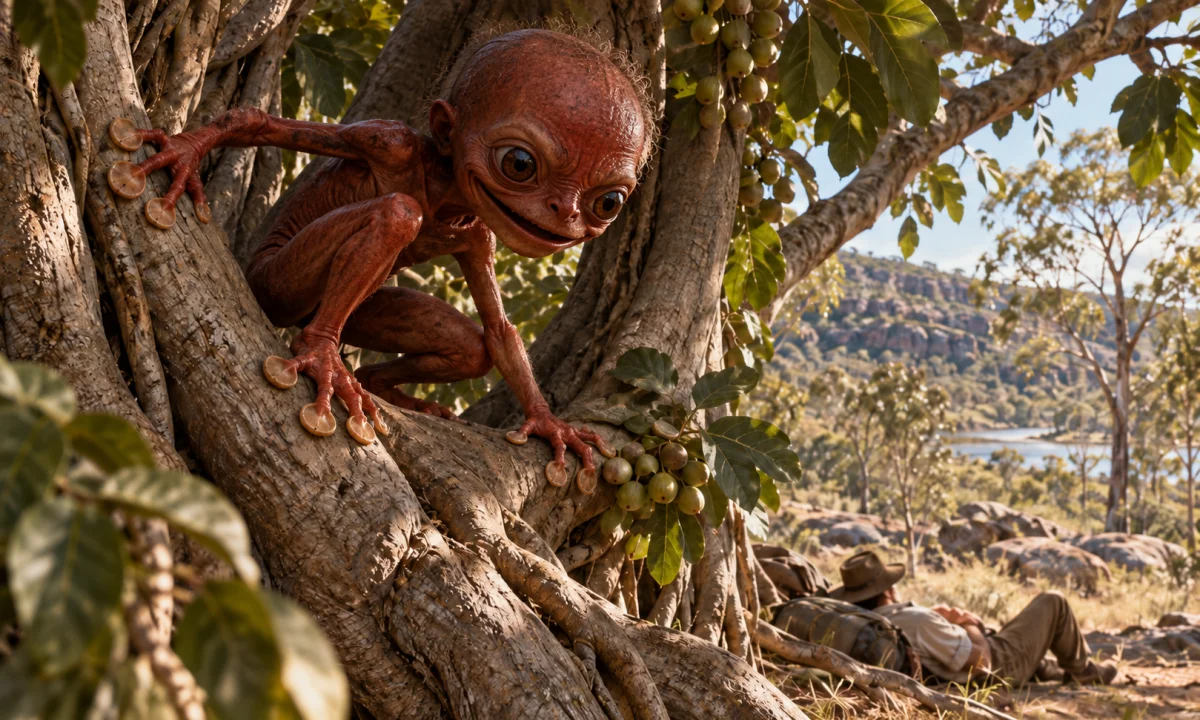
There is likewise no dependable traditional description that fixes Widjingara’s appearance. It should not automatically be illustrated as a giant, serpent, ghost, demon, animal-headed creature or humanoid spirit. Those forms occur in Aboriginal narratives involving many different beings, but similarity of imagery does not establish a connection. Artistic representations should be understood as modern interpretations unless they are based on the visual traditions of a particular Aboriginal community.
The same caution applies to claims about supernatural powers. Aboriginal ancestral figures may shape rivers, call rain, establish laws, transform into animals or remain present in particular landscapes. These motifs are widespread, but they are not interchangeable. Assigning them to Widjingara without a documented story would create a composite figure rather than recover a known tradition.
Why documentation matters
Traditional knowledge was often transmitted orally through family, initiation, ceremony, performance, song, dance and custodianship of Country. Written records represent only a small and uneven portion of that knowledge. Early European observers frequently misunderstood what they witnessed, omitted material considered secret, or interpreted Aboriginal religious ideas through Christian and classical categories.
Some records were also produced without the informed consent of the people whose traditions were being described. A name might be published outside its appropriate context, stripped of its ceremonial meaning or assigned to the wrong community. Later writers may then treat that publication as independent confirmation, even when all later references derive from the same uncertain record.
Contemporary cultural protocols recognise that Aboriginal communities have authority over their own stories and sacred knowledge. A respectful account of an uncertain figure should therefore avoid pretending to recover information that has not been reliably preserved in public sources. It should also avoid treating the absence of a detailed written record as evidence that a tradition never existed.
Distinguishing Widjingara from better-documented figures
Wondjina or Wanjina
The Wondjina are ancestral beings in the traditions of several Aboriginal peoples in the Kimberley. They are strongly associated with rock art, rain, fertility, clouds and the continuing presence of ancestral power in Country, although meanings and practices vary among communities. Their name and cultural context are distinct from the uncertain record surrounding Widjingara. Similar-looking spellings should not be used to combine the two.
The Rainbow Serpent
“Rainbow Serpent” is a broad English expression applied to different powerful serpent beings in Aboriginal traditions. These beings are not one universal character with one standard name or story. Many are connected with water, rain, fertility, ancestral movement and the shaping of Country. Widjingara should not be described as a Rainbow Serpent merely because serpent imagery is common in accounts of Aboriginal mythology.
Bunyip
The bunyip belongs to a range of southeastern Aboriginal traditions and has been represented in colonial writing as a dangerous water creature. Its spelling and meaning also vary, and modern popular culture has turned it into a general Australian monster. Even so, bunyip traditions have a more identifiable regional history than the uncertain figure called Widjingara. The two should not be treated as equivalent.
Yowie
The yowie is another name surrounded by substantial modern retelling. It is variously linked to Aboriginal stories, colonial folklore and twentieth-century cryptid culture. It is not a synonym for Widjingara, and neither name should be used as a catch-all term for an Aboriginal monster or forest spirit.
Interpretation and cultural significance
The most responsible interpretation of Widjingara is therefore a limited one. The name has some presence in modern discussions of Australian Aboriginal mythology, but its traditional identity remains uncertain in publicly available English-language material. It cannot presently be treated as a pan-Aboriginal deity with a fixed appearance, powers or mythology.
This uncertainty also illustrates a wider issue in the study of Indigenous religions. A catalogue of names can give the impression that Aboriginal cultures possessed a single mythology comparable to the pantheons of Greece or Scandinavia. In reality, names belong to places, languages, communities and relationships with Country. A figure’s meaning may be inseparable from a particular landscape and from obligations that are not explained in a brief public account.
Where the name has been preserved in a specific community, its significance would best be explained by that community’s custodians and cultural institutions. The relevant questions would include the original language and spelling, the place associated with the name, whether the knowledge is public, and whether the being is understood as an ancestor, personification, guardian, spirit or something that does not fit those English categories.
Widjingara in modern reference culture
Widjingara has little established presence in major works of modern fiction, film or popular entertainment. Its appearances are more often found in generalised online lists of mythical beings. In that setting, the name can acquire invented details as writers repeat one another without identifying an Aboriginal source or language group.
Modern retellings should therefore distinguish clearly between documented traditional knowledge and creative invention. A fantasy character named Widjingara may be a legitimate new work, but it should not be presented as an authentic representation of Aboriginal religion unless it has been developed with the relevant community and cultural permissions. In the absence of such context, the name is best treated as an uncertain and sparsely documented entry rather than as a fully defined mythological character.