WORLD
WORLD
To-toro-potaa
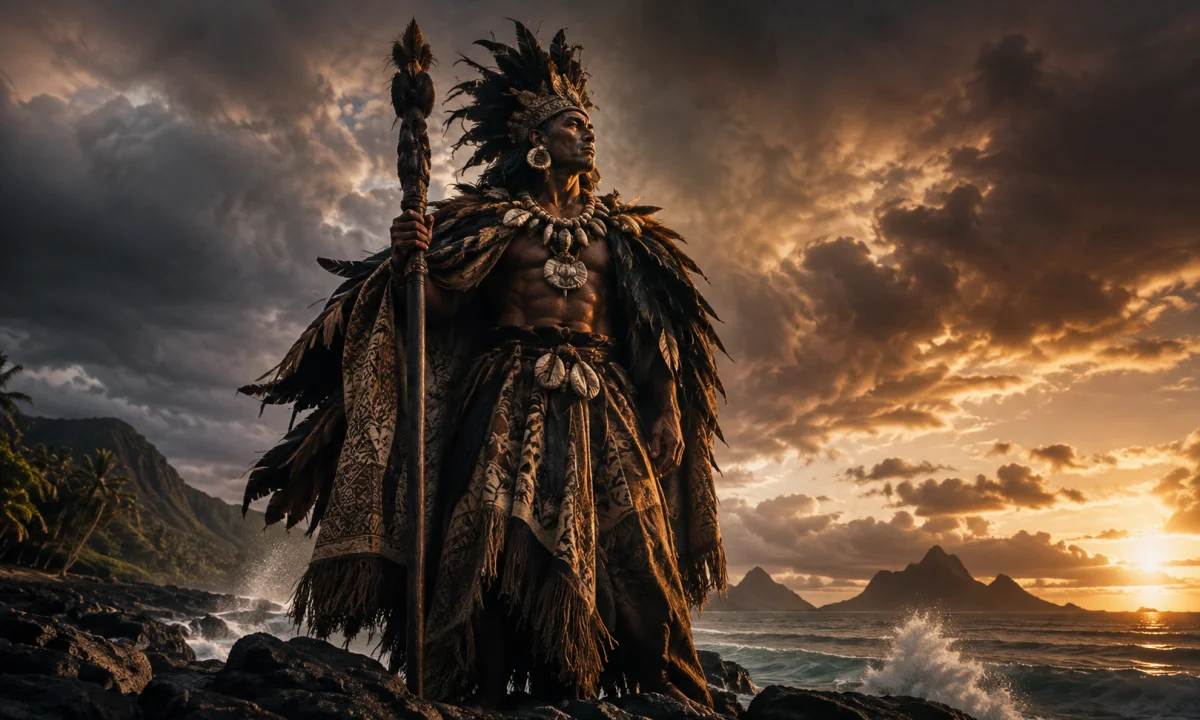
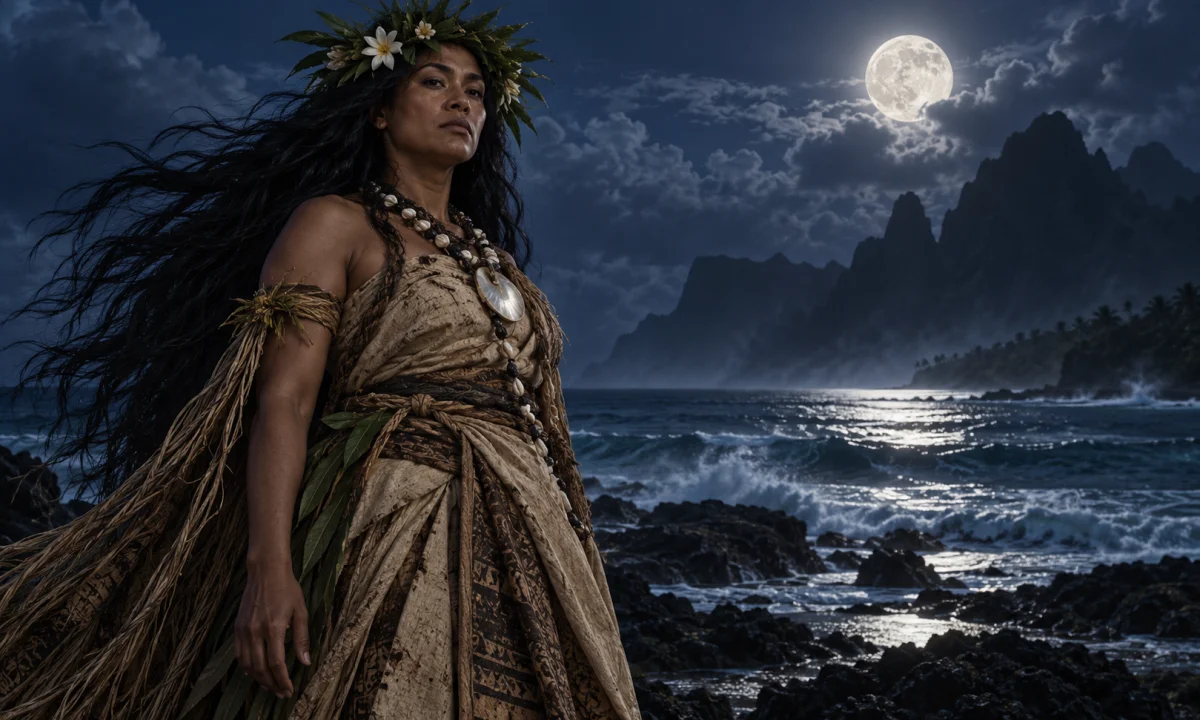
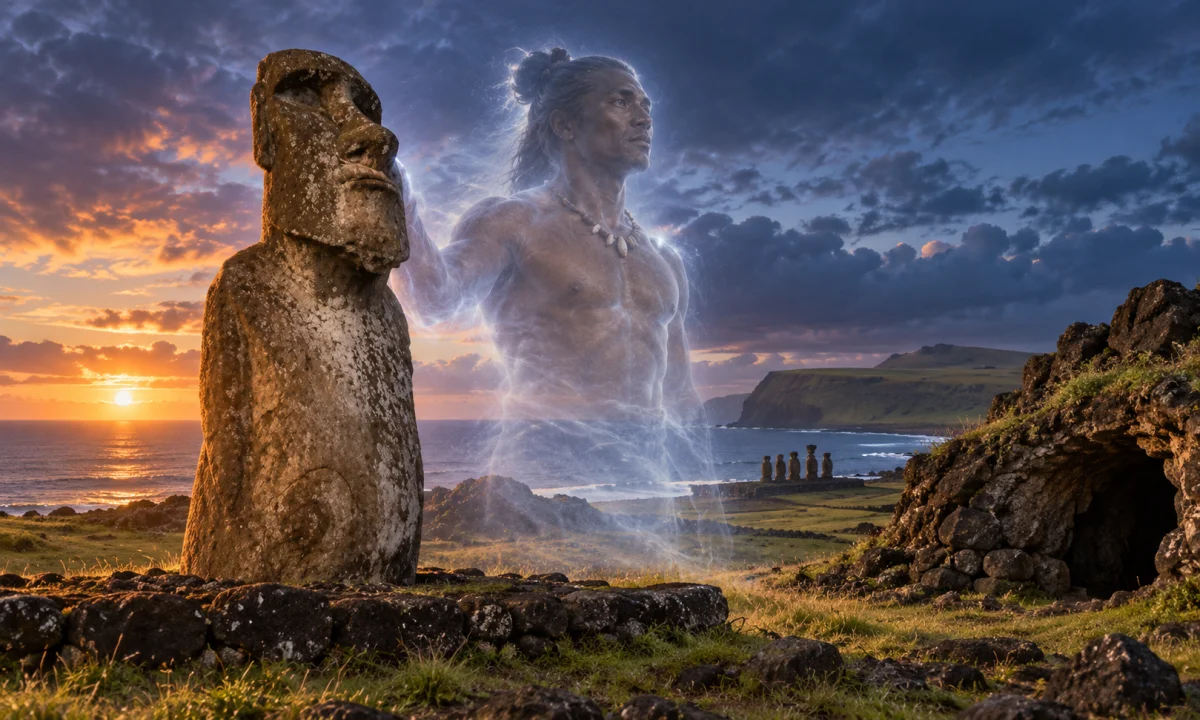
To-toro-potaa is a poorly documented name associated with Polynesian mythology. Unlike major Polynesian figures such as Māui, Tangaroa, Tāne, or Tū, To-toro-potaa does not have a widely established body of traditional stories, a securely identified island origin, or a consistent role across reliable accounts. The name appears chiefly in modern English-language lists and compilations of mythological beings, where details are often brief or contradictory.
Origins and cultural setting
“Polynesian mythology” is a broad modern category rather than the name of a single religious system. Polynesia includes many island societies spread across the central and eastern Pacific, including the Māori of Aotearoa New Zealand, the peoples of the Society Islands, the Tuamotu Archipelago, the Marquesas, Hawai‘i, Tonga, Samoa, the Cook Islands, and other regions. Each community maintained its own language, genealogies, rituals, sacred places, and traditions.
Religious knowledge was generally preserved through oral performance, priestly teaching, genealogical recitation, chants, local legends, and accounts connected with particular temples or sacred landscapes. Early European observers recorded only parts of these traditions, often using spellings that did not accurately represent local pronunciation. Later writers sometimes combined material from different islands or treated a local spirit as though it were a deity known throughout Polynesia.
To-toro-potaa illustrates the difficulties created by that history. The name is circulated as a Polynesian mythological name, but its exact island community and original context are not consistently identified. There is no generally accepted traditional corpus that describes a figure of this name in the way that Māori traditions describe Māui or Tahitian traditions describe Ta‘aroa. Assertions that assign To-toro-potaa a precise rank, appearance, or supernatural power should therefore be treated cautiously unless they can be traced to a specific local tradition.
The name and its spelling
The spelling To-toro-potaa is not a universally standard Polynesian form. Hyphens, doubled vowels, apostrophes, and other marks in older English renderings often reflect the habits of the recorder rather than an original orthography. Polynesian languages also differ in their treatment of long vowels, glottal stops, and consonants, so a name written in one island language may look quite different when recorded in another.
Variants such as To-toro-pota‘a, Totoro Potaa, or forms with altered vowel length may be encountered in secondary material. These should not automatically be treated as separate beings, but neither should every similar-looking form be merged without evidence. A reliable identification would require a local-language spelling, an island attribution, and a description from a traditional or early recorded source.
It is also unsafe to translate the name simply by separating it into familiar Polynesian-looking parts. Words resembling to, toro, pō, or pota‘a can have different meanings in different Polynesian languages, and a name may preserve an archaic, dialectal, or ritual form. Without knowing the language and context in which the name was recorded, a proposed translation remains speculative.
Identity and classification
To-toro-potaa is sometimes classified generally as a Polynesian deity or mythological spirit. That classification should not be understood as proof that the figure was worshipped throughout Polynesia. In traditional Polynesian societies, the boundaries between gods, culture heroes, ancestral spirits, nature beings, guardians, and named figures in local narratives were not identical from island to island.
A being could be important in one community without appearing in the religious traditions of neighbouring islands. A name might also belong to a minor god, a local ancestor, a person in a particular legend, or a figure mentioned only in a specialist ritual. European and later popular writers frequently flattened these distinctions by placing all named supernatural figures under the single label “god.”
For To-toro-potaa, the available identification is too uncertain to support a firm classification beyond “a name attributed to Polynesian mythology.” There is no secure basis for describing the figure as a universal creator, a god of the sea, a lord of the underworld, a guardian spirit, or a culture hero. Such descriptions may occur in unsourced summaries, but they should not be presented as established traditional facts.
Attributes and powers
No stable traditional description of To-toro-potaa’s physical appearance is widely attested. The figure cannot responsibly be assigned a fixed form such as a human, animal, giant, bird, reptile, or sea creature merely because those forms occur elsewhere in Polynesian mythology.
The same caution applies to supernatural abilities. Polynesian traditions contain powerful beings associated with creation, weather, fertility, warfare, fishing, voyaging, death, healing, and the protection of particular places. Yet the presence of these themes in Polynesian religion does not establish a connection with To-toro-potaa. A statement that the figure controlled one of these domains requires evidence from a specific tradition rather than a general knowledge of Polynesian mythology.
Even apparently simple classifications, such as “sea god” or “spirit of darkness,” can be misleading. Oceanic religious concepts were often expressed through relationships among gods, ancestors, land, sea, ritual specialists, and genealogies. A supernatural figure might have several functions depending on the ceremony, island, or narrative in which the name occurred.
Stories and relationships
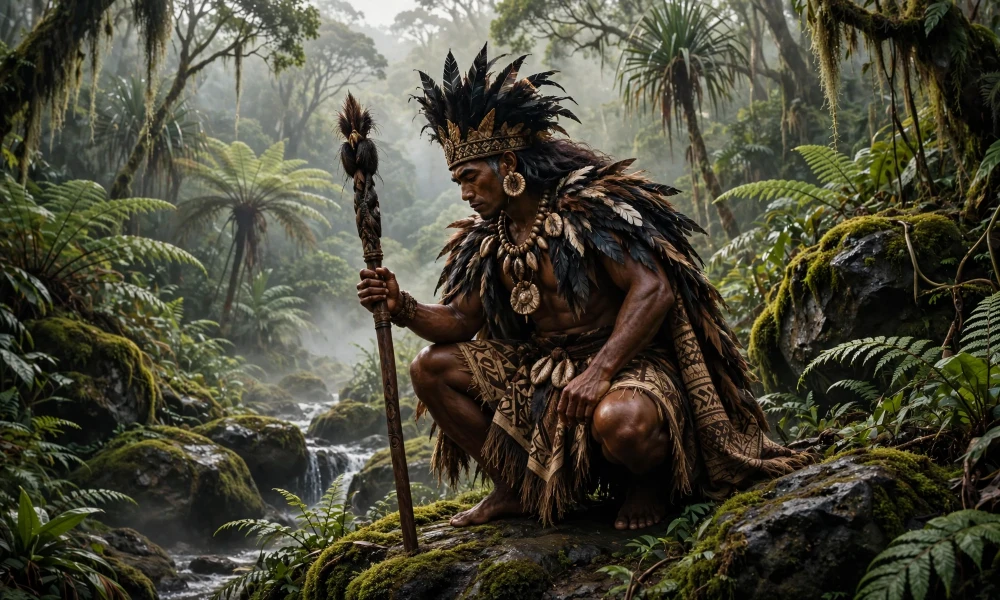
No widely recognized cycle of myths gives To-toro-potaa a clearly established family, rival, companion, or sequence of adventures. The figure is not securely linked to the major Polynesian genealogies of the sky father and earth mother, nor is there a broadly accepted narrative placing the name in the stories of Māui, Tāne, Tangaroa, or other pan-Polynesian figures.
This absence does not prove that no local story ever used the name. Oral traditions can be restricted to a particular island, lineage, village, or ritual community, and many recordings remain incomplete. It does mean that a detailed biography would go beyond the evidence currently available in general English-language reference material.
Names in Polynesian myth can also be transmitted through genealogical or poetic passages without a full narrative being preserved. A short mention may have been meaningful to its original audience while appearing obscure to later readers. The lack of a surviving story may therefore reflect gaps in documentation rather than the insignificance of the name within its original setting.
Cultural significance of uncertainty
The uncertainty surrounding To-toro-potaa is itself important. Many mythological databases present short entries with the same confidence whether a figure is supported by extensive traditional material or by a single unattributed reference. Once such an entry is repeated, later writers may add invented details, and those details can eventually appear to be ancient tradition.
Responsible treatment distinguishes among several levels of evidence:
- Local traditional evidence: material preserved in the language and cultural context of the community associated with the name.
- Early recorded evidence: accounts made by missionaries, travellers, ethnographers, or other observers, interpreted with awareness of their limitations.
- Comparative interpretation: scholarly attempts to relate names or themes across Polynesian languages and cultures.
- Modern compilation: lists, websites, encyclopedias, and popular books that may repeat older information without identifying its origin.
To-toro-potaa is best treated as a name whose documentation is incomplete rather than as a fully described member of a standard Polynesian pantheon. The distinction matters because Polynesian communities continue to maintain living cultural identities. Presenting an uncertain or possibly misrecorded name as a universal god can obscure the diversity of the societies grouped under the word “Polynesian.”
Distinction from similar names
To-toro-potaa should not be automatically identified with every Polynesian name containing toro, toa, toroa, or pota‘a. Similar syllables can occur independently in related languages, and different spellings may represent different words rather than variants of one being.
It should also be distinguished from well-known figures whose names have been altered in translation or transcription. Māui, Tangaroa, Tāne, Tū, Lono, Kāne, and other major gods have extensive and regionally varied traditions. There is no sound basis for treating To-toro-potaa as an alternative name for any of them simply because the figure is labelled “Polynesian” in a modern list.
Nor should the name be confused with a modern fictional character, a place name, or an ordinary personal name that happens to resemble it. A precise comparison requires the original spelling, the language concerned, and the context in which the name appears.
Later reception
To-toro-potaa has no prominent, well-documented role in modern popular culture comparable to Māui, Pele, or other Polynesian figures who appear in novels, films, games, comics, and tourism imagery. When the name does appear in contemporary material, it is generally as an obscure entry in a catalogue of mythological beings rather than as the subject of a continuous cultural tradition or a major adaptation.
Modern retellings should therefore avoid supplying invented powers or dramatic episodes merely to make the figure resemble better-known gods. A careful presentation can acknowledge the name, explain its uncertain documentation, and preserve the distinction between a possible local or poorly recorded tradition and later imaginative elaboration.
What can responsibly be said
To-toro-potaa is a name attributed to Polynesian mythology, but its exact origin, identity, role, and traditional stories remain uncertain in the commonly available record. It is not securely established as a pan-Polynesian god, and no consistent appearance, domain, genealogy, or mythic cycle can be stated without a specific source and cultural attribution.
The most accurate understanding is therefore provisional: To-toro-potaa belongs to the less-documented edge of Polynesian mythological reference material. Further identification would depend on locating the name in a particular island tradition, preserving its original spelling, and examining the surrounding text or oral account rather than relying on isolated catalogue descriptions.