WORLD
WORLD
Taonoui
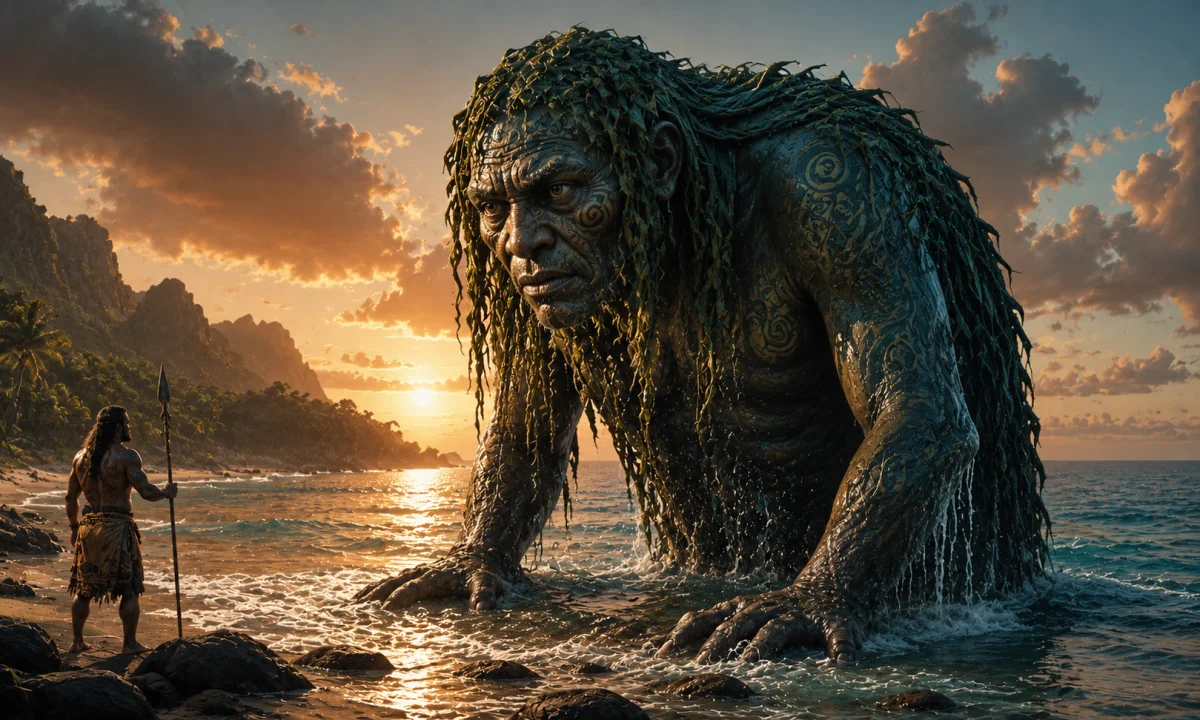
Taonoui is an obscure name associated with Polynesian mythology, sometimes described in modern reference works as a solar deity or a being connected with light. The evidence for this identification is limited, however. Unlike widely documented figures such as Māui, Tangaroa, Tāne, or Rongo, Taonoui does not have a clearly established, pan-Polynesian mythology or a securely documented cycle of traditional stories. The name may represent a local figure, a variant spelling, or an interpretation repeated in later summaries of Polynesian religion.
Polynesian cultural setting
Polynesia is a vast cultural region of the Pacific, extending across numerous island groups, including Hawai‘i, Aotearoa New Zealand, Tahiti and the Society Islands, the Marquesas, Tonga, Samoa, the Cook Islands, the Tuamotu Archipelago, and several smaller groups. These societies shared certain ancestral languages and religious concepts, but they did not possess one uniform mythology. Gods, spirits, ancestors, ritual practices, and creation accounts varied considerably from island to island.
Names that look similar across Polynesian languages do not automatically identify the same being. A deity known under one name in the Society Islands might have a different name, genealogy, or function in Tonga, Samoa, Hawai‘i, or the Cook Islands. Even where names are historically related, local traditions could transform a figure’s character. One community might preserve a god as a creator, while another remembers a related name as an ancestor, a culture hero, or a spirit associated with a particular natural force.
This regional diversity is especially important in the case of Taonoui. The surviving information does not provide a secure basis for treating Taonoui as a major god worshipped throughout Polynesia. The name is best approached as an uncertain and poorly documented Polynesian mythological designation, rather than as a universally recognized divine personality.
Name and identity
The spelling Taonoui is not sufficient by itself to establish a precise origin. Polynesian languages use related sounds and words in different ways, and older European transcriptions often represented unfamiliar pronunciations inconsistently. A name may appear with changes in vowels, consonants, spacing, apostrophes, or macrons when it is transferred from an oral language into missionary records, colonial publications, dictionaries, or modern English-language reference books.
Forms such as Taonui or other locally adapted spellings may therefore be confused with Taonoui. That does not prove that every similar form refers to the same figure. A reliable identification would require information about the island or language in which the name was recorded, the original spelling, the associated chants or narratives, and the ritual context in which the figure appeared.
Some modern lists of Polynesian deities describe Taonoui as a sun god. This association may reflect a local tradition that has not been widely preserved, or it may result from a brief secondary description whose original evidence is difficult to trace. There is not enough secure documentation to give Taonoui a detailed genealogy, a fixed appearance, or a universally accepted set of powers.
Possible association with the sun and light
If the solar identification is accepted provisionally, Taonoui would belong to a broad class of Polynesian divine or supernatural beings connected with the sun, daylight, warmth, and the ordering of time. The sun was not merely an object in the sky. In island societies dependent on navigation, agriculture, fishing, and seasonal knowledge, the movement of the sun helped organize daily life and the annual cycle.
Solar symbolism could therefore include several related ideas:
- the return of daylight after darkness;
- heat and the ripening of cultivated plants;
- the measurement of days and seasons;
- visibility, revelation, and the overcoming of obscurity;
- the regular movement of the heavens; and
- the relationship between the human world, the ancestors, and the gods.
These themes are common possibilities, not securely attested attributes of Taonoui. There is no dependable evidence that Taonoui was represented in one particular human or animal form, carried a distinctive weapon, lived in a named heavenly domain, or possessed a specific sacred object. Descriptions that assign such details should be treated cautiously unless they can be tied to a particular island tradition or recorded narrative.
Solar beings in Polynesian traditions
Polynesian religions contain many figures associated with celestial bodies and cosmic order, but their roles should not be merged with Taonoui without evidence. In several traditions, the sun is linked to a high god, a creator, a culture hero, or a person whose actions explain the length of the day. The famous Polynesian hero Māui, for example, is associated in several island traditions with slowing the sun so that people would have more daylight for their work. This story is not evidence that Māui and Taonoui are the same being.
Other Polynesian mythologies describe gods whose names are connected with light, sky, or the creation of the visible world. Tāne is a major deity in several eastern Polynesian traditions and is associated in different contexts with forests, procreation, beauty, and the separation of heaven and earth. Tangaroa or Tangaloa is a major sea or creator deity in many island groups, though his character varies widely. In the Society Islands, Ta‘aroa occupies an important place in creation traditions. None of these figures should be presented as alternate names for Taonoui merely because they share a connection with the heavens or the natural world.
The presence of a solar god in one local tradition would also not necessarily mean that the sun was worshipped in the same way across Polynesia. Religious life included formal temples, offerings, chants, priestly specialists, ancestral observances, and relationships with local spirits. A deity’s importance depended on the island community and its ritual institutions, not simply on the apparent meaning of a name.
Sources and limits of the evidence
Most knowledge of Polynesian mythology was transmitted orally before it was recorded in writing. Genealogies, chants, ritual formulae, narratives, and local explanations were preserved by specialists and elders, sometimes over many generations. The earliest written records were often produced by European explorers, missionaries, colonial officials, or later collectors. Such records can be valuable, but they may omit sacred material, misunderstand indigenous categories, or combine accounts from different communities.
Missionary writers sometimes classified Polynesian gods according to European ideas of “mythology” or “idolatry.” Collectors could also standardize variant names or arrange unrelated traditions into a single system. Later encyclopedias and websites occasionally repeated short entries without giving the original island, language, or informant. An entry identifying Taonoui as a sun god may consequently preserve a genuine local reference, but it may also conceal a chain of transcription and interpretation.
The absence of extensive surviving stories does not demonstrate that Taonoui was unimportant to the people who used the name. Sacred knowledge could be restricted, and many oral traditions were lost or fragmented through disease, population decline, missionary pressure, cultural disruption, and the replacement of indigenous languages. At the same time, the lack of evidence means that modern descriptions should not confidently supply missing details.
Attributes and religious significance
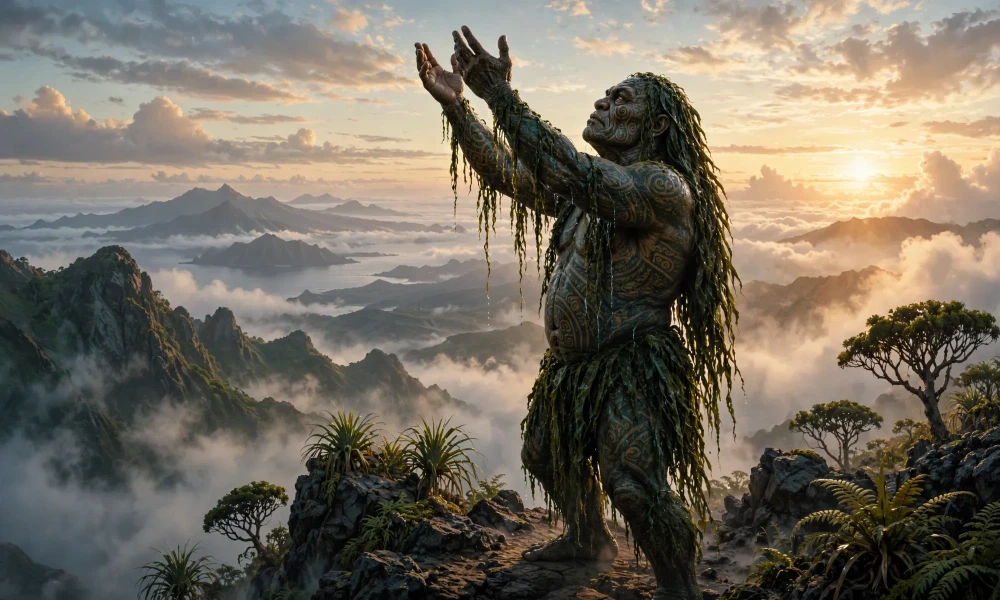
No well-established account describes Taonoui’s physical appearance. The figure should not automatically be imagined as a human-shaped god wearing a crown of rays, since that image belongs largely to later artistic conventions about sun deities. Polynesian representations of gods were culturally varied. A divine presence could be expressed through a carved image, a sacred place, a natural phenomenon, a name in a genealogy, a chant, or a ritual relationship rather than through a single standardized portrait.
Nor is there a secure body of stories explaining Taonoui’s birth, marriage, children, rivalries, or adventures. Claims that Taonoui created the world, guided voyagers, defeated a night monster, or controlled the seasons should not be treated as traditional facts without a specific and credible local source.
In a cautious interpretation, the possible solar meaning of Taonoui points toward the importance of cosmic regularity. Polynesian communities developed sophisticated knowledge of stars, ocean currents, winds, seasons, and changes in daylight. Religious explanations of these patterns did not necessarily separate “science” from “myth” in the modern sense. Celestial observation, ritual authority, genealogy, navigation, and agriculture could form part of one integrated understanding of the world.
Distinguishing Taonoui from similar names
Confusion is particularly likely because Polynesian divine names often contain related sounds or recurring elements. Taonoui should not be equated automatically with Tangaloa, Tangaroa, Ta‘aroa, Tāne, Tū, Rongo, or Māui. These are distinct names with their own distributions and traditions, even when a particular island’s language or oral history creates relationships between them.
It is also unwise to assume that nui, a word meaning “great” or “large” in several Polynesian languages, proves a specific interpretation of the whole name. Related words can have different meanings, pronunciations, and grammatical functions in individual languages. Folk etymology can produce attractive explanations that are linguistically uncertain.
Taonoui should likewise be distinguished from generic references to the sun. A phrase translated as “great sun,” “sun spirit,” or “lord of daylight” might be a title, a description, or a translator’s interpretation rather than the personal name of a separate god. Without the original wording and context, it is impossible to know whether Taonoui was an individual deity, an epithet, a local spirit, or a name preserved inaccurately.
Later reception
Taonoui has not become a prominent figure in widely known Polynesian literature, film, games, or global popular culture. When the name appears in modern mythology lists, it is often presented briefly and with more certainty than the surviving evidence warrants. Such summaries can make an obscure or localized reference appear to be a major pan-Polynesian deity.
A responsible modern presentation should therefore preserve the uncertainty surrounding the name. Taonoui may be discussed as a possible solar figure in Polynesian tradition, but the identification should remain qualified. The most reliable distinction is between the limited traditional evidence and later catalogues that expand the figure’s attributes. Until a specific island tradition, original-language record, or indigenous account can be identified, Taonoui is best understood as an obscure name whose exact identity and cultural setting remain unresolved.