WORLD
WORLD
Tahu
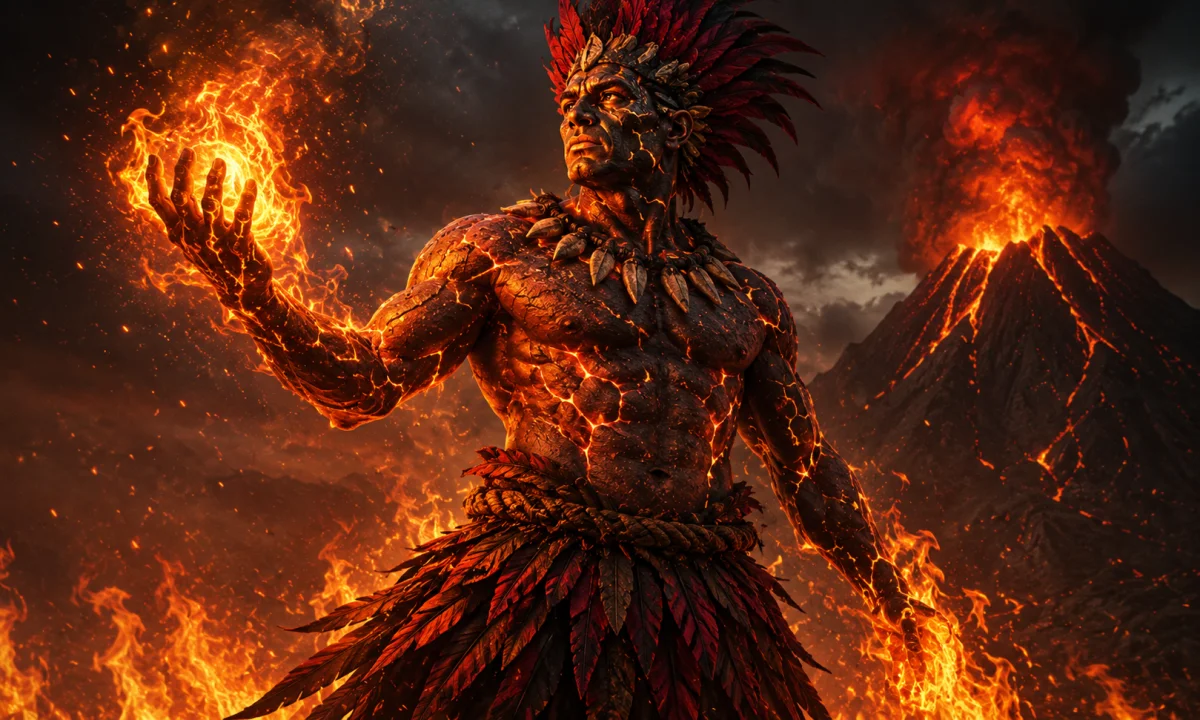
Tahu is a name associated with Polynesian mythology in some modern collections, but it does not identify one clearly documented, pan-Polynesian god. Unlike widely attested figures such as Māui, Tangaroa, Tāne, or Tū, Tahu has no single, stable profile shared across the major Polynesian traditions. Claims that Tahu was universally a god of fire, the sun, war, or the sea should therefore be treated cautiously unless they are tied to a specific island tradition and an identifiable traditional source.
Polynesian cultural setting
Polynesia is not one single religious culture. It includes a vast region of the Pacific whose communities developed related but distinct languages, genealogies, ritual systems, and stories. Māori traditions from Aotearoa New Zealand, Hawaiian traditions, Tahitian traditions, Samoan traditions, Tongan traditions, and the traditions of the Cook Islands, Tuvalu, Tokelau, and the Tuamotu and Marquesas archipelagos share certain inherited ideas, but they do not preserve an identical pantheon.
Many Polynesian religious traditions were transmitted orally. Stories could be preserved in genealogical recitations, ritual chants, place names, performances, and specialist knowledge rather than in a single authoritative scripture. Names also changed as they passed between languages. Early European and missionary transcriptions frequently represented Polynesian sounds inconsistently, and later writers sometimes grouped figures from different islands under broad labels such as “Polynesian mythology.”
This background is important in the case of Tahu. A name appearing in a modern list of Polynesian gods does not, by itself, establish that Tahu was recognized throughout Polynesia or that the figure possessed the same role in every island society.
Name and identity
The spelling Tahu is not sufficient to determine a figure’s origin. Polynesian languages often use related sounds and word forms, while older records may omit the macrons, apostrophes, or other marks that distinguish words and names. A name written as Tahu may therefore represent a local form, a transcriptional variant, or a shortened form of a longer name.
The word also resembles ordinary Polynesian terms and titles. In some languages, forms related to tahu can be associated with burning, kindling, cooking, or other actions involving heat. In Tahitian and related contexts, tahuʻa may refer to a priest, ritual specialist, expert, or skilled practitioner, depending on context and spelling. These linguistic similarities do not prove that Tahu was a fire god, nor do they prove that every occurrence of the name refers to a supernatural being.
Some popular mythology references present Tahu as a deity with a particular domain, especially fire. That description may reflect a local tradition, a modern compilation, or an interpretation based on the sound or meaning of the name. Without a clearly identified island tradition, however, it should not be presented as a universally accepted feature of Tahu.
Sources and the limits of the evidence
Knowledge of Polynesian religions comes from several kinds of evidence, each with its own limitations. Oral traditions recorded by Indigenous specialists and later scholars can preserve important religious knowledge, but they may also contain regional variations. Missionary accounts sometimes provide early written records, although they were shaped by the authors’ religious assumptions and by the circumstances in which information was collected. Linguistic comparison, archaeology, ethnography, and the study of chants and genealogies can help clarify relationships between traditions, but they do not always identify a figure with certainty.
There is no widely recognized ancient Polynesian text that establishes a single, standardized biography of Tahu. Nor is Tahu generally treated by specialists as one of the major deities shared across all Polynesian societies. The available evidence is better understood as fragmentary and variable. A responsible account must distinguish an attested local figure from a name repeated in unsourced encyclopedic or popular material.
Attributes and proposed domains
Descriptions of Tahu sometimes assign the figure control over fire or heat. This association is understandable because fire has a central place in Polynesian life: it was used for cooking, warmth, craft production, land management, and ritual activity. Fire also appears in many Polynesian narratives concerning the origin of cooking, the theft of flame, or the relationship between humans and the supernatural world.
Even so, the best-known fire traditions do not depend on a pan-Polynesian god named Tahu. In Māori tradition, the keeper of fire is commonly identified as Mahuika, while the story of how Māui obtained fire belongs to a wider family of traditions with different names and details in different islands. In Hawaiʻi, Pele is strongly associated with volcanoes and volcanic power, but she is not simply another name for Tahu. Other island societies preserve their own fire beings, ancestral figures, or explanations of volcanic activity.
Other summaries have described Tahu as a solar, sea, or war deity. These claims should not be combined into one fixed portrait. There is no secure basis for saying that Tahu simultaneously possessed all of these roles in a common Polynesian religion. The variation may result from confusion between separate local names, differences in transcription, or the tendency of modern writers to assign a familiar divine category to an obscure figure.
No consistent traditional description of Tahu’s appearance, weapons, animal form, dwelling place, or family relationships is broadly established. Statements that Tahu was the child, sibling, or companion of a major Polynesian god require a specific cultural context. Genealogies differ greatly between island groups, and a relationship found in one local account cannot automatically be transferred to another.
Fire, ritual, and sacred power
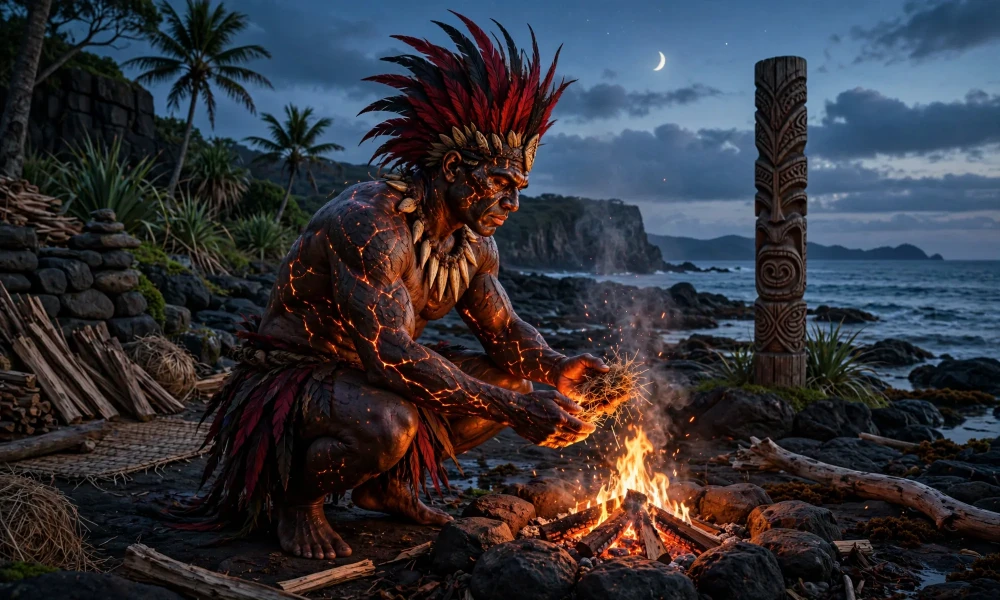
Although Tahu’s supposed connection with fire is uncertain, the religious importance of fire in Polynesia is well established. Fire could be practical, ancestral, transformative, and sacred at the same time. The hearth supported family life, while controlled burning shaped landscapes and food production. In ritual settings, fire could mark offerings, purification, cooking, or communication with supernatural powers.
Polynesian religious systems also distinguished between ordinary activity and actions governed by tapu or related concepts of sacred restriction. Priests and ritual experts held specialized knowledge concerning chants, offerings, genealogies, healing, navigation, and ceremonies. A name resembling Tahuʻa, or a title connected with expertise, might consequently be mistaken for the name of a god when removed from its original linguistic and social setting.
This is one reason why a simple label such as “god of fire” can be misleading. A traditional term may describe a ritual specialist, a quality, an action, a place, or an ancestral name rather than a distinct deity with a fixed sphere of power.
Stories and relationships
No single cycle of stories about Tahu is securely shared throughout Polynesia. In particular, there is no universally accepted account of Tahu’s birth, exploits, marriage, death, or role in the creation of the world. The absence of a widely documented narrative does not prove that no community ever preserved stories about a figure with this name. It means that broad claims must not be made without identifying the community and tradition involved.
Polynesian creation traditions commonly describe the emergence of the world from darkness, primal forces, earth and sky, or generations of divine and ancestral beings. Famous examples include genealogical systems involving Ranginui and Papatūānuku in Māori tradition, Wākea and Papa in Hawaiian tradition, and related but distinct accounts elsewhere. Tahu should not be inserted into these creation genealogies simply because modern sources classify the name as Polynesian.
The same caution applies to narratives about Māui, Tāne, Tangaroa, or other major figures. A story involving fire, the sun, or the ocean may resemble a proposed domain for Tahu without actually featuring Tahu. Shared themes across Polynesia reflect related cultural histories and common human concerns, but thematic similarity is not proof that the same character appears in every tradition.
Distinguishing Tahu from similar names and figures
- Mahuika: In Māori tradition, Mahuika is associated with the origin and guardianship of fire. Mahuika is a distinct figure and should not be renamed Tahu without evidence from a particular source.
- Pele: Pele is a major Hawaiian deity associated especially with volcanoes, lava, and volcanic landscapes. She belongs to Hawaiian tradition and is not a general Polynesian equivalent of every alleged fire deity.
- Tāwhirimātea: In Māori tradition, Tāwhirimātea is associated with winds and storms. The similarity of sound between parts of Polynesian names does not establish a relationship with Tahu.
- Tahuʻa and related titles: Forms such as Tahitian tahuʻa can refer to a priest, expert, or ritual specialist. Such a title is not necessarily the name of a god.
- Local words for fire or burning: Related words may occur in several Polynesian languages. A shared or similar word does not automatically indicate a shared divine person.
Scholarly interpretation
From a historical and comparative perspective, Tahu is best treated as an uncertain or locally restricted name rather than as a securely reconstructed pan-Polynesian deity. Comparative mythology can identify recurring figures and concepts across Polynesian societies, but it must account for sound changes, regional innovation, borrowing, transcription errors, and the difference between a divine name and an ordinary word.
A careful interpretation would ask several questions: Which island or language does the name come from? Is the spelling original or supplied by a later writer? Does the source record a prayer, chant, genealogy, narrative, or merely a dictionary term? Is Tahu presented as a god, ancestor, spirit, title, or descriptive word? Are the claimed powers actually found in the tradition, or were they inferred by a modern compiler?
These questions are especially important because older descriptions of Pacific religions sometimes reduced complex local systems to lists of “gods,” separating beings from the ritual, genealogical, and environmental settings that gave them meaning. Indigenous traditions may not divide the supernatural world into sharply bounded categories equivalent to those used in classical mythology or modern fantasy.
Modern reception
Tahu occasionally appears in online mythology directories, name lists, fantasy databases, and other modern compilations. In these settings, the name may be given a concise domain such as fire or the sun, even when the cultural origin and evidence are not explained. Such presentations can make an uncertain or regional figure appear to be a universally recognized Polynesian deity.
There is no broadly established modern popular-culture portrayal of Tahu comparable to the many adaptations of Māui, Pele, or other prominent Polynesian figures. When Tahu appears in a game, novel, artwork, or fictional setting, its attributes should be understood as a modern interpretation unless the work clearly identifies a specific traditional source. Traditional Polynesian material should not be confused with invented fantasy versions that use Polynesian-sounding names or combine figures from unrelated island cultures.
The most accurate treatment of Tahu is therefore one that preserves the uncertainty surrounding the name. It may refer to a local supernatural figure, a variant or mistranscription, a ritual title, or a later classification based on linguistic association. Without firmer cultural identification, Tahu cannot responsibly be assigned a single appearance, genealogy, or divine function for all of Polynesia.