WORLD
WORLD
Sisimatailaa
Sisimatailaa is a little-documented figure associated with Samoan mythology and the wider Polynesian cultural region of Oceania. The name appears in modern collections of Polynesian mythological beings, but descriptions of Sisimatailaa are brief, inconsistent, and not supported by a single universally recognised Samoan narrative. For that reason, Sisimatailaa is best treated as a figure preserved through fragmentary documentation rather than as a character with a fixed, pan-Samoan biography.
Origins in Samoan tradition
Samoan mythology belongs to an oral religious culture in which stories about gods, ancestors, spirits, monsters, heroes, and the origins of places were transmitted through recitation, family knowledge, chiefly traditions, and relationships with particular landscapes. These traditions were not necessarily organised into one complete mythology with a standard list of characters. A figure could be prominent in one district, island community, or narrative cycle and absent from another.
The name Sisimatailaa is generally classified as Samoan or Polynesian in modern reference works, although the surviving information does not establish a detailed history for the figure. Written records of Samoan traditions were made mainly after sustained European contact, especially by missionaries, colonial observers, collectors, and later scholars. Such records are valuable, but they often preserve only selected stories, translate indigenous terms imperfectly, or treat oral traditions as though they belonged to a single system. Names may also be written in several forms when vowel length, glottal stops, or local pronunciation are not recorded consistently.
This documentary background matters because Sisimatailaa should not automatically be presented as a major deity worshipped throughout Polynesia. There is no secure evidence that the figure had the same name, attributes, or religious importance across the whole Polynesian world. The safest description is that Sisimatailaa is a supernatural being remembered in accounts connected with Samoan mythology, with a profile that remains uncertain.
Name and identity
The spelling Sisimatailaa is the form most often encountered in English-language mythological lists. It may represent a compressed rendering of a Polynesian expression, but the meaning of the name cannot be stated with confidence without a reliable traditional-language explanation. Polynesian names frequently contain familiar elements relating to the eyes, face, light, sky, body, or supernatural power, yet apparent word-for-word translations can be misleading. Similar sounds in different Polynesian languages may also have different meanings.
Some modern summaries associate the name with a being of extraordinary or multiple eyes. This detail may reflect an interpretation of the name or a motif attached to the figure in one version of the tradition. It should not be treated as an uncontested definition. The available material does not provide a stable account of whether Sisimatailaa was regarded as a god, an ogre, a guardian, a dangerous spirit, or a monstrous figure in every context.
Classification is therefore difficult. In English, the word “god” is sometimes applied broadly to any named supernatural being in Polynesian traditions. Samoan religious concepts did not always divide beings according to the modern categories of “god,” “demon,” “monster,” and “spirit.” A being might be connected with a family, a place, a natural force, an ancestral line, or a particular story without belonging to a formal pantheon. Calling Sisimatailaa a “monster” may describe its appearance in a story, while calling it a “deity” may reflect the way older compilers grouped named supernatural figures.
Reported characteristics
The most distinctive attribute linked with Sisimatailaa in secondary descriptions is unusual sight, sometimes represented through numerous eyes or an otherwise abnormal face and body. Such an image would place the figure among supernatural beings whose bodies express their powers. In traditional storytelling, an extraordinary physical feature is rarely decorative only: it can signal danger, vigilance, knowledge, or a capacity to perceive what ordinary humans cannot.
If the many-eyed description belongs to an authentic local version of the tradition, it may suggest that Sisimatailaa was difficult to approach or evade. A being able to watch in every direction would embody the fear of being observed even when one believes oneself hidden. It could also function as a guardian of a boundary, a sacred place, or a forbidden route. These interpretations are possibilities rather than established facts about a single canonical story.
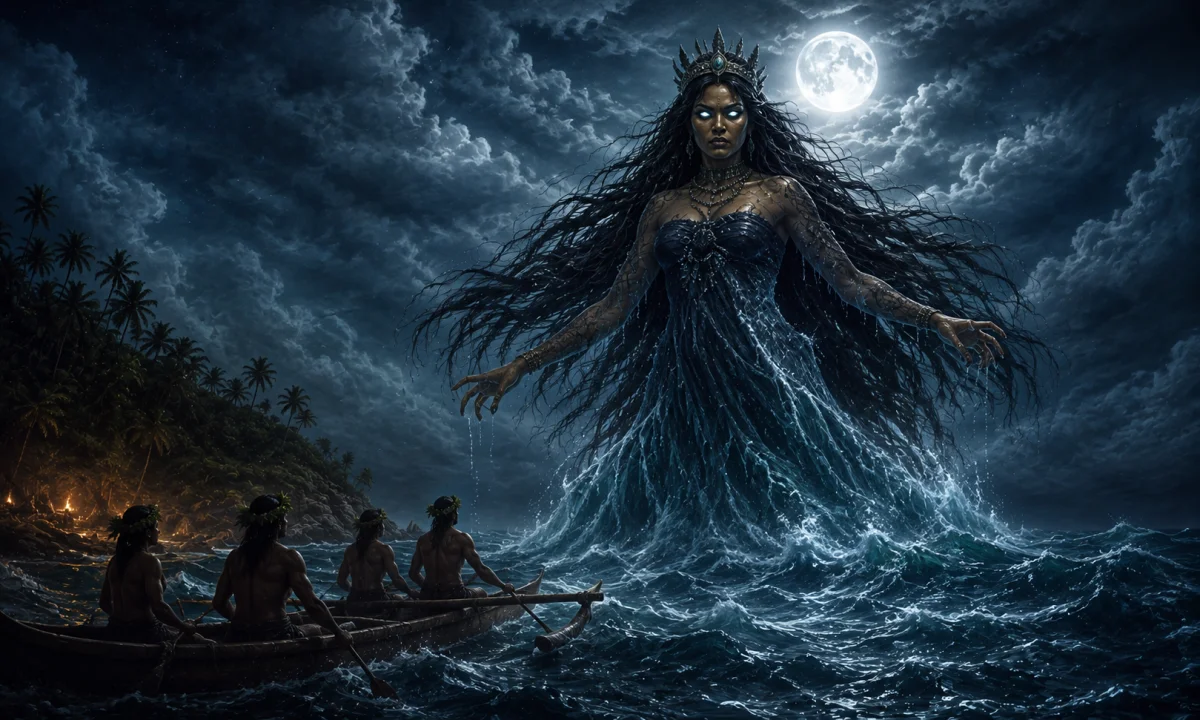
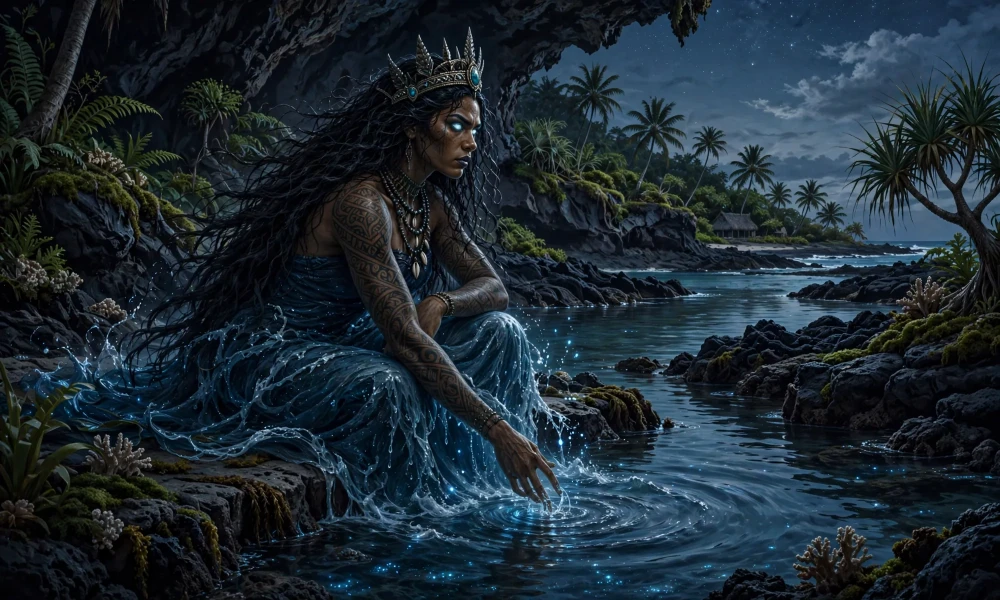
There is not enough dependable information to give Sisimatailaa a fixed size, colour, dwelling place, genealogy, or set of supernatural powers. Illustrations and internet entries sometimes expand short descriptions into elaborate portraits, but those additions should not be confused with documented Samoan tradition. No securely established account identifies a standard weapon, spouse, parent, offspring, or permanent residence for Sisimatailaa.
Role in stories and oral tradition
A major difficulty in discussing Sisimatailaa is the lack of a widely attested narrative cycle centred on the figure. The name is usually encountered as an isolated entry rather than within a long, preserved Samoan story with a clear beginning, conflict, and resolution. It is therefore not possible to describe a single definitive adventure or to claim that one hero defeated Sisimatailaa in every version.
Short entries of this kind may be remnants of longer oral accounts, local names recorded without their surrounding story, or classifications created by collectors who gathered supernatural names from different informants. Oral narratives can also change according to the purpose of a performance. A story told to explain a place may emphasise a being’s danger; a story told for entertainment may enlarge its monstrous qualities; and a genealogical or chiefly account may give greater importance to ancestry and social authority.
For the same reason, Sisimatailaa should not be inserted casually into better-known Samoan cycles involving figures such as Tagaloa, Ti‘iti‘i, Nafanua, Moso, or Saveasi‘uleo. These names belong to bodies of tradition with their own histories and regional variations. A shared Polynesian setting does not prove that every named being is related to them. There is no firm basis for identifying Sisimatailaa as a companion, enemy, child, or servant of any one of these figures.
Samoan religious and cultural context
Traditional Samoan ideas about the supernatural were closely connected with the natural and social environment. The sea, forests, volcanic landscapes, caves, reefs, villages, and family territories could all be associated with spiritual presence. Ancestors and other beings were not necessarily imagined as belonging to a distant, separate world. Their influence could be encountered through dreams, illness, taboo, ritual observance, unusual events, and the protection or danger associated with particular locations.
Within this setting, a frightening figure such as Sisimatailaa would not simply be a fictional “monster” in the modern entertainment sense. Its significance, if preserved in a local tradition, could involve boundaries between safe and unsafe spaces, human and non-human beings, permitted and forbidden conduct, or ordinary sight and supernatural perception. A story about a dangerous being may teach caution, explain why a location is avoided, or express the power of forces that cannot be controlled by human beings.
Samoan traditions also place strong emphasis on relationships, obligations, rank, hospitality, and the authority of family and community. Supernatural narratives can reflect these concerns without functioning as formal religious scripture. A being may represent the consequences of entering a place without permission, breaking a taboo, disrespecting an elder, or failing to recognise hidden power. However, no specific moral lesson can be assigned to Sisimatailaa without a documented story that makes the connection clear.
Multiple eyes as a mythological motif
The image of a many-eyed being occurs in mythologies around the world, but similar imagery does not demonstrate a historical connection between those traditions. In Polynesian storytelling, unusual bodily forms may express a being’s otherness and its relationship to the environment. Eyes in particular can symbolise awareness, surveillance, and the ability to see beyond ordinary human limits.
It is important not to equate Sisimatailaa with every other many-eyed figure in world mythology. The Greek Argus, for example, belongs to a different religious and literary tradition, while multi-eyed angels in Jewish, Christian, and Islamic artistic or textual traditions have different theological meanings. Sisimatailaa should be interpreted within the Samoan and Polynesian context in which the name is recorded, not by borrowing the identity or symbolism of famous figures from unrelated cultures.
Variation, uncertainty, and responsible interpretation
Several uncertainties surround the figure:
- The exact traditional-language form of the name is not consistently recorded in English sources.
- The meaning of the name is not securely established.
- Descriptions vary regarding whether Sisimatailaa is a god, spirit, monster, or other supernatural being.
- The many-eyed appearance is widely repeated in summaries but is not accompanied by a single, universally accepted narrative.
- There is no reliable basis for assigning a fixed genealogy or placing Sisimatailaa within a complete Samoan pantheon.
These limits are not evidence that the figure is unimportant. They demonstrate the problems involved in reconstructing oral traditions from short written records. A name can survive after much of its original story has been lost, or it can be preserved in a form shaped by a particular collector’s spelling and interpretation. Treating uncertainty openly is more accurate than filling the gaps with invented details.
Distinction from related Polynesian beings
Sisimatailaa should be kept distinct from better-documented Samoan figures and from supernatural beings belonging to other Polynesian islands. Polynesia covers a vast region, and religious traditions from Samoa, Tonga, Tahiti, Hawai‘i, Aotearoa New Zealand, the Cook Islands, and other island groups share certain themes while retaining distinct languages, histories, and local traditions.
Neither a similar name nor a shared attribute is sufficient to establish identity. A being described as a giant in one island tradition is not automatically Sisimatailaa, and an entity associated with eyes, darkness, caves, or the sea should not be merged with the figure simply because those motifs appear in more than one culture. The spelling may also be confused with unrelated names when diacritics and glottal stops are omitted in English.
Modern databases often place dozens of names under broad labels such as “Polynesian monsters” or “Samoan gods.” Such categories are convenient for searching but can conceal important differences between an ancestral deity, a local guardian, a legendary creature, and a name known only from a brief record. Sisimatailaa is better understood as an uncertainly documented Samoan supernatural figure than as a standard member of a unified Polynesian monster class.
Later reception
Sisimatailaa has had little clearly documented influence on major modern literature, film, games, or popular media. Its presence today is mainly through encyclopedic lists, mythology websites, and general discussions of Polynesian supernatural beings. These formats often repeat a short description, especially the association with multiple eyes, while providing little information about the cultural setting or the limits of the evidence.
When the name is adapted for fiction, the resulting character belongs to modern popular culture rather than automatically representing Samoan tradition. A contemporary author or artist may give Sisimatailaa a detailed appearance, powers, backstory, or role in a pantheon, but those creative choices should be identified as adaptations. Respectful use of the name requires preserving its Samoan context, avoiding the treatment of Polynesian cultures as interchangeable, and acknowledging that the traditional record is fragmentary.