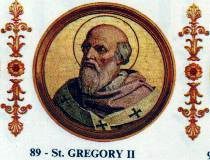
St. Gregory II was a significant figure in the early history of the Christian Church. He served as Pope from 715 to 731 and is remembered for his impactful leadership during a time of considerable change and challenge. His papacy came at a moment when the church was navigating complex political landscapes and religious debates. Gregory II played a crucial role in the expansion of Christianity and the establishment of the church’s authority across Europe. This article explores his life, contributions, and the lasting influence he had on Christian mythology and history.
Early Life and Background
St. Gregory II was born in Rome, likely around the year 669. His early life is not well-documented, but it is believed that he came from a noble family, which was not uncommon for individuals who would later take significant roles in the church. His upbringing in a prominent family likely provided him with the education and resources necessary to pursue a career in the ecclesiastical hierarchy. Gregory was known for his intelligence and deep understanding of both theology and church politics, which would serve him well in his future endeavors as Pope.
 St. Gregory I
Before becoming Pope, Gregory II held several important positions within the church. He was a cardinal priest, which placed him among the upper echelons of church leadership. His experience in these roles allowed him to develop a strong network of supporters and to gain insight into the issues facing the church. Gregory’s ascension to the papacy came at a time when the church was facing external threats from various groups, including the Lombards and the Byzantine Empire. His background and experience positioned him to address these challenges effectively.
Papal Leadership and Achievements
As Pope, Gregory II was known for his vigorous defense of the church’s authority. One of his most notable achievements was his staunch opposition to the iconoclast movement, which sought to destroy religious images and icons. Gregory believed that icons played a crucial role in the lives of the faithful, serving as a means of connecting with the divine. He wrote extensively against iconoclasm, arguing that the veneration of icons was an essential aspect of Christian worship. His writings helped to solidify the church’s position on this issue and provided a theological foundation for the continued use of icons in worship.
In addition to his theological contributions, Gregory II was also a skilled diplomat. He worked tirelessly to strengthen the relationship between the papacy and the Frankish kingdom, particularly with King Charles Martel. This alliance proved vital for the church, as it provided protection against external threats and helped to expand the influence of Christianity throughout Europe. Gregory’s diplomatic efforts laid the groundwork for the eventual establishment of the Holy Roman Empire, which would further solidify the church’s power in the region.
 St. Govan
Major Contributions to Christian Theology
- Defended the use of icons in worship
- Strengthened relationships with powerful leaders
- Promoted the spread of Christianity in Europe
Gregory II’s contributions to Christian theology were not limited to his defense of icons. He also emphasized the importance of the papacy as a central authority in the Christian faith. He believed that the Pope was the successor to St. Peter and held a unique position in guiding the church. This belief in papal supremacy would become a defining feature of Catholic doctrine in the centuries to come. Gregory’s teachings helped to establish a clear hierarchy within the church, reinforcing the idea that the Pope was the ultimate authority on matters of faith and practice.
Challenges Faced During His Papacy
Despite his many accomplishments, Gregory II faced significant challenges during his papacy. The most pressing issue was the ongoing threat from the Lombards, a Germanic people who were hostile to the papacy and sought to expand their territory into Italy. Gregory worked diligently to secure alliances with other powers to counter this threat. He sought the support of the Franks, who were emerging as a dominant force in Western Europe, and his efforts ultimately paid off when Charles Martel agreed to provide military assistance to the papacy.
Another challenge Gregory faced was the internal strife within the church. The iconoclast controversy had divided the church, with many factions emerging on both sides of the debate. Gregory’s unwavering support for the veneration of icons put him at odds with those who sought to eliminate them. He used his position to rally support for the iconodules, those who defended the use of religious images, and worked to ensure that their voices were heard within the church. This struggle highlighted the complexities of maintaining unity in a diverse and rapidly changing religious landscape.
 St. Godric Of Finchale
The Legacy of St. Gregory II
The legacy of St. Gregory II is profound and enduring. His efforts to defend the use of icons in worship established a crucial theological precedent that would influence Christian practice for centuries. His diplomatic skills and alliances helped to protect the papacy from external threats and solidified the church’s position in Western Europe. Gregory’s teachings on papal authority laid the groundwork for the development of the Catholic Church’s hierarchical structure, which continues to this day.
Furthermore, Gregory II’s commitment to spreading Christianity beyond the borders of Italy contributed to the faith’s growth throughout Europe. His relationships with leaders like Charles Martel fostered a sense of cooperation between the church and emerging political powers. This cooperation would ultimately lead to the Christianization of various regions and the establishment of a Christian cultural identity across Europe. Gregory’s impact can still be seen in the continued reverence for icons and the recognition of the Pope as a central figure in the Catholic Church.
Commemoration and Feast Day
- Feast Day: February 11
- Recognized as a Doctor of the Church
- Patron saint of various causes
St. Gregory II is commemorated in the liturgical calendar, with his feast day celebrated on February 11. This day serves as a reminder of his contributions to the church and the legacy he left behind. Many Catholic churches hold special services in his honor, reflecting on his teachings and the importance of papal authority in the life of the church. Additionally, Gregory is recognized as a Doctor of the Church, a title given to saints whose teachings have significantly contributed to the understanding of Christian doctrine.
In various regions, St. Gregory II is also considered the patron saint of specific causes, including education and diplomacy. His commitment to learning and theological inquiry continues to inspire those in the field of religious education. As a diplomat, his ability to navigate complex political landscapes serves as a model for modern leaders seeking to foster cooperation and understanding between diverse groups. His legacy as a saint endures, reminding believers of the importance of faith, authority, and the power of diplomacy in the pursuit of peace.
St. Gregory II’s life and papacy were marked by significant challenges and achievements. His defense of the veneration of icons, commitment to papal authority, and diplomatic efforts to secure the church’s position in a changing world have left an indelible mark on Christian history. As a revered figure in Christian mythology, his teachings and actions continue to resonate with believers today, highlighting the enduring impact of his leadership during a pivotal time in the church’s history.