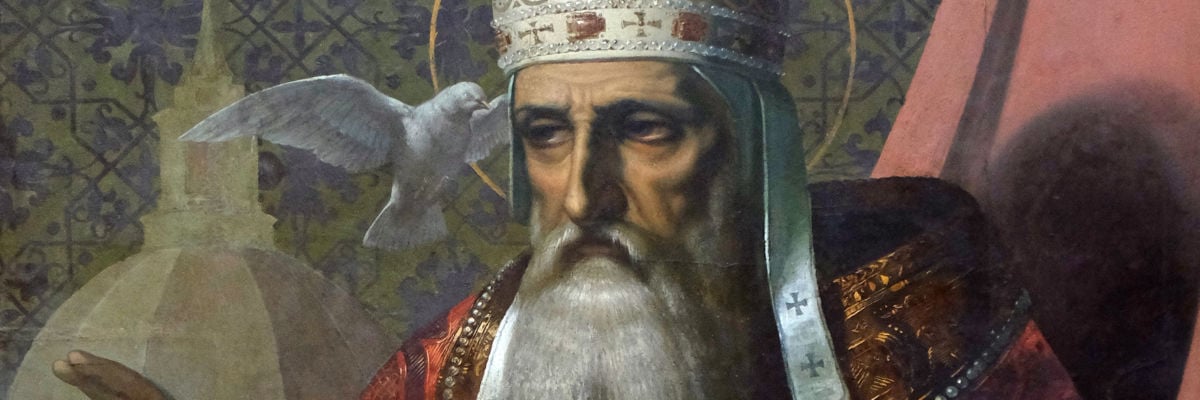
St. Gregory I, also known as Gregory the Great, is a significant figure in Christian mythology and history. He was born around 540 AD in Rome and became Pope in 590 AD. His papacy lasted until his death in 604 AD. Gregory is renowned for his contributions to the church and his efforts to reform the liturgy. He is also credited with being a great writer, and his works have had a lasting impact on Christianity. His life and actions are often examined in the context of the early medieval church and the development of Christian doctrine.
The Early Life of St. Gregory I
St. Gregory I was born into a wealthy Roman family. His father, Gordianus, was a prominent senator, which afforded Gregory a good education. He was well-versed in various subjects, including law, philosophy, and theology. Despite his affluent background, Gregory felt a strong calling towards the monastic life. He joined the Benedictine order, which emphasized a life of prayer, work, and community. This decision marked the beginning of his spiritual journey and commitment to serving God.
 St. Govan
During his early years, Gregory held various administrative positions within the church. He served as a papal representative in Constantinople, where he gained valuable experience in church politics and diplomacy. His time in Constantinople also allowed him to deepen his understanding of the Eastern Christian traditions. This knowledge would later influence his reforms and teachings as Pope. Gregory’s dedication to the church and his extensive experience prepared him for the challenges he would face as the leader of the Roman Catholic Church.
The Papacy of St. Gregory I
St. Gregory I became Pope during a tumultuous time for the church. The Western Roman Empire had fallen, and the church faced numerous challenges, including external threats from invading tribes and internal strife. Gregory’s leadership was marked by a commitment to reform and a focus on strengthening the church’s influence in the region. He believed that the church should be a guiding light for the people, providing spiritual guidance and support during difficult times.
One of Gregory’s most notable achievements was his reform of the liturgy. He is credited with developing the Gregorian Chant, a form of plainchant that became central to the worship practices of the Roman Catholic Church. This musical style emphasized simplicity and clarity, making it accessible to the faithful. Gregory believed that music should enhance the worship experience, and his contributions helped shape the liturgical practices of the church for centuries.
 St. Godric Of Finchale
Theological Contributions of St. Gregory I
St. Gregory I made significant theological contributions that influenced Christian doctrine. He wrote extensively on various topics, including the nature of God, the role of the church, and the importance of morality. His writings emphasized the need for a personal relationship with God and the importance of prayer in daily life. Gregory’s teachings often focused on the concept of divine grace, stressing that salvation is a gift from God rather than something that can be earned through good works.
In addition to his writings, Gregory played a crucial role in defining the church’s stance on several theological issues. He advocated for the authority of the Pope as the successor of St. Peter, emphasizing the Pope’s role as the spiritual leader of the church. This idea laid the groundwork for the papal authority that would develop in the following centuries. Gregory also addressed issues related to sin and repentance, encouraging believers to seek forgiveness and strive for a virtuous life.
 St. Godfrey Of Amiens
St. Gregory I is often associated with the missionary efforts to convert the Anglo-Saxons in England. He recognized the importance of spreading Christianity to new regions and took an active role in supporting missionary endeavors. Gregory sent a group of missionaries, led by Augustine of Canterbury, to England in 597 AD. This mission marked a significant turning point in the spread of Christianity in the British Isles.
Gregory’s approach to missionary work emphasized the importance of cultural sensitivity. He encouraged missionaries to respect local customs and traditions while introducing Christian teachings. This strategy proved effective, as it allowed for a smoother transition for many people who were unfamiliar with Christianity. The success of Augustine and his companions in converting the Anglo-Saxons can be attributed to Gregory’s guidance and support.
The Legacy of St. Gregory I
The legacy of St. Gregory I is profound and far-reaching. He is recognized as a Doctor of the Church, a title given to saints whose writings have significantly contributed to Catholic theology. His influence extends beyond the church; his writings and reforms have shaped Western civilization as a whole. Gregory’s emphasis on the importance of education and moral living continues to resonate in contemporary Christian teachings.
St. Gregory I is also remembered for his compassionate leadership. He prioritized the needs of the poor and marginalized, advocating for social justice and charity. He established various initiatives to support those in need, including the establishment of food distribution programs in Rome. His commitment to helping the less fortunate set a standard for future church leaders and remains a key aspect of Christian teaching today.
St. Gregory I in Art and Culture
St. Gregory I has been a subject of artistic representation throughout history. Many artists have depicted him in various forms, including paintings, sculptures, and mosaics. These artworks often highlight his papal authority, theological contributions, and commitment to the church. In many depictions, Gregory is shown with symbols of his papacy, such as the papal tiara and the keys of St. Peter.
In literature, Gregory’s life and teachings have inspired countless works. His writings have been studied by theologians, scholars, and laypeople alike. The themes of grace, repentance, and the importance of community resonate throughout his works, making them relevant to readers across different eras. Gregory’s influence can be seen in the writings of later theologians who built upon his ideas and sought to further develop Christian thought.
Feast Day and Commemoration
The feast day of St. Gregory I is celebrated on September 3rd in the Roman Catholic Church. This day is an opportunity for the faithful to reflect on his life and contributions to the church. Various liturgical celebrations take place, including Mass and special prayers. During this time, many Christians take the opportunity to study Gregory’s writings and learn more about his teachings.
In addition to the Roman Catholic Church, St. Gregory I is also honored in the Eastern Orthodox Church, where he is recognized as a saint. His contributions to Christian theology and practice are acknowledged, and his feast day is celebrated with similar reverence. This shared recognition highlights the universal impact of Gregory’s work on Christianity as a whole.
Conclusion of St. Gregory I’s Impact
St. Gregory I remains a pivotal figure in Christian mythology and history. His contributions to theology, liturgy, and missionary work have left a lasting legacy that continues to influence the church today. His life serves as an example of dedication to faith, compassion for others, and commitment to spreading the message of Christianity. The teachings and reforms initiated by Gregory have shaped the church’s direction for centuries, making him a central figure in the story of Christianity.