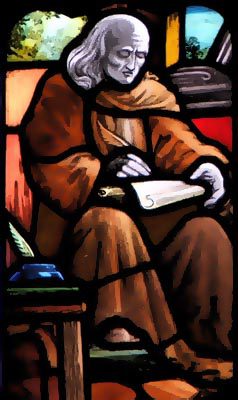
St. Gildas the Wise is a significant figure in Christian mythology, particularly within the context of early medieval Britain. He is often remembered for his profound influence on the spiritual and cultural landscape of the time. Born in the early 6th century, Gildas was a monk, historian, and theologian whose writings provide a unique insight into the history and challenges faced by the Christian community in post-Roman Britain. His most notable work, “De Excidio et Conquestu Britanniae,” serves as both a historical account and a moral treatise, reflecting his deep concern for the spiritual state of his contemporaries.

The Life of St. Gildas
St. Gildas was born in what is now modern-day Wales, likely in the year 500. His early life is shrouded in mystery, but it is believed that he was of noble birth. He was educated in a monastic setting, which was typical for the time. His education would have included a thorough understanding of Christian doctrine, Latin, and perhaps even the works of earlier church fathers. After his education, Gildas chose to dedicate his life to the church and became a monk. His commitment to monastic life reflects the values of the early Christian community, which emphasized asceticism and devotion to God.
Throughout his life, Gildas traveled extensively across Britain, spreading the teachings of Christianity. His travels allowed him to encounter various communities, each with their own struggles and challenges. He was particularly concerned with the moral decay he observed among both the clergy and laity. Gildas believed that the downfall of society was closely tied to the spiritual failings of its leaders. His experiences and observations would later form the basis of his most famous work, where he lamented the state of the Church and called for reform.
The Writings of St. Gildas
Gildas’s most significant contribution to Christian literature is his work titled “De Excidio et Conquestu Britanniae,” which translates to “On the Ruin and Conquest of Britain.” This text is one of the few surviving accounts of early British history and provides valuable insights into the period following the Roman withdrawal from Britain. In this work, Gildas critiques the moral and spiritual decline of the British people, attributing it to their abandonment of Christian values. His passionate prose reflects his deep concern for the fate of his homeland and its people.
 St. Germanus Of Auxerre
In “De Excidio,” Gildas not only recounts historical events but also offers a scathing critique of the leaders of his time. He identifies several kings by name, accusing them of moral corruption and failure to uphold their duties to God and their subjects. Gildas emphasizes the need for strong, virtuous leadership, suggesting that the chaos and suffering experienced by the people are direct consequences of their leaders’ sins. This emphasis on the relationship between morality and governance was a theme that resonated deeply in medieval thought and continues to be relevant today.
Key Themes in Gildas’s Writings
- Moral Decay: Gildas laments the loss of Christian values and the prevalence of sin.
- Leadership and Responsibility: He emphasizes the role of leaders in shaping the moral fabric of society.
- Call to Reform: Gildas urges a return to faith and virtuous living as the path to salvation.
Another notable aspect of Gildas’s writings is his historical perspective. He provides a unique view of the political landscape of Britain during his time, detailing the conflicts and power struggles among various tribes and kingdoms. His accounts serve as one of the few sources for understanding the early medieval period in Britain, a time often characterized by instability and change. Gildas’s historical narrative is interwoven with theological reflections, demonstrating how intertwined religion and politics were during this era.
The Legacy of St. Gildas
The impact of St. Gildas extends far beyond his lifetime. His writings influenced subsequent generations of Christian thinkers and historians. Gildas’s call for moral reform resonated throughout the centuries, particularly during times of crisis within the Church. His emphasis on the need for righteous leadership became a foundational principle in the development of Christian political thought. Many later theologians would draw upon his ideas when discussing the responsibilities of rulers and the relationship between faith and governance.
 St. Germanus I
Gildas is also recognized as one of the early saints of the British Isles. His feast day is celebrated on January 29th, and he is venerated in various Christian traditions. The places associated with his life, particularly in Wales, have become sites of pilgrimage and reverence. Many churches and monasteries are dedicated to him, serving as a testament to his enduring influence on the Christian faith in Britain.
St. Gildas in Art and Culture
The figure of St. Gildas has inspired various forms of art and literature throughout the centuries. Artists have depicted him in stained glass, paintings, and sculptures, often portraying him as a wise and solemn figure, embodying the virtues he championed. His image is commonly associated with themes of wisdom, contemplation, and moral integrity. These artistic representations serve not only as a tribute to his legacy but also as a means of conveying his teachings to future generations.
In literature, Gildas’s life and works have been referenced by numerous authors, both historical and contemporary. His writings continue to be studied in theological and historical contexts, highlighting the relevance of his insights into leadership, morality, and the challenges faced by the Christian community. Scholars have analyzed his texts for their historical value, as well as their theological implications, contributing to a deeper understanding of early medieval Christianity.
Modern Interpretations of St. Gildas
In recent years, there has been a resurgence of interest in the life and works of St. Gildas. Modern scholars and theologians are revisiting his writings to extract lessons applicable to contemporary issues. His critiques of leadership and calls for moral integrity resonate in today’s world, where leaders are often scrutinized for their ethical standards. Gildas’s emphasis on the need for a strong moral foundation in governance serves as a reminder of the importance of integrity in public life.
Additionally, Gildas’s insights into the challenges faced by the early Christian community offer valuable lessons for modern believers. His writings encourage reflection on the state of faith in contemporary society and the responsibilities of individuals and leaders within the Church. The moral dilemmas he addressed continue to be relevant, prompting discussions on how to navigate faith in a complex and often tumultuous world.
St. Gildas the Wise remains a pivotal figure in the history of Christian mythology and early medieval Britain. His life, writings, and enduring legacy provide a rich tapestry of insights into the spiritual and cultural challenges of his time. Through his critiques of leadership and moral decay, Gildas calls for a return to virtuous living and strong, principled governance. His influence can be seen in the art, literature, and theology that followed him, as well as in the ongoing discussions about faith and morality in contemporary society. St. Gildas’s life and teachings continue to inspire and challenge us, reminding us of the enduring importance of integrity and faith in all aspects of life.